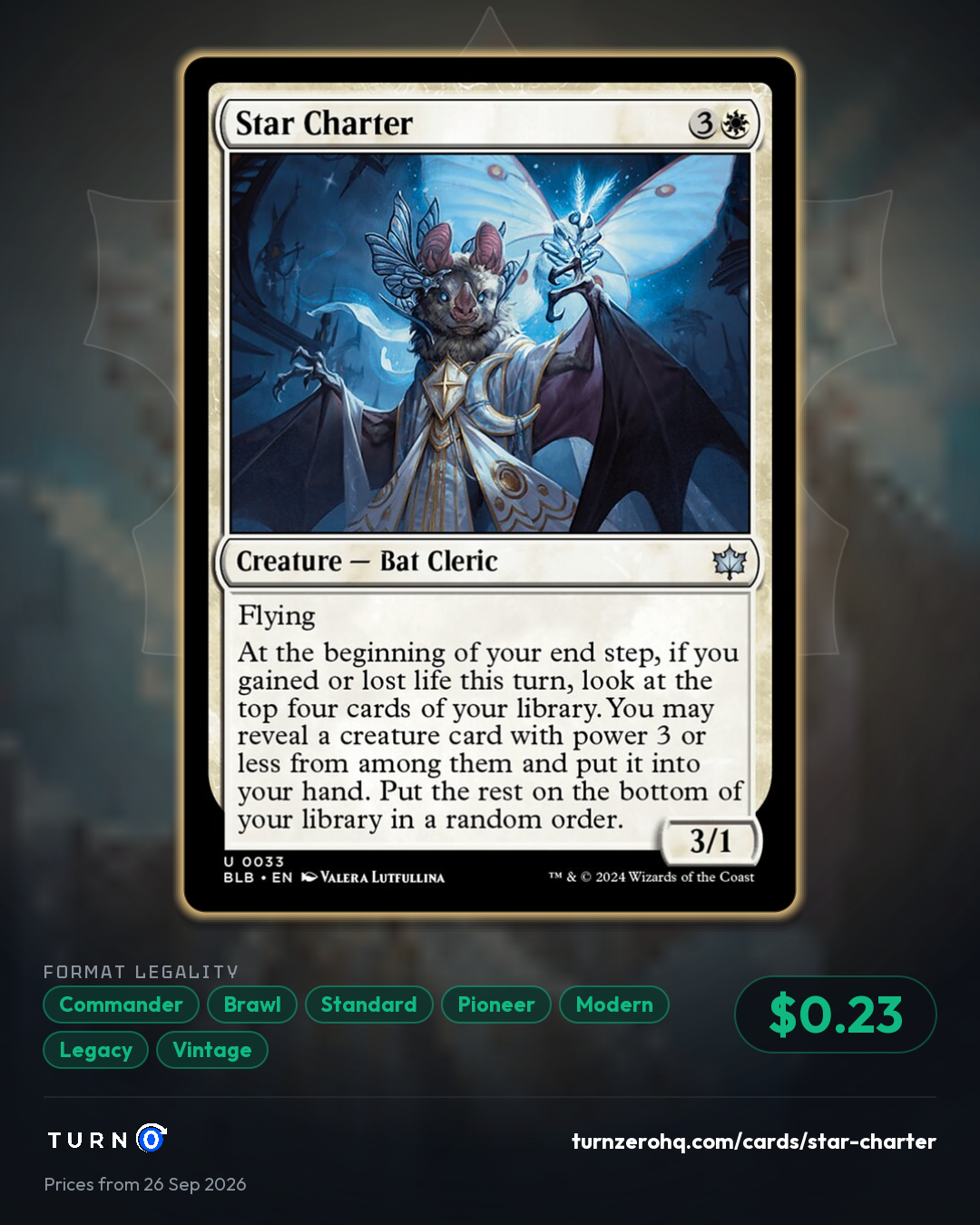
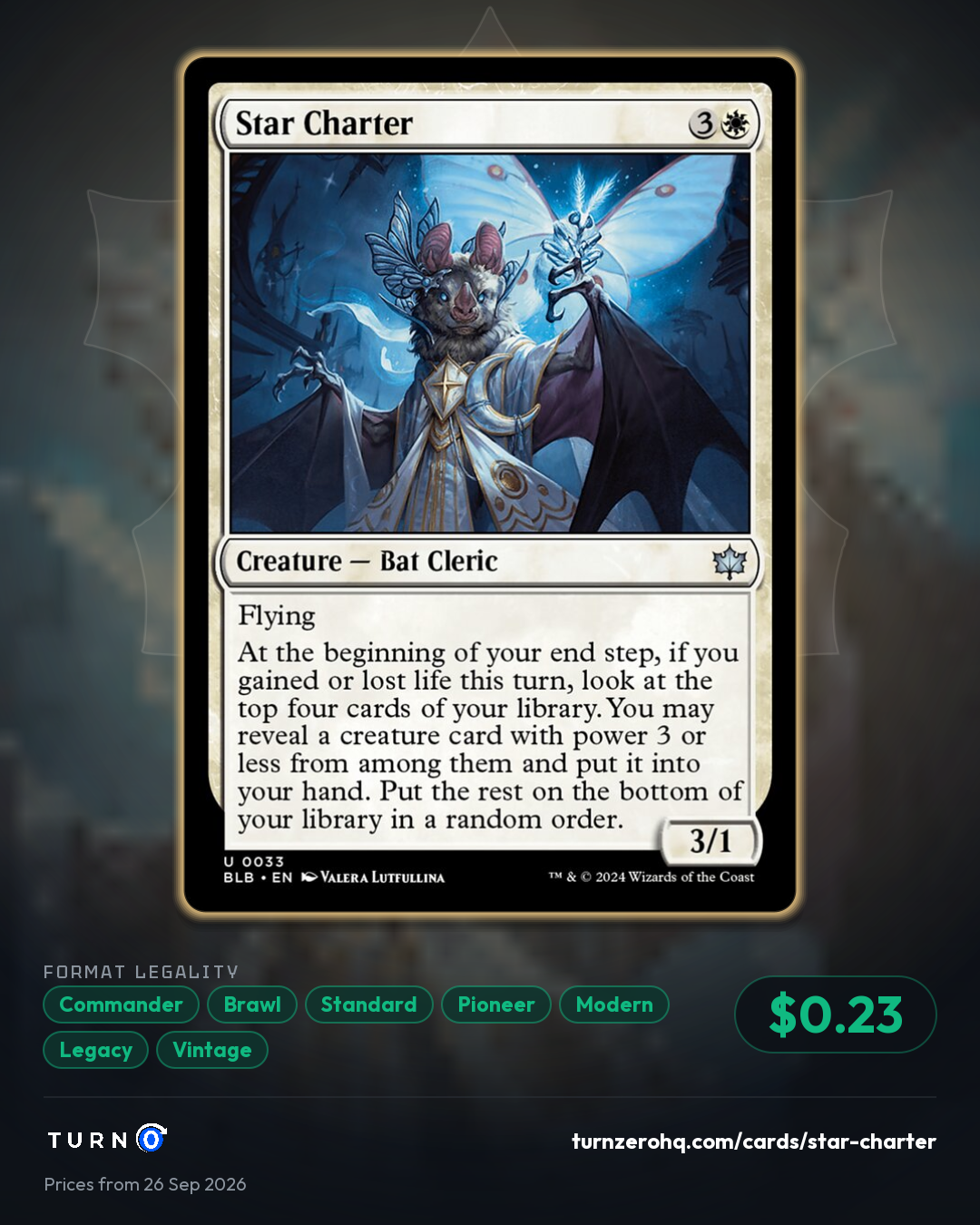
Star Charter
Tracked across real Commander games played through TurnZero HQ.
Jump to section ▾
What it does
Flying
At the beginning of your end step, if you gained or lost life this turn, look at the top four cards of your library. You may reveal a creature card with power 3 or less from among them and put it into your hand. Put the rest on the bottom of your library in a random order.
Rulings
2 official rulings, in the order Wizards published them.
- 2024-07-26
If you haven’t gained or lost life during the turn when your end step begins, Star Charter’s last ability won’t trigger at all. Gaining or losing life during your end step won’t cause the ability to trigger.
- 2024-07-26
Star Charter’s last ability cares whether you gained or lost life this turn, not how your life total changed. For example, if you gained 2 life and lost 2 life in the same turn, you still gained and lost life that turn, even though your life total is the same as it was at the start of the turn.
Rulings are Wizards of the Coast's own, mirrored from Scryfall and refreshed nightly.
In the 99
Every deck whose current list includes Star Charter, whatever its commander.
Most played under
| Commander | Decks | Games | Win rate |
|---|---|---|---|
| Zoraline, Cosmos Caller | 1 | 0 | — |
Colors it shows up in
- Orzhov 1 deck
Every version of Star Charter
1 printing, newest first. Prices are the market figures Scryfall publishes, refreshed nightly — a printing with no figure shows a dash rather than a zero, because Scryfall genuinely publishes none for some of them.
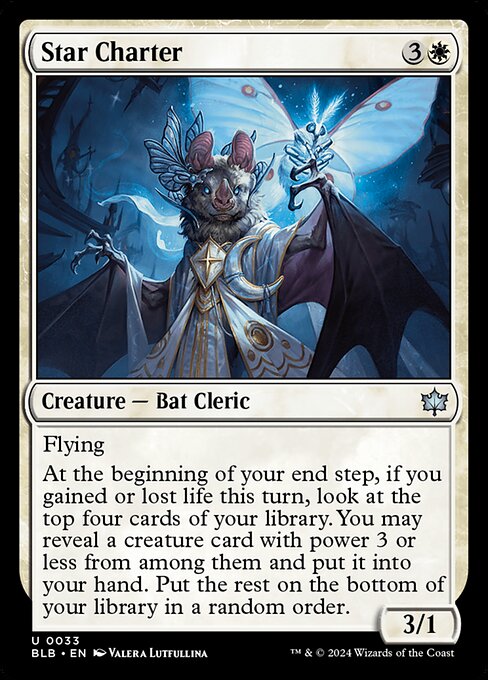
- Normal
- $0.23
- Foil
- $0.30
Prices from Scryfall, which tracks the TCGplayer and Cardmarket markets. They move daily and are a guide rather than a quote. Search TCGplayer for Star Charter — a name search across every version, for the printings TCGplayer publishes no direct link to.
Aggregated from Commander games tracked in TurnZero HQ. Every figure counts decks and games only — no individual deck list, player or playgroup is identified. Win rates are withheld below 5 completed games, where the sample is too small to mean anything.