Ever wonder whether somebody in your group has stronger decks than everyone else? We can prove it. Why TurnZero HQ →
Not because the app is clever, but because your group has been playing for years without ever writing any of it down.
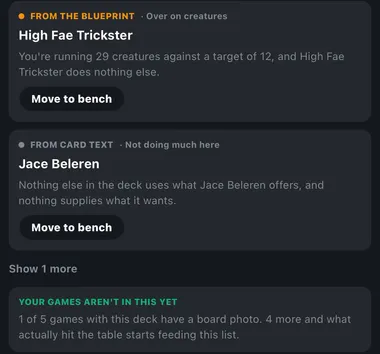
Your list stops being a hundred names and becomes something you can read: what it is short of, the combos it is holding, how it wins, and which cards are not earning their slot.
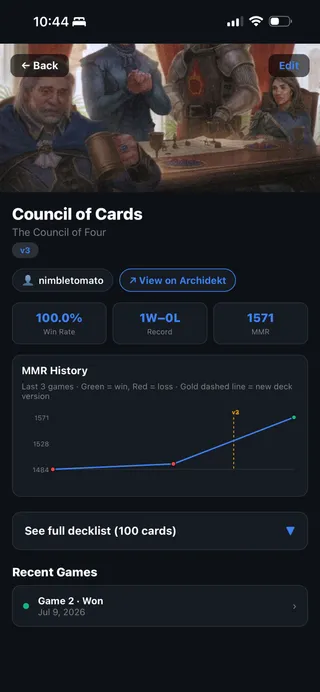
See the deck builder →Every deck earns a rating from real wins and losses, ranked inside your playgroup as well as globally, with a head-to-head record against every player you sit down with. The argument gets an answer.
How deck MMR works →Every card you own, what it is worth, and which deck it is in, in your pocket at the shop. Cards in a binder at home cannot be traded, brewed with, or borrowed against.
About My Library →A hundred cards is more than anybody holds in their head. So most decks get built on a feeling and then played on a hope, and you find out what is wrong with yours three turns into somebody else's Friday night. Paste the list you already keep on Archidekt, Moxfield or Manabox, or scan the real cards with your camera, and it gets read properly.
Two cards that are unremarkable apart and the whole deck together. Looked up against a real database rather than guessed at, folded so one combo reads as one line, and marked when it goes infinite.
Ramp, removal, draw, wipes and protection against what your archetype really runs, with a tolerance band so being one card off is not a scolding.
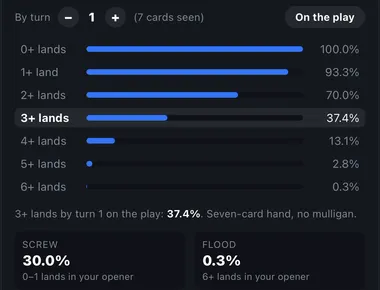
Your sources per color against the pips your own spells demand, and the real odds of having three lands on turn three or double black on turn four. Hypergeometric, not a rule of thumb. Being two green sources short is a fixable deck problem.
Named cuts and adds, each carrying the reason it was suggested. Photograph the board as you play and it sharpens into the one thing no decklist tool can know: this card has not been on the battlefield once in nine games.
A written read on your deck's three strongest interactions (never a mana rock, because “you have more mana” is not a synergy) and an honest estimate of the turn it closes a four-player game.
Some of what you call mana screw really is the shuffle, and nothing fixes that. A lot of it is twelve green sources in a deck that wants double green on turn three, which is arithmetic, and arithmetic you can look at before it costs you another game.
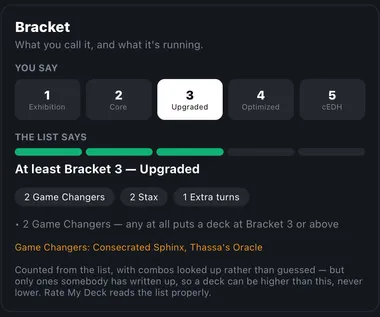
And it tells you which bracket the list is honestly playing in: a floor you can take to a Rule 0 conversation. Finding out your deck is stronger than the table wanted is a conversation before you shuffle up. It is a ruined evening after you have already won with it.
Be the master of your deck. Don’t let it master you.
Every group has one: the deck that is somehow always there at the end, the player who wins the games that count, the rebuild everybody swears was a downgrade. Nobody can prove any of it, because nobody has been keeping score.
Track your nights and every deck earns an Elo-style rating off real wins and losses, ranked inside your playgroup as well as globally, next to a head-to-head record against every player you sit down with. A few weeks in you know which of your decks is carrying you, which one has actually improved since its last rebuild, and who genuinely has your number.
At a shop it is the whole room rather than your table. One gathering holds every pod running that night in a single standings race, so the question stops being how your four did and becomes where you finished among everybody who turned up.
Bragging rights, with the receipts.
Most of what you own is at home in a box, which is the one place it can never be traded, brewed with, or lent to somebody a card short. TurnZero HQ puts the whole thing in your pocket.
Every card you own, priced from the live market, with a running total. A card Scryfall publishes no price for says so rather than counting as nothing.
Which decks hold it, which are on the bench, and how many spare copies are loose in a box. Scan a pile with the camera and it all lands in the same list.
Folders for the trade binder, the sell pile, the ones you are hunting. So “do I already own this” is a question you can answer standing at the counter.
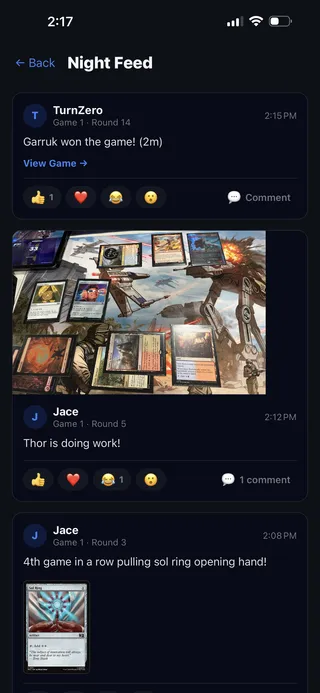
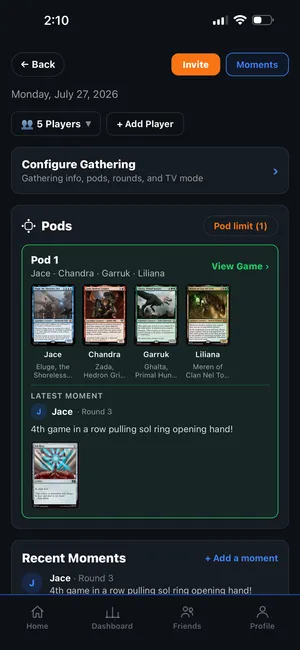
Any player can post a photo, a note, or the exact cards behind a huge play, tagged to the turn it happened. Friends react and comment, the app nudges you after an epic turn, and automatic win recaps blend into the same feed.
Three weeks later, "remember Friday at Dave's?" has an answer: the whole night, captured while it happened, without anyone having to type it up.
You had work, or a kid, or the flu, and they played without you. So the next morning you text the group chat and get back two replies and a joke. The night is already written down: every game, who won it, what they were playing, where everyone finished, and the Moments people posted while it was happening. You read it instead of asking for it.
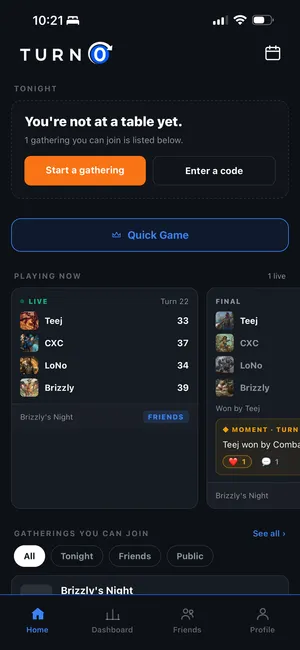
And it is live while it runs. Life totals dropping turn by turn, standings moving, Moments landing in the feed as they are posted, so the friend who could not make it reacts to the comeback from a couch three miles away, rather than hearing about it on Saturday.
Missing the night stops meaning missing what happened.
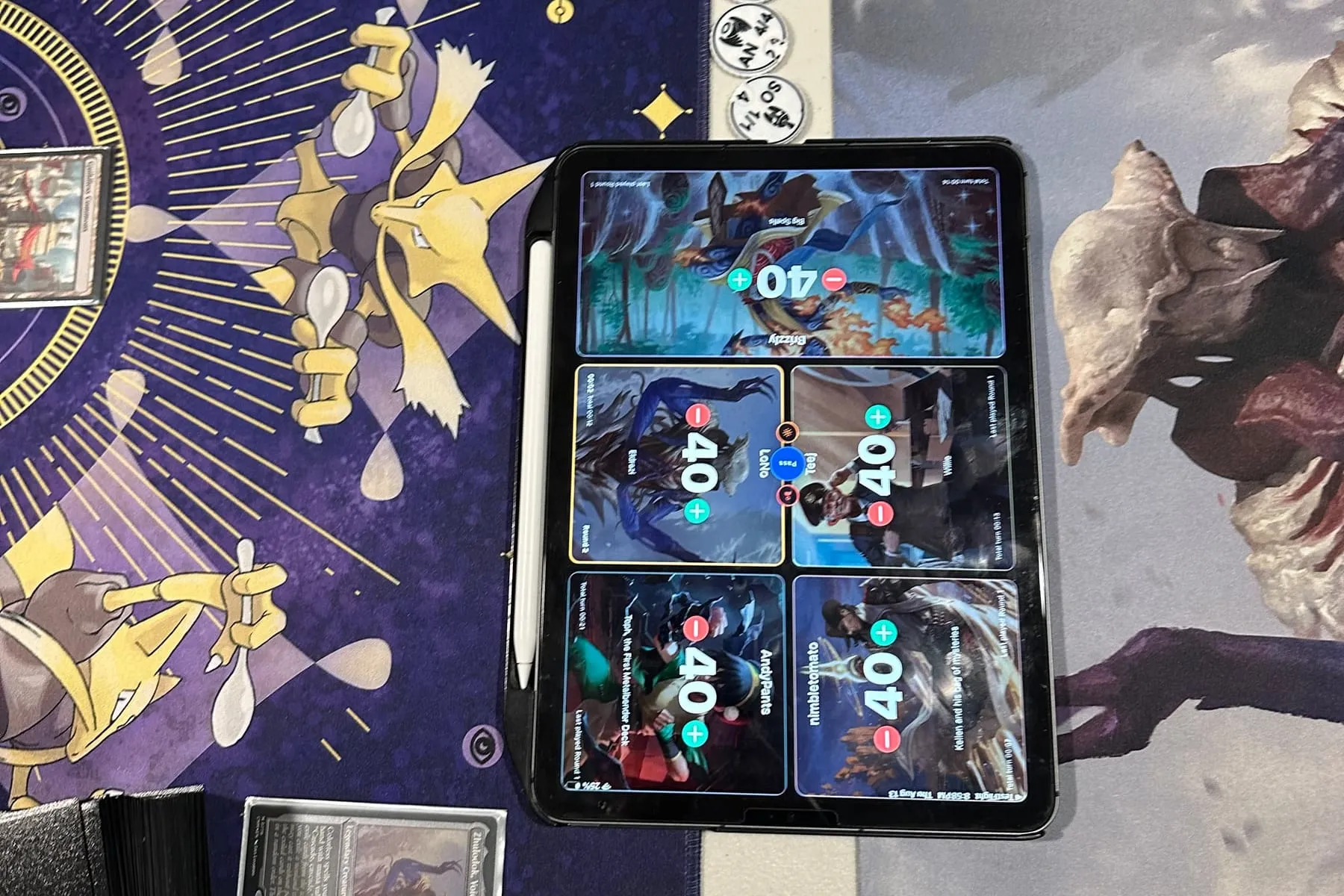
Life totals, commander damage and timers are all here and work the way you would expect. These are the parts that surprise people.
Point your phone at a card, or a whole stack, and it lands in your decklist, matched against the official card database. Entering a 100-card deck stops being an evening's work.
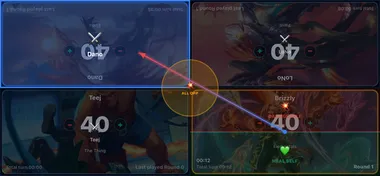
How the card scanner works →Put live life totals, standings, and table assignments on the big screen. A living-room TV for your pod, or wall signage for a store running Commander night.
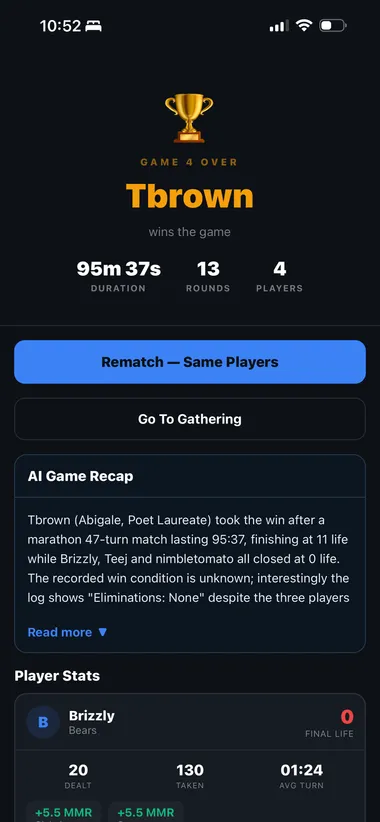
Hosting a Commander night →Every game gets a written recap from a play-by-play commentator, a numbers-first analyst, a roaster, a tall-tale spinner, or a storyteller. Your night, narrated your way.
About AI Commander recaps →Paste a decklist into Rate My Deck on the web, with no signup and nothing installed, and get the same slot counts, curve, combos and bracket read the app gives your own decks.
About Rate My Deck →TurnZero HQ's MCP server connects your decks and stats to Claude and other AI assistants. Ask which deck is overdue for a win, or have an AI tune your 99 from real results.
The Magic: The Gathering MCP →Each deck earns a matchmaking-style rating from real games, so "which of my decks is actually good" gets a data-backed answer, globally and within your playgroup.
What MMR means in MTG →
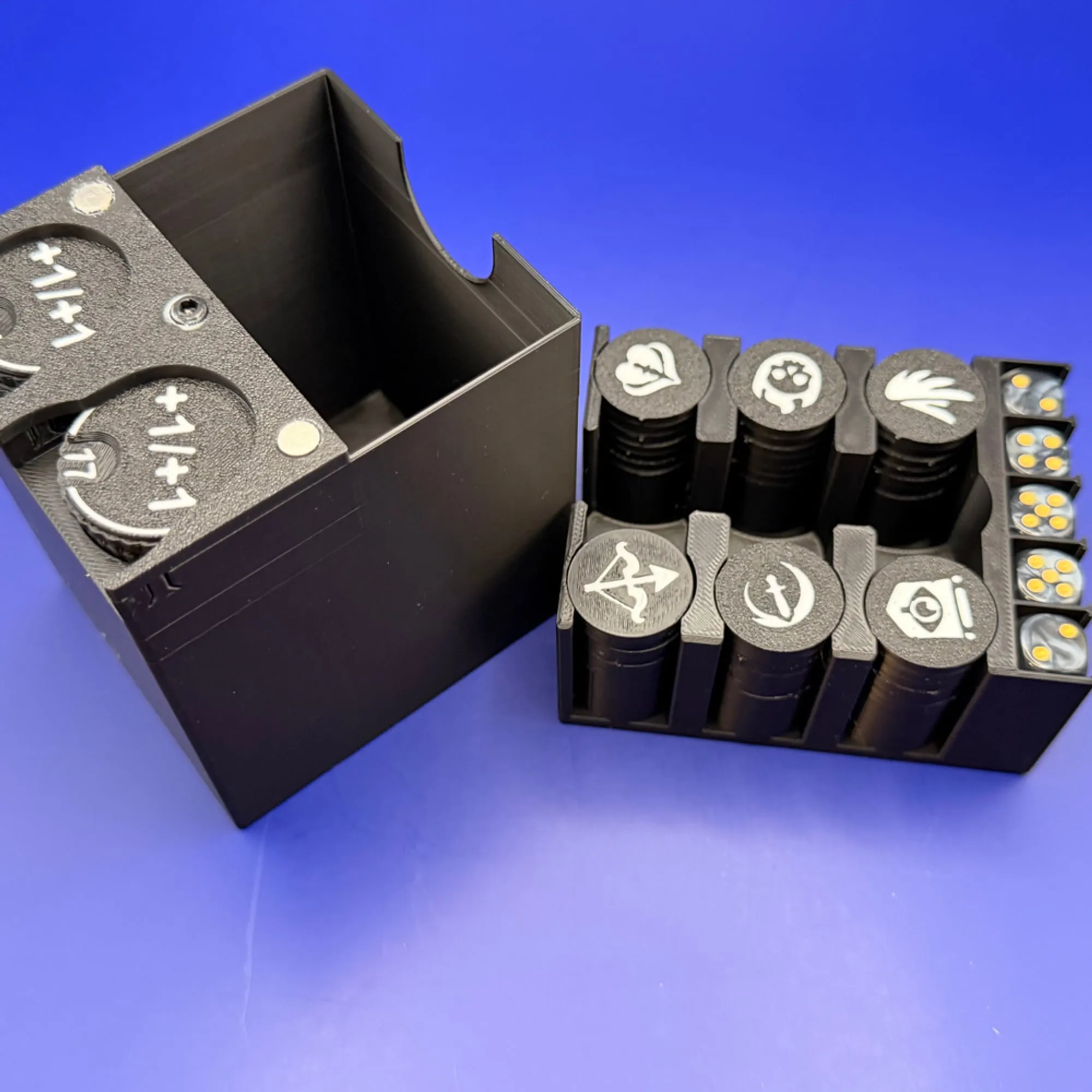
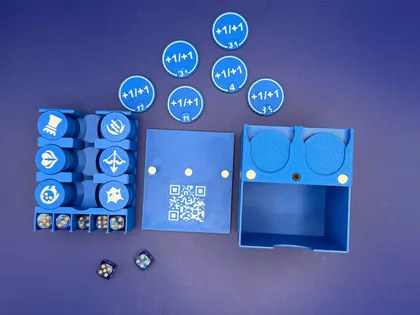
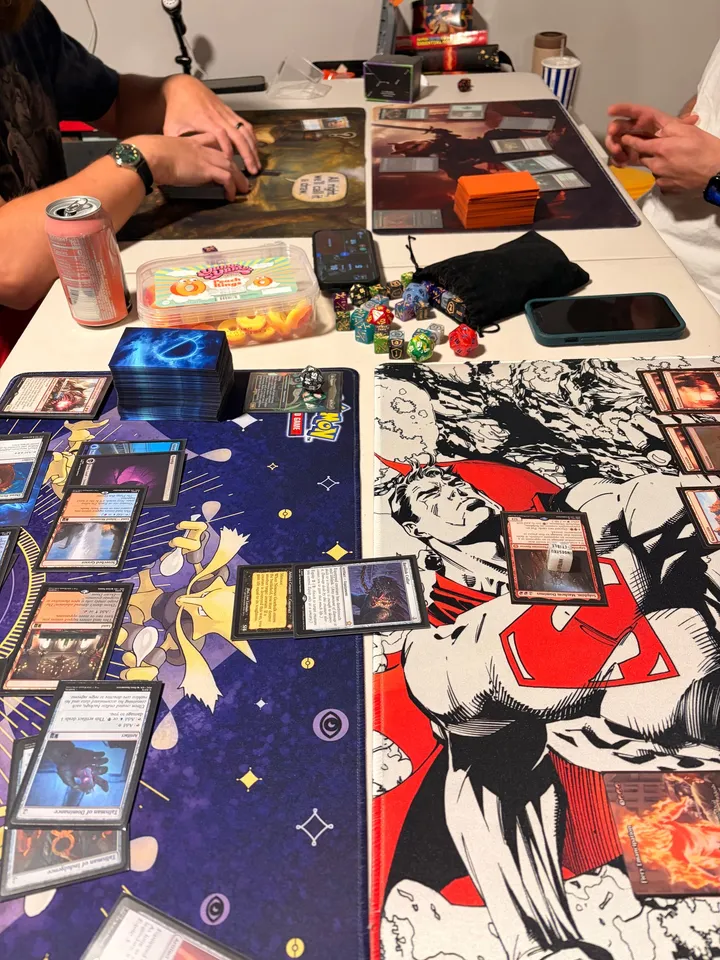
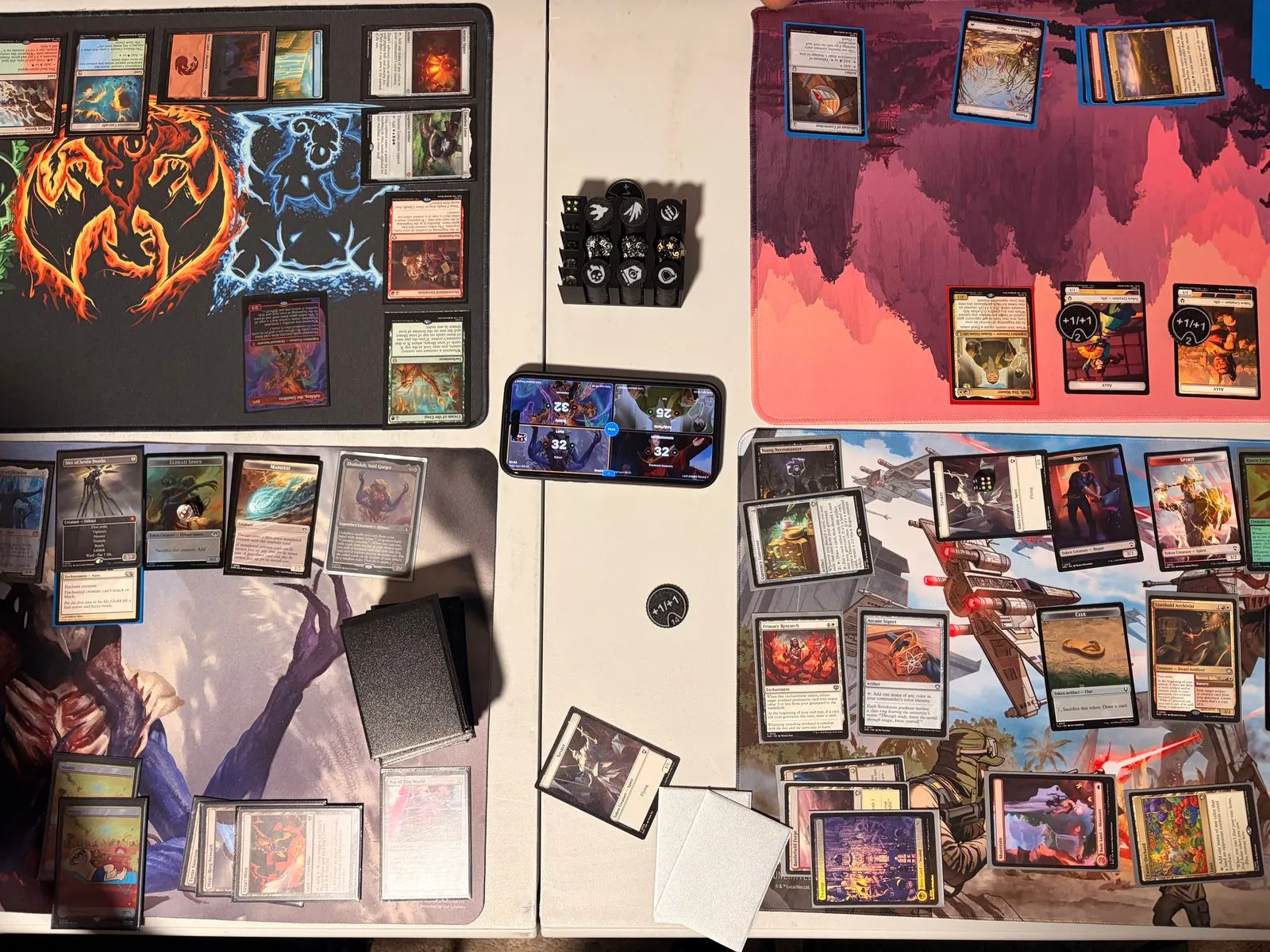
The Commander Cube is a deck-box-sized companion that dispenses up to 30 +1/+1 dials and holds a whole table's worth of status tokens and dice, so the physical side of game night is as organized as the digital one. You bring the decks, we've got the rest.
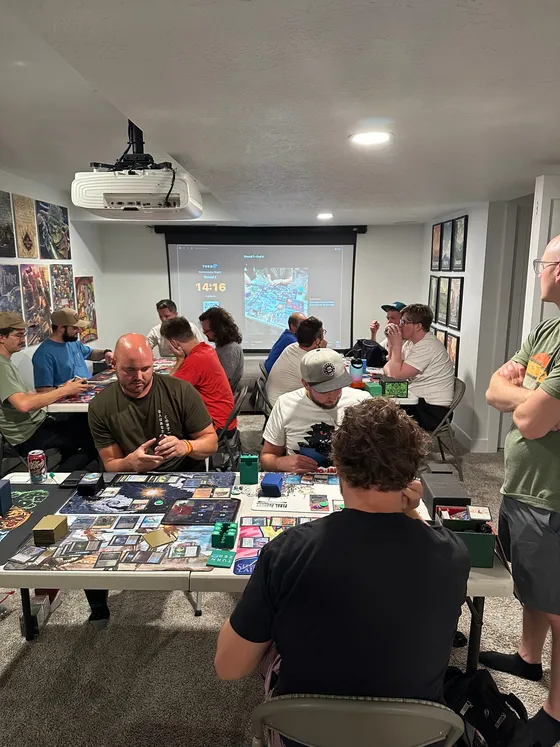
From a kitchen-table duel to a six-player free-for-all: the same app, the same shared history. And when the night outgrows one table, run multiple pods at once under a single gathering, without changing how you play.
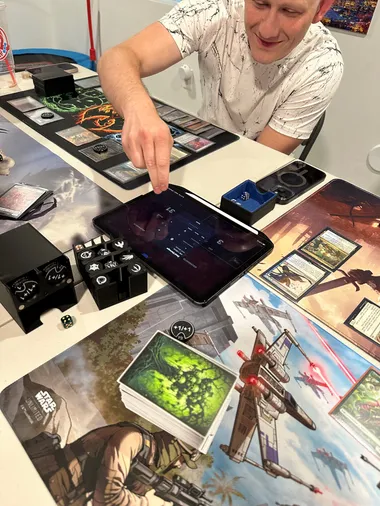
Two friends and a quick game. Life totals and commander damage tracked with zero setup, and the result still counts toward both decks' histories.
The weeknight special. Pick decks in a couple of taps, drag to deal damage across the table, and let the app write the recap.
Your standing Commander night: pods, standings, Moments, and MMR that carry over week to week, so the night feels like a season, not a one-off.
Split the room into balanced pods with one tap, reshuffle between rounds, and keep one standings race across every table. Each pod tracks its own game, and the host sees them all.
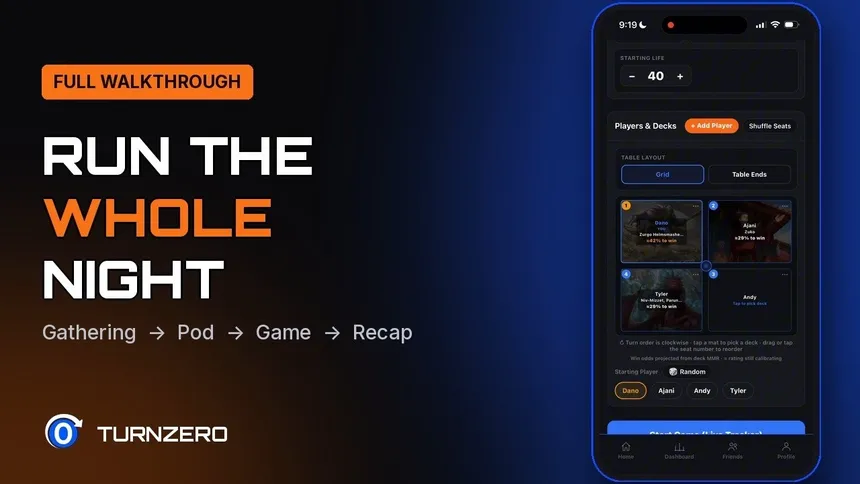
A full Commander game in three and a half minutes: starting the gathering, seating the pod, tracking damage, and reading the stats at the end.
Real screens from a real Commander night.
Create a night and invite your playgroup with a join code. Guests can join without an account.
Drop players into a pod and pick decks in a couple taps. Flip on TV mode if there's a screen in the room.
Track the game, post the Moments worth remembering, and get an AI recap of the whole night.
Every deck carries an Elo-style rating (MMR) that moves on the result of each game it plays, weighted by how strong the decks it beat were and by how many players were at the table. It is ranked globally and, separately, inside your own playgroup, so "best in your group" is measured against the people you actually play rather than against strangers. Alongside it you get a head-to-head record against every player you sit down with, and a per-version win rate, so a rebuild starts a clean argument instead of inheriting the old deck's record.
Yes, and in four different ways. It counts what the list holds (ramp, removal, draw, wipes, protection) against what a deck of that archetype usually runs, so a thin slot is visible rather than something you notice mid-game. It works out whether your mana actually supports the deck: sources per color against the pips your own spells demand, with the real odds of hitting your land drops and your colors on time. It looks your two-card combos up against a real database rather than guessing, and marks the ones that go infinite. And it writes a read on how the deck actually wins, roughly what turn it closes a four-player game, and which cards are not earning their slot. Photograph the board while you play and the last of those gets much sharper: a card that has never once been on the battlefield across nine games is a cut nothing working from a decklist alone could ever suggest.
Not entirely, and anybody promising that has not played much Magic. You are shuffling a deck, and some games you keep a two-lander and never see a third. What it does do is separate that from the part which is not luck at all. TurnZero HQ counts your real sources of each color against the pips your own spells demand, and gives you the actual probability of having three lands on turn three, or double black on turn four, worked out properly rather than from a rule of thumb. A deck running twelve green sources for a commander that wants double green on turn three will feel like constant bad luck and is arithmetic. It also shows what your opening hand looks like: draw seven from the list you are building, mulligan it, and watch the land count.
Yes, and the two are the same list. My Library holds every card TurnZero HQ has evidence you own: the cards in your decks, anything you scanned in with the camera, and spare copies you record by hand. It prices the lot from the live market, tells you which decks each card is in and which copies are spare, and lets you group cards into folders like a trade binder or a sell pile. It is free, and it works whether or not you have tracked a single game.
No. TurnZero HQ tracks life totals and commander damage as well as any dedicated counter, but that's the starting point, not the product. It's a complete companion app for your whole Commander gathering: shared game Moments with reactions and comments, a feed of the night's story, per-deck MMR ratings, AI-written recaps, and a history of every game your group has ever played together.
Moments are the highlight reel of your game night. Any player can post a photo, a note, or the exact cards involved in a big play, tagged to the turn it happened. Friends react and comment, the app nudges you after an epic turn, and automatic win recaps blend into the same feed, so the whole night's story gets captured without anyone typing it up afterwards.
Yes, and this is the question TurnZero HQ answers best. The night is written down as it happens, so the next morning you open the app instead of texting the group chat: every game, who won it, which decks were played, where everyone finished, and the Moments people posted at the table. While it is still running it is live, too, with life totals ticking down turn by turn, standings updating and Moments landing in the feed, so you can react to the winning play from your couch rather than hearing about it two days later.
Yes. One gathering can hold as many tables as your group needs. TurnZero HQ can auto-assign balanced pods, reshuffle them between rounds, and keep one standings table for the whole night. Every pod tracks its own game simultaneously, and the host sees them all at a glance. That single standings table is also what answers “how did I do against everyone else tonight” at a game store, where you only ever see your own table: it is scored across every ended game of the night rather than per pod, so you finish the evening with a position in the room rather than a result against three people.
Yes. TV mode drives a shared display with live life totals, standings, and table assignments. Point a browser on any smart TV at it and enter your night's join code. It works on the living-room TV for a home pod just as well as on the wall of a game store running a full Commander night.
Yes. The card scanner identifies Magic cards through your camera, one card at a time or a whole stack laid out in a single shot, and adds them straight to the decklist you're building. No typing a hundred card names.
TurnZero HQ exposes your decks and stats to AI assistants through the Model Context Protocol. Connect Claude or any MCP-capable client and ask questions like "which of my decks is overdue for a win?" or have it review a decklist. The answers come from your real game history, not vibes.
Yes. Tracking games, decks, Moments, friends, and gatherings is free on iOS, Android, and the web, as are deck building and AI deck ratings. The free phone apps show occasional ads, which $0.99 a month removes; the web app has none either way. A premium subscription adds AI-written night recaps, more pods per gathering, and is ad-free too. The guides on this website carry display ads of their own, which no subscription removes.
Two starting points, depending on where you're at.
New to the game, or new to Commander specifically? Start with the basics, in order.
Already playing regularly? These go deeper on power level, stats, and running a better night.
One night is enough to begin. Track a single gathering and your decks have ratings, your group has a leaderboard, and the argument about whose deck is best finally has somewhere to be settled. Free on iOS, Android and the web.