Color Combinations
All 32 MTG Color Combinations and Their Names
Boros, Golgari, Jund, Abzan, Witch-Maw. Magic's color combinations have names, the names come from five different sets across nineteen years, and nobody ever explains which is which. Here is the whole list, and what each one actually does at a Commander table.
There are exactly thirty-two color combinations in Magic, because there are five colors and a combination is any set of them, five single colors, ten pairs, ten trios, five four-color sets, one five-color set, and colorless, which is the empty set and counts. Every one of the thirty-two is a legal Commander color identity, and every one of them has at least one legendary creature that can lead it.
The confusing part is the names. They were not designed as a system: they accumulated. The two-color names are Ravnica's guilds from 2005 and 2006, the allied three-color names are Alara's shards from 2008, the enemy three-color names are Tarkir's clans from 2014, and the four-color names come from a cycle of Guildpact creatures that cannot legally be commanders at all. Single colors and five-color were never named. That is why a player can know exactly what Boros means and have no idea about Mardu: the two words are nine years and two planes apart.
What color identity is, and why it is not the same as a card's color →One color: no nicknames
Single colors have never been given faction names. Nobody says anything but mono-white, and Magic has never printed a word for one color the way Ravnica did for pairs.
 Mono-White White One color, no name, and the best board wipes and lifegain in the game.
  Mono-Blue Blue Draws the most cards, answers anything on the stack, and gets targeted first.
  Mono-Black Black Pays life for anything: tutors, removal, recursion and the biggest single-color rituals.
  Mono-Red Red Fastest mana, most damage, worst long game, and the best rituals in the format.
  Mono-Green Green More mana than anyone, the biggest creatures, and no answer to a resolved spell.
 Two colors: the ten Ravnica guilds
Ravnica: City of Guilds (2005), Guildpact (2006) and Dissension (2006) between them named all ten two-color pairs after the guilds that ran the plane. These are the best-known color names in Magic by a distance, and they are the ones most players learn first.
 Azorius White and blue Law and paperwork: taxes, counterspells and a board nobody is allowed to develop.
  Dimir Blue and black The guild nobody was supposed to know existed: mill, theft, evasion and secrets.
  Rakdos Black and red A cult built around a demon: sacrifice, damage, and no interest in the long game.
 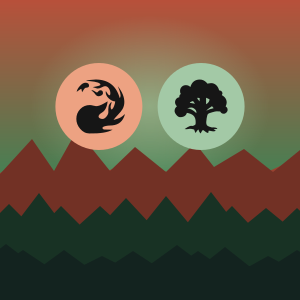 Gruul Red and green Anti-civilization berserkers: the most mana, the biggest creatures, the fewest answers.
 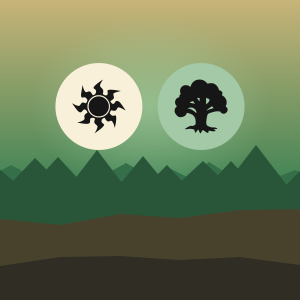 Selesnya Green and white Community as a mechanic: tokens, anthems, and more creatures than anybody can block.
 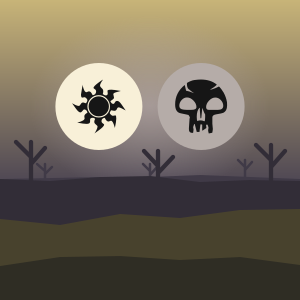 Orzhov White and black A church that is also a bank: debt, drain, and a death that does not end service.
  Izzet Blue and red A research guild with no ethics board: instants, sorceries, copies and storm.
 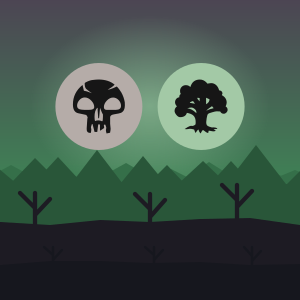 Golgari Black and green Death feeding growth: the graveyard as a second hand, and nothing stays dead.
 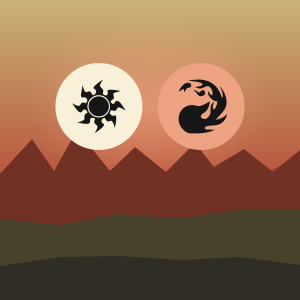 Boros Red and white Righteous violence, immediately: combat tricks, equipment and an army of tokens.
  Simic Green and blue Biological research without limits: ramp, card draw, counters and enormous turns.
 Three allied colors: the five Alara shards
Shards of Alara (2008) shattered a plane into five fragments, each holding one color and its two allies, with its enemy colors simply absent. Invasion had already named them in 2000, after its five dragon legends, and Streets of New Capenna named them again in 2022 as its crime families. The Alara words are the ones that stuck.
 Bant Green, white and blue Order, honor and enormous value: ramp, blink, protection and a fair deck that isn't.
 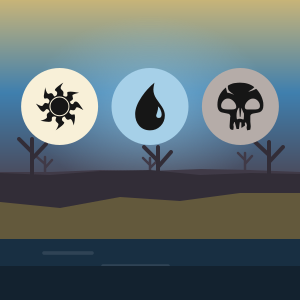 Esper White, blue and black Etherium and control: every answer in the game except the ones that need red or green.
 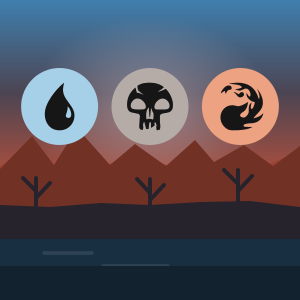 Grixis Blue, black and red A dead world run by Nicol Bolas: theft, reanimation, removal and no creatures worth blocking with.
 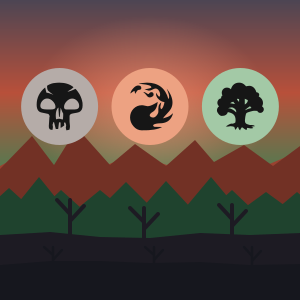 Jund Black, red and green A world of dragons and predation: sacrifice everything, remove everything, attack with what's left.
 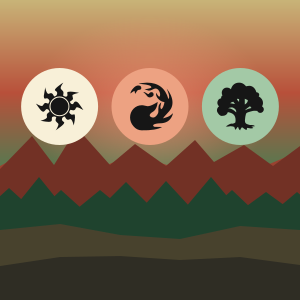 Naya Red, green and white A world of enormous beasts: ramp into the biggest creatures and attack with all of them.
 Three enemy colors: the five Tarkir clans
Khans of Tarkir (2014) named the five wedges (one color plus its two enemies) after the plane's clans. They are nine years younger than the shard names, which is exactly why a player who knows Jund often does not know Mardu. Apocalypse had named all five back in 2001 (Necra, Raka, Ana, Dega and Ceta) and not one of those words caught on.
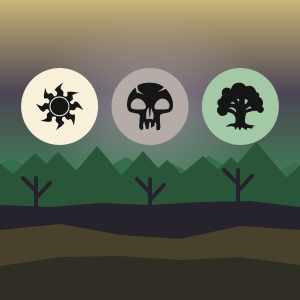 Abzan White, black and green Endurance and family: counters, recursion and a board that refuses to stay dead.
 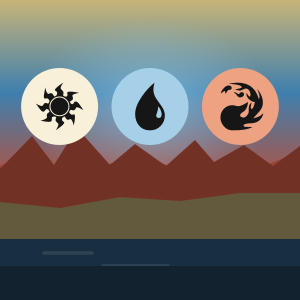 Jeskai Blue, red and white Monks and cunning: spells, prowess, extra turns and a very small number of creatures.
  Sultai Black, green and blue Ruthless opulence: ramp, draw, and a graveyard that is a better hand than your hand.
 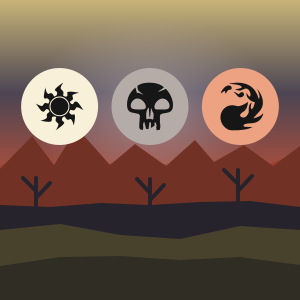 Mardu Red, white and black Speed above everything: aggressive creatures, complete removal, and no cards to spare.
  Temur Green, blue and red Savagery and instinct: the most mana in Magic, spent on the largest possible turn.
 Four colors: the Nephilim, and the Commander 2016 themes
Guildpact printed five four-color Nephilim in 2006 and Magic then ignored the space for a decade. Commander 2016 built the first four-color decks and gave each identity a theme word instead. Both sets of names are in use, and most players just say "no green". Note the joke: the Nephilim are not legendary, so none of them can be a commander.
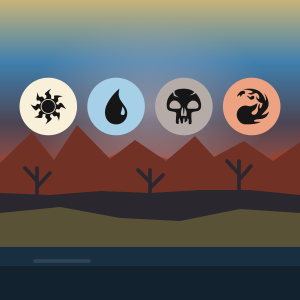 Yore-Tiller White, blue, black and red Everything except green: artifacts, control and the format's most complete answer suite.
 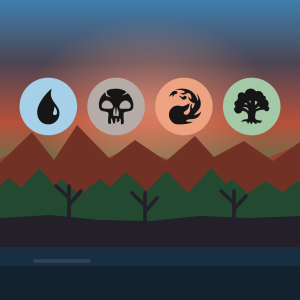 Glint-Eye Blue, black, red and green Everything except white: ramp, draw, removal and cascade, with no board wipes at all.
 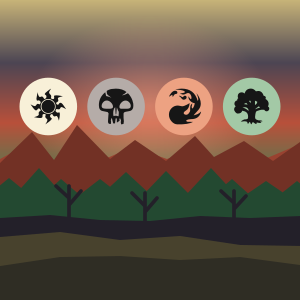 Dune-Brood White, black, red and green Everything except blue: every removal spell, every token maker, and no counterspells.
 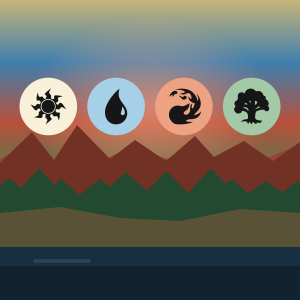 Ink-Treader White, blue, red and green Everything except black: ramp, draw, removal and the format's best group-hug shell.
 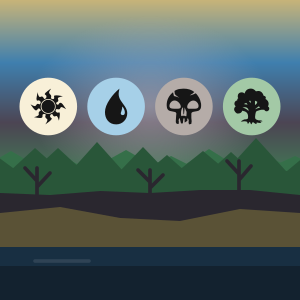 Witch-Maw White, blue, black and green Everything except red: counters, proliferate, and the strongest four-color deck in the format.
 Five colors
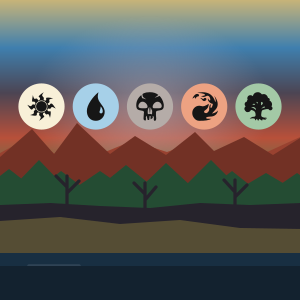
No faction name: five-color, WUBRG, or rainbow. Every card in Magic is legal in the deck, which makes the mana base the entire difficulty.
No colors
The one nobody counts, and the reason there are 32 rather than 31: color identity is a set of colors, and the empty set is a legal one.

The Same Colors, Named Again
Every set that needs factions divides the colors the same way, because there are only so many ways to divide five colors. So the pairs and trios keep getting renamed, and a player who learned Magic in 2021 may know Lorehold and never have heard of Boros. They are the same two colors, eight sets apart.
These are the schemes that produced a full set of names rather than a one-off. Each identity's own page lists the names for its colors with the set each came from.
Invasion (2000) the five allied trios
Treva, Dromar, Crosis, Darigaaz and Rith, after the set's dragon legends. Alara renamed all five eight years later.
Apocalypse (2001) the five enemy trios
Necra, Raka, Ana, Dega and Ceta. Khans of Tarkir renamed all five thirteen years later.
Ravnica: City of Guilds onward (2005-06) all ten pairs
Azorius, Dimir, Rakdos, Gruul, Selesnya, Orzhov, Izzet, Golgari, Boros and Simic. The most durable naming scheme Magic has, and still the default.
Shards of Alara (2008) the five allied trios
Bant, Esper, Grixis, Jund and Naya.
Khans of Tarkir (2014) the five enemy trios
Abzan, Jeskai, Sultai, Mardu and Temur.
Dragons of Tarkir (2015) the five allied pairs
Dromoka, Ojutai, Silumgar, Kolaghan and Atarka. The timeline changed and each clan became a two-color dragon brood.
Strixhaven (2021) the five enemy pairs
Silverquill, Prismari, Witherbloom, Lorehold and Quandrix, the school's five colleges.
Streets of New Capenna (2022) the five allied trios
Brokers, Obscura, Maestros, Riveteers and Cabaretti, the city's crime families.
Two of those never took. Nobody says Necra or Treva, and the reason is that a word only becomes the name for a color pairing when a whole faction is built on it and the set keeps referring to it. Ravnica, Alara and Tarkir did that. Invasion and Apocalypse printed a handful of cards each and moved on.
Allied, Enemy and the Shape of the Color Pie
Two of the names above only make sense once you know the color wheel. The five colors sit in a ring (white, blue, black, red, green) and each color's two neighbours are its allies while the two across from it are its enemies. White's allies are blue and green; its enemies are black and red.
That is the whole difference between a shard and a wedge. A shard is a color with its two allies, so it sits as a contiguous arc of the ring; a wedge is a color with its two enemies, so it jumps across it. It is also why the two-color guilds are usually taught in two batches: the five allied pairs first, then the five enemy pairs, which historically got less support and are still the ones with slightly rougher mana.
Frequently Asked Questions
How many color combinations are there in Magic?
Thirty-two. Five single colors, ten pairs, ten three-color combinations, five four-color combinations, one five-color combination and colorless, which is every possible subset of the five colors, including the empty one. All thirty-two are legal Commander color identities.
What are the two-color combinations called in Magic?
After Ravnica's ten guilds: Azorius (white-blue), Dimir (blue-black), Rakdos (black-red), Gruul (red-green), Selesnya (green-white), Orzhov (white-black), Izzet (blue-red), Golgari (black-green), Boros (red-white) and Simic (green-blue). The first four-guild batch arrived in Ravnica: City of Guilds in 2005 and the last three in Dissension in 2006.
What is the difference between a shard and a wedge?
A shard is a color plus its two allied colors and is named after a fragment of the plane Alara from 2008: Bant, Esper, Grixis, Jund and Naya. A wedge is a color plus its two enemy colors and is named after a clan of Tarkir from 2014: Abzan, Jeskai, Sultai, Mardu and Temur. Both are three-color combinations; which one you have depends on which three colors.
Is Lorehold the same as Boros?
Yes. Lorehold is Strixhaven's red-white college and Boros is Ravnica's red-white guild, and both simply mean a red-white deck. Most of the pairs and trios have been named two or three times over, because every set that needs factions divides the five colors the same way. Boros is the name most players reach for, since Ravnica's guilds are the oldest scheme still in common use, but the two are interchangeable.
What are the Strixhaven colleges in color terms?
Silverquill is white-black (Orzhov), Prismari is blue-red (Izzet), Witherbloom is black-green (Golgari), Lorehold is red-white (Boros) and Quandrix is green-blue (Simic). They are the five enemy-color pairs, which is why Strixhaven covers exactly the half of the guilds that Dragons of Tarkir did not: that set named the five allied pairs after its dragon broods.
Why do the four-color combinations have two names each?
Because they were named twice. Guildpact printed five four-color Nephilim in 2006 (Yore-Tiller, Glint-Eye, Dune-Brood, Ink-Treader and Witch-Maw), and Commander 2016, the first product built around four-color decks, gave the same five identities theme words instead: Artifice, Chaos, Aggression, Altruism and Growth. Both are in circulation, and most players in practice just name the missing color.
Which color combination should I pick for a Commander deck?
Start from what you want the deck to do rather than from a color pair you like the sound of. Two colors is the easiest place to start (the mana base is nearly free and the card pool is still deep), and three is where most decks end up. Each identity's page here lists what it does well and what it cannot do, which is more useful to know than which colors are strongest.
Track which of your colors actually wins.
TurnZero HQ records every game you play, so your win rate breaks down by deck, by commander and by the colors you keep coming back to. Free to start.
Create Free Account