Beginner Series
The Land & Mana Base Guide
Your deck's plan doesn't matter if the mana isn't there to cast it. Here's how color count, fixing, and a few key utility lands decide whether your deck actually works.
Jump to section ▾
The basics
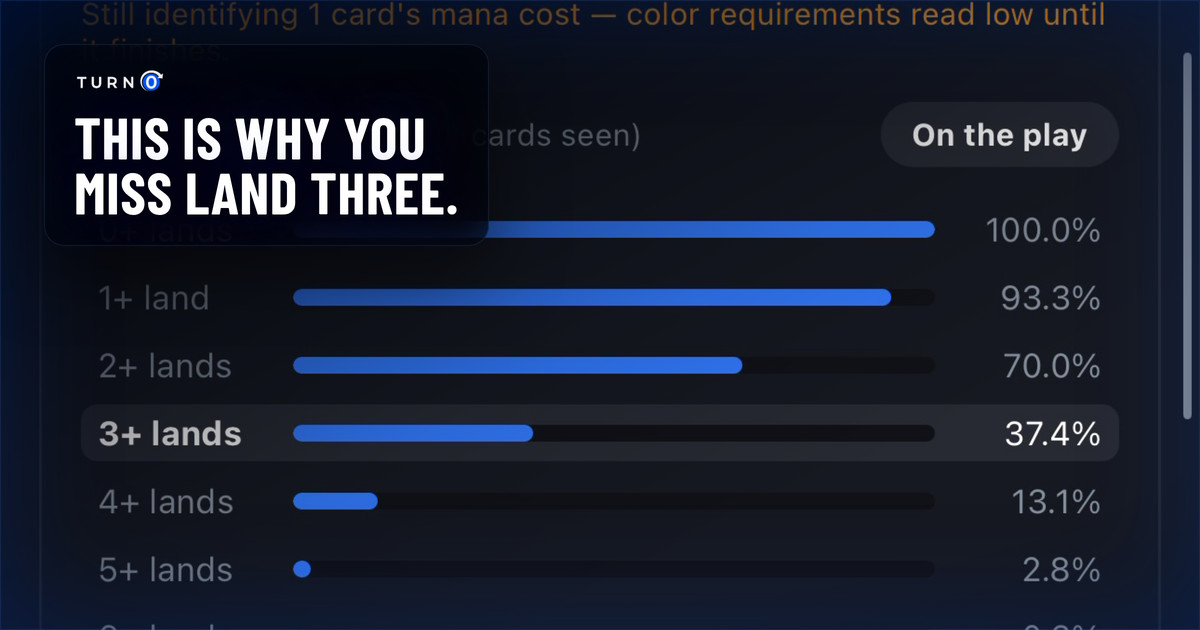
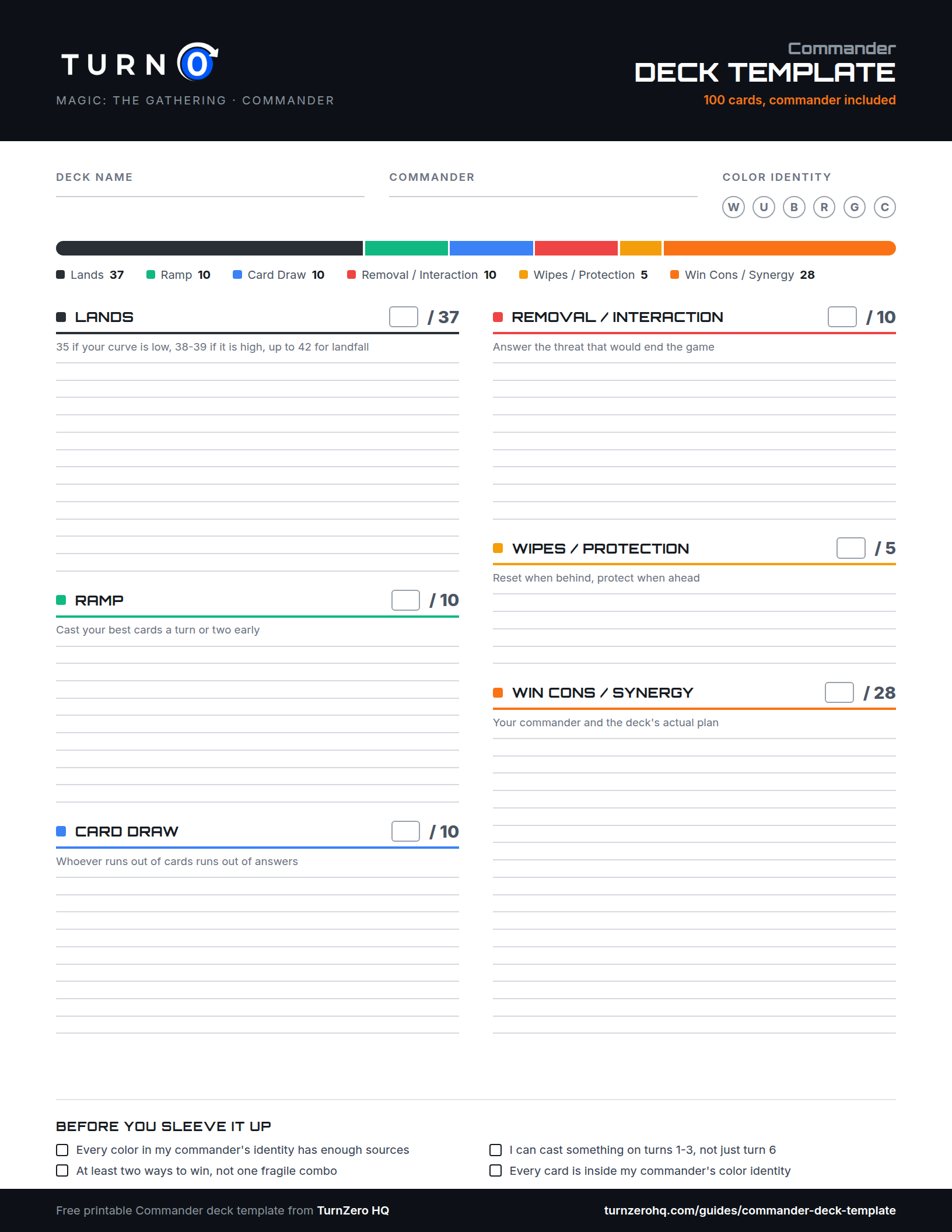
Most decks want 36–38 lands: trim toward 35 on a low curve, climb to 39 on a high one, and as far as 42 if the deck is built around landfall. But "37 lands" means something very different depending on how many colors your commander needs.
A mono-color deck can run almost all basics and never think twice. A five-color deck needs its mana base to be treated like its own subsystem, with dozens of decisions about fixing, life loss, and tempo all bundled into "which lands do I run." The more colors you need, the more of your 37 land slots get spent just making sure you can cast your spells at all, instead of doing something extra.
The most common reason new Commander decks feel bad to play is a mana base that can't reliably produce the colors the deck needs.
common deckbuilding lesson
Count your lands on paper
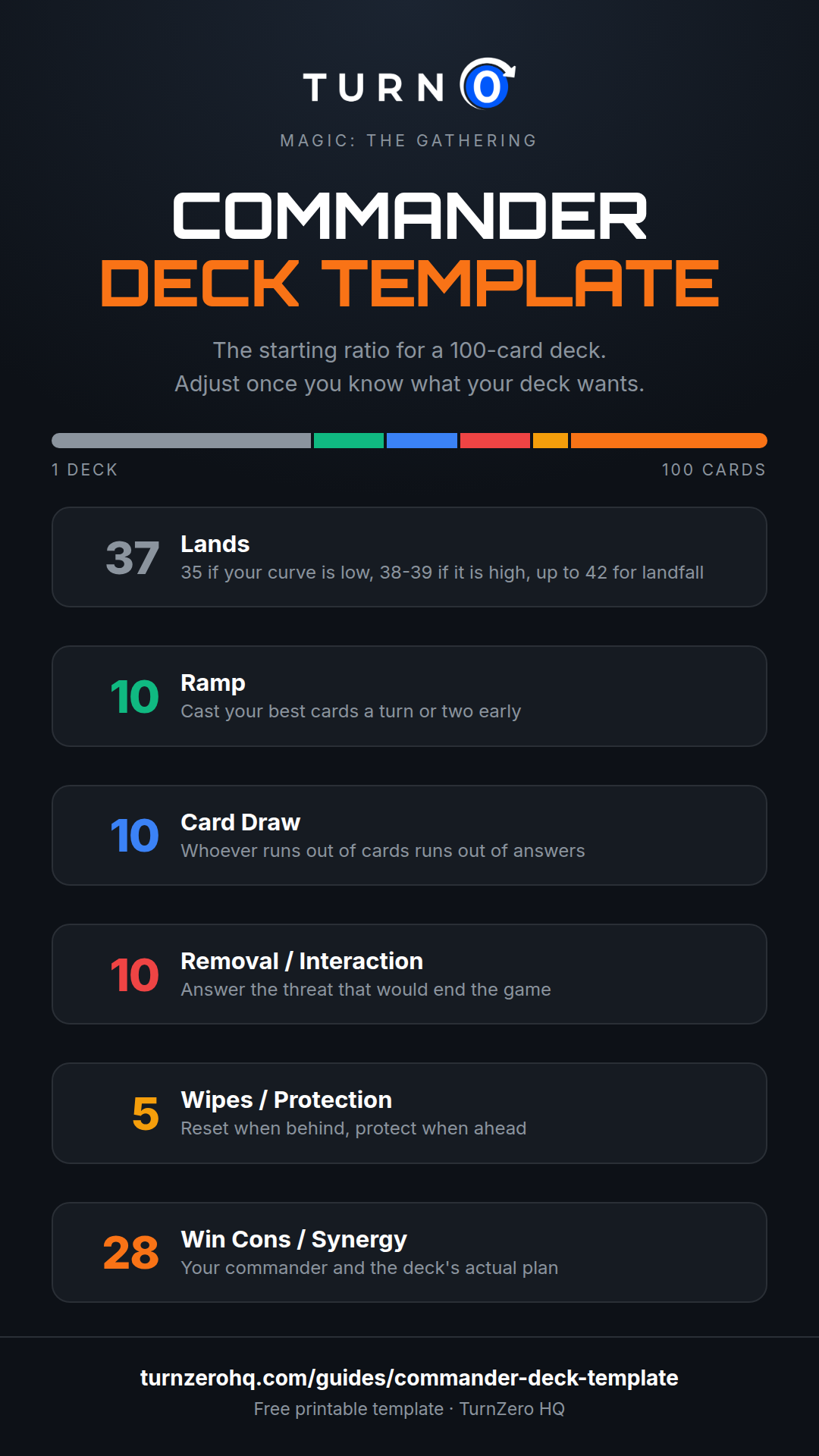
Our free Commander deck template has a land block with room to write every nonbasic in, and a count box to check against the 37 you're aiming for. Print the sheet, or keep the phone version open while you build.
The official rule
Lands are covered in section 305 of the Comprehensive Rules.
Comprehensive Rules · Rule 305.1
"A player who has priority may play a land card from their hand during a main phase of their turn when the stack is empty. Playing a land is a special action; it doesn't use the stack."
Comprehensive Rules · Rule 305.2
"A player can normally play one land during their turn; however, continuous effects may increase this number."
Comprehensive Rules · Rule 305.8
"Any land with the supertype 'basic' is a basic land. Any land that doesn't have this supertype is a nonbasic land, even if it has a basic land type."
Worth knowing: "landfall," which we'll cover below, is technically an ability word, not a keyword, per rule 207.2c, it has no rules meaning of its own and exists only to flavor-group cards with similar "whenever a land enters" text.
Examples
Two-color vs. four-color, same deck size
A two-color deck can run 8-10 dual lands plus basics and reliably have both colors online by turn 3-4.
A four-color deck needs those same 37 land slots to cover four colors, meaning far fewer basics, much heavier reliance on triomes, fetches, and rocks just to function.
Both decks might run "37 lands," but the four-color deck's mana base is doing dramatically more work per card.
Cracking a fetch land
You play a fetch land (like Evolving Wilds) and immediately sacrifice it to search your library for a basic land, putting it onto the battlefield.
You've spent one land drop but effectively played a specific land, thinned one card from your deck, and (if you control a landfall card) triggered landfall twice (once for the fetch, once for the land it found).
The cost: you're down a card in a deck full of no-longer-random draws, and depending on the fetch, possibly some life.
How to take advantage of it
The fixing ladder. As color count goes up, climb this ladder: basics → dual lands (weigh tapped vs. untapped tradeoffs) → fetch lands → triomes → mana rocks and signets as backup fixing → Mono and two-color decks can stop early on this ladder; three-plus color decks need most of it.
Game-winning and game-saving lands. A few lands are worth a slot in almost any deck of the right colors because they can single-handedly swing a game: a land that turns into a real threat, or bails you out of a bad board state, essentially for free since it still taps for mana the rest of the time.
Utility lands: when to play them. A land that does something besides tap for mana is a small tax on your fixing. Two-color, lower-curve decks can usually afford one or two; greedy four-or-five-color decks often can't spare the slot, since every land needs to pull its weight on color fixing first.
Cracking lands: the tradeoff. Fetch lands thin your deck and fix your colors, but cost life and a small tempo hit (you don't get to hold up the mana the same turn in some cases). That tradeoff is worth it more in decks that want graveyard triggers or repeated landfall than in decks that are already stretched thin on card advantage.
Landfall decks: a dedicated approach. If your deck cares about landfall, the count goes up, with 40 to 42 lands normal, because a land off the top isn't a dead draw when it triggers half your board. Extra land drops still matter more than raw count, though: fetch lands are premium here since they trigger landfall twice per activation (once entering, once for the land they find), and effects that grant extra land drops (like Exploration or Azusa, Lost but Seeking) become some of the best cards in the whole deck.
Cards & commanders that spotlight the mana base
Fixing
The backbone of any multicolor mana base: cards that make sure you actually have the colors your deck needs.
Game-winning / game-saving lands
Lands that are essentially free inclusions since they can swing a game by themselves.
Landfall payoffs
Cards that turn "I played a land" into an actual event.
Commander spotlight
The signature commander for building an entire deck around the mana base itself.
Commander Spotlight
Tatyova, Benthic Druid ↗
Landfall: whenever a land you control enters, you gain 1 life and draw a card. Every land drop becomes card advantage, which is why a Tatyova deck happily runs 40-plus lands and stacks fetch lands and extra-land-drop effects on top of them.
Keep the table on the same page.
TurnZero HQ tracks life, turns, and moments so nobody's re-litigating what happened three plays ago.
Create Free Account