Collector Boosters vs Play Boosters: Which Is Worth the Money?
I opened a Reality Fracture Play Booster Box and three Collector Boosters, and the three packs felt like better value. So I checked the last 8 sets to see whether that holds up.
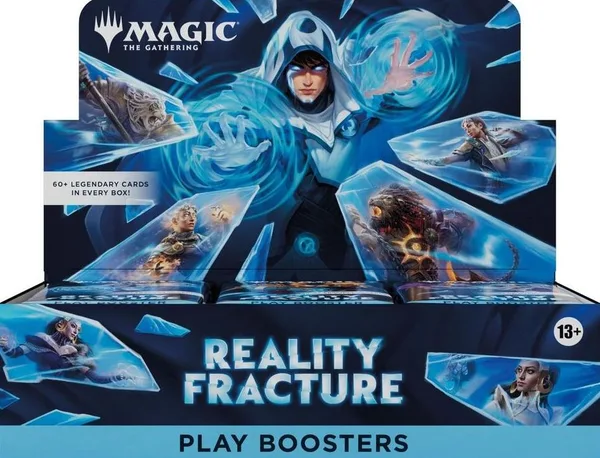
I recently opened a Reality Fracture Play Booster Box. That is 30 packs and 420 cards, and
I got some good ones. The best was The Theorist, Jace Beleren , which sells for about $36.60 in
its regular version.
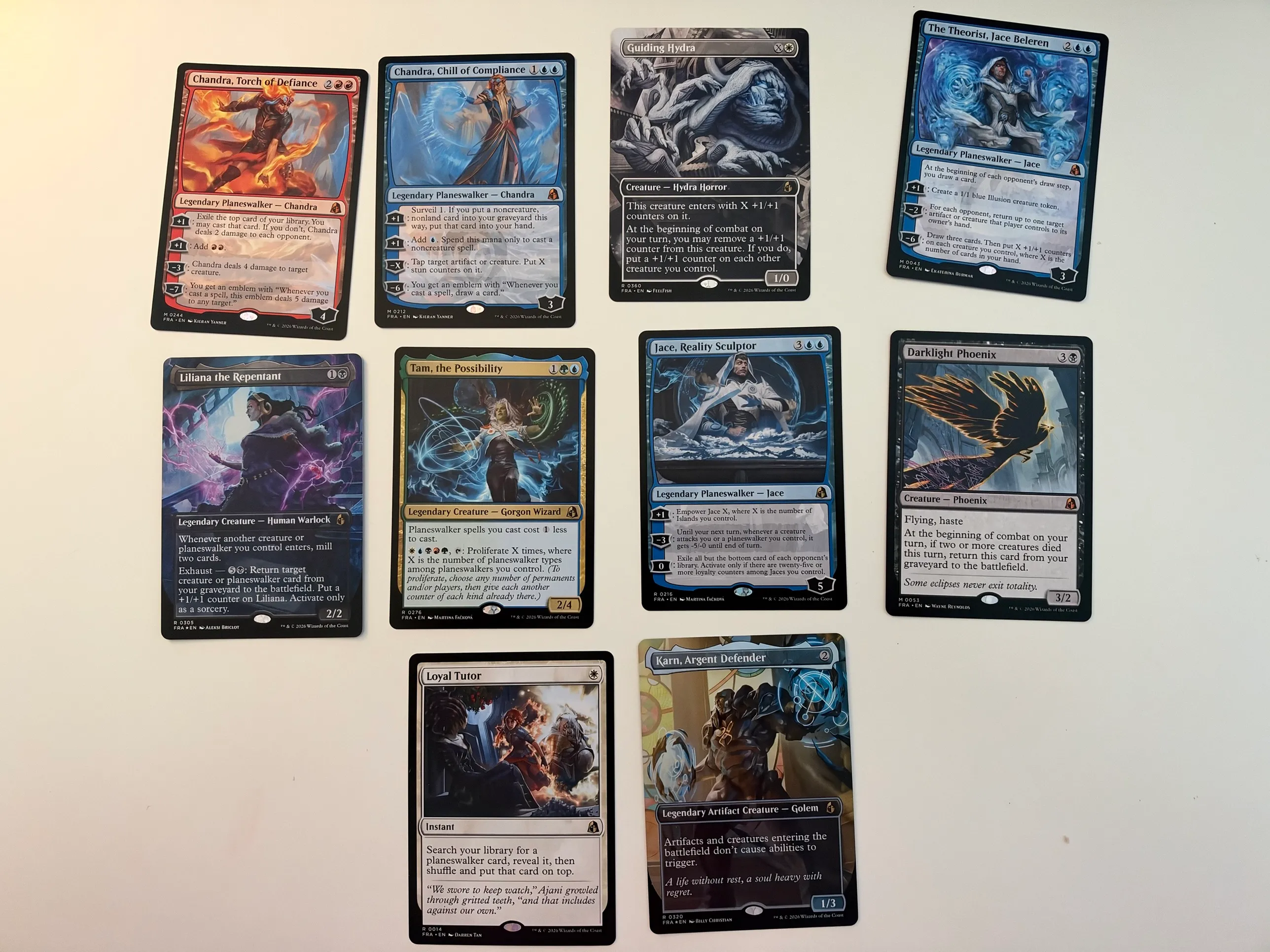
The ten cards I set aside as hits from my Play Booster Box.
Those ten cards come to $85.90. Jace is 43% of that on his own, and the next best, Darklight Phoenix , is $16.74. The rest sell for $12.00 or less each.
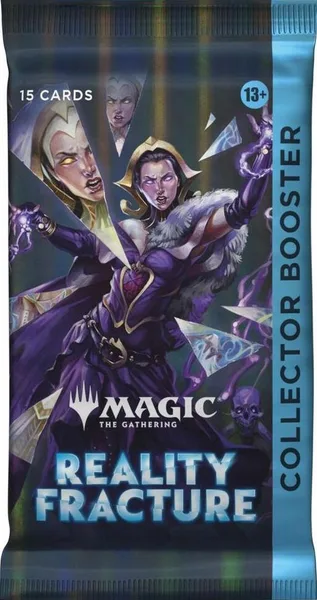
Then I bought three Collector Boosters from my local game store and pulled these three foils:
The box cost me $164.70, which is MSRP. The Collector Boosters were $40 each, so $120 for the three, $44.70 less than the box. The ten best cards from the
box come to $85.90. The three foils come to $102.84, in three cards instead of ten.
Neither paid for itself on its best cards alone.
So I felt like I got a lot more value out of the Collector Boosters. The box gave me far more cards, but most of
them are not easy to turn around. Three foils that each sell for $14 or more are easy to sell or trade. A few
hundred commons and uncommons are not.
Opening these got me thinking about the real value of spending more. Now, I know Collector Boosters have limited
availability, and many players don't have the funds or the opportunity to buy them. But given the opportunity to
buy both, at MSRP or at market price, is it worth it? And which one gives players the best bang for their buck?
Card prices are TCGplayer market prices via Scryfall on October 5, 2026, the week Reality Fracture came out, so
they will move.
How I Measured It
For each of the last 8 sets with Collector Boosters, I took Wizards' published pack contents and
pull rates and priced every slot at TCGplayer market prices. That gives the average value of the cards in one
pack, which I compared with two prices: MSRP, and what a pack costs today if you buy a sealed box and divide by
the number of packs in it.
A few things to know about the numbers. Card value here is what the cards would cost to buy, not what you would
get selling them: fees and shipping are not taken out. Within a treatment, every card is treated as equally
likely, since Wizards does not publish per-card odds. Art cards, tokens and box toppers count as nothing. And I
give a second figure that counts any card under $2 as worth nothing, because that is closer to what you could
actually sell.
Jackpot Cards, and Why I Take Them Out
Every Collector Booster now has a few cards I call jackpot cards: serialized cards, headliners and the like, worth
hundreds or thousands of dollars and found in a tiny fraction of packs. An average-value calculation spreads
their price across every pack. That is correct math, but it is not a pack anyone opens.
If you are buying packs expecting to hit one of these, that is gambling. It is not investing, and it is not
really enjoying the game either. If you pull one, great. It is not something to spend money chasing, and it is
not something I put into my numbers.
This reminds me of my time with Pokémon's Prismatic Evolutions. The set was awesome because of its chase cards,
and everyone wanted the Eeveelutions. They were also really hard to hit. I bought several Elite Trainer Boxes and
never pulled one. Edge of Eternities feels the same way to me: it has some awesome cards, but they are harder to
hit. When you do hit one, I bet it feels great. I just would not buy packs counting on that feeling.
So the figures below take them out. Any card that shows up in fewer than 1 in 100 packs and averages $100 or more is removed, and that slot gets one of its normal cards instead. Here is
what that took out of each set's Collector Booster:
Several of these cards appear in more than one version, and the price shown is the most valuable version.
Wizards gives only "less than 1%" for most of them, so their exact odds are estimates, which is one more reason
to leave them out.
The biggest change is The Hobbit, at $4.90 a pack. For most sets it is a few
dollars. That is a few dollars of value you will almost certainly never see.
Collector Boosters: What the Cards Are Worth
Without jackpot cards, every one of the 8 Collector Boosters held less in cards than it costs to buy at today's box prices. On average,
each dollar bought about $0.73 in cards, or $0.59 if you count only cards
worth $2 or more.
Set
Card value per pack
Cards worth $2+
Box price per pack
MSRP
Cards per $1
Edge of Eternities
$36.57
$31.39
$61.78
$24.99
$0.59
Marvel's Spider-Man
$23.34
$18.47
$33.61
$37.99
$0.69
Avatar: The Last Airbender
$32.43
$26.82
$36.96
$37.99
$0.88
Lorwyn Eclipsed
$19.44
$14.11
$35.17
$26.99
$0.55
Teenage Mutant Ninja Turtles
$27.38
$21.66
$36.20
$37.99
$0.76
Secrets of Strixhaven
$30.41
$24.35
$41.91
$26.99
$0.73
Marvel Super Heroes
$32.31
$26.86
$38.47
$37.99
$0.84
The Hobbit
$46.45
$41.39
$60.06
$37.99
$0.77
Avatar: The Last Airbender and Marvel Super Heroes come closest to paying for themselves. Lorwyn Eclipsed and Edge of Eternities are furthest
off, because their boxes now sell for far more than their cards are worth.
MSRP tells a different story for 3 sets: Edge of Eternities ($36.57 in cards for $24.99), Secrets of Strixhaven ($30.41 in cards for $26.99), The Hobbit ($46.45 in cards for $37.99).
If you got those at MSRP, you did well. At today's box prices, that edge is already priced in.
Play Boosters: More Value on Paper
Play Boosters look better. No jackpot card in them met the rule above, so nothing was removed, and 7 of 8 held more in cards than they cost at box prices: about $1.24 per dollar
on average. Against MSRP it is a different picture: only Edge of Eternities came out ahead.
Set
Card value per pack
Cards worth $2+
Box price per pack
MSRP
Cards per $1
Edge of Eternities
$7.92
$4.80
$6.29
$5.49
$1.26
Marvel's Spider-Man
$5.49
$2.53
$3.92
$6.99
$1.40
Avatar: The Last Airbender
$6.01
$3.06
$4.19
$6.99
$1.43
Lorwyn Eclipsed
$5.42
$2.42
$3.90
$5.49
$1.39
Teenage Mutant Ninja Turtles
$4.17
$1.23
$3.54
$6.99
$1.18
Secrets of Strixhaven
$5.22
$2.18
$4.78
$5.49
$1.09
Marvel Super Heroes
$4.78
$2.14
$3.73
$6.99
$1.28
The Hobbit
$4.74
$2.01
$5.21
$6.99
$0.91
Now look at the third column. Count only cards worth $2 or more and none of the 8 Play Boosters pays for itself. They range from 35% to 76% of the box price. Most
of a Play Booster's value is a dozen cards worth a few cents to a dollar each, plus one rare.
What a Whole Box Looks Like
An average tells you what a pack is worth over thousands of packs. Nobody opens thousands of packs, so I
simulated opening 4,000 boxes of each, with the jackpot cards still taken
out, to see what one box actually tends to give you. A weak box is one that only 1 in 10 boxes does worse
than, and a strong box is one that only 1 in 10 does better than.
For Collector Boosters, the box usually does not pay for itself. Between 1%
and 23% of simulated Collector boxes held cards worth at least what the box costs today,
depending on the set.
Collector box (12 packs)
Box price
Weak box
Typical box
Strong box
Boxes that cover the price
Edge of Eternities
$741
$298
$413
$611
4%
Marvel's Spider-Man
$403
$201
$259
$395
9%
Avatar: The Last Airbender
$444
$299
$383
$489
23%
Lorwyn Eclipsed
$422
$166
$224
$303
1%
Teenage Mutant Ninja Turtles
$434
$223
$299
$495
14%
Secrets of Strixhaven
$503
$219
$311
$527
11%
Marvel Super Heroes
$462
$281
$372
$514
19%
The Hobbit
$721
$334
$502
$874
18%
Play Booster boxes look much better: between 28% and 97% of them held more in
cards than the box costs. Count only cards worth $2 or more, though, and that falls to between 1% and 22%. In most sets a Play box gives you its money's worth in
cards, just not in cards you can sell.
Play box (30 packs)
Box price
Weak box
Typical box
Strong box
Boxes that cover the price
Edge of Eternities
$189
$176
$227
$311
82%
Marvel's Spider-Man
$118
$118
$144
$233
90%
Avatar: The Last Airbender
$126
$134
$174
$235
96%
Lorwyn Eclipsed
$117
$128
$159
$202
97%
Teenage Mutant Ninja Turtles
$106
$102
$122
$153
83%
Secrets of Strixhaven
$143
$125
$150
$200
61%
Marvel Super Heroes
$112
$108
$138
$188
85%
The Hobbit
$156
$105
$137
$185
28%
Box price is today's market price for a sealed box. Card values are TCGplayer market prices on October 5, 2026,
every card counted, before any selling fees.
This is also the clearest way to see why I leave jackpot cards out. The chance that a whole sealed
Collector box holds even one runs from about 1 in 417 to about 1 in 9, depending on the set. Most people who buy a box will never see one.
Why the Collector Boosters Felt Better
The numbers back up what I felt, even though Play Boosters win on paper. In a Collector Booster, about 81% of the card value is in cards worth $2 or more. In a Play Booster it is about 45%.
That matters if you ever want to sell or trade. A foil worth $15 is worth listing, and a store will make you an
offer on it. A stack of commons worth ten cents each costs more in time and shipping than it brings in, and
stores buy bulk by the thousand at a flat rate. When I opened my box, the value was real, but most of it was
locked in cards I was never going to sell.
That is not a knock on Play Boosters. They are built to be drafted and played, and a box gives you a lot of
cards for your Commander decks and your trade binder. Just do not count every common at its market price when
you work out what you got. Where to sell MTG cards →
Why Reality Fracture Is Not in the Tables
Reality Fracture came out on October 2, a few days before these prices were taken. Prices in a set's first weeks
move fast, usually down as more packs get opened, so any number I gave you now would be wrong soon. I left it
out rather than quote it, and the prices in my story above are release-week prices for the same reason. Reality Fracture Collector vs Play Boosters →
What Changes in 2027
Wizards announced changes to both boosters on October 5, 2026, starting with Nauctis: The Sunken Realm in
February 2027. Universes Beyond sets follow in 2028, and Wizards says prices are not changing. Nothing below is
in my numbers yet, because no 2027 set has prices to measure. Wizards' announcement →
Play Boosters become just Booster Packs. They lose their foil commons and uncommons and their guaranteed foil,
and in exchange get more foil rares and mythics and a chance at a traditional foil Japan Showcase card in the
wildcard slot, which used to be a Collector Booster card. That moves even more of a pack's value into a few
cards, which is the part of a Play Booster you can actually sell. I expect the "cards worth $2 or more" figure to
go up for Booster Packs, but I will not put a number on it until Wizards publishes the rates and the first set's
prices settle.
Collector Boosters lose two foil commons and one foil uncommon, so each pack has three fewer cards for the same
price. Those cards are mostly bulk, so I do not expect the value per pack to move much. What does change is that
Japan Showcase cards are no longer Collector-only, which takes away part of what made a Collector Booster
special.
The big addition is God Packs. One in every 1,000 Booster Packs will hold 14 rares and mythics, and one in every
300 Collector Boosters will hold a pack stacked with foil Booster Fun cards. By the rule in this article, those
are jackpots. The chance that a 30-pack box of Booster Packs holds one is about 1 in 34, and for a
12-pack Collector box it is about 1 in 25. They will make great opening videos, and they are exactly the kind of
hit I would not buy a box hoping for.
What I Would Buy
If you want to play, buy Play Boosters. Draft them, open them with friends, and build decks from what you get.
That is what they are for, and the fun is the value.
If you want cards you can sell or trade, Collector Boosters hold their value in fewer, better cards. Know that
at today's box prices you get back about $0.73 in cards for every dollar, and less if you buy
loose packs. Buying at or near MSRP closes that gap, and in some sets
erases it.
If you want one specific card, buy the single. Every set has dozens of rares and mythics in several versions
each, so no pack is a good bet on one card.
And whatever you buy, do not buy it for the jackpot.
Frequently Asked Questions
Are Collector Boosters worth it?
Not as a way to make money. Across the last 8 sets, with serialized and other jackpot cards taken out, a Collector Booster bought at box price held about $0.73 in cards for every dollar it cost on October 5, 2026. They are worth it if you want foils and special treatments and you would rather open them than buy them, and the cards you do get are easier to sell than a Play Booster's.
Do Play Boosters or Collector Boosters have better value?
Play Boosters hold more card value per dollar on paper: about $1.24 per dollar against $0.73 for Collector Boosters at box prices. Most of a Play Booster's value is cards worth under $2 each, though, which are hard to sell. Count only cards worth $2 or more and a Play Booster holds 35% to 76% of its price.
Should I count serialized cards when working out a pack's value?
I don't. A serialized card or headliner shows up in fewer than 1 in 100 packs, often far fewer, so averaging it in adds dollars to every pack that almost no pack contains. If you pull one, great. Buying packs because you expect to is gambling.
Is it cheaper to buy singles than to open packs?
For a specific card, almost always. Every set has dozens of rares and mythics in several versions each, so no pack is a good bet on one card. Packs make sense when opening them is the fun, or when you want whatever you open.
Scan your pulls into My Library and TurnZero HQ adds up what your collection is worth every night, alongside the decks you build and the games you play.