Collection & Community
How to Manage Your MTG Collection
Know what you own, sort what you keep, and don't let the rest of it just sit in a drawer. What we actually do with our own collection, including logging it in the app and pooling the extras with the playgroup.
This isn't theoretical. TurnZero HQ's founders have run a real collection this way for years, for a playgroup of around ten regular players: a shared shelf everyone pools cards into, sorted by color the same way described below, that has onboarded new players into their first deck for free more times than we can count. My Library, the app half of this guide, exists because we wanted the same system digitally and nothing else did what we needed. The advice here is what we actually run, not a theory of how a collection should work. More on why we built this →
Step One: Know What You Actually Own
Before you organize a single box, get an honest count of the collection. TurnZero HQ's My Library rolls every card you have evidence of owning into one inventory: search the catalog or point the camera at a stack, sort the results into binders, and it prices the whole thing from a nightly market sync so the total value is never more than a day stale.
It also does the one thing a binder can't: it knows which deck each card is currently in. That matters for the next step, because "sort the collection" only means the cards that aren't already doing a job in one of your decks.
How My Library works → See it on Instagram →
Sort by Color, Not by Set
Once you know what's actually loose (not already in a deck), sort it by color rather than by set. Nobody pulling cards for a deck cares which set a card came from; they care whether it does something in white, or green, or whatever colors the deck needs. Sorting by color is slower to file into and dramatically faster to actually build from, which is the right tradeoff for a collection you intend to use rather than just store.
Two Tiers, Sorted Differently
Commons and uncommons are volume, not precision. Nobody is hunting for one specific bulk common by name, so a color-sorted storage box you flip through in bulk is the right tool. Rares and mythics are the opposite: worth flipping through page by page and worth protecting individually, so those get binder pages instead, sorted a level deeper by card type and mana value within each color.
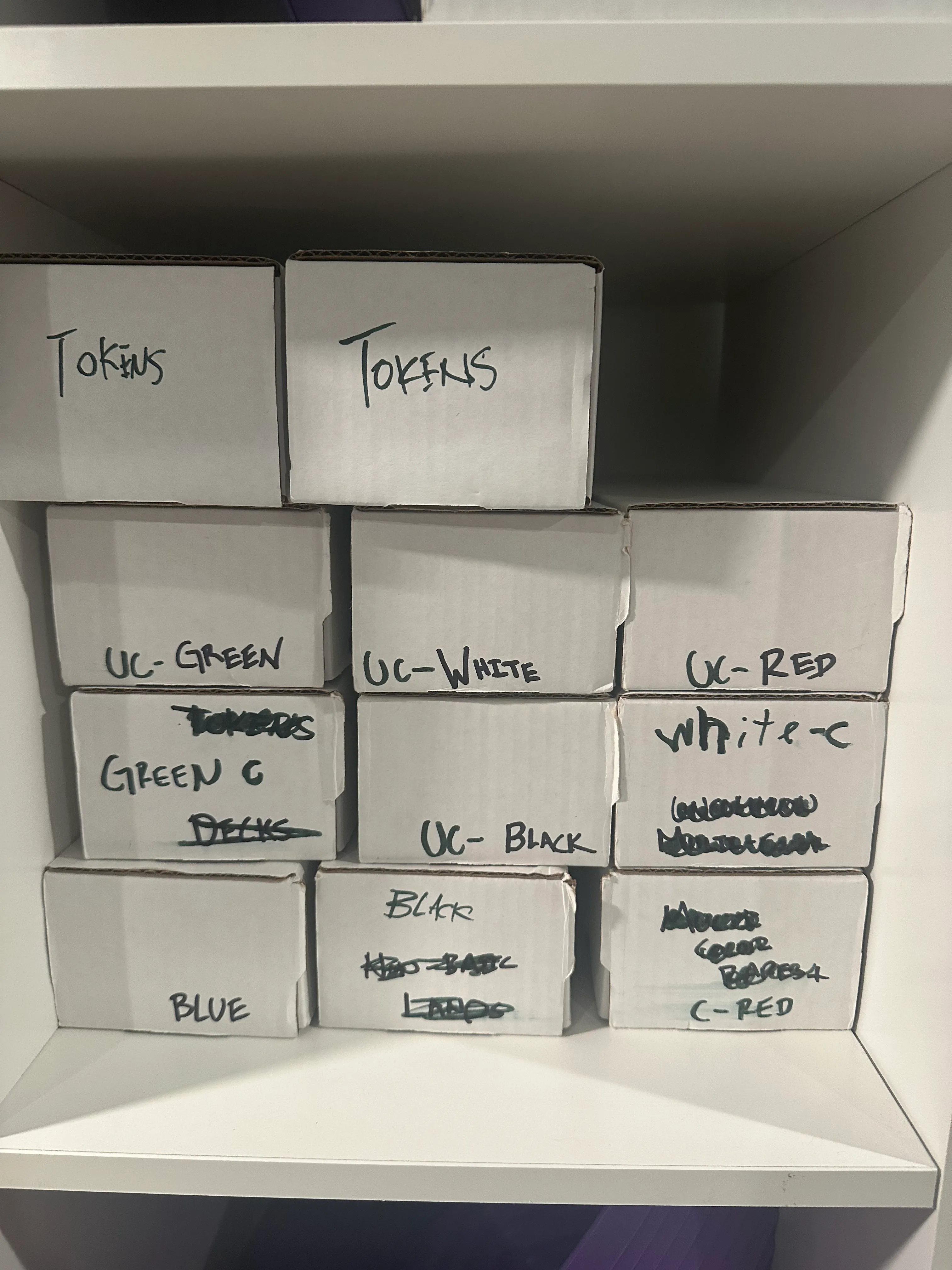
Commons & Uncommons: Storage Boxes
As an Amazon Associate we earn from qualifying purchases. It costs you nothing extra, and it does not change what is recommended here. See our affiliate disclosure.
A stack of 1,100-count storage boxes, one per color plus a box for tokens, covers this tier for cheap. Tokens get their own box unsorted by color on purpose: they get reused across colors and decks constantly, so sorting them would just mean re-sorting the same box every game night. 1,100-count storage boxes on Amazon →
Rares & Mythics: One Binder Per Color
A 9-pocket binder per color, with pages organized by card type and then mana value inside it, makes the valuable half of the collection something you can actually browse rather than dig through. It's also the tier worth spending a little more on: a real binder protects cards somebody is going to flip through repeatedly, which a storage box full of commons does not need. 9-pocket card binders on Amazon → More on sleeving valuable cards →
Optional: Pool the Extras With Your Playgroup
Once a collection is sorted, an obvious question shows up: what actually happens to the commons and uncommons that will never go in one of your own decks? Our own playgroup's answer is a shared library. Everyone pools whatever they open and don't use onto one shelf instead of a drawer, sorted with the exact same color system above. Anyone in the group can pull from it, so a new player can sit down with a stack of binders instead of a shopping cart, and someone mid-build can check whether the card they want is already five feet away before ordering it.
Nobody buys specifically for it, so it grows at the rate the group already opens product, and it works at any group size, it just fills more slowly with fewer people. Keep it low-friction on purpose: no checkout log, no IOU for a single common. The one norm worth actually having is a quick heads-up in the group chat before a build-around or anything valuable leaves the shelf, the same courtesy you'd extend borrowing anything else from a friend. A library that requires paperwork to use stops getting used.
Put the Whole Thing in the App
However you sort the physical cards, log them in My Library too. It's free, it works whether or not you've tracked a single game, and it does one thing neither a box nor a binder can: once a friend's deck is in the app, you can suggest a card straight from your own library for a spot in their list. The suggestion is checked against what you actually own before it's sent, so it's never a recommendation you can't back up, which turns "hey, this would be perfect in your deck" from a comment at the table into something they can actually act on.
Frequently Asked Questions
What's the first step in managing an MTG collection?
Get an honest count of what you actually own before you organize any of it. A digital inventory like TurnZero HQ's My Library does this by scanning or searching cards in, which also gives you a running value and tells you which deck each card is currently in, so sorting the physical pile afterward is working from a real list instead of a guess.
Should I track my collection digitally, physically, or both?
Both, and they do different jobs. A digital tracker answers what you own and what it's worth without you touching a single card. Physical sorting (boxes for commons and uncommons, binders for anything worth protecting) is what makes finding a specific card during deckbuilding fast. Neither replaces the other.
Do you sort a collection by color or by set?
By color, not by set. Nobody building a deck cares which set a card came from; they care whether it's white or green. Set-sorted boxes are faster to file into and slower to actually build from, which is the wrong tradeoff once you're pulling cards for a deck rather than just storing them.
What actually goes into a shared playgroup card library?
Whatever nobody in the group wants to keep for their own decks. When someone opens packs or buys a bulk lot, they pull what they need and the rest goes to the shared shelf instead of a drawer. Nobody buys specifically for it, so it grows at the rate the group already opens product, and it's the fastest way to get a new player into their first deck for free.
Log what you own in My Library.
Every card you have, what it's worth, and a way to suggest one straight to a friend's deck.
Create Free Account