The Complete Guide
The Ultimate Guide to Hosting Commander Night
A great Commander night comes down to four things: a pod that actually gets seated, a way to track life and damage that doesn't fall apart under table talk, a system for keeping score across the whole night, and a reason to remember it afterward. Here's how to nail all four.
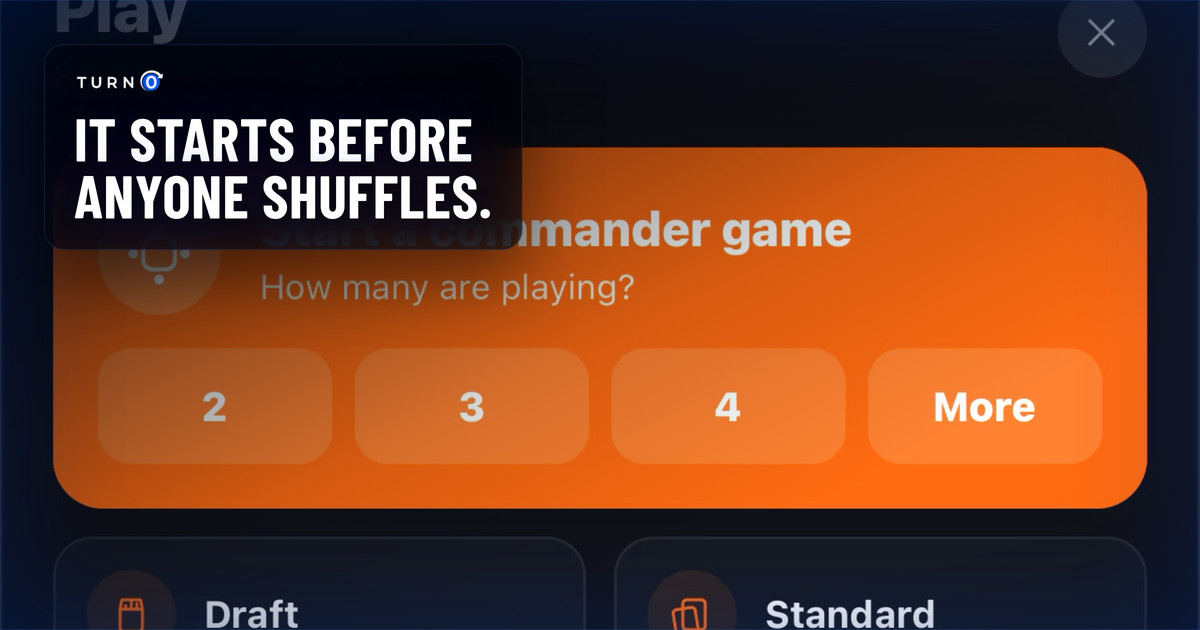
1. Lock In Your Pod Before Anyone Sits Down
Most Commander night friction happens before the first card is even drawn: mismatched power levels, an odd number of players, or someone showing up with a deck built to end games in six turns against three decks built to durdle for twenty. Sort this out first.
Decide pod sizes up front. Four-player free-for-all is standard, but 1v1, three-player, five/six-player, and Two-Headed Giant are all fair game if that's what your group has.
If power level is ever a sore spot, have people say roughly what they're bringing before pods are built, not after someone's board gets run over turn four. How to run a Rule 0 conversation →
Agree on house rules once, out loud (starting life, extra-turn etiquette, whether there's a soft turn timer) so nobody's relitigating it mid-game.
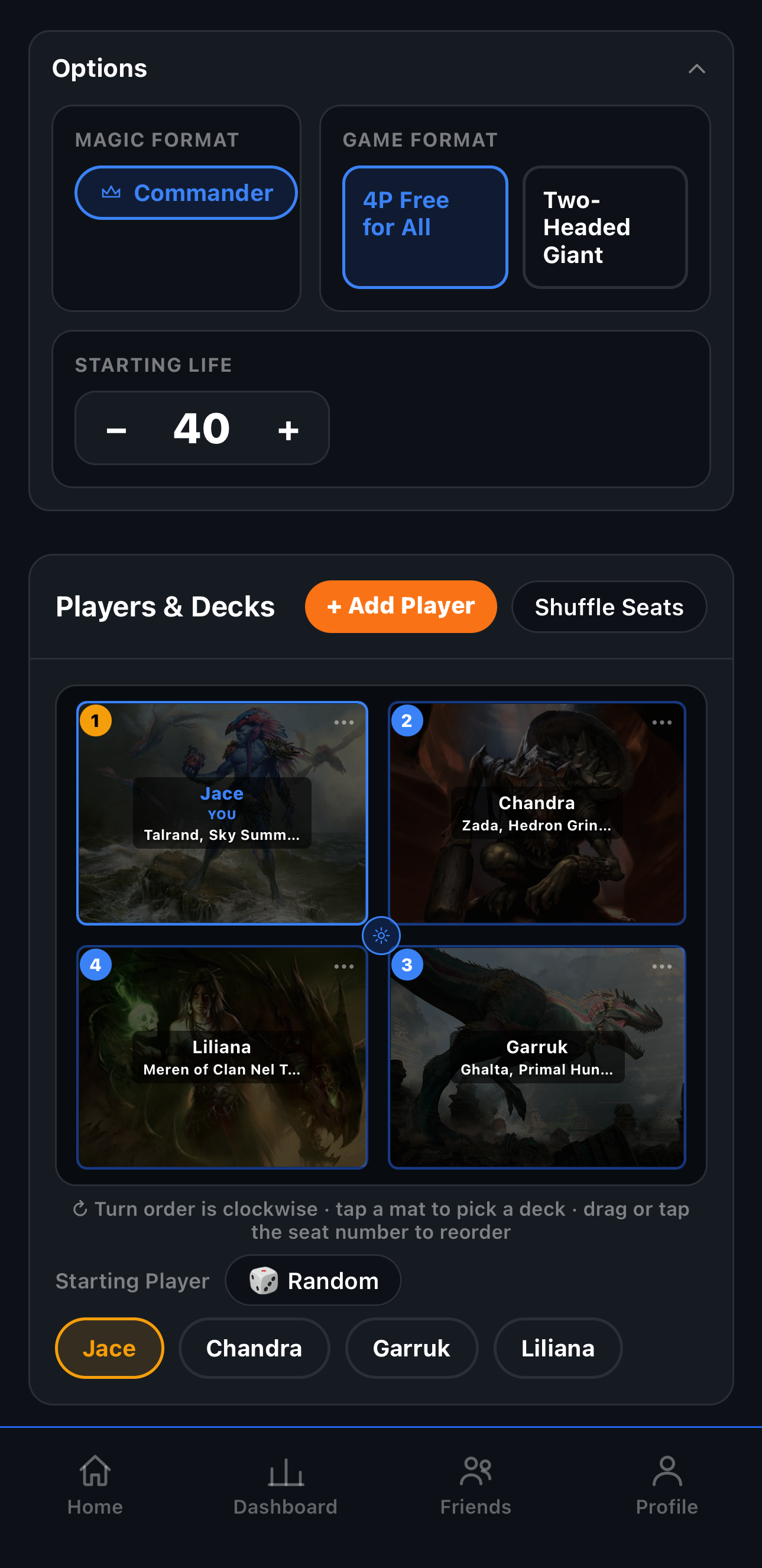
Format, starting life, and every seat's deck, locked in before anyone draws a card
For the full rundown, see our Commander Night Checklist, which also has a free printable version for the fridge or the game shelf.
2. Bring the Right Gear to the Table
You don't need much, but a few specific things separate a smooth night from one spent digging through a backpack for a d20. Dice, +1/+1 counters, sleeves, and something to organize all of it matter more than people expect once four boards are in play at once.
We put together a full breakdown in Best Commander Accessories for Game Night, including what actually earns a permanent spot in the game bag.
3. Track Life Totals and Commander Damage Properly
This is where most nights lose time. Dice get knocked over, paper gets ambiguous, and nobody agrees on how much Commander damage they've actually taken once three different commanders have hit the same player. Commander damage specifically has to be tracked separately from life loss: 21 damage from a single commander kills a player outright, even if they've got life to spare.
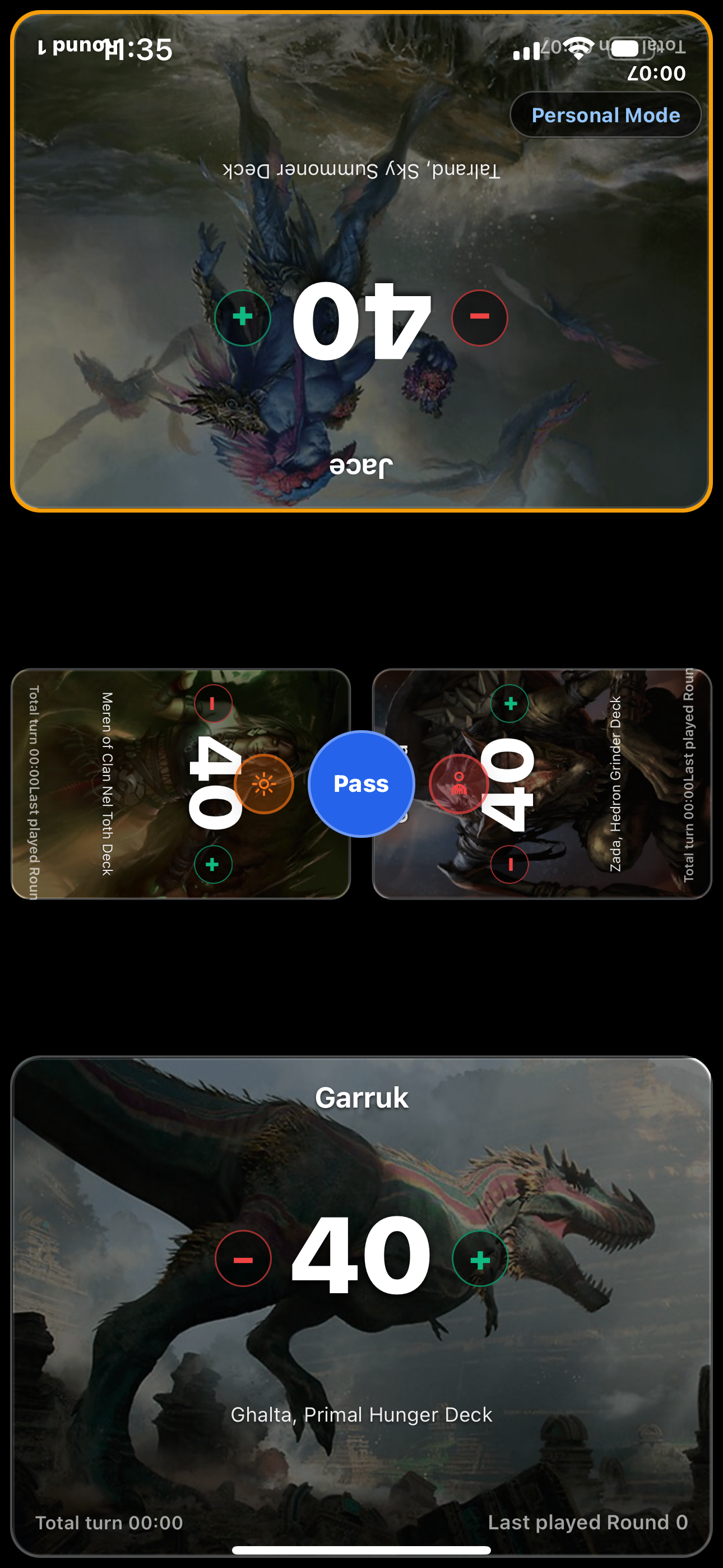
The whole pod's life totals in one view, turn after turn
Read How to Track Commander Damage for the full rules refresher, or Best Commander Life Tracker Apps if you're still deciding what to actually use at the table.
4. Keep Score Across the Whole Night
A single game tells you who won. A full night of games, tracked together, tells you which deck is actually good, who's been on a heater for a month, and who needs a rebuild. If your group plays the same night every week or two, the running record across nights gives the group more to talk about than any single game.
See What Stats Should Every Commander Player Track? and Why Tracking Your Commander Games Makes You Better for what to actually pay attention to.
5. Give the Night an Ending
The best Commander nights have a story by the end: the comeback, the collapse, the guy who finally broke a six-week losing streak. Writing that down (or having something write it for you) is the difference between "yeah, we played some games" and a night your group still talks about a month later.
See AI Commander Recaps: Turn Every Game Night Into a Story.
If the Night Is Your Store's
Everything above is written for somebody hosting four friends. A game store hosting thirty is a different job: the pods change every game, half the room is strangers to each other, and whoever is on the counter has to seat people rather than play. Running a Commander Event at Your Store is that version, and TurnZero HQ for Game Stores covers what a shop gets and what it costs.
How Long Should You Actually Plan For?
Wizards' own guideline is about 20 minutes per player, but most tracked games run longer. See How Long Does the Average Commander Game Last? for real numbers you can actually plan a night around.
Frequently Asked Questions
How many players do you need for a Commander night?
Four is the classic Commander pod size, but a good night flexes with whoever shows up. 1v1 duels, three-player pods, five or six-player tables, and Two-Headed Giant all work. The important part is deciding pod sizes before the first game starts, not mid-shuffle.
How long should a Commander night be scheduled for?
Plan on roughly an hour to 90 minutes per game once you account for setup, so a night with three or four games easily fills three to four hours. See our breakdown of how long the average Commander game actually lasts for more detail.
What's the single most useful thing to bring to Commander night?
A reliable way to track life totals and Commander damage. Paper and dice work, but they fall apart the moment a table gets loud or someone loses count. A life tracker app removes the single biggest source of table arguments.
Do I need to track stats across the whole night, or just each game?
Tracking just within a game answers 'who won.' Tracking across the whole night answers more interesting questions: who's actually the best deck in the group, who's on a win streak, who needs a rebuild. If your group plays regularly, night-level tracking is where the real insight is.
Let TurnZero HQ run the tracking side of Commander night.
Life totals, Commander damage, deck stats, and a full night history with AI recaps, all handled automatically so you can focus on playing.
Create Free Account