Precon Upgrade Guide
Power Hungry Upgrade Guide
What to cut, what to add, and how to play the Jund tokens and sacrifice precon from Commander 2013, commanded by Prossh, Skyraider of Kher.
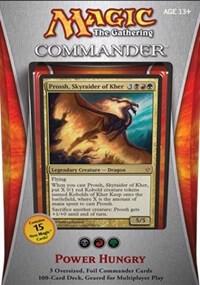
Commander 2013
Power Hungry
Cast it for tokens, then sacrifice them for value, an easy loop to run. Out of the box, before any upgrades. How we rate precons
Buy Power Hungry on TCGplayer →Quick verdict
Power Hungry is one of the stronger Commander 2013 decks because its commander arrives with a board of fodder already attached. Casting Prossh, Skyraider of Kher makes a 0/1 Kobold for each mana you spent, and the deck is full of ways to sacrifice those Kobolds for damage and cards. It is held back by a slow, tapped mana base, light ramp toward a six-mana commander, and a handful of cards that help opponents as much as you.
TurnZero HQ rates Power Hungry a 2 out of 5 on difficulty and a 4 out of 5 on power, as it comes in the box. That is our editorial read, not an official Wizards rating. The full hundred cards are on the Power Hungry decklist page, and every other precon we cover is on the precon directory.
How the precon plays
Prossh, Skyraider of Kher is a six-mana 5/5 flier. When you cast it, you create a 0/1 Kobold token for each mana spent, so a first cast makes six and each recast after it makes two more, because commander tax counts as mana spent. Prossh can sacrifice another creature to get +1/+0, which turns a board of Kobolds into a large flying attack.
The deck's sacrifice outlets do more with those Kobolds than Prossh does alone. Goblin Bombardment turns each one into 1 damage to any target, Carnage Altar turns them into cards, and Furnace Celebration adds 2 more damage for every sacrifice you pay {2} for. Sek'Kuar, Deathkeeper , Deathbringer Thoctar and Stalking Vengeance reward creatures dying in different ways.
Primal Vigor doubles the tokens, so Prossh can arrive with twelve Kobolds, though it doubles tokens for opponents as well. Fecundity draws for every creature that dies, and Endrek Sahr, Master Breeder and Tempt with Vengeance supply more bodies when the Kobolds run out.
What works out of the box
Prossh, Skyraider of Kher ↗
Comes with a 0/1 Kobold for every mana spent to cast it, and recasting it after a removal spell makes even more because commander tax counts.
Goblin Bombardment ↗
Two mana for a free sacrifice outlet that deals 1 damage to any target per creature. With a board of Kobolds, it is removal and a finisher in one card.
Carnage Altar ↗
Turns any Kobold into a card for three mana. It keeps the deck from running out of gas once the tokens are on the battlefield.
Sek'Kuar, Deathkeeper ↗
Every nontoken creature of yours that dies leaves behind a 3/1 haste Graveborn token, which makes trading creatures and board wipes much less painful.
Stalking Vengeance ↗
A haste 5/5 that deals damage equal to each dying creature's power to a player, so sacrificing a pumped creature becomes a burn spell.
Fecundity ↗
Every creature that dies draws its controller a card. With Kobolds dying every turn, you draw far more than anyone else.
What needs improvement
The mana base and ramp are slow for a six-mana commander. Guildgates, refuges, Golgari Rot Farm , Savage Lands , Rupture Spire and Khalni Garden all enter tapped, and the only ramp is Sol Ring , Obelisk of Jund , Armillary Sphere , Sakura-Tribe Elder and Spoils of Victory . Ramp matters twice here, since extra mana spent on Prossh also means extra Kobolds. See how much ramp a Commander deck needs.
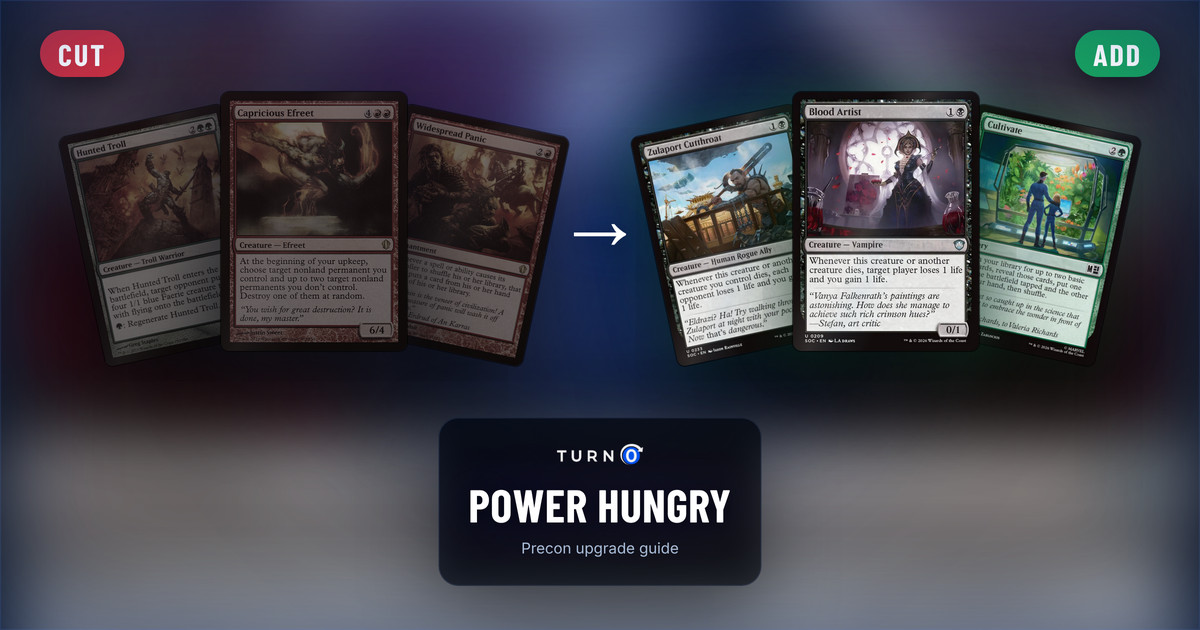
Several cards help opponents or do nothing. Hunted Troll gives an opponent four flying 1/1s, Widespread Panic has almost no effect in most games, and Curse of Chaos and Curse of Predation reward whoever attacks the cursed player, which is rarely only you.
Upgrade ideas
Each upgrade below starts from something the deck does poorly and says what a replacement card has to do. The cards named are examples, not the only answer: if you own something else that does the same job, or a newer printing does it better, it goes in the same slot. Make one change at a time and play a few games between them, so you can tell which change helped. The general method is in how to upgrade a Commander precon →
1. Ramp to Prossh sooner
Prossh costs six and every mana you spend on it becomes a Kobold. Getting there on turn four instead of six means a bigger board and a longer game for your engine.
What to look for Two- and three-mana ramp that puts lands onto the battlefield or taps for any of your colors.
Cut, for example
Widespread Panic Makes a player put a card back on top when they shuffle their own library. It does little in most games, and your own fetch effects trigger it too.
Restore Two mana to return a land from a graveyard. Its usual target is a spent Evolving Wilds, which is a small return for a card.
Add, for example
Cultivate ↗
Puts a basic land onto the battlefield and another into your hand, so it fixes colors and covers your next land drop.
Rampant Growth ↗
Two mana for an extra land on the battlefield, and it fetches whichever basic you are missing.
Arcane Signet ↗
A two-mana rock that taps for black, red or green.
2. Get paid every time a creature dies
Prossh's Kobolds are 0/1s that exist to be sacrificed. Cheap creatures that drain or make mana whenever something dies turn every sacrifice into value, even without an outlet that costs mana.
What to look for Cheap creatures or enchantments that trigger on each of your creatures dying and give you life loss for opponents, mana or cards.
Cut, for example
Curse of Chaos Lets attackers loot when they attack the cursed player. It helps whoever is attacking, which is often not you.
Curse of Predation Gives a +1/+1 counter to any creature attacking the cursed player, so it helps every opponent who attacks that player too.
Add, for example
Zulaport Cutthroat ↗
Two mana: whenever it or another creature you control dies, each opponent loses 1 life and you gain 1. Six Kobolds is six life from each opponent.
Blood Artist ↗
Two mana: whenever any creature dies, a target player loses 1 life and you gain 1. It also triggers on opponents' creatures.
Pitiless Plunderer ↗
Makes a Treasure whenever another creature you control dies, so a turn of sacrifices also ramps you.
3. Replace cards that help opponents with removal
Some of the creatures in this deck hand opponents value or act randomly. Clean instant-speed removal does more for a sacrifice deck that has to survive to the late game.
What to look for Removal costing three mana or less that kills a creature, an artifact, or anything at all.
Cut, for example
Hunted Troll An 8/4 for four that gives an opponent four 1/1 fliers. Those fliers can block Prossh.
Capricious Efreet Destroys one of three permanents at random each upkeep, and one of those is always yours. You can't control what it hits.
Brooding Saurian A 4/4 that returns stolen permanents to their owners. The deck barely steals anything, so it is mostly a vanilla 4/4.
Add, for example
4. Untapped lands in place of the worst tapped ones
A three-color deck with this many tapped lands often can't cast two spells in a turn until late. Replacing the slowest lands makes every turn smoother.
What to look for Two-color lands in your colors that usually enter untapped.
Cut, for example
Rupture Spire Enters tapped and costs {1} to keep, which loses a full mana on the turn you play it.
Temple of the False God Makes no mana until you control five lands, so it is a blank early.
Win conditions
The deck usually wins by turning a board of Kobolds into damage. Prossh, Skyraider of Kher can sacrifice them to swing for a large amount in the air, and Goblin Bombardment and Blood Rites throw them at opponents' faces directly. With the upgrades, Zulaport Cutthroat and Blood Artist drain the table every time a Kobold dies, so a single cast of Prossh followed by a big sacrifice turn can take out a player who thought they were safe.
Who should buy this precon
An easy deck to pick up for someone who likes making tokens and sacrificing them. The plan is clear from the first game: cast Prossh, get Kobolds, and spend them on something useful. It is one of the stronger decks from its year, so it holds up well at a table of other precons, and it suits players who enjoy a big turn that ends the game.
Checked against the printed decklist on October 10, 2026.
Track how the upgrades actually perform.
TurnZero HQ keeps a win rate per deck version, so you can change a few cards, play some games, and see the difference instead of guessing.
Create Free Account