Precon Upgrade Guide
Blast from the Past Upgrade Guide
What to cut, what to add, and how to play the Bant historic precon from Doctor Who, commanded by The Fourth Doctor.
Magic: The Gathering Doctor Who
Blast from the Past
Tokens and historic spells: straightforward. Out of the box, before any upgrades. How we rate precons
Buy Blast from the Past on TCGplayer →Quick verdict
Blast from the Past turns the top of your library into a second hand. The Fourth Doctor lets you cast one historic spell or play one historic land from there each turn and hands you a Food when you do, while Sarah Jane Smith makes a Clue the first time each turn you cast a historic spell. Between them the deck rarely runs out of things to do. What holds it back is a mana base full of lands that enter tapped, a few expensive cards that don't pull their weight, and no way to stop an opponent's spell on the stack.
TurnZero HQ rates Blast from the Past a 2 out of 5 on difficulty and a 3 out of 5 on power, as it comes in the box. That is our editorial read, not an official Wizards rating. The full hundred cards are on the Blast from the Past decklist page, and every other precon we cover is on the precon directory.
How the precon plays
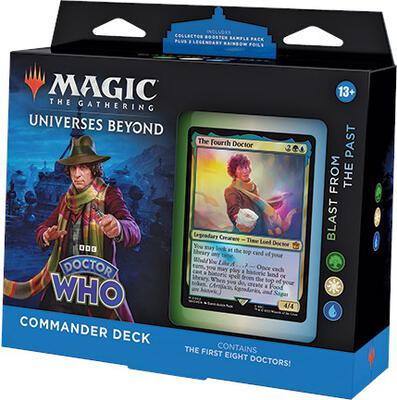
The Fourth Doctor is a four-mana 4/4 that lets you look at the top card of your library any time. Once each turn, if that card is historic (an artifact, a legendary card or a Saga), you can play it from there, and you create a Food token when you do. Since you can always see the top card, you know before you draw whether it's worth casting now or saving the draw for something else.
Sarah Jane Smith is the usual partner. She investigates the first time each turn you cast a historic spell, so the Doctor's free look at the library also turns into a Clue you can crack for a card later. Most of the deck's creatures are legendary companions or earlier Doctors, which means nearly every creature you cast counts.
Around them the deck stacks payoffs for historic spells. Alistair, the Brigadier makes a Soldier token for each one, The Sixth Doctor copies the first historic spell you cast each turn, and Jamie McCrimmon grows by the spell's mana value. Sagas like An Unearthly Child and Trial of a Time Lord count too, and Barbara Wright lets you start a Saga on whichever chapter you want.
What works out of the box
The Fourth Doctor ↗
Lets you cast one historic spell or play one historic land from the top of your library each turn, and makes a Food when you do. It works like an extra card every turn the top card lines up.
Sarah Jane Smith ↗
Two mana for a Clue the first time each turn you cast a historic spell. In a deck where most creatures are legendary, that is a card's worth of value almost every turn.
The Sixth Doctor ↗
Copies the first historic spell you cast each turn, and the copy isn't legendary, so a copied companion stays on the battlefield alongside the original.
Alistair, the Brigadier ↗
Makes a 1/1 Soldier for every historic spell you cast. Its attack trigger can turn a wide board into a lethal swing late in the game.
Trial of a Time Lord ↗
Three mana to exile up to three of an opponent's creatures, one per chapter, for as long as the Saga stays out. The final vote can send them to the bottom of their owners' libraries for good.
Traverse Eternity ↗
Draws cards equal to the greatest mana value among your historic permanents. With a six-mana Doctor or Gallifrey Stands out, it refills your hand in one spell.
What needs improvement
The mana is slow. The deck runs three Temples, three Thriving lands, two cycling lands that always enter tapped, Seaside Citadel , Celestial Colonnade and Path of Ancestry . A three-color deck needs some of those, but this many means you will often spend a turn playing a tapped land instead of casting the companion in your hand.
The deck also has nothing that answers a spell. It has good creature removal in Swords to Plowshares , Path to Exile and Trial of a Time Lord , but when an opponent casts a board wipe or a combo piece, Heroic Intervention is the only response. A couple of cheap counterspells cover that gap, and blue is the right color for them.
Upgrade ideas
Each upgrade below starts from something the deck does poorly and says what a replacement card has to do. The cards named are examples, not the only answer: if you own something else that does the same job, or a newer printing does it better, it goes in the same slot. Make one change at a time and play a few games between them, so you can tell which change helped. The general method is in how to upgrade a Commander precon →
1. Replace tapped lands with ones that enter untapped
The deck wants to cast a two- or three-mana companion every turn from turn two on. Each land that enters tapped on those turns pushes the whole plan back by one.
What to look for Dual lands that enter untapped under normal conditions (shocklands, checklands, painlands) or lands that fetch a basic and untap later in the game.
Cut, for example
Temple of Mystery Always enters tapped. The scry 1 is a small bonus for losing tempo on the turn you play it.
Irrigated Farmland Always enters tapped. Its cycling is a nice option late, but early it costs you a turn.
Scattered Groves Same problem as Irrigated Farmland: a tapped dual with cycling you rarely want to use.
Add, for example
Breeding Pool ↗
Enters untapped if you pay 2 life, and counts as both a Forest and an Island for other lands that care.
Hinterland Harbor ↗
Enters untapped as long as you control a Forest or an Island, which is almost always true by turn two.
Fabled Passage ↗
Fetches any basic, including a Plains, and untaps it once you control four lands. It fixes all three colors.
2. Add cheap historic cards for the Doctor to find
The Fourth Doctor only pays off when the top card is historic. The more cheap artifacts and legends in the deck, the more often that card is something you can cast right away.
What to look for Artifacts or legendary cards costing two mana or less that either make mana or replace themselves. Each one is also a Clue from Sarah Jane.
Cut, for example
Leela, Sevateem Warrior A four-mana 3/3 that only grows when opponents draw extra cards. In most pods it stays a vanilla creature.
Ace, Fearless Rebel A four-mana 2/2 that has to sacrifice an artifact and attack to fight a creature. Too much setup for a small effect.
Add, for example
Mox Amber ↗
A zero-mana legendary artifact that taps for a color of any legendary creature you control. Free to cast off the top and it triggers Sarah Jane.
Prophetic Prism ↗
Two mana, draws a card when it enters, and fixes colors afterward. It replaces itself and makes a Clue on top of that.
Wayfarer's Bauble ↗
One mana now and two more later to put a basic land onto the battlefield. Cheap ramp that also counts as historic.
3. Trim the expensive cards that don't pay off
A few of the deck's six- and seven-drops cost a full turn and do less than a cheaper historic engine would. Swapping them for cards that make every historic spell better keeps the deck ahead on tempo.
What to look for Permanents costing four mana or less that make historic spells cheaper or let you cast more of them from the top of your library.
Cut, for example
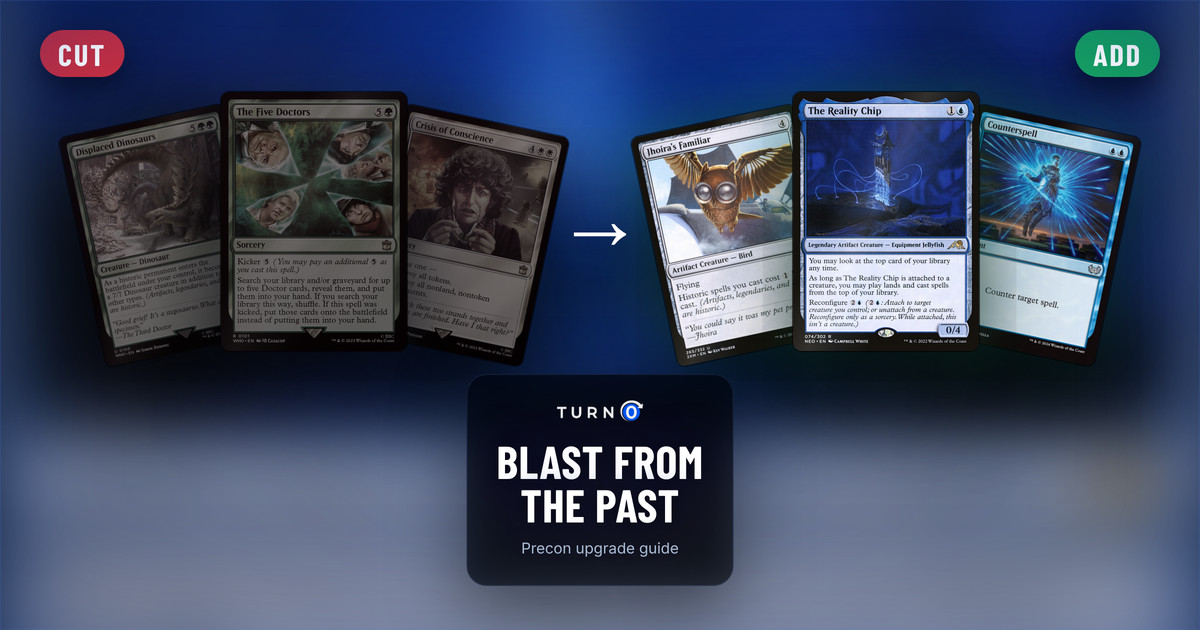
The Five Doctors Six mana to tutor Doctors to hand, or eleven to put them onto the battlefield. The deck rarely has that much mana to spare.
Displaced Dinosaurs Seven mana for a 7/7 that turns your historic permanents into 7/7s. Strong if it lands, but it rarely survives to make an impact.
Add, for example
Jhoira's Familiar ↗
A four-mana flier that makes every historic spell you cast cost one less. In this deck that is nearly every spell.
The Reality Chip ↗
A two-mana legend that lets you look at the top card, and once attached to a creature you can play lands and cast spells from there. It stacks with the Doctor.
Mystic Forge ↗
Lets you cast artifact and colorless spells from the top of your library. With the Doctor out, two different cards can come off the top in one turn.
4. Add counterspells for the spells that matter
The deck can remove creatures but has no answer to a board wipe or a combo once it's cast. A small counterspell package, held up on the turns you have spare mana, protects the board you built.
What to look for Counterspells costing two mana or less. Ones that only hit noncreature spells are fine, since board wipes are what the deck fears most.
Cut, for example
Crisis of Conscience A six-mana sorcery wipe that either kills your own Clues and Food or every nonland, nontoken permanent you have. Time Wipe and The Night of the Doctor do the job better.
The War Games Gives every player three goaded Warrior tokens. It is unpredictable and often helps an opponent as much as you.
Add, for example
Counterspell ↗
Two mana, counters any spell. The standard every other counterspell is measured against.
Arcane Denial ↗
Two mana to counter anything. The caster draws two cards later, so save it for the spells that would end the game.
Swan Song ↗
One mana to counter an instant, sorcery or enchantment. That covers almost every board wipe.
Win conditions
The upgraded deck wins the same way the precon does, by casting more historic spells than the table can keep up with. Alistair, the Brigadier turns them into Soldiers, and once the board is wide, Alistair's attack trigger or Day of Destiny pumping every legend ends the game in a swing or two. Gallifrey Stands is a long-game backup that returns every Doctor in your graveyard to your hand. The upgrades mostly get you there faster and keep the board intact against a wipe.
Who should buy this precon
A friendly first Commander deck for someone who likes Doctor Who or legendary creatures. The Fourth Doctor's ability is one simple check each turn (is the top card historic?), and Sarah Jane Smith's Clues are easy to track. It is not the deck for a player who wants to win quickly or shut down the table, since most of its strength builds up over a long game.
Checked against the printed decklist on October 10, 2026.
Track how the upgrades actually perform.
TurnZero HQ keeps a win rate per deck version, so you can change a few cards, play some games, and see the difference instead of guessing.
Create Free Account