Precon Upgrade Guide
Counterpunch Upgrade Guide
What to cut, what to add, and how to play the Abzan counters and Saprolings precon from Commander 2011, commanded by Ghave, Guru of Spores.
Commander 2011
Counterpunch
Sacrifice and counter triggers loop together, which takes a beat to see. Out of the box, before any upgrades. How we rate precons
Buy Counterpunch on TCGplayer →Quick verdict
Counterpunch gives you a commander that turns spare mana into either a 1/1 Saproling or a +1/+1 counter, which makes it a flexible engine that never quite runs out of things to do. Ghave, Guru of Spores trades counters for tokens and tokens for counters, and the deck has a handful of cards like Sigil Captain and Skullclamp that turn that trade into real advantage. What holds it back is a top end full of eight- and ten-mana cards, a mana base that enters tapped far too often, and few cards that pay you when a creature dies, which is the thing Ghave makes happen most.
TurnZero HQ rates Counterpunch a 3 out of 5 on difficulty and a 3 out of 5 on power, as it comes in the box. That is our editorial read, not an official Wizards rating. The full hundred cards are on the Counterpunch decklist page, and every other precon we cover is on the precon directory.
How the precon plays
Ghave, Guru of Spores enters with five +1/+1 counters. For {1} you can remove a +1/+1 counter from any creature you control to create a 1/1 green Saproling, and for {1} you can sacrifice a creature to put a +1/+1 counter on a target creature. Those two abilities feed each other: counters become bodies, and bodies become counters on whatever creature you want to grow. Since the second ability is a sacrifice outlet you can use at instant speed, you can also cash in a creature that is about to be exiled or destroyed.
The deck around Ghave is a toolbox of creatures that hold counters, like Spike Feeder , Fertilid and Aquastrand Spider , which give Ghave more counters to turn into Saprolings. Sigil Captain puts two +1/+1 counters on any 1/1 that enters, so each Saproling Ghave makes arrives as a 3/3 and comes with fresh counters to remove later. Necrogenesis and Selesnya Evangel add more Saprolings, and Skullclamp turns any of those 1/1 tokens into two cards.
Around that core sits a lot of removal: Doom Blade , Mortify , Shriekmaw , Attrition and Hex , plus Aura Shards for artifacts and enchantments. The big threats are Hornet Queen , Karador, Ghost Chieftain and Teneb, the Harvester , which use the graveyard the deck fills as it sacrifices creatures.
What works out of the box
Ghave, Guru of Spores ↗
Turns spare mana into a Saproling or a +1/+1 counter, and doubles as an instant-speed sacrifice outlet. Every other card in the deck gets better with it on the battlefield.
Sigil Captain ↗
Any 1/1 that enters gets two +1/+1 counters, so each Saproling arrives as a 3/3. With Ghave, every counter you remove comes back as two new ones on the token.
Skullclamp ↗
A Saproling wearing it becomes a 2/0 and dies, drawing you two cards. Equip costs one mana, so every spare token is a draw.
Aura Shards ↗
Every creature you put onto the battlefield, Saproling tokens included, can destroy an artifact or enchantment. Ghave makes this a repeatable answer to the whole table's permanents.
Hornet Queen ↗
Five flying deathtouch bodies for one card. They block almost anything, and they are spare creatures for Ghave to sacrifice later.
Karador, Ghost Chieftain ↗
Gets cheaper for every creature card in your graveyard and lets you cast a creature from your graveyard once each turn. The deck sacrifices creatures constantly, so it is rarely expensive.
What needs improvement
The top of the curve is very heavy. Storm Herd costs ten mana, Death Mutation , Celestial Force , Symbiotic Wurm and Chorus of the Conclave all cost eight, and the mana base has ten lands that enter tapped. A Ghave deck wants its mana free for activations in the midgame, and an eight-drop that does nothing with counters or tokens works against that.
The deck sacrifices creatures all the time but gets paid for it very little. Apart from Skullclamp and Yavimaya Elder , nothing draws a card, drains an opponent, or makes mana when a creature dies. Cards that do turn Ghave from a slow engine into one that wins games.
Upgrade ideas
Each upgrade below starts from something the deck does poorly and says what a replacement card has to do. The cards named are examples, not the only answer: if you own something else that does the same job, or a newer printing does it better, it goes in the same slot. Make one change at a time and play a few games between them, so you can tell which change helped. The general method is in how to upgrade a Commander precon →
1. Get paid every time a creature dies
Ghave sacrifices a creature every time you use its second ability, and Saprolings are made to be thrown away. Right now most of those deaths do nothing beyond moving one counter.
What to look for Cheap creatures or enchantments that drain, draw or make mana whenever a creature you control dies, or a sacrifice outlet that costs no mana to use.
Cut, for example
Vow of Malice Puts +2/+2 and intimidate on an opponent's creature or yours, but the deck already has stronger ways to grow a creature through Ghave.
Vow of Duty Another pump Aura for +2/+2 and vigilance. Ghave's own counters do this job without spending a card on it.
Add, for example
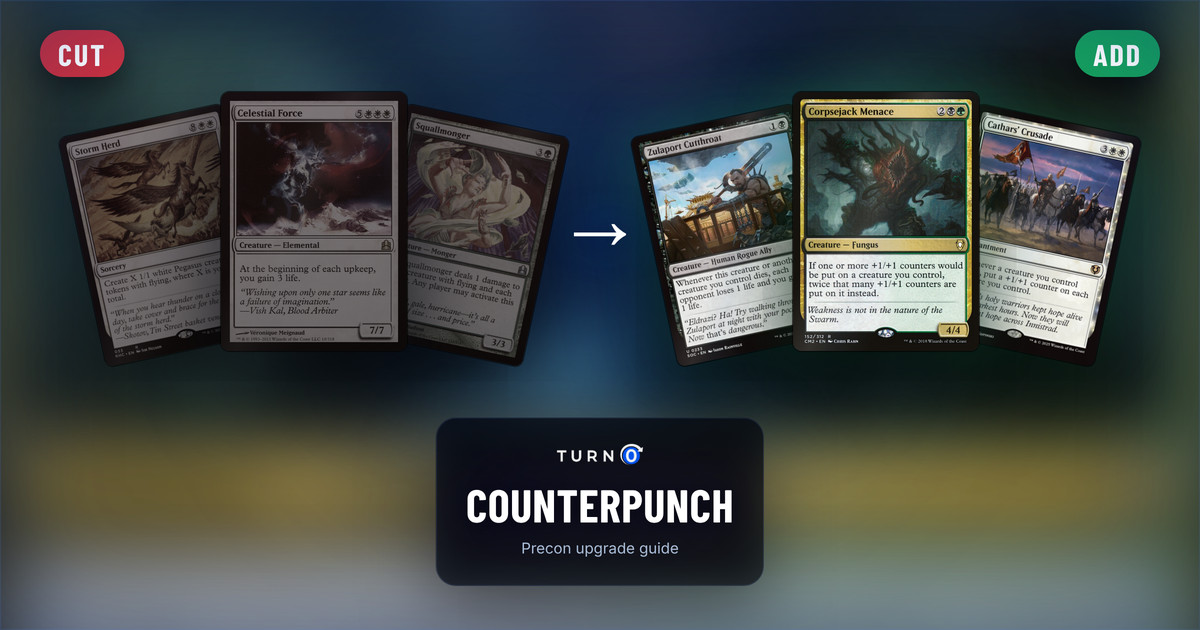
Zulaport Cutthroat ↗
Whenever it or another creature you control dies, each opponent loses 1 life and you gain 1 life. Every Saproling Ghave sacrifices drains the table.
Pitiless Plunderer ↗
Whenever another creature you control dies, you create a Treasure. That mana pays for the next Ghave activation.
Ashnod's Altar ↗
Sacrifice a creature to add two colorless mana. Ghave makes a Saproling for one mana, so each one the Altar eats nets you a mana back.
2. Put more counters on everything
Every +1/+1 counter is a future Saproling for Ghave, and Ghave also puts counters on creatures. A card that adds extra counters makes both halves of the engine bigger.
What to look for Enchantments or creatures that add extra +1/+1 counters, or that put counters on your creatures whenever something enters, at five mana or less.
Cut, for example
Storm Herd Ten mana for Pegasus tokens equal to your life total. It is a big finish when you can cast it, but you rarely can before the game is decided.
Celestial Force Eight mana for a 7/7 that gains you 3 life each upkeep. It does nothing with counters or tokens.
Death Mutation Eight mana to destroy one nonblack creature. Doom Blade and Mortify do the main part of that job for two and three.
Add, for example
Hardened Scales ↗
One mana: whenever counters would go on your creature, one extra goes on. Ghave enters with six, and each of its counter activations adds two.
Corpsejack Menace ↗
Doubles every batch of +1/+1 counters put on your creatures. Ghave enters with ten, and Sigil Captain gives each Saproling four.
Cathars' Crusade ↗
Whenever a creature you control enters, every creature you control gets a +1/+1 counter. Each Saproling Ghave makes then adds a counter to the whole board.
3. Draw cards off the creatures you sacrifice
A Ghave deck spends cards to build its board and then spends the board. Without steady card draw it runs out of material by the midgame, and Harmonize is the only card in the box that draws more than two.
What to look for Permanents that draw a card when your creatures die, so the sacrifice plan refills your hand instead of shrinking it.
Cut, for example
Squallmonger Any player can activate its damage ability, and it hits your own fliers, including the Insects from Hornet Queen .
Nemesis Trap Exiles one attacking creature for six mana, or two if the attacker is white. Too narrow next to the deck's other removal.
Add, for example
Moldervine Reclamation ↗
Whenever a creature you control dies, you gain 1 life and draw a card. Tokens count, so every Ghave sacrifice is a card.
Midnight Reaper ↗
Draws a card whenever a nontoken creature you control dies, at the cost of 1 damage. It pays you for trading creatures in combat.
Grim Haruspex ↗
Draws a card whenever another nontoken creature you control dies, with no life cost.
4. Fix the mana so Ghave has mana to spend
Ghave wants a spare mana or two every turn, and ten taplands make that hard on the turns that matter. Untapped dual lands fix three colors without slowing you down.
What to look for Two-color lands in any pair of white, black and green that enter untapped most of the time. Check the land and mana base guide for how many to run.
Cut, for example
Temple of the False God Taps for nothing until you control five lands, which is when you least need the help.
Rupture Spire Enters tapped and costs a mana to keep, so it sets you back a full turn for its color fixing.
Add, for example
Win conditions
The upgraded deck wins by making Saprolings faster than the table can deal with them and draining everyone as they die. Zulaport Cutthroat turns every Ghave sacrifice into a point of damage to each opponent, while Cathars' Crusade or Corpsejack Menace make the board too big to block. Hornet Queen and Teneb, the Harvester are still there to close out a game that goes long.
Who should buy this precon
A good fit for someone who likes engines and doesn't mind tracking counters. Ghave asks you to keep deciding where to move counters and which creatures to sacrifice, which takes some practice but rewards careful play. It is a moderate pick: not hard to pilot once you see how the two abilities feed each other, but slower and more fiddly than a deck that just attacks.
Checked against the printed decklist on October 10, 2026.
Track how the upgrades actually perform.
TurnZero HQ keeps a win rate per deck version, so you can change a few cards, play some games, and see the difference instead of guessing.
Create Free Account