Precon Upgrade Guide
Prismari Artistry Upgrade Guide
What to cut, what to add, and how to play the Izzet precon from Secrets of Strixhaven, commanded by Rootha, Mastering the Moment.
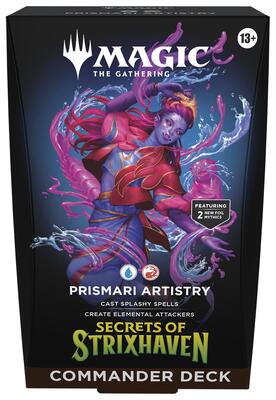
Secrets of Strixhaven
Prismari Artistry
Big spells cast expressively, needing mana planning. Out of the box, before any upgrades. How we rate precons
Buy Prismari Artistry on TCGplayer →Quick verdict
Prismari Artistry is for a player who wants to cast instants and sorceries and get an Elemental token or a copy of something for the trouble. It's good out of the box for a table that plays a normal, interactive game, since the magecraft package and Treasure generation keep the deck's mana and card flow steady across a whole game. Its biggest weakness is that a lot of its best payoffs need a real spell count to matter, so an opening hand light on instants and sorceries can leave it doing very little for the first few turns.
TurnZero rates Prismari Artistry a 3 out of 5 on strength and a 3 out of 5 on difficulty, a straightforward spellslinger shell once its own rhythm clicks. See it alongside every other precon we cover on the precon directory.
How the precon plays
Rootha, Mastering the Moment makes an X/X flying, hasty Elemental at the beginning of combat if you've cast an instant or sorcery that turn, sized off the biggest one you cast, so the deck wants to lead with a real spell before combat rather than saving it for later. Magecraft creatures (Veyran, Voice of Duality, Storm-Kiln Artist, Archmage Emeritus) turn every spell cast or copied into a pump, a Treasure, or a card, stacking value the more the deck fires off.
Galazeth Prismari and the deck's Treasure generation keep mana flowing even after a heavy spell turn, while Brudiclad, Telchor Engineer and copy effects like Cursed Mirror and Rite of Replication let a single strong creature multiply into a real board. Goldspan Dragon is the top end: a hasty flier that pays for itself in Treasures the moment it either attacks or gets targeted.
Rootha, Mastering the Moment vs. Muddle, the Ever-Changing
Both commanders reward casting instants and sorceries, but they turn that habit into different kinds of pressure.
Rootha is the better fit for a build that leans into the deck's expensive instants and sorceries for bigger tokens each turn. Muddle rewards keeping at least one strong nonlegendary creature on board and copying it repeatedly to pressure every opponent at once.
What works out of the box
Veyran, Voice of Duality ↗
Doubles up triggered abilities off casting or copying instants and sorceries. The deck's best value multiplier.
Storm-Kiln Artist ↗
Makes a Treasure off every spell and grows with the artifact count, funding the deck's own top end.
Goldspan Dragon ↗
Hasty, evasive, and pays for itself in mana the moment it attacks or gets targeted by removal.
Archmage Emeritus ↗
Draws a card off every instant or sorcery cast or copied, refilling the hand as the deck empties it.
Brudiclad, Telchor Engineer ↗
Turns the deck's combat-trigger tokens into copies of its best creature, one at a time, every turn.
Prismari Charm ↗
A flexible, cheap answer that also digs for the next spell. Efficient in any matchup.
What needs improvement
The manabase is a fine two-color base already; see the Land & Mana Base Guide → if the basics ratio needs adjusting as upgrades come in. The curve has a real gap at the very top, with a few sorceries well above ten mana that rarely get cast as written; see What Makes a Curve and Why It Matters → for how to weigh cutting those for spells the deck can actually reach.
The bigger gap is card selection early: the deck wants a real instant or sorcery in the opening hand to get Rootha or Muddle going, and doesn't have much in the way of cheap card filtering to find one. See the Spellslinger archetype guide → for how decks built this way typically smooth out that exact problem.
10 cards to cut
Each of these has a real function, but each does less for this deck's plan than the upgrades below.
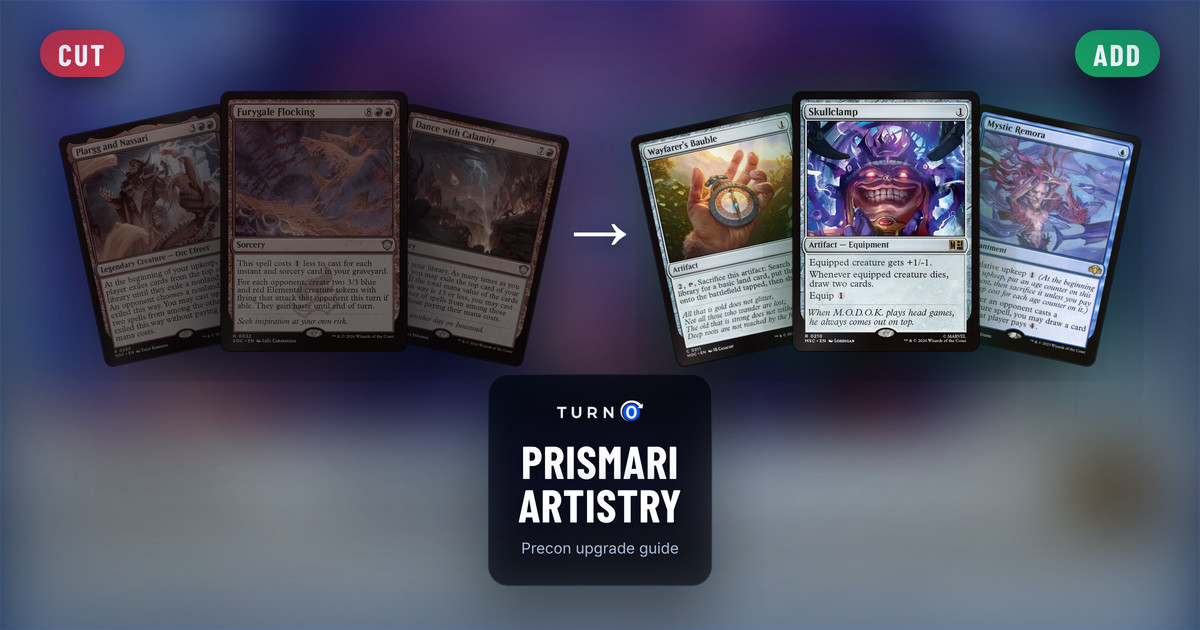
Plargg and Nassari lets an opponent choose which exiled card you keep, handing the table information and control over your own draw.
Furygale Flocking costs eight or more mana even with the graveyard discount, well outside the range this deck actually operates in.
Dance with Calamity is a high-variance gamble at seven mana that can easily whiff into nothing worth the investment.
Renegade Bull is a five-mana body whose pump only lasts the turn, a replaceable rate next to the deck's other payoffs.
Abstract Performance lets an opponent pick which pile of cards you get, a real risk for a six-mana card-selection spell.
Rousing Refrain only produces a lot of mana against an opponent holding a full grip, too situational to build a turn around.
Volcanic Salvo needs a real board of power already in play to discount, awkward in a deck that's light on creatures early.
Mana Geyser is a strong opening play and a dead card everywhere else in the game, too narrow a window to count on.
Redoubled Stormsinger only copies tokens that entered that same turn, a conditional trigger the deck can't reliably set up.
Resculpt hands the opponent a real 4/4 body in exchange for the artifact or creature it removes, a worse rate than the deck's other answers.
First upgrades
Budget, first
Wayfarer's Bauble ↗
Cheap ramp and fixing to get the deck's expensive spells online sooner.
Skullclamp ↗
Turns any small Elemental or Phyrexian Myr token that would otherwise sit there into two cards.
Next
Mystic Remora ↗
Draws a card off any noncreature spell cast at the table, feeding both Veyran and Storm-Kiln Artist for one mana.
Chimil, the Inner Sun ↗
Protects your own spells from being countered and adds a free card most end steps, a strong general-purpose upgrade.
Higher-investment
Rhystic Study ↗
The format's best pure card-advantage engine, funding more spells across a longer game.
Cyclonic Rift ↗
A one-sided reset that leaves the deck's own board of tokens and copies standing.
Fierce Guardianship ↗
Free protection for whichever payoff creature the deck is leaning on, paid for in the deck's own colors.
Win conditions
The upgraded deck still wins the way the precon wants to: chain instants and sorceries into a growing Elemental or Fractal-style token army off Rootha, Mastering the Moment or Muddle, the Ever-Changing, refueled by Rhystic Study and Mystic Remora, and closed by Goldspan Dragon or a wide alpha strike once the board is stacked. Cyclonic Rift overloaded is the cleanest way to clear a stalled board the turn before that swing.
The upgraded 99, in shape
The finished list keeps the precon's core engine untouched (whichever commander leads, the magecraft package, Goldspan Dragon as the top end) and adds the card selection and card advantage it was missing to reliably start on time. The high-variance and overpriced filler is gone, replaced by cheap interaction and a real draw engine. The deck still plays the same instants-and-sorceries game it always did; it just gets going a turn or two sooner.
Who should buy this precon
A good fit for a player who enjoys casting a lot of spells and watching a simple trigger snowball into real pressure, and for anyone who likes copying their own best creature rather than building a wide board from scratch. It's a weaker fit for a hand that comes up light on instants and sorceries, since this precon does very little until that first real spell resolves.
Track how the upgrades actually perform.
TurnZero HQ keeps a win rate per deck version, so you can change ten cards, play ten games, and see the difference instead of guessing.
Create Free Account