
The Setup
A smaller, cozier journey
Where Tales of Middle-earth tackled the sprawling War of the Ring, this set narrows the lens to one book: a homebody hobbit, a wizard, thirteen dwarves, and a very large dragon. Expect the tone to lean lighter and more whimsical than its predecessor: think riddles in the dark and stolen second breakfasts rather than armies at the Black Gate. The 321-card HOB expansion is fully Standard-legal, the first Tolkien set that is, while the 158-card HOC companion brings eternal-format Commander cards (Legacy and Vintage legal, but not Standard). "Smaller" is a matter of tone rather than size: between them that is 479 cards, and it is the Dwarf-and-Treasure set far more than it is the hobbit one.
New Themes
Mechanics worth learning before prerelease
A handful of brand-new keywords join returning favorites. None of it reinvents the game, but a few will shape how limited decks and Commander tables play out.
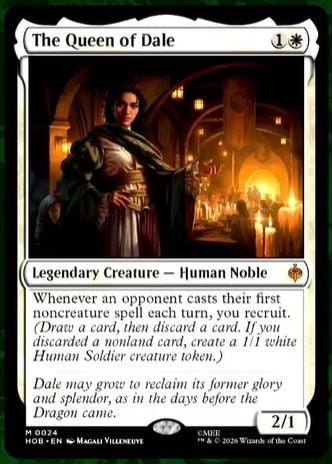
Recruit
A keyword action, and a white-flavored cousin of connive: draw a card, then discard a card. If you discarded a nonland card, you get a 1/1 white Human Soldier token instead of connive's +1/+1 counter, so it builds a board while it filters your hand.
Storied
Control three or more artifacts, legendary permanents and/or Sagas while a Storied permanent is on the battlefield and you earn an enduring story. The important half is that it never goes away: lose the Storied permanent, lose the artifacts, it doesn't matter, the story is written and every Storied bonus you draw for the rest of the game is switched on.
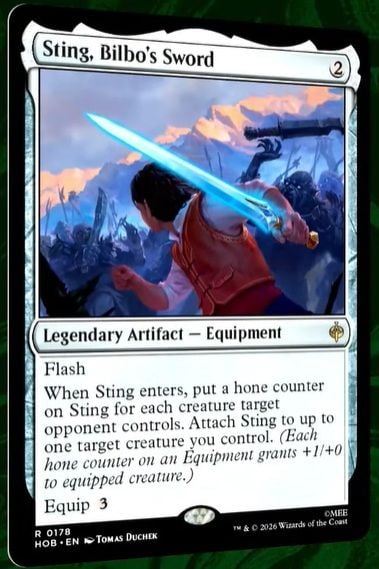
Hone counters
A new counter type for Equipment: each hone counter gives the equipped creature +1/+0. The bonus comes from the counter itself rather than from an ability printed on the card, so it keeps working if the Equipment loses its abilities, and a hone counter pumps the equipped creature on any Equipment, even one that never mentions hone.
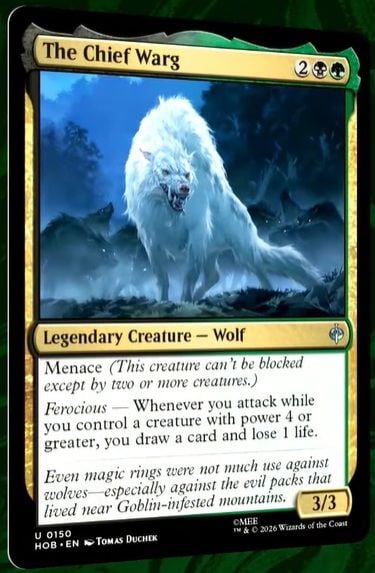
Ferocious
Its first main-set appearance since the Khans of Tarkir block: an ability word that checks whether you attacked with a creature with power 4 or greater. On The Chief Warg that means drawing a card (and losing a life), a nod to the warg-and-goblin pack tactics from the book.
Amass (Goblins)
Amass is back, this time building a single growing Goblin Army instead of the usual Zombies, a tighter, less go-wide read on the mechanic that fits the goblin-infested Misty Mountains.
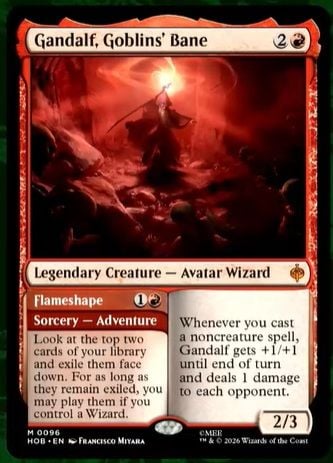
Adventure
Back from Throne of Eldraine as the set's main storytelling tool. Cast the Adventure half first, then cast the creature from exile later, perfect for representing two-part beats like Gandalf's escape from the goblin tunnels.
Landfall & Kicker
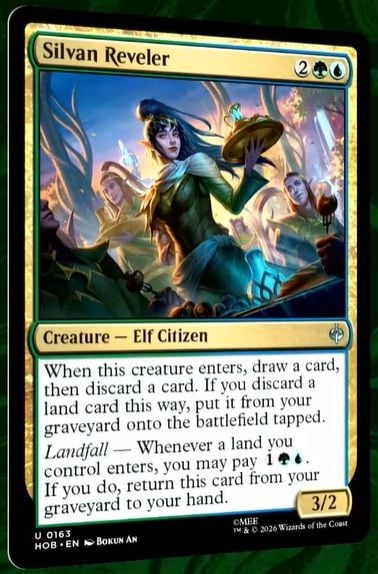
Landfall is the engine under the blue-green Elves deck, with each Elf doing something different when a land arrives. Kicker is a one-card cameo: The Eagles Are Coming! bounces one of your creatures and replaces it with a 4/4 white Bird Soldier, or does it to as many of your creatures as you like if you pay the kicker.
Main Creature Types
Who you'll actually be casting
This is a tightly-cast story, and the set leans into it. Five creature types carry almost all of the set's tribal synergy.
Dwarves
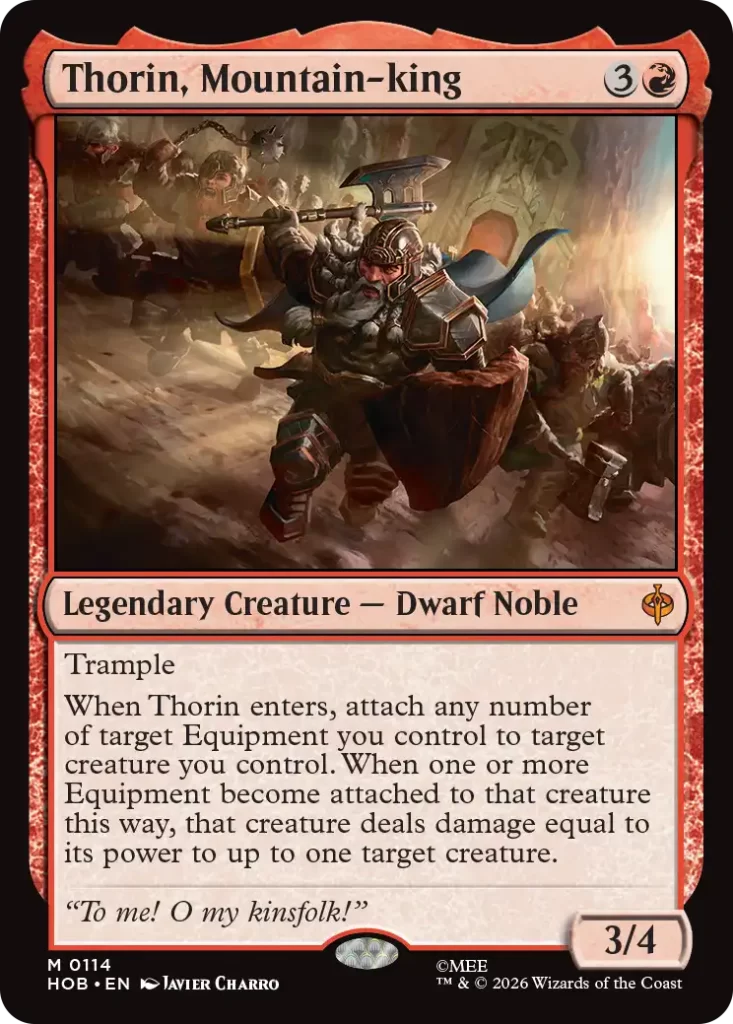
The Company of Thirteen makes Dwarf the set's deepest tribe by far. Go wide with Thorin's crew, or go tall on a handful of legendary dwarves that matter individually.
Elves
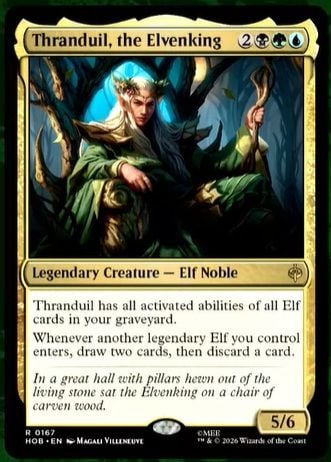
Mirkwood's elves get a graveyard-recursion angle this time, a departure from the go-wide elf decks of past sets, fitting for the ancient, long-memoried Woodland Realm.
Halflings
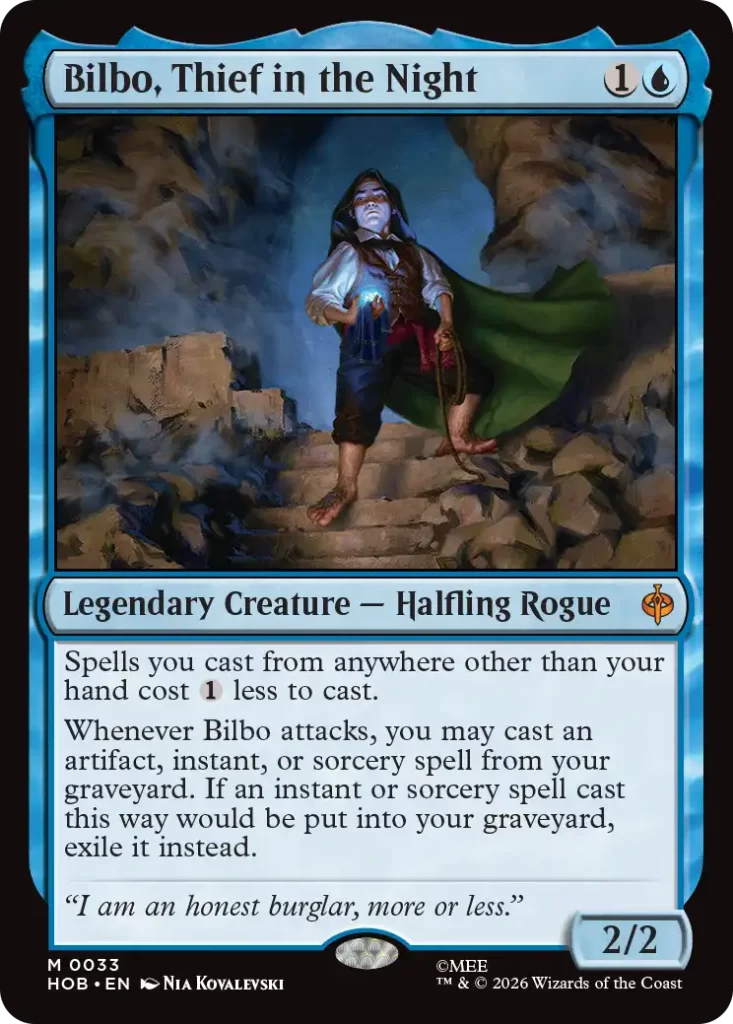
Small type count, huge narrative weight. Bilbo gets several cards tracking his arc from reluctant burglar to ring-bearer, and Thief in the Night is among the most-discussed cards in the set for Constructed as well as Commander.
Goblins & Wargs
Split across two archetypes rather than one: goblins amass in black-red, wargs go ferocious in black-green as Wolves. Black is the seam they share.
Dragons
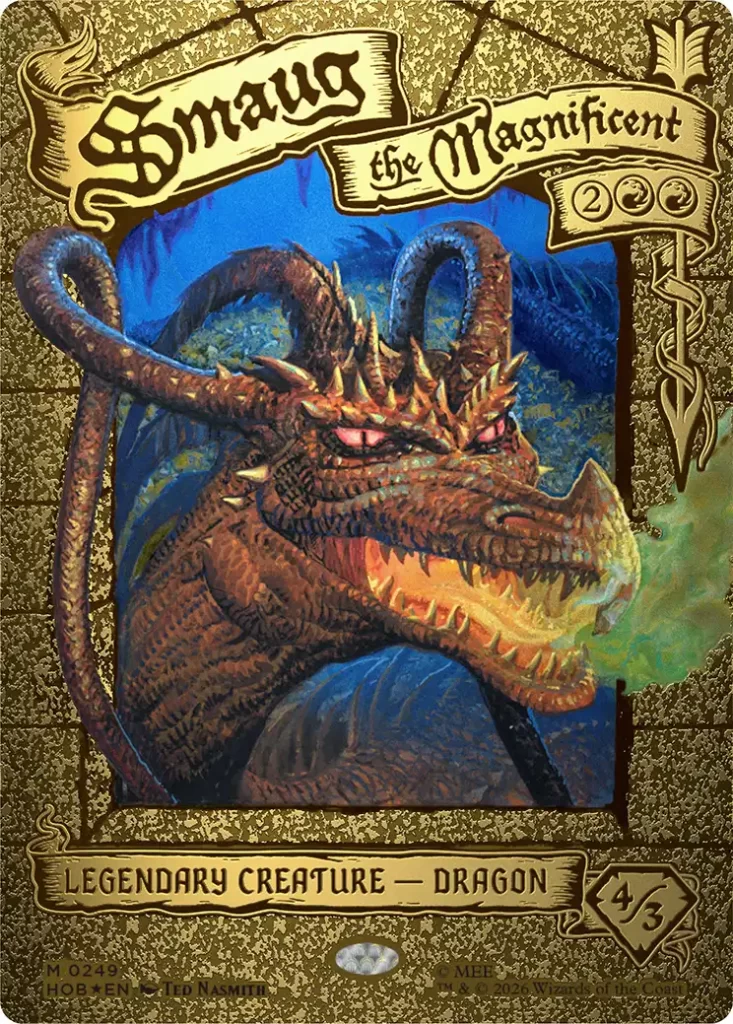
Only one that matters: Smaug himself, finally getting a proper card instead of a token after guest-starring in three prior sets.
Limited
All five draft archetypes
There are five, not the usual ten, and the reason is the book: the design team built one archetype per army in the Battle of the Five Armies, giving each a species to care about. Because some of those armies came with colors already attached, the five land on a mix of allied and enemy pairs rather than a tidy wheel, which is worth knowing before you first-pick something in a color pair that has no home.
Draw-Two Humans
Tempo / Value
Built around Recruit: loot a card, and if you toss a nonland you leave behind a 1/1 Human token. Grindy, card-advantage-positive, and rewards a low curve of efficient Humans that don't mind a token army backing them up.
Amass Goblins
Aggro / Sacrifice
Amass returns, but the Army it builds is a Goblin, which means the set's goblin payoffs read it as one of the tribe rather than as a stray token. That's the whole trick: one growing threat that everything else in the deck already cares about.
Ferocious Wolves
Midrange / Beatdown
The wargs of the Battle of the Five Armies, playing as Wolves. Attack with a creature of power 4 or greater and the rest of your board gets paid. An unusual color placement (this shell is normally Gruul) but it means the deck can lean on removal and card draw instead of just going bigger.
Storied Dwarves
Go-Wide Aggro
Once you control three historic permanents (artifacts, sagas, or legendaries) you lock in an enduring story for good, and this deck is stuffed with all three, especially the Company's many legendary dwarves and a handful of sagas.
Landfall Elves
Ramp / Value
A deliberate swap from the scry-Elves of Tales of Middle-earth: this time Elves care about playing lands, and each one does something different when a land arrives. Straightforward, resilient, and a good on-ramp if you'd rather not fight over the flashier archetypes.
By The Numbers
Legendary creatures, sorted by color
The full spoiler carries 48 legendary creatures in the Standard-legal main set (HOB) and another 31 in the eternal-legal HOC, 79 in all. Listing every one of them would be a phone book, so here are the ones already driving deckbuilding chatter, and where they sit on the pie.
The bars count the legends in the table above, not all 79 in the set, and every color an identity touches counts, so Tom Bombadil lands on all five. Red leads by a distance because the set's Treasure theme lives there: six of the marquee legends are Dwarves, and most of what's red makes, doubles or spends Treasure. Green is the thin one, propped up mainly by Beorn and the Mirkwood elves.
Commander
Cool commanders to build around
There are no Commander precons this time. The HOC companion set is singles only, seeding new decks rather than shipping finished ones, and the slot precons usually fill is taken by The Battle of the Five Armies Co-Op Kit in 2027. So the deckbuilding starts with the legends themselves, and a few are already well ahead.
Smaug the Magnificent
R · Mono-Red
The set's headliner is also its most-built commander on EDHREC by a clear margin. A mono-red Treasure engine that ramps itself and then turns the hoard into damage, so he sits at the intersection of the two things the set does most: Dragons and Treasure.
Tom Bombadil
WUBRG · Five-Color
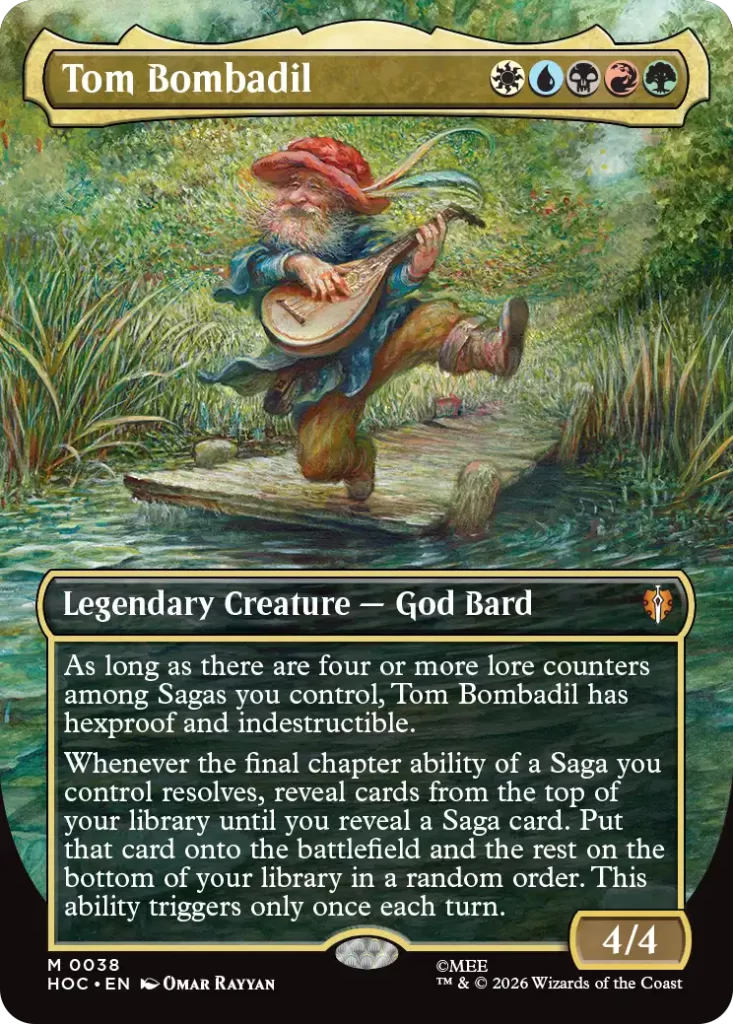
Master of the Old Forest, bound by nothing, including a color identity. A natural home for a five-color "good stuff" pile of legendary Middle-earth allies, especially anything that cares about being historic.
Sauron, the Dark Lord
UBR · Grixis
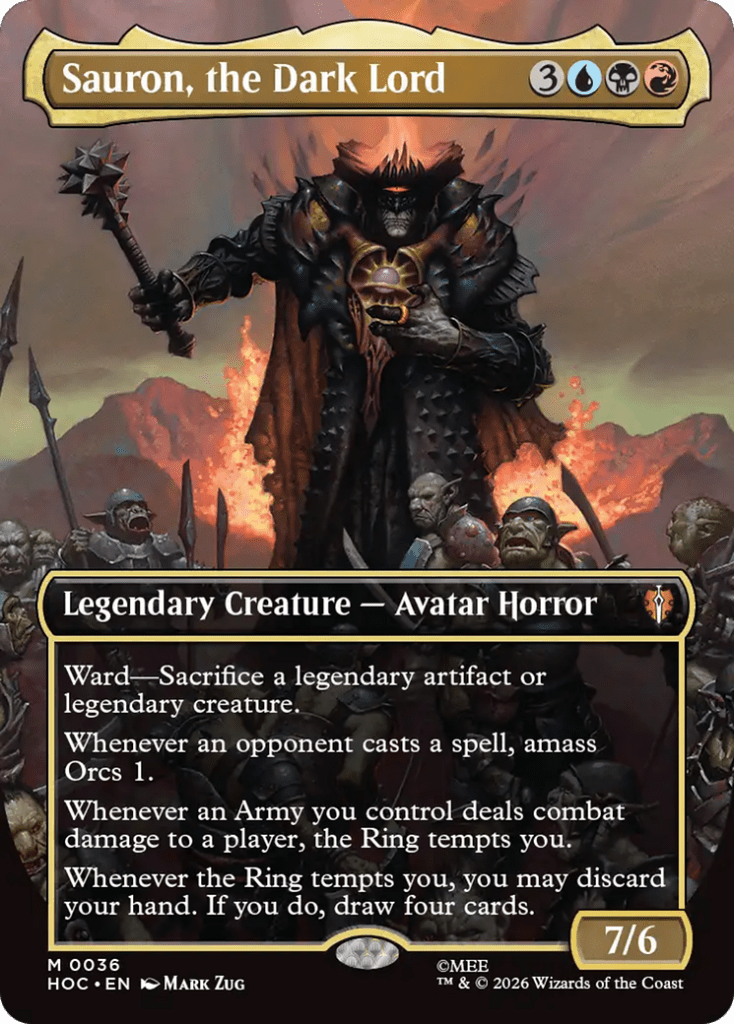
The eternal-legal villain payoff. Grixis colors point toward a controlling shell: hold up interaction, mill and reanimate, and let Sauron close games once you're out of answers to give.
Thranduil, the Elvenking
UBG · Sultai
Sultai colors back up his graveyard-recursion Elf theme perfectly: self-mill into your Elves, then bring the good ones back. There are 89 legendary Elves in his colors to hit his draw trigger with, and he's the set's second most-built commander on EDHREC behind Smaug.
Beorn the Fierce
G · Mono-Green
The skin-changer, and the set's green mythic. Third on EDHREC's early deck counts and the only one of the top three that fits in a mono-colored deck, which is a large part of why he's there.
Thorin Oakenshield
WR · Boros
The Company's leader is a Standard-legal card, but nothing stops him from anchoring a Boros Dwarf tribal Commander deck: go wide with dwarves, hit three historic permanents, and ride Storied bonuses all game.
Gandalf, Party Guest
WUR · Jeskai
The card the community's already nicknamed the "oops! all Gandalf" enabler. With multiple Gandalf variants spread across this set and Tales of Middle-earth, a Jeskai typal shell built entirely around him is buildable.
Smaug the Impenetrable
BR · Rakdos
An indestructible 8/7 flying dragon that turns noncombat damage dealt to him into Treasure tokens, punishing burn and edict effects while ramping you straight into your next threat.
Constructed
Standard watch
This is the first Tolkien set legal in Standard, which makes it the rare Universes Beyond release that Constructed players have to read rather than admire. Nothing has been played in a real event yet, so treat the following as the cards previews have argued loudest about, not as a metagame report.
Riddles in the Dark
A Fact or Fiction that hands you the scissors: one card fewer and one mana cheaper, but you build the piles yourself. It's an instant and it fills the graveyard, which is exactly what the Izzet spells decks near the top of Standard already want to be doing.
Bilbo, Thief in the Night
The card most often named as the set's likeliest crossover, wanted in Commander and Constructed for the same reasons. A cheap legendary that also happens to be a historic permanent is doing two jobs in any deck touching Storied.
Sting, Bilbo's Sword
Two mana, flash, and it arrives with a hone counter for each creature the opponent controls, then attaches itself. Against a go-wide board it lands as a combat trick that stays on the table, which is the whole design brief hone was written to solve.
Card Gallery: Follow the Route
The Company's journey, stop by stop
Bilbo's actual route from the book. Seven stops, from the Shire to the Lonely Mountain.
Bilbo, Thief in the Night
Story Anchor
Bilbo's home-away-from-adventure card, marking the exact moment the reluctant burglar decides to go. Expect a handful of Bilbo cards tracking his growth across the set.
An Unexpected Party
Adventure
The dwarves crash into Bag End uninvited. A fitting first scene for the set's Adventure spells, which pair a spell effect with a creature cast later from exile.
Sting, Bilbo's Sword
Historic Piece
Glows blue near goblins in the lore, and mechanically it's an equipment built around Hone counters, one of the set's new counter types, and a natural fit for Storied decks needing historic permanents.
Elrond, Moon-Reader
Elf Tribal
The Elven half-king of Rivendell returns to Magic, this time leaning into the set's elf graveyard-recursion theme rather than the go-wide elf strategies from prior sets.
Gandalf, Goblins' Bane
Adventure
Gandalf's escape from the goblin tunnels, told as a two-part Adventure card: cast the spell side to represent the escape, then the creature side later.
Bolg of the North
Amass
Commands the set's take on Amass: instead of building Zombies, this Amass grows a single Goblin Army token, echoing the swelling goblin horde from the book.
The Chief Warg
Ferocious
Rewards you for running big creatures alongside it: attack with power 4 or more on board and The Chief Warg draws you a card at a cost.
Beorn the Fierce
Mythic
The skin-changer who takes the Company in between the goblin tunnels and Mirkwood, and the set's green mythic. Third on EDHREC's early deck counts behind the two obvious multicolor picks, which for a mono-green card is the more impressive number.
Thranduil, the Elvenking
Elf Tribal
The suspicious, gold-hungry Elvenking of Mirkwood, cast in Sultai colors, a signal that this set's elves care more about the graveyard than about counters.
Gollum, Riddle Master
Story Anchor
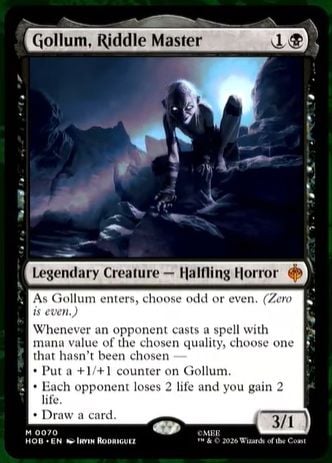
The riddle game in the dark, reimagined as a card. Wretched, precious-obsessed, and exactly the kind of legendary that a Halfling or Storied deck wants to build around.
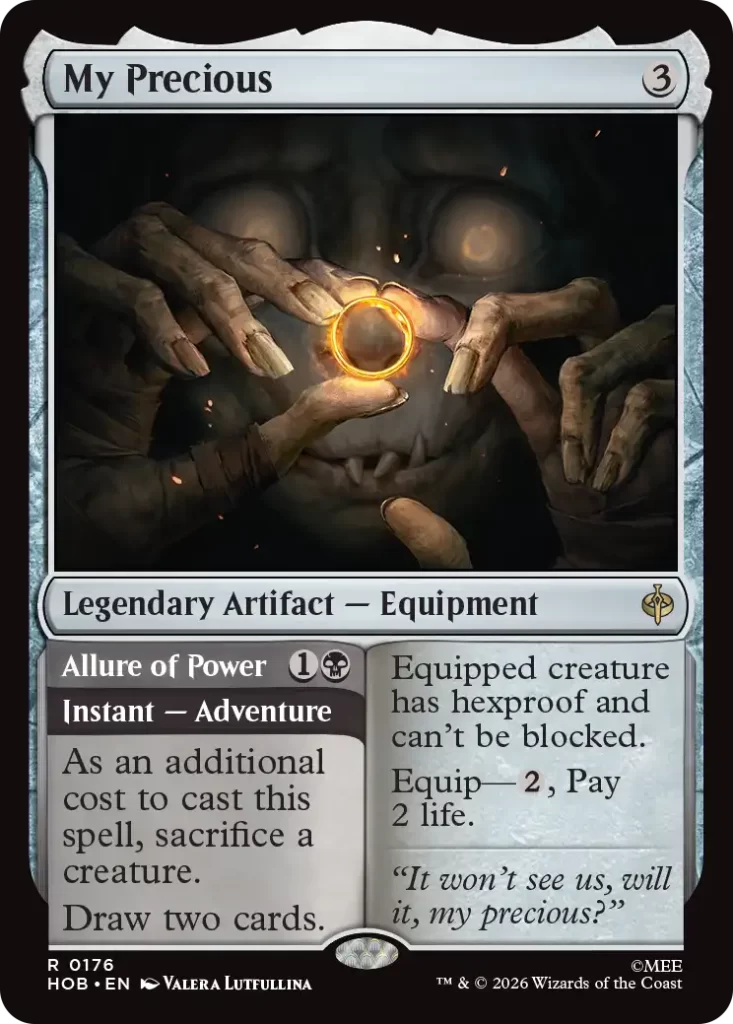
My Precious
Adventure
An Adventure card built around the Ring's corrupting pull, not an immediate power outlier.
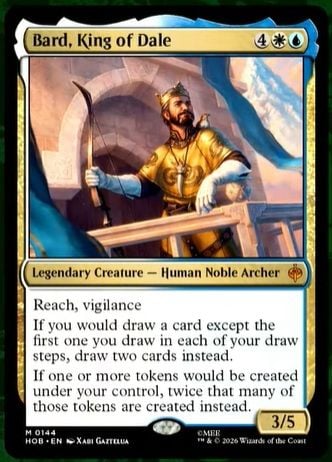
Bard, King of Dale
Azorius
The bowman who eventually fells Smaug, in a white-blue shell, a good sign this deck wants to hold up defenses before delivering one big, game-ending shot.
The Queen of Dale
Recruit
One of the clearest showcases for Recruit: loot through your deck, and every discarded nonland leaves you a 1/1 Human token instead of a stat boost.
Smaug the Magnificent
Headliner
The set's headliner card and easily its biggest pull. A hasty flying dragon that turns a Treasure-heavy board into direct damage every time he attacks, and mints a new Treasure every upkeep.
Thorin, Mountain-king
Dwarf Tribal
Thorin's arc completes here, from exiled prince to a king reclaiming his hoard, and the clear centerpiece for any Dwarf tribal deck the set supports.
The Arkenstone
Historic Piece
The Heart of the Mountain itself gets a split artifact/saga treatment and lands as one of the set's chase mythics, exactly the kind of historic permanent that Storied decks are built to count toward three.
→ scroll for the rest of the journey
Card Showcase Styles
Collector treatments to keep an eye out for
No bonus reprint sheet this time, but the Booster Fun lineup is stacked. Borderless art, Dragon Hoard frames and surge foils all turn up, and the five Dwarvish Language cards, printed in Khuzdul runes, are the ones pulling the money, at roughly a 1.5% appearance rate. All of it is Collector Booster only: a Play Booster will never produce a rune-script card.
Smaug, Gleaming Gold
~500 copies worldwide · Collector Boosters only
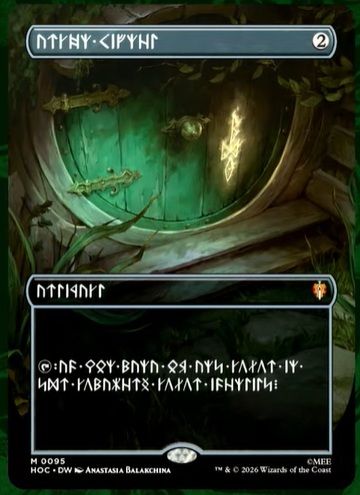
Arcane Signet
Dwarvish Language card
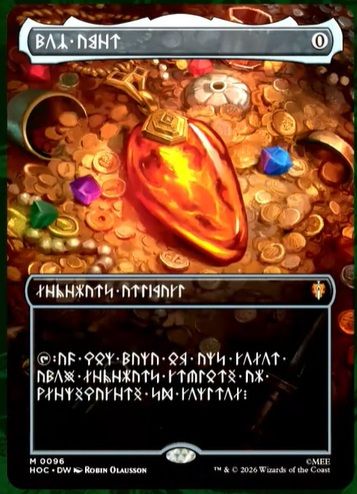
Mox Amber
Dwarvish Language card
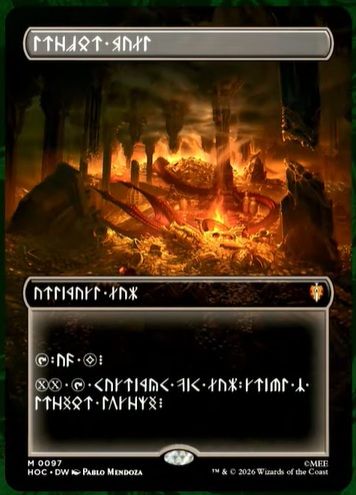
Treasure Vault
Dwarvish Language card
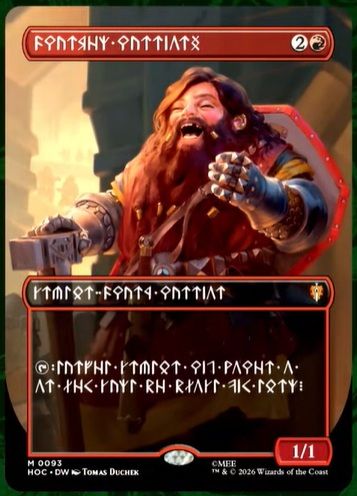
Dwarven Warriors
Dwarvish Language card
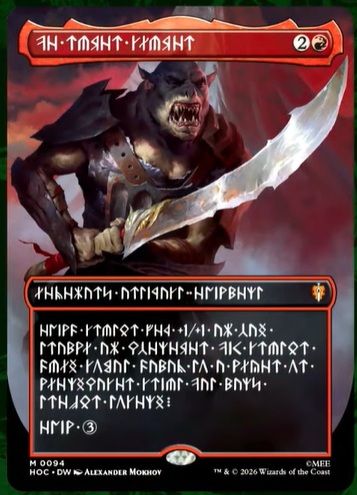
The Reaver Cleaver
Dwarvish Language card
Sauron, the Dark Lord
HOC · Commander-exclusive reprint
Tom Bombadil
Box Topper · Borderless
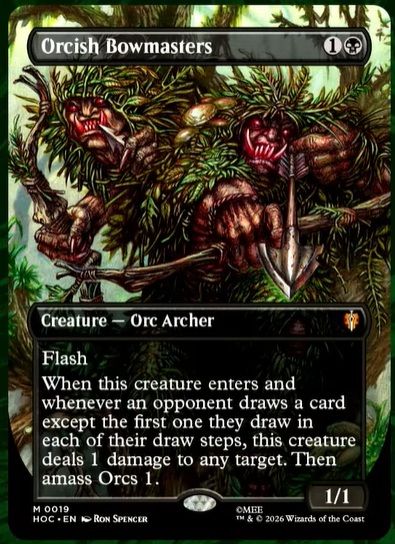
Orcish Bowmasters
HOC Commander reprint
What each of those is selling for is a page of its own: the ten most expensive cards in The Hobbit, with presale price ranges for the Gleaming Gold Smaug, every borderless mythic, the box toppers and the Dwarvish five, plus what the cheap, identical-to-play version of each one costs.
Before You Play
Get ready for the table
Key dates
Products to plan for
All card names, art, and mechanics belong to Wizards of the Coast and Middle-earth Enterprises. The Hobbit is not out yet. The set is fully spoiled and details reflect that spoiler as of August 2026: card counts, mechanics and treatments are final, but prices and early Commander deck counts move daily. Paper launch is August 14, 2026. Sources: Wizards of the Coast mechanics and prerelease articles, Draftsim, Scryfall, EDHREC.
Where You Can Play It
Format legality
The Hobbit ships more than one set code, and they don't share the same legality. The main set is Standard-legal while the Commander cards are eternal-only.
Standard legality is current as of August 2026. There is no rotation in 2026; the next is February 2027, when 2025–2027 sets become the Standard pool.
Track your first games with the new set.
When The Hobbit lands, TurnZero HQ keeps deck records, MMR, and moments for every night you play it.
Create Free Account