Star Wars: Unlimited Beginner Series
How Combat Works in Star Wars: Unlimited
To attack, you exhaust a ready unit and pick a target in its own arena: an enemy unit or the enemy base. Units deal damage to each other at the same time, and the damage stays until something heals it. This guide covers the arenas, each step of an attack and the keywords that change combat.
The short answer
Attacking is one of the five actions you can take on your turn. You choose one of your ready units, exhaust it, and attack either:
A unit is defeated when the damage on it equals or passes its HP. A player loses when the damage on their base equals or passes its HP. Only one unit attacks at a time, and there is no blocking step: the attacker picks the target, and the defender's only say comes from the cards already on the table, such as a unit with Sentinel. This page follows the publisher's Comprehensive Rules version 9.0, dated October 9, 2026.
Ground and space
Every unit belongs to one of two arenas: ground or space. The arena is printed on the card, and the unit goes there when you play it. The arena decides what a unit can attack:
The base is reachable from both arenas, and attacking it doesn't move the unit out of its arena. That makes the two arenas two separate fights over one shared target. If your opponent has a wall of ground units and an empty space arena, your space units can attack their base freely, and their ground units can do nothing about it.
A card ability can override this. Some abilities let a unit attack into the other arena, and many deal damage to a unit in either arena without an attack. Without one of those, units fight only in their own arena.

The steps of an attack
The rules split an attack into five steps. You rarely need the names at a casual table, but the order explains most of the questions that come up.
Two consequences follow from the order. First, On Attack abilities happen before damage, so an On Attack ability that defeats the defending unit leaves the attacker with nothing to hit, and it takes no damage back. (Overwhelm is the exception: with no defender left, all of its damage goes to the base.) Second, if the attacker is defeated during step 3, the attack still finishes, but it deals no combat damage.

Damage and defeat
Damage in Star Wars: Unlimited is tracked with counters, and it is persistent. It stays on a unit until the unit leaves play or an ability heals it. Nothing heals at the end of a round. A 3/5 unit that takes 3 damage this round still has 3 damage on it next round, so any attack of 2 or more finishes it.
That changes how trades work. A unit doesn't have to be defeated in one attack: you can chip it with one attack and finish it with another, even rounds later. It also means a damaged unit is worth less than its printed HP suggests, both to you and to your opponent.
Combat damage is dealt at the same time by both units, so a trade can defeat both. A 4/3 attacking a 3/4 deals 4 and takes 3: both are defeated. When a unit is defeated, it goes to its owner's discard pile, and any upgrades attached to it are defeated with it.
Both units deal damage at the same time
A 4/3 attacks a 3/4. Each deals its power to the other at once, so both are defeated.

Attack the base or a unit?
This is the decision you make on almost every attack, and it depends on the race. Attacking the base moves you toward winning, but it leaves the enemy unit alive to attack you or block next round. Attacking a unit costs you base damage now and usually costs your unit some HP, in exchange for a smaller board on their side.
A useful way to decide is to count. Add up the power your ready units can send at the base each round, compare it to the HP left on the opposing base, and do the same from your opponent's side. Whoever needs fewer rounds is ahead in the race, and the player who is behind usually needs to trade with units rather than race. A favorable trade (your unit survives and theirs doesn't) is almost always worth taking. An even trade depends on which side the clock favors.
Remember that your opponent's units defend whether or not they're exhausted, and an exhausted unit can't attack you back until the regroup phase. A unit that just attacked is often the safest target in its arena, since it's damaged and can't respond this round.
Keywords that change combat
Most of the game's keywords touch combat. These are the ones you'll see in nearly every game. The keywords guide covers the full list.
A Shield matters more than its size suggests. It stops a whole instance of damage, so a Shield on a 2/2 absorbs an attack from an 8-power unit just as well as from a 1-power unit. The usual answer is to attack a Shielded unit with your smallest unit first, or with a Saboteur. Indirect damage, a separate kind of damage some cards deal, can't be prevented and ignores Shields entirely.


Leaders in combat
Your leader starts on its leader side, next to your base, and can't attack or be attacked there. Once you control enough resources, it can deploy, usually with its Epic Action: it flips to its unit side and goes into the ground arena ready. Unlike a unit you play, a deployed leader can attack the round it arrives.
A deployed leader is a unit like any other, so it can be attacked and defeated. When it's defeated, it doesn't go to the discard pile. It flips back to its leader side and returns to your base zone exhausted, and if it deployed with its Epic Action, it can't deploy again that game. Some leaders deploy as an upgrade on a unit instead, and those follow the same rule when the upgrade is defeated.
Worked examples
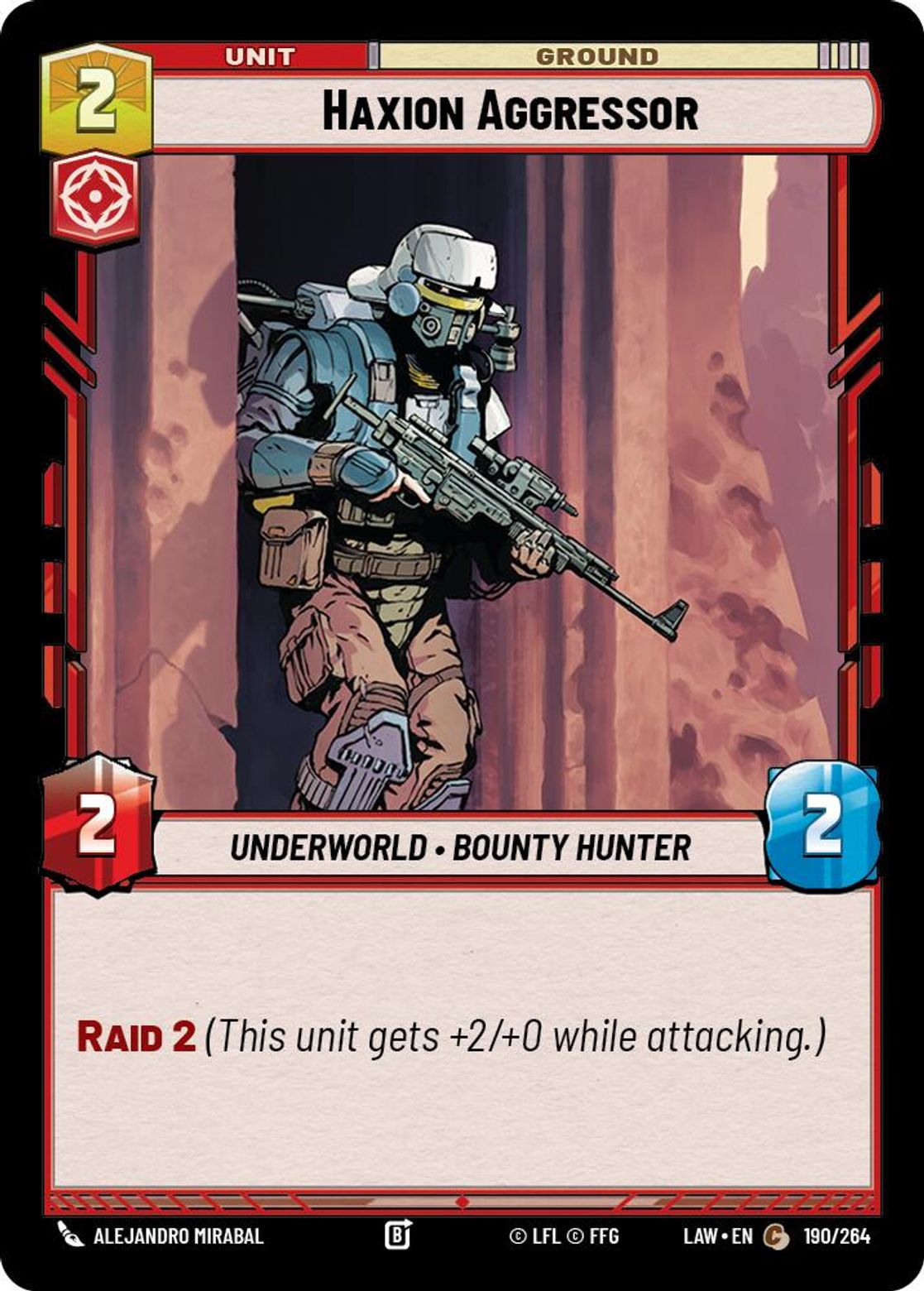
A simple trade. Your Haxion Aggressor (2/2, Raid 2) attacks an enemy 3/3 ground unit. Raid makes it 4/2 while attacking. It deals 4 damage, defeating the 3/3, and takes 3 damage, which defeats it too. Without Raid it would have dealt 2 and been defeated for nothing.
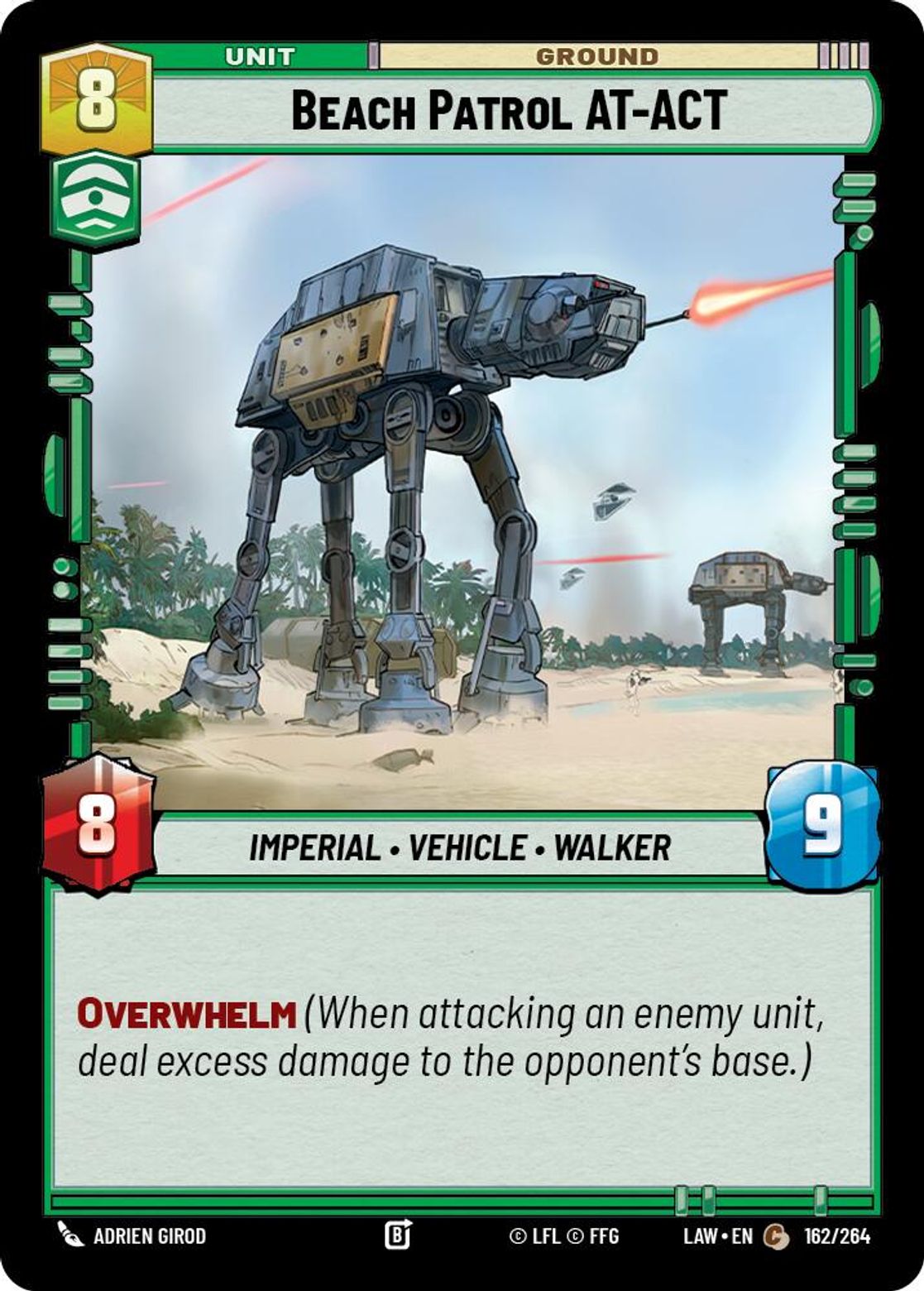
Overwhelm. Your Beach Patrol AT-ACT (8/9, Overwhelm) attacks an enemy unit with 3 HP remaining. It deals 3 to the unit, defeating it, and the other 5 to your opponent's base. If that unit had a Shield, the Shield would prevent the damage, the unit would survive, and no damage would reach the base.
Overwhelm: the excess hits the base
An 8-power unit with Overwhelm attacks a unit with 3 HP. Three defeats it, and the other five reach the base.
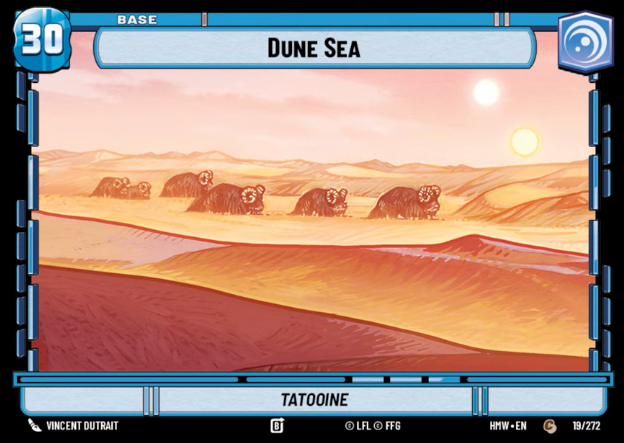
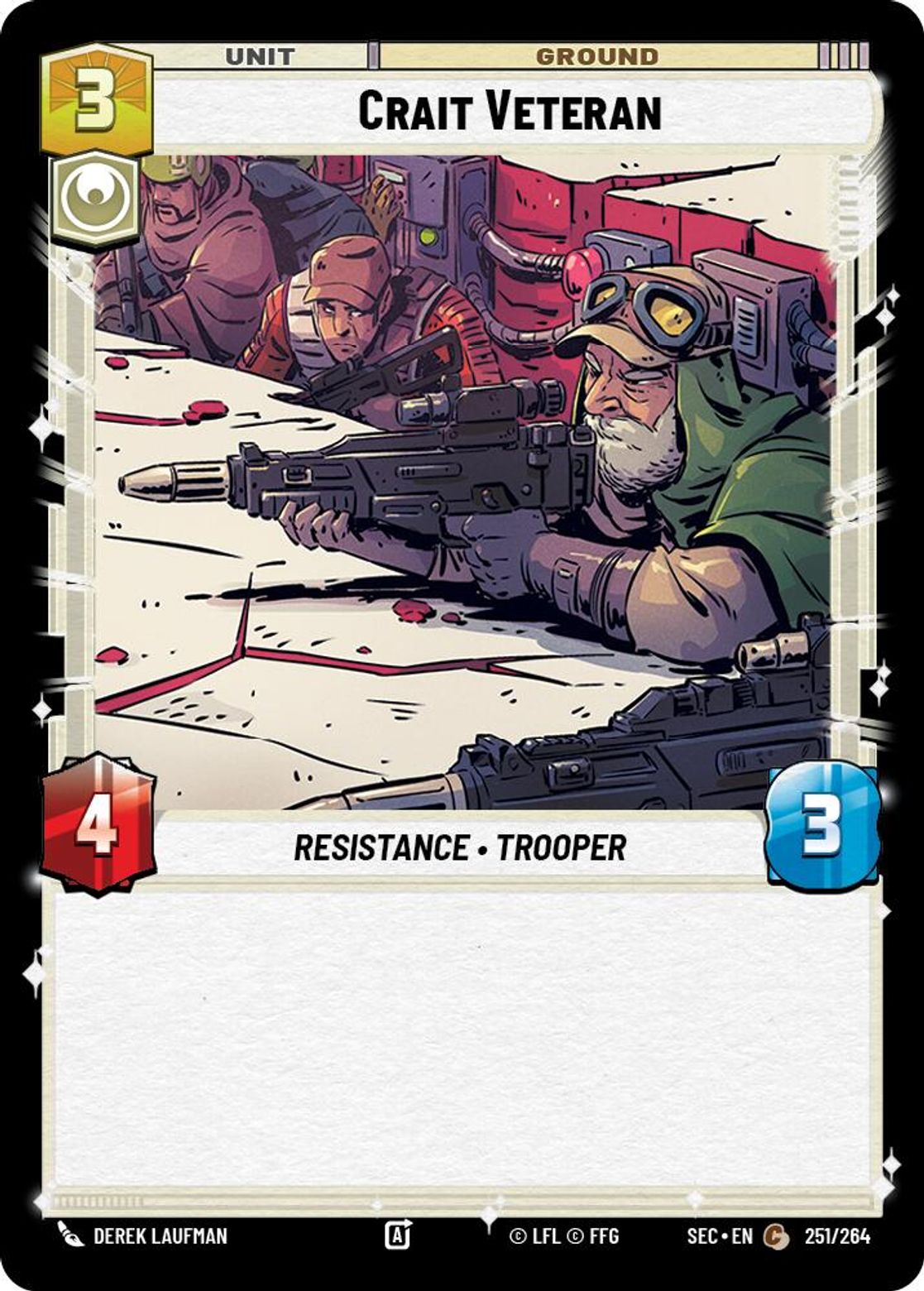
Sentinel. Your opponent controls a Perimeter AT-RT (3/5, Sentinel) and two other ground units. All of your ground attacks this round have to target the AT-RT, and your ground units can't attack their base while it is in play. Your space units are unaffected, since Sentinel only covers its own arena. A Relentless Hunters (Saboteur) could ignore the AT-RT and attack the base or any other ground unit.
Sentinel forces the attack, and the damage stays
A 4/4 wants the base, but a Sentinel stands in the way. It attacks the Sentinel instead, and both units keep their damage into the next round.

Frequently Asked Questions
How does combat work in Star Wars: Unlimited?
On your turn, you exhaust a ready unit and attack either an enemy unit in the same arena or your opponent's base. If it attacks a unit, both units deal damage equal to their power to each other at the same time. If it attacks a base, the base takes the damage and deals none back. A unit is defeated when the damage on it equals or passes its HP.
Can ground units attack space units in Star Wars: Unlimited?
No. A ground unit can attack enemy ground units or the enemy base, and a space unit can attack enemy space units or the enemy base. Units in either arena can attack the base directly. Only a card ability can let a unit attack across arenas, although some abilities deal damage to units in the other arena.
Does damage heal at the end of the round in Star Wars: Unlimited?
No. Damage stays on a unit until the unit leaves play or the damage is healed by an ability. A unit that survives a fight carries that damage into the next round, so a later attack can finish it off.
Does the defending unit deal damage back?
Yes. When a unit attacks another unit, both deal damage equal to their current power to each other at the same time, so an attack can defeat both units. A base never deals damage back.
Can an exhausted unit be attacked?
Yes. Exhausted units can be attacked and still deal their power in damage back to the attacker. Being exhausted only stops a unit from attacking or using exhaust abilities.
What is Sentinel in Star Wars: Unlimited?
Sentinel is a keyword that forces enemy attacks in its arena onto it. While you control a unit with Sentinel, enemy units in that arena can't attack your other units or your base, so they have to attack a Sentinel unit first. A unit with Saboteur can ignore Sentinel.
Track base damage while you play.
TurnZero HQ keeps each base's HP, the initiative, the round and each leader on one phone, and saves the result when the game ends. Free to start.
Create Free AccountStar Wars: Unlimited card names and images are the property of Lucasfilm Ltd. and Fantasy Flight Games. © & ™ Lucasfilm Ltd. TurnZero HQ is not affiliated with, sponsored, or endorsed by Lucasfilm Ltd., Disney, Fantasy Flight Games, or Asmodee. Card data comes from swu-db.com, and prices from TCGplayer.