Star Wars: Unlimited Beginner Series
Star Wars: Unlimited Keywords, Explained
Keywords are the bold red words on Star Wars: Unlimited cards, each a short name for a fixed rule. This guide covers all 17 in the current rules, every token, and the timing details that come up at the table.
The short answer
A keyword is an ability printed in bold red text that stands for a rule defined in the Comprehensive Rules. Most cards print a short reminder in parentheses after the keyword, such as "Raid 2 (This unit gets +2/+0 while attacking.)", so you can usually play from the card alone. A keyword works automatically unless its definition says "may."
Cards can also give keywords, either for good ("Attached unit gains Sentinel") or for a while ("gains Saboteur for this phase"), and a unit that gains a keyword has it exactly as if it were printed. This page follows the publisher's Comprehensive Rules version 9.0, dated October 9, 2026. Card examples come from the six Premier-legal sets as of October 2026, except in the section on older sets.
Every keyword at a glance
Combat keywords
These change who can attack whom, and how much damage lands. The combat guide covers the attack sequence they plug into.
Sentinel
While you control a unit with Sentinel, enemy units in its arena can't attack your non-Sentinel units or your base. If you have several Sentinel units in that arena, the attacker chooses which one to attack. Sentinel covers only its own arena: a ground Sentinel does nothing about space attacks on your base. Sentinel also overrides "can't be attacked" abilities on the same unit, so a unit with both Hidden and Sentinel can be attacked.
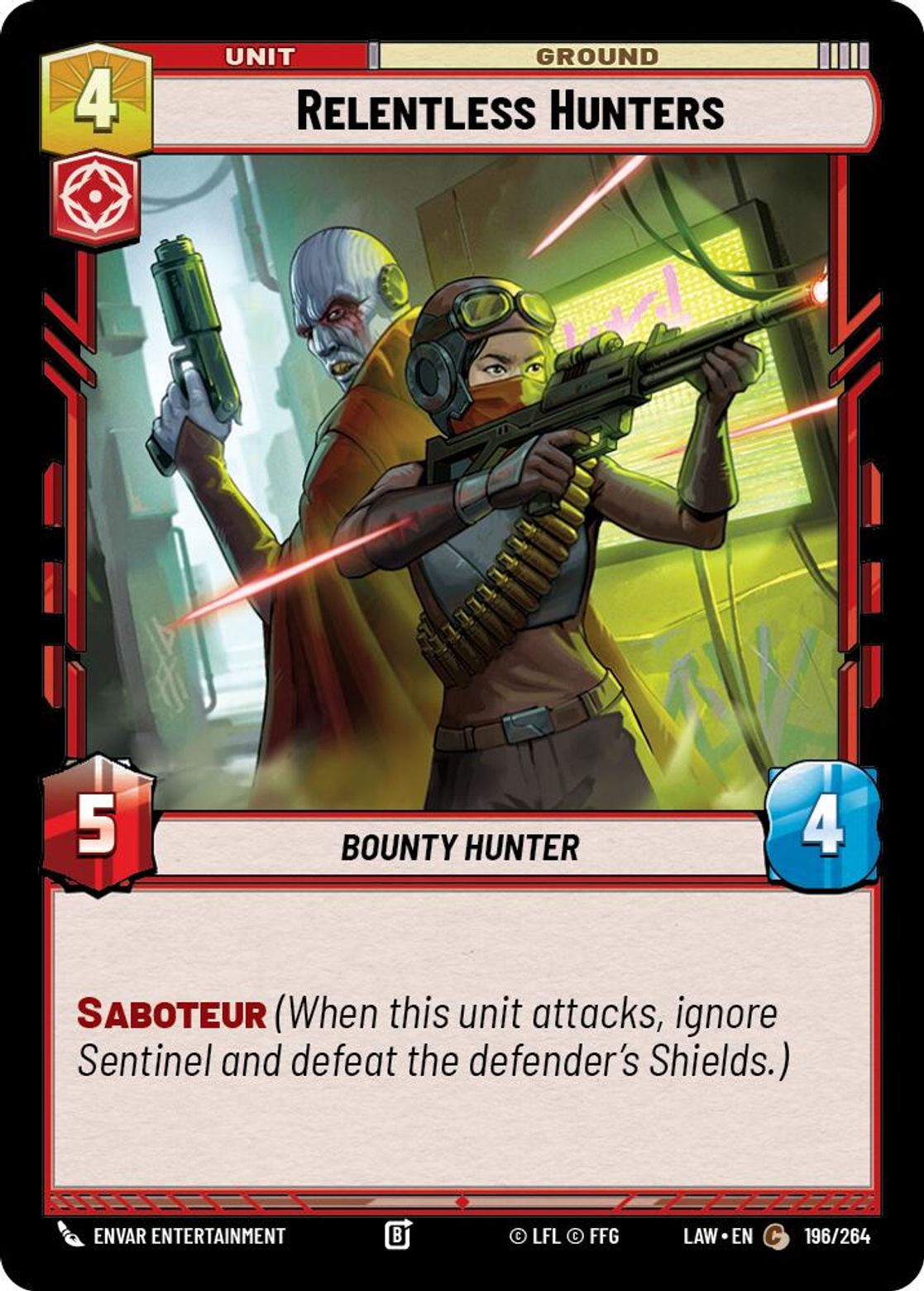
Saboteur
Saboteur does two things. When choosing a target, its controller may ignore Sentinel and attack any unit in the arena or the base. And as an On Attack ability, it defeats every Shield token on the defending unit before damage is dealt. It's the cleanest answer to a Shielded Sentinel.
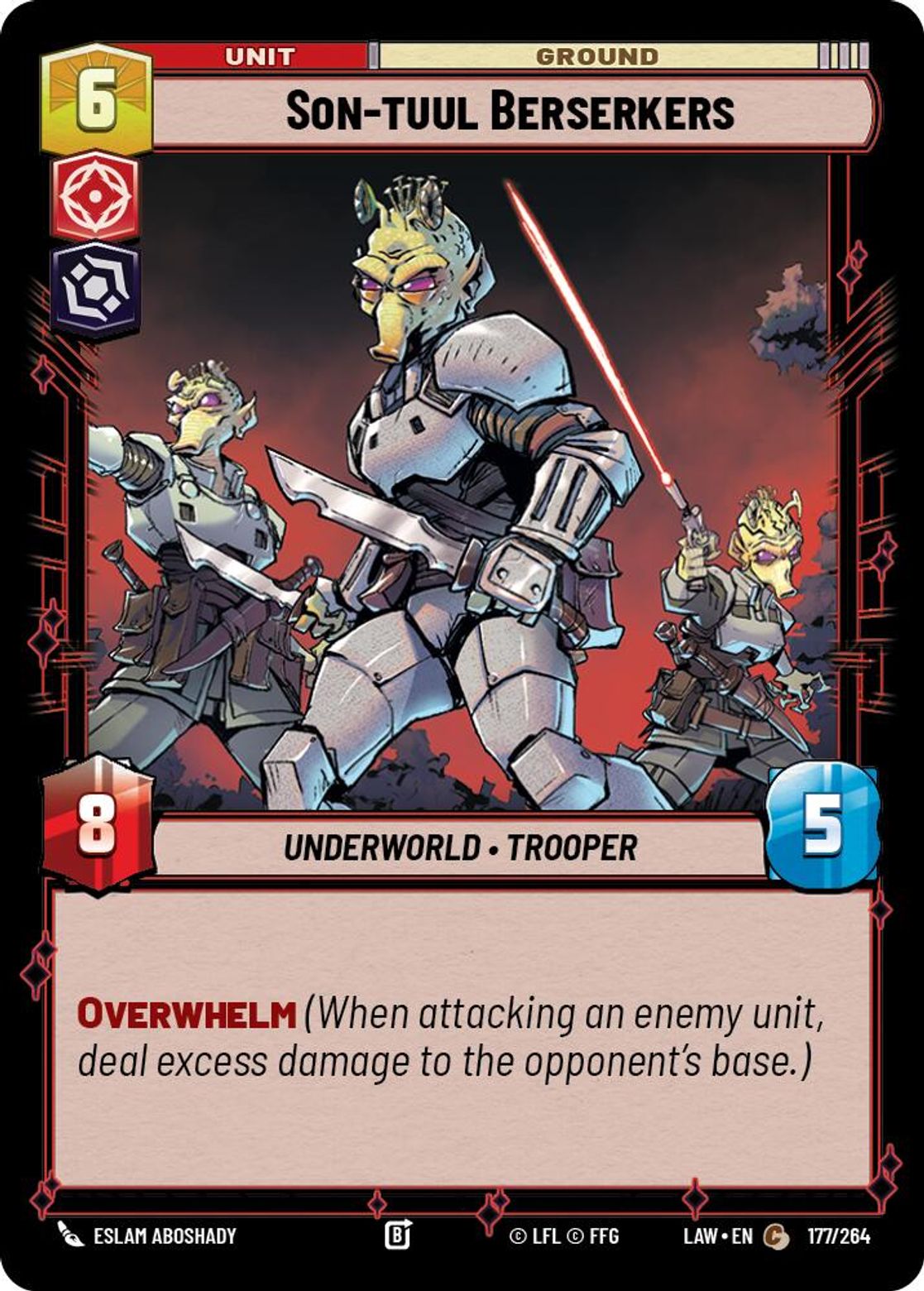
Overwhelm
When a unit with Overwhelm attacks a unit, it deals just enough damage to defeat the defender and the rest to the defending player's base. A 5-power Overwhelm unit attacking a unit with 3 HP left deals 3 to the unit and 2 to the base. If the defender won't be defeated (because of a Shield, for example), nothing goes through to the base. If the defender leaves play before damage, all of the damage goes to the base.
Raid X and Grit
Raid adds X power only while the unit is attacking, so it does nothing on defense. Grit adds 1 power for each damage counter on the unit, all the time, and it updates as the unit is damaged or healed. One timing detail: during combat, Grit doesn't count the damage being dealt in that same exchange. A 2/2 Grit unit with no damage that takes 1 in a fight deals 2, not 3, and only has 3 power afterward.
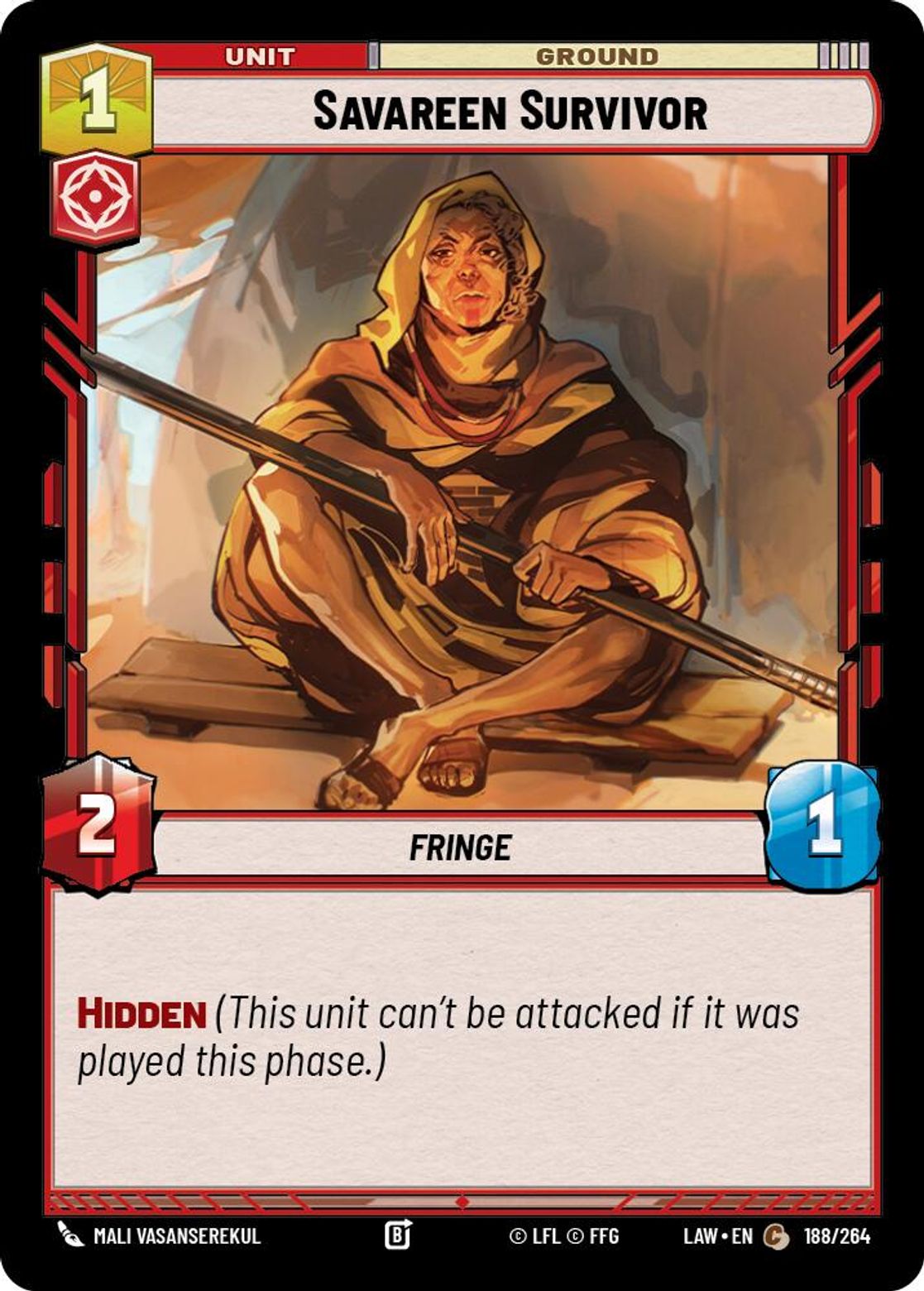
Hidden
A Hidden unit can't be attacked during the phase it was played (or deployed or created). Since the round's action phase is when attacks happen, that usually means it's safe until the next round. It can still be damaged or defeated by abilities. Hidden first appeared in Legends of the Force and is most common on Cunning and Aggression cards.


When a unit enters play
Ambush, Shielded and Support all resolve when the unit is played, at the same time as its "When Played" abilities. On a deployed leader they resolve when it deploys, and on a token unit when it's created. If several resolve at once, you choose the order.
Ambush
When you play a unit with Ambush, it may attack an enemy unit right away, even though it entered play exhausted. It can only attack a unit this way, not the base, and if there's no enemy unit it can legally attack, nothing happens. The attack happens immediately, before your opponent's next action, and it's a normal attack in every other way.
Shielded
When the unit is played, it gets a Shield token, which prevents the next instance of damage that would be dealt to it. Shielded units are best at attacking into something bigger, since the Shield absorbs the damage coming back.
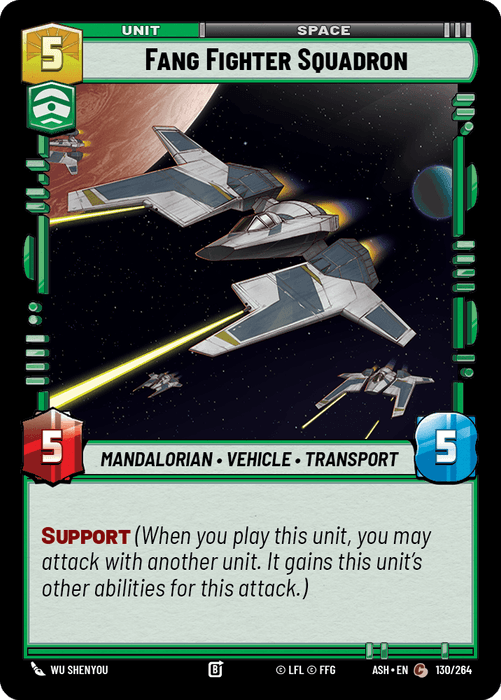
Support
When you play a unit with Support, you may attack with one of your other units, and that unit gains the Support unit's other abilities for the attack. A Support unit with Overwhelm, for example, lets the attacking unit deal excess damage to the base. The attacker still has to be ready. Support appeared in Ashes of the Empire.


Keywords for your base
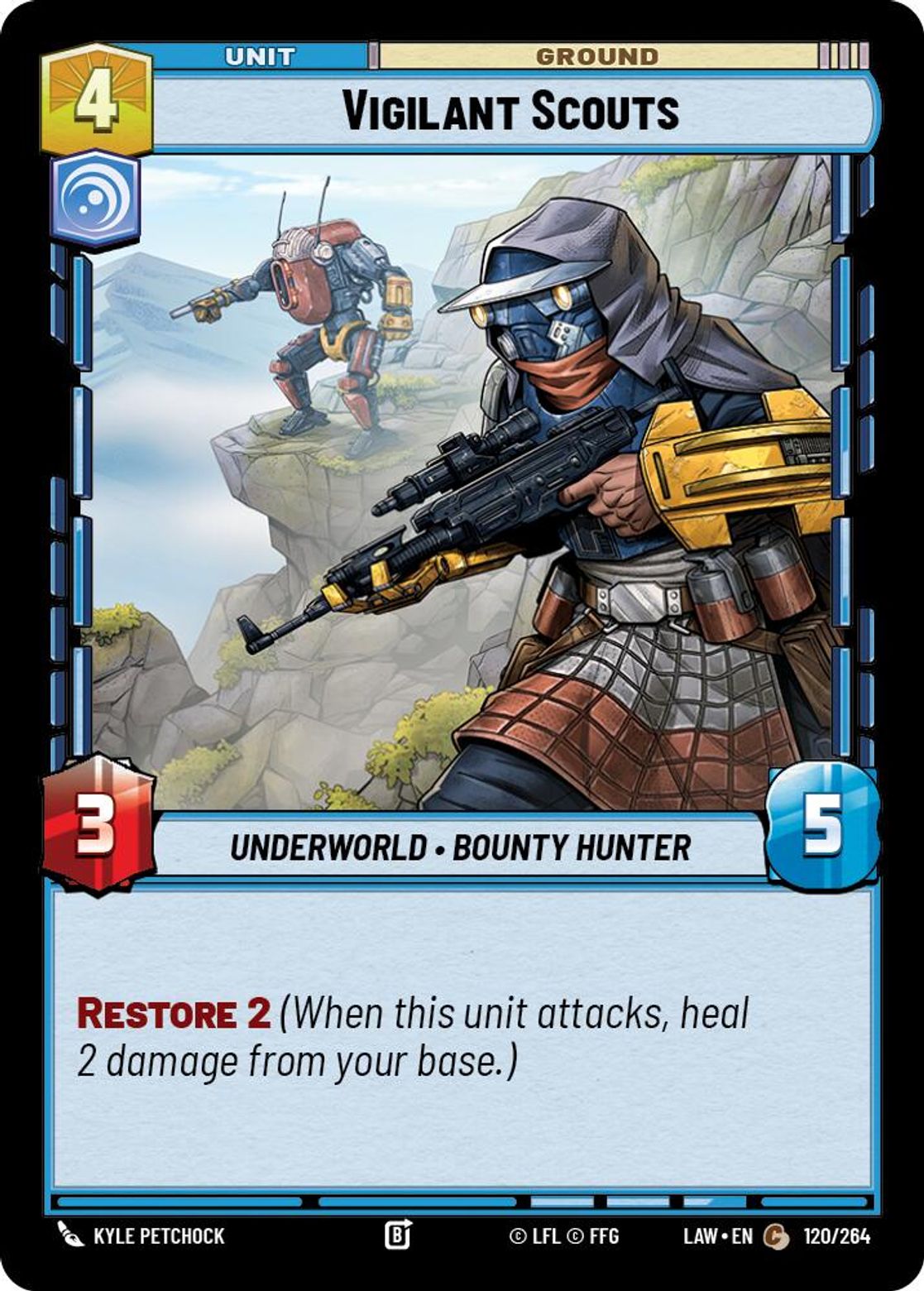
Restore X heals X damage from your base each time the unit attacks, whether it attacks a unit or the base. It resolves as an On Attack ability, before combat damage, so the heal happens even if the unit is defeated in the fight. Healing can't take a base above its printed HP.
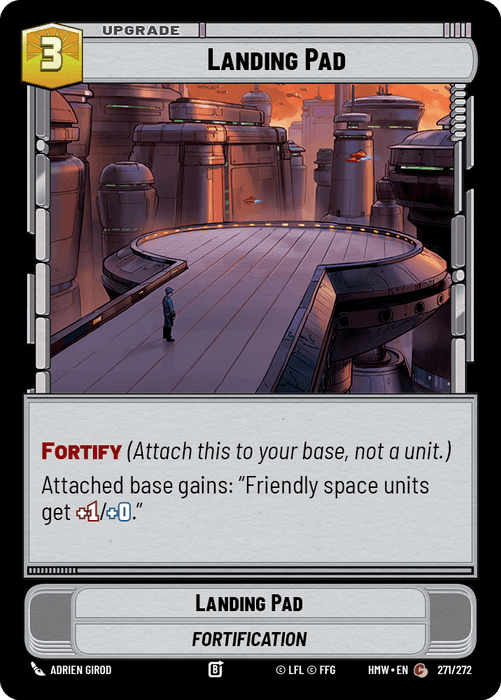
Fortify appears on upgrades from Homeworlds. An upgrade with Fortify attaches to your base instead of a unit, and it can be played even when no units are in play. It usually gives your base an ability, and it can still be defeated by anything that defeats upgrades.
Playing cards from your resources
Resources are face-down cards, and normally their text does nothing. Two keywords are the exception: they let you play the card from your resource zone. In both cases, the card is replaced by the top card of your deck, which comes in as an exhausted resource, so your resource count stays the same.
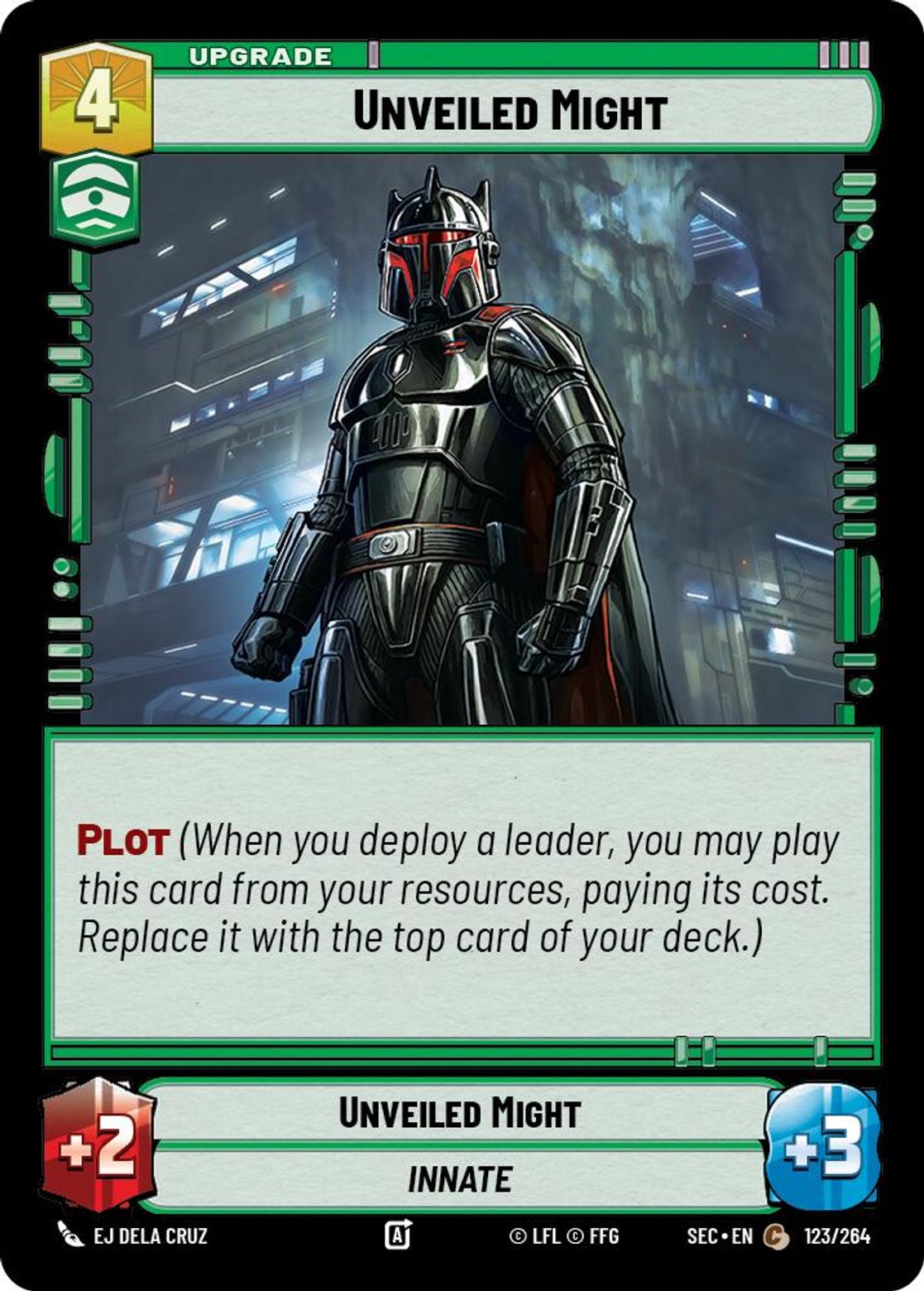
Plot (from Secrets of Power) triggers when you deploy a leader. Right after the deploy, you may play any number of Plot cards from your resources, one at a time, paying each card's normal cost. Only cards that were already resources when the leader deployed qualify. Smuggle (from Shadows of the Galaxy) works on any of your turns: you play the card as an action, paying the cost printed in brackets after Smuggle instead of its normal cost, and the Smuggle card can be exhausted to help pay for itself.
Both change how you resource. A Plot or Smuggle card is a card you can put face down without giving it up, which is why decks built around them resource more freely.
Piloting
Piloting, from Jump to Lightspeed, is on ground units that can also be played as an upgrade. Pay the Piloting cost in brackets and attach the card to a friendly Vehicle unit that doesn't already have a Pilot. As an upgrade, it adds its power and HP modifiers to the Vehicle. You can still play the card as a normal unit for its printed cost.

Keywords from older sets
Four keywords appear on cards from Shadows of the Galaxy and Twilight of the Republic, which have rotated out of Premier. You'll meet them in Eternal, where every released set is legal, and in casual games with older cards.


Which keywords stack
A unit can gain a keyword it already has, usually from an upgrade or another unit's ability. Whether that does anything depends on what follows the keyword:
Tokens
Tokens are cards that don't start in your deck. They're set aside at the start of the game and put into play by abilities: abilities "give" token upgrades and "create" token units. Tokens are created rather than played, so they don't trigger When Played abilities, and their cost counts as 0. When a token would leave play for any reason (to your hand, your discard pile or anywhere else), it is set aside instead.
Token upgrades
Token units
Token units enter play exhausted like any unit, unless the ability that creates them says to ready them.
Other tokens
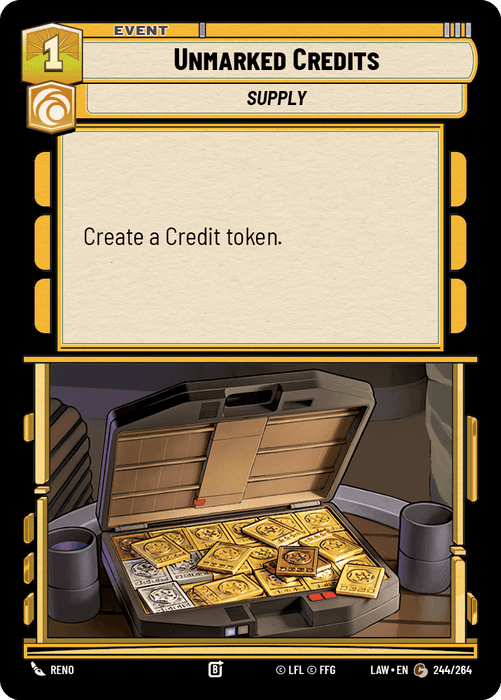
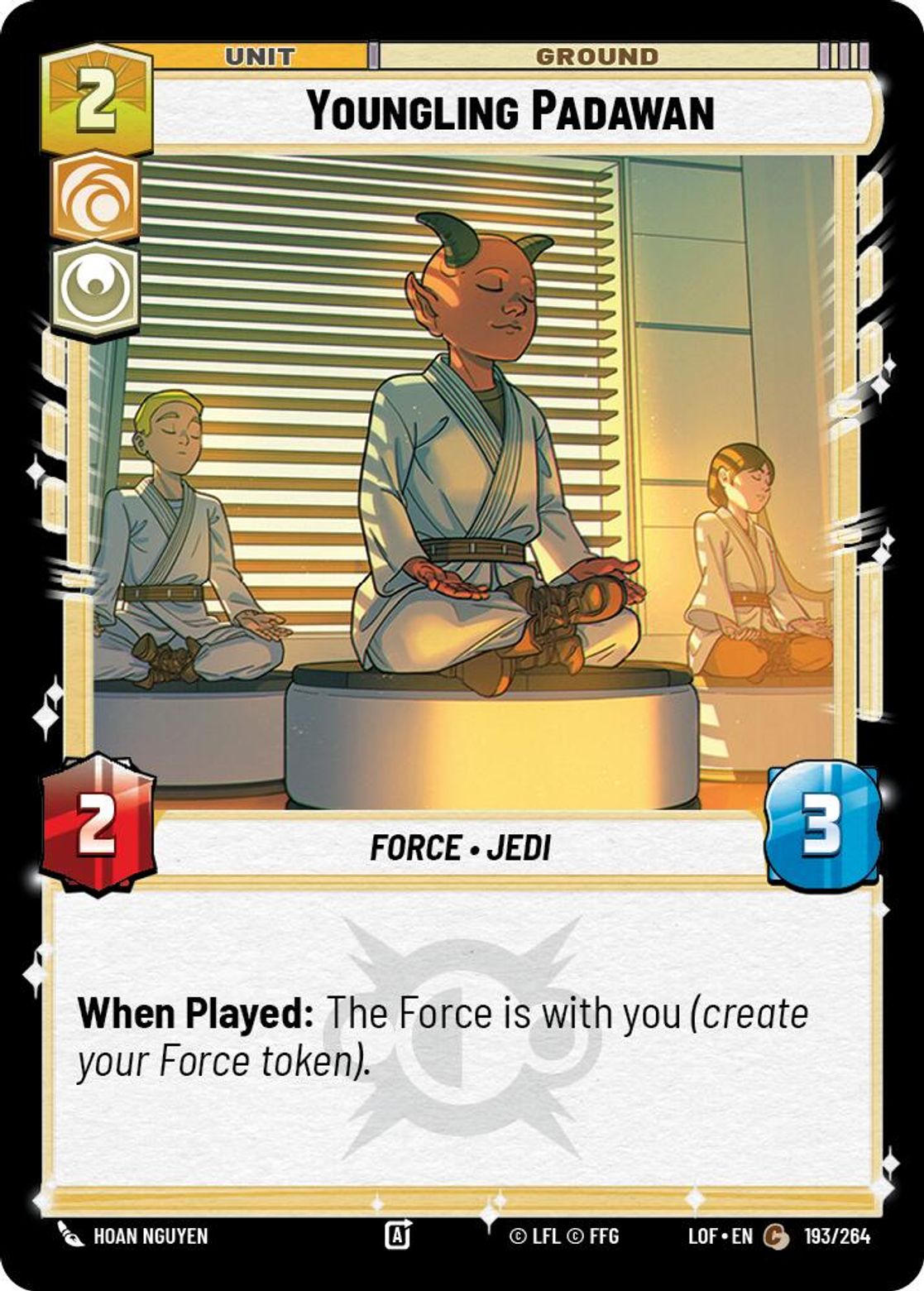
A Credit token, from A Lawless Time, sits in your resource zone but isn't a resource. While you're paying a cost, you may defeat it to pay 1 less. The Force token, from Legends of the Force, sits in your base zone, and you can control only one. "The Force is with you" creates it, and "use the Force" means defeating it to pay for an effect. Some cards also check whether the Force is with you, which is true while you control the token.
Other terms on cards
These aren't keywords, but they show up in bold on most cards and in most rules questions.
When a card's text contradicts the rules, the card wins. That's the first golden rule in the Comprehensive Rules, and it's how a single card can let a unit attack across arenas or ignore a keyword.
Frequently Asked Questions
How many keywords are in Star Wars: Unlimited?
The Comprehensive Rules version 9.0 define 17 keywords: Ambush, Grit, Overwhelm, Raid, Restore, Saboteur, Sentinel, Shielded, Bounty, Smuggle, Coordinate, Exploit, Piloting, Hidden, Plot, Support and Fortify. Each new set can add more.
What does Sentinel do in Star Wars: Unlimited?
Enemy units in the same arena as a unit with Sentinel can't attack your non-Sentinel units or your base, so they have to attack a Sentinel unit. A unit with Saboteur can ignore Sentinel. An ability that says a Sentinel unit can't be attacked, such as Hidden, doesn't protect it.
Do keywords stack in Star Wars: Unlimited?
Only keywords with a number, a cost or ability text after them. Raid 1 and Raid 2 on the same unit add up to Raid 3, and two different Bounty abilities both resolve. A unit with Grit, Sentinel or Ambush gains nothing from getting the same keyword a second time.
What does an Experience token do?
An Experience token is a token upgrade that gives the unit it's attached to +1 power and +1 HP. A unit can have any number of them, and each one adds +1/+1. Like every token, it is set aside, not discarded, when it leaves play.
What does an Advantage token do in Star Wars: Unlimited?
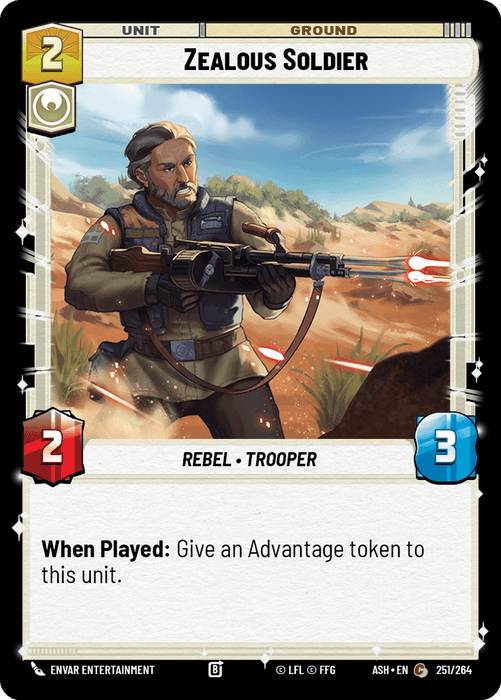
An Advantage token is a token upgrade that gives the attached unit +1 power. It is defeated when that unit's next attack or defense ends, so it is a one-fight bonus rather than a permanent one.
What is a Spy token in Star Wars: Unlimited?
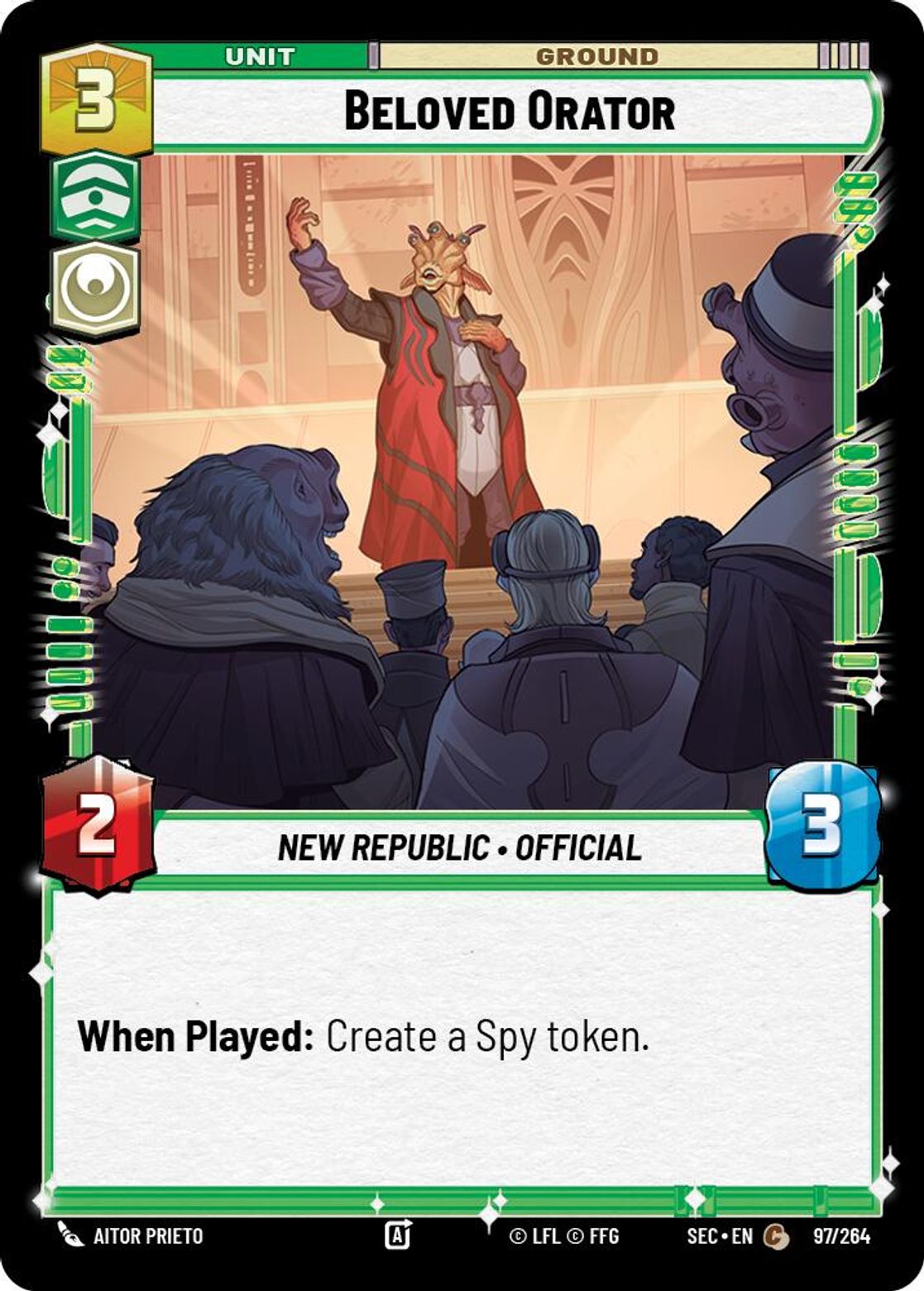
A Spy token is a token unit: a ground unit with 0 power, 2 HP, Raid 2 and the Official trait, and no aspect icons. Because of Raid 2, it attacks for 2 even though its printed power is 0.
Do Shield tokens stop indirect damage?
No. Indirect damage can't be prevented, so it ignores Shield tokens. The Shield stays on the unit, untouched, and the damage is placed as if the Shield weren't there.
Look up any Star Wars: Unlimited card.
Every Star Wars: Unlimited card has a TurnZero HQ page with its text, keywords and both sides of a leader, and the app scans your own cards in with your phone. Free to start.
Create Free AccountStar Wars: Unlimited card names and images are the property of Lucasfilm Ltd. and Fantasy Flight Games. © & ™ Lucasfilm Ltd. TurnZero HQ is not affiliated with, sponsored, or endorsed by Lucasfilm Ltd., Disney, Fantasy Flight Games, or Asmodee. Card data comes from swu-db.com, and prices from TCGplayer.