Star Wars: Unlimited Beginner Series
How Turns Work in Star Wars: Unlimited
Star Wars: Unlimited doesn't give you a whole turn. Each round, you and your opponent trade single actions until you both pass, then everyone draws 2 cards, adds a resource and readies. This guide walks through a round step by step.
The short answer
A game of Star Wars: Unlimited is a series of rounds. Each round has two phases:

In the rules, a "turn" is one of those single actions, not a full sequence of plays. That's the main thing that separates Star Wars: Unlimited from games like Magic or Pokémon, where you play out everything you want before your opponent gets to move. Here, every play gets an answer before your next one. This page follows the publisher's Comprehensive Rules version 9.0, dated October 9, 2026.
Before the first round
Setup happens once, in this order: each player puts their base and leader into play (leader side face up), a player chosen at random decides who starts with the initiative, everyone shuffles and draws 6 cards, each player may mulligan once (the player with the initiative decides first), and each player puts exactly 2 cards from their hand into play as resources, face down and ready.
Then the first round begins with the first action phase. Nobody draws before it: the 6-card opening hand, minus the 2 cards you resourced, is what you have for round one. The how to play guide covers setup in more detail.
The action phase
The player who starts the round with the initiative counter is the first active player and takes the first action. Then their opponent takes one action, then the first player again, and so on. After each action, any abilities it triggered resolve before the other player acts.
The phase ends when both players pass using consecutive actions. Passing once doesn't lock you out: if you pass and your opponent plays a card, you can act again. Only two passes in a row end the phase.
There is no limit on how many actions you take in a round. You stop when you run out of useful things to do (or resources to do them with), when you'd rather pass and see what your opponent does, or when you take the initiative.
The five actions
On each of your turns in the action phase, you choose exactly one of these:
Any action other than passing has to change the game state, so you can't use an ability that would do nothing just to stall. Abilities that trigger along the way (When Played, On Attack, When Defeated and the like) are not actions of their own. They resolve as part of the action that set them off, and they don't use up your turn.
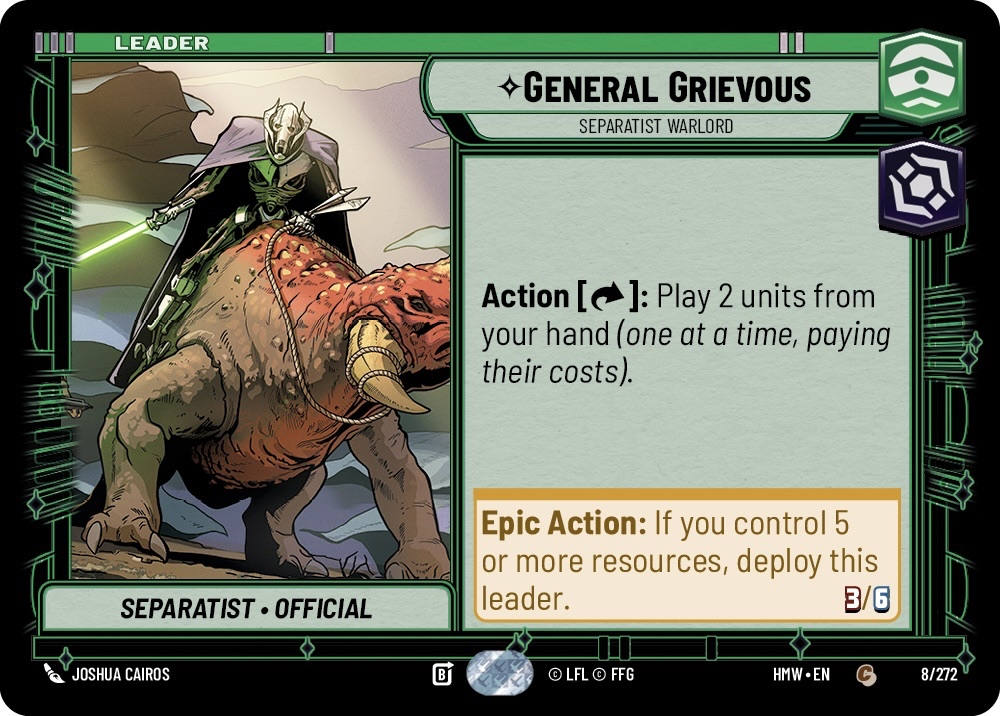
Leaders use the third action. Most leaders have an Epic Action that deploys them once you control enough resources, and an Epic Action can be used only once per game. Many leaders also have an ordinary Action, often with an exhaust cost, that you can use every round.
General Grievous, Separatist Warlord shows both. His Action exhausts him to play 2 units from your hand, one at a time and paying their costs, which uses one turn for two plays. His Epic Action deploys him once you control 5 or more resources.
The initiative
The initiative decides who acts first each round, and taking it is the biggest timing decision in the game. The rules for it are short:
You can take the initiative even if you already hold it. That sounds pointless, but it stops your opponent from taking it this round, and it is how you end your part of the phase while keeping first action for next round.
When to take it depends on the board. Acting first next round lets you attack before your opponent can set up a blocker, or play a big unit before they can answer. The price is everything you'd have done for the rest of this round. A common pattern is to take it once you've spent your resources and have no attacks worth making, since passing would give the same result and the initiative is free value on top. Taking it early, with resources left, is a deliberate trade: you give your opponent the rest of the round uncontested.
The regroup phase
Once the action phase ends, the regroup phase runs through these steps in order:
The resource step is the long-term decision of every round. Each card you resource is a card you'll never play, but every resource adds 1 to what you can spend each round for the rest of the game. A deck full of 6- and 7-cost units wants to resource every round; a deck that plans to win with cheap units can skip a round to keep a better card.
If your deck is empty when you'd draw, you take 3 damage to your base for each card you can't draw, so the draw step can end a long game. The how to win guide covers that and every other way a game ends.
Ready and exhausted
Cards turn sideways to show they are exhausted and turn back upright when they ready. Three things exhaust cards in a normal round: paying resources exhausts them, attacking exhausts the attacker, and many abilities have an exhaust cost.
A unit you play enters exhausted, so it can't attack until the regroup phase readies it. That's why a unit you play this round is mostly a blocker until next round. The exceptions are worth knowing:

An exhausted unit can still be attacked and still deals damage back when it defends. Exhausting matters for what a unit can do, not for whether it can be hit. The combat guide covers attacking in detail.
A sample round
Here is a round between two players, Ana and Ben, early in a game. Ana has the initiative, and both have 3 ready resources.
In the regroup phase, both draw 2 cards. Ana resources first because she has the initiative, then Ben. Everything readies, and round two begins with Ana acting first. Her 2-cost unit can attack now, and so can Ben's 3-cost unit when his turn comes.
Rounds in Twin Suns
Twin Suns, the multiplayer format, changes the action phase. Players act clockwise starting from the player with the initiative. Instead of "take the initiative," the action is "take an available counter," and there are three counters: the initiative, the blast counter (taking it deals 1 damage to each opponent's base) and the plan counter (taking it draws a card, then puts a card from your hand on the bottom of your deck). Each player can take one counter a round, and you can't simply pass while a counter is still available: you act or take a counter. Once you take one, you pass for the rest of the phase, as in a two-player game.
Frequently Asked Questions
How do turns work in Star Wars: Unlimited?
Players don't take full turns. The game is played in rounds, and in each round's action phase players alternate taking one action at a time: play a card, attack with a unit, use an action ability, take the initiative or pass. When both players pass in a row, the action phase ends and the regroup phase begins.
What does the initiative do in Star Wars: Unlimited?
The player with the initiative takes the first action of each round. Taking it is an action, only one player can take it each round, and the player who takes it passes for the rest of that action phase. If nobody takes it, whoever already has it keeps it for the next round.
What happens in the regroup phase?
Each player draws 2 cards, then each player may put 1 card from their hand into their resources, face down and exhausted. Then each player readies every exhausted card they control, including units, resources and their leader, and a new round begins.
Can you attack the turn a unit is played in Star Wars: Unlimited?
Usually not. A unit enters play exhausted, so it can't attack until the regroup phase readies it. Ambush is the main exception: a unit with Ambush may attack an enemy unit right after it is played. A leader that deploys as a unit enters the ground arena ready, so it can attack that same round.
Does using a triggered ability count as your action?
No. Abilities such as When Played, On Attack and When Defeated resolve as part of the action that set them off, or right after it, and they don't use up a turn. Only the five actions (play a card, attack, use an action ability, take the initiative and pass) do.
How many cards do you draw each round in Star Wars: Unlimited?
Two, in the regroup phase at the end of each round. You draw 6 cards at the start of the game and don't draw again until the first regroup phase, unless a card tells you to.
Keep the round and the initiative on one phone.
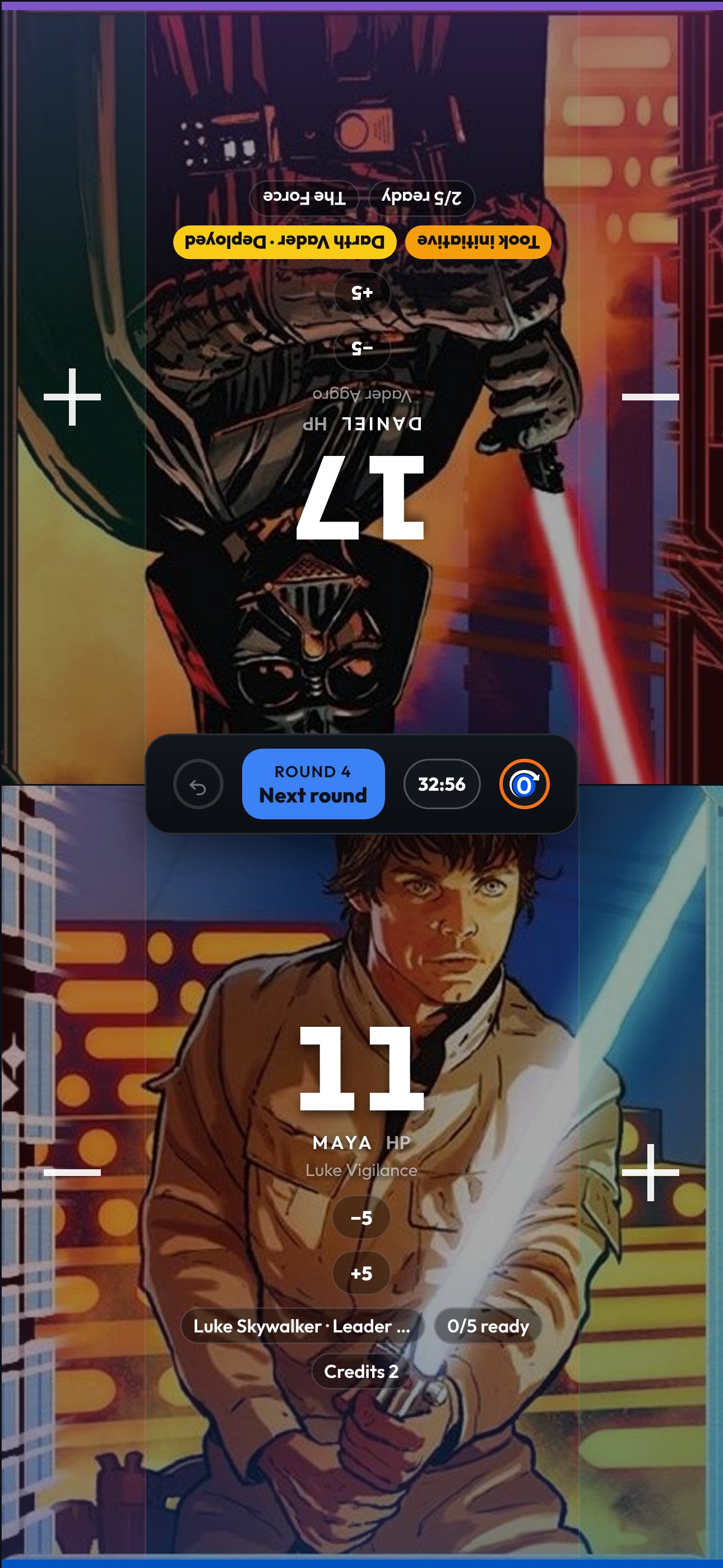
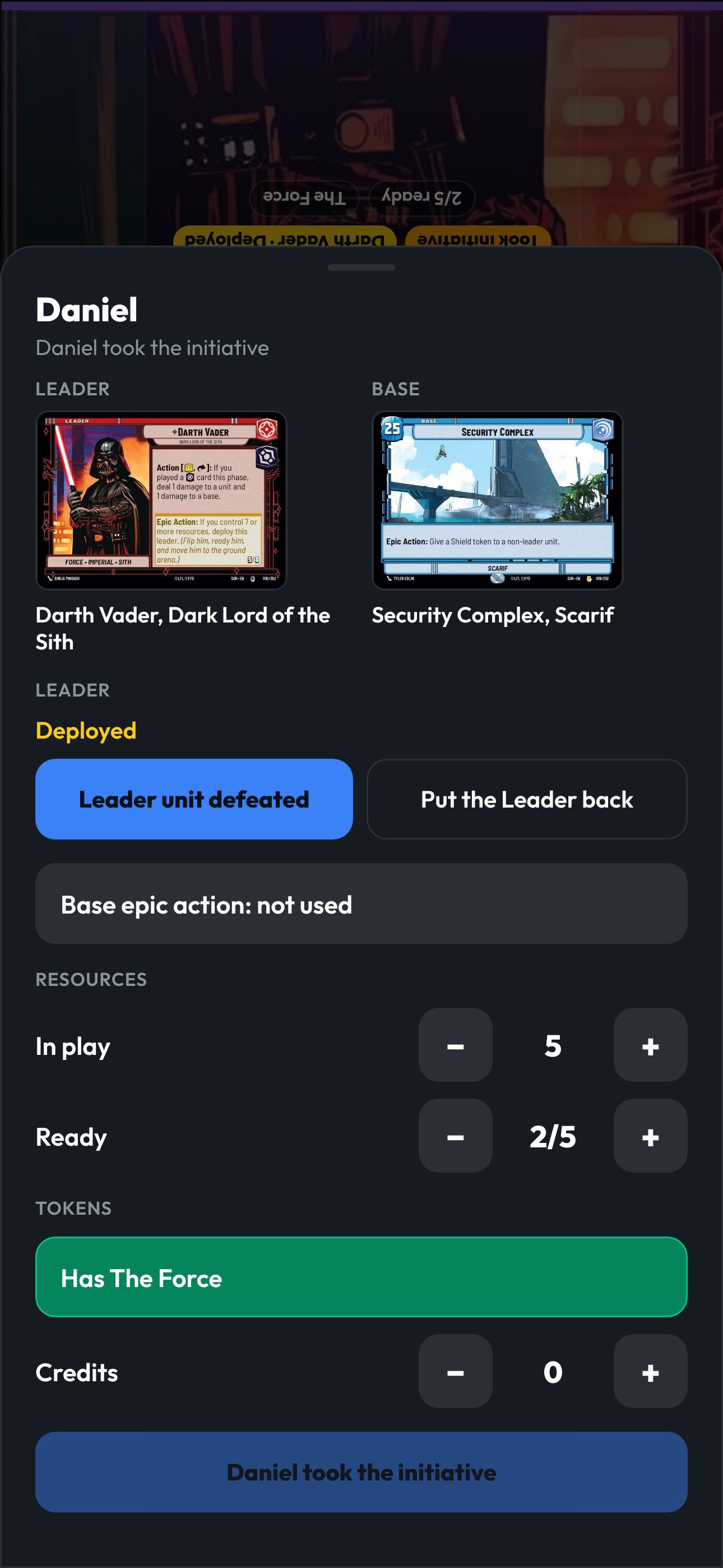
TurnZero HQ tracks each base's HP, who has the initiative, the round and each leader while the table watches. Free to start.
Create Free AccountStar Wars: Unlimited card names and images are the property of Lucasfilm Ltd. and Fantasy Flight Games. © & ™ Lucasfilm Ltd. TurnZero HQ is not affiliated with, sponsored, or endorsed by Lucasfilm Ltd., Disney, Fantasy Flight Games, or Asmodee. Card data comes from swu-db.com, and prices from TCGplayer.