Star Wars: Unlimited Beginner Series
Star Wars: Unlimited Aspects (Colors), Explained
Aspects are Star Wars: Unlimited's six colors. Your leader and base decide which aspects your deck plays at printed cost, and every other aspect icon on a card adds 2 to what it costs you. This guide covers each aspect, the penalty and how to pick a pair.
The short answer
Every card belongs to zero or more aspects, shown as colored icons beside its cost. Your leader and base show aspect icons too, and those are the aspects your deck provides. A card whose icons are all covered plays at its printed cost. For each icon that isn't covered, the card costs 2 more resources. That is the aspect penalty, and it is the only thing aspects restrict: you can put any card in any deck.
This page follows the publisher's Comprehensive Rules version 9.0, dated October 9, 2026. The card counts below come from the TurnZero HQ catalog of the six Premier-legal sets as of October 2026: Jump to Lightspeed, Legends of the Force, Secrets of Power, A Lawless Time, Ashes of the Empire and Homeworlds.
The six aspects
Four aspects describe a style of play, and two describe which side of the war a card is on.
Each aspect has roughly the same number of cards: between 333 and 368 non-leader, non-base cards per aspect across the six Premier sets. A card with no aspect icons is neutral. There are 44 neutral cards in those sets, and they fit in any deck without a penalty.

Perimeter AT-RT
Jump To Lightspeed #068
Vigilance
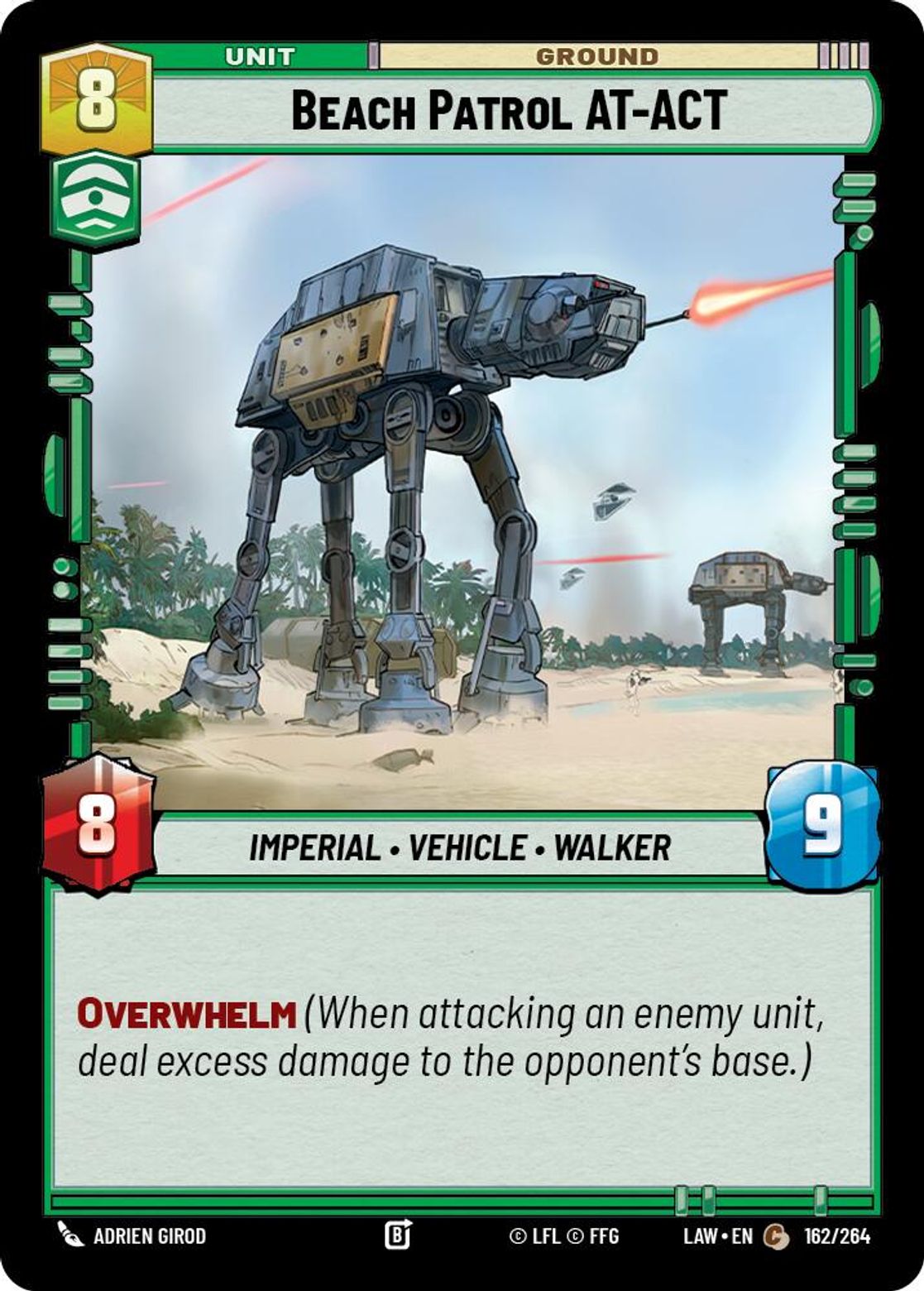
Beach Patrol AT-ACT
A Lawless Time #162
Command
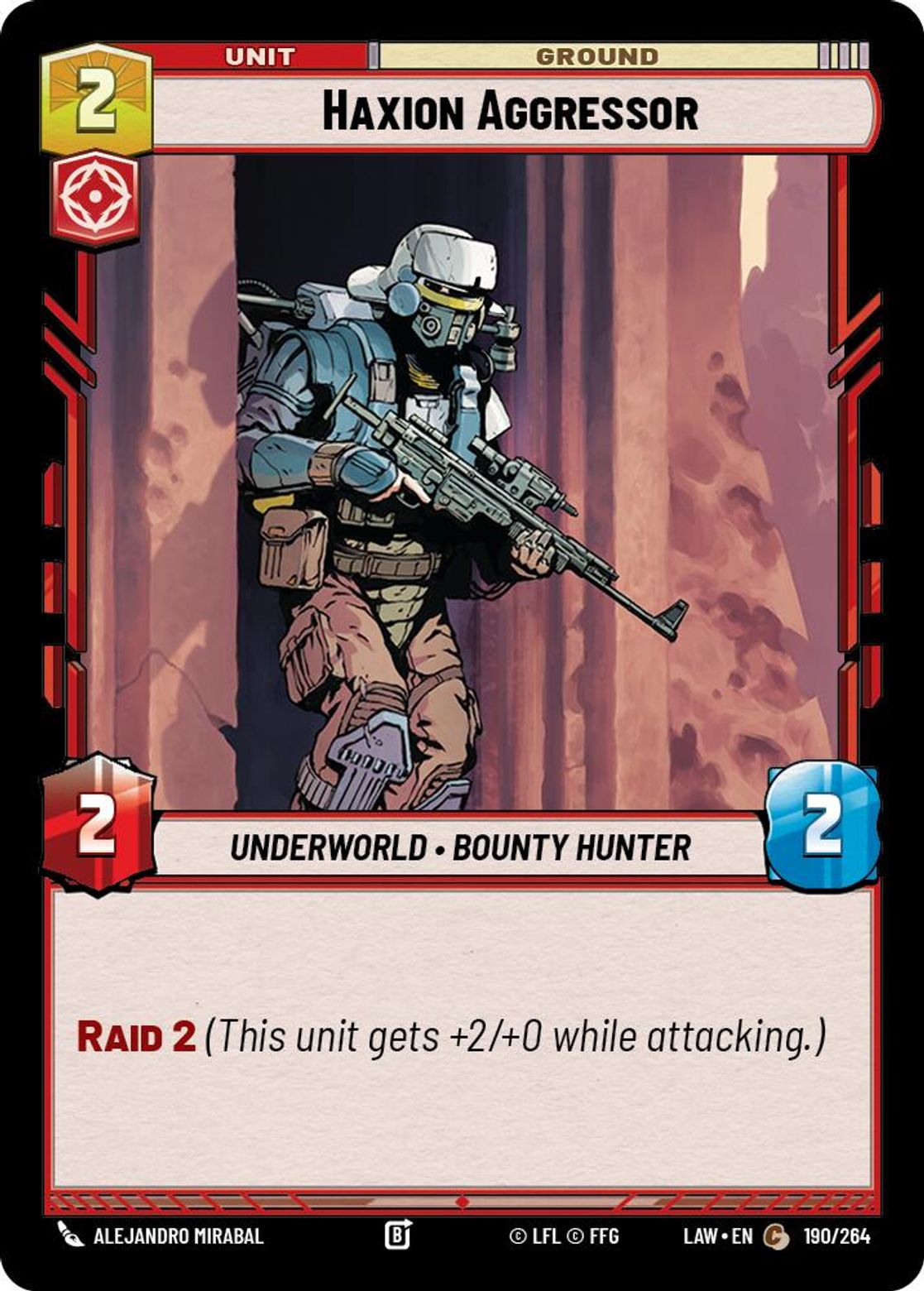
Haxion Aggressor
A Lawless Time #190
Aggression
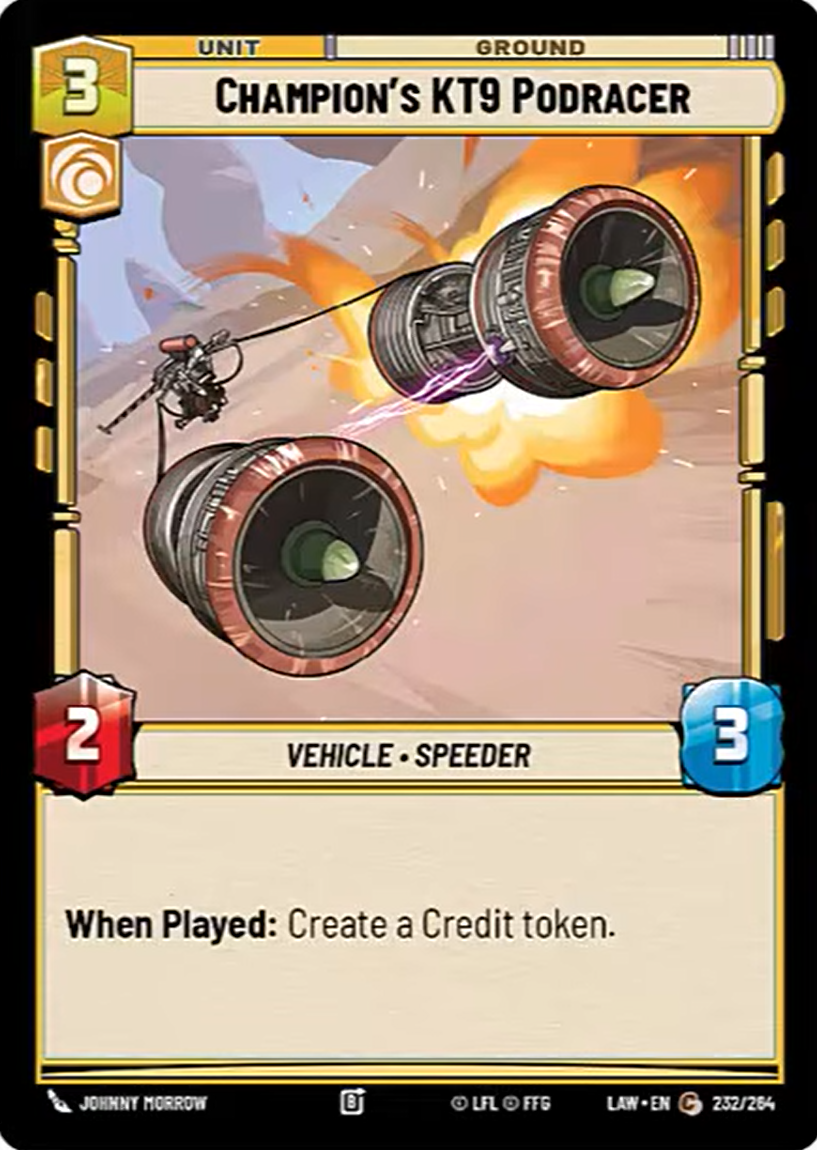
Champion's KT9 Podracer
A Lawless Time #232
Cunning
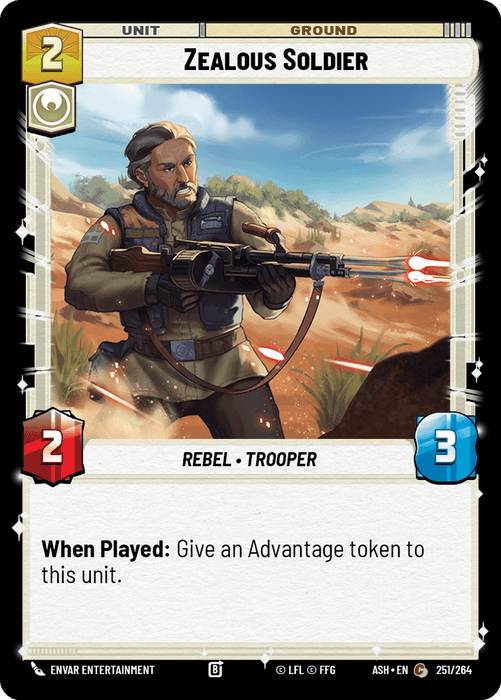
Zealous Soldier
Ashes of the Empire #251
Heroism

Sandtrooper Cavalry
Legends of the Force #232
Villainy
Where your aspects come from
Your leader and base are the only cards that provide aspects. Their icons sit on the right side of the card, and every icon counts once.
Bases never provide Heroism or Villainy, so your side comes from your leader. A standard deck therefore covers three aspects at printed cost: the two on its leader and the one on its base. If the base repeats one of the leader's aspects, the deck covers only two, but it gets two icons of that aspect, which matters for cards that print the same icon twice.
The aspect penalty
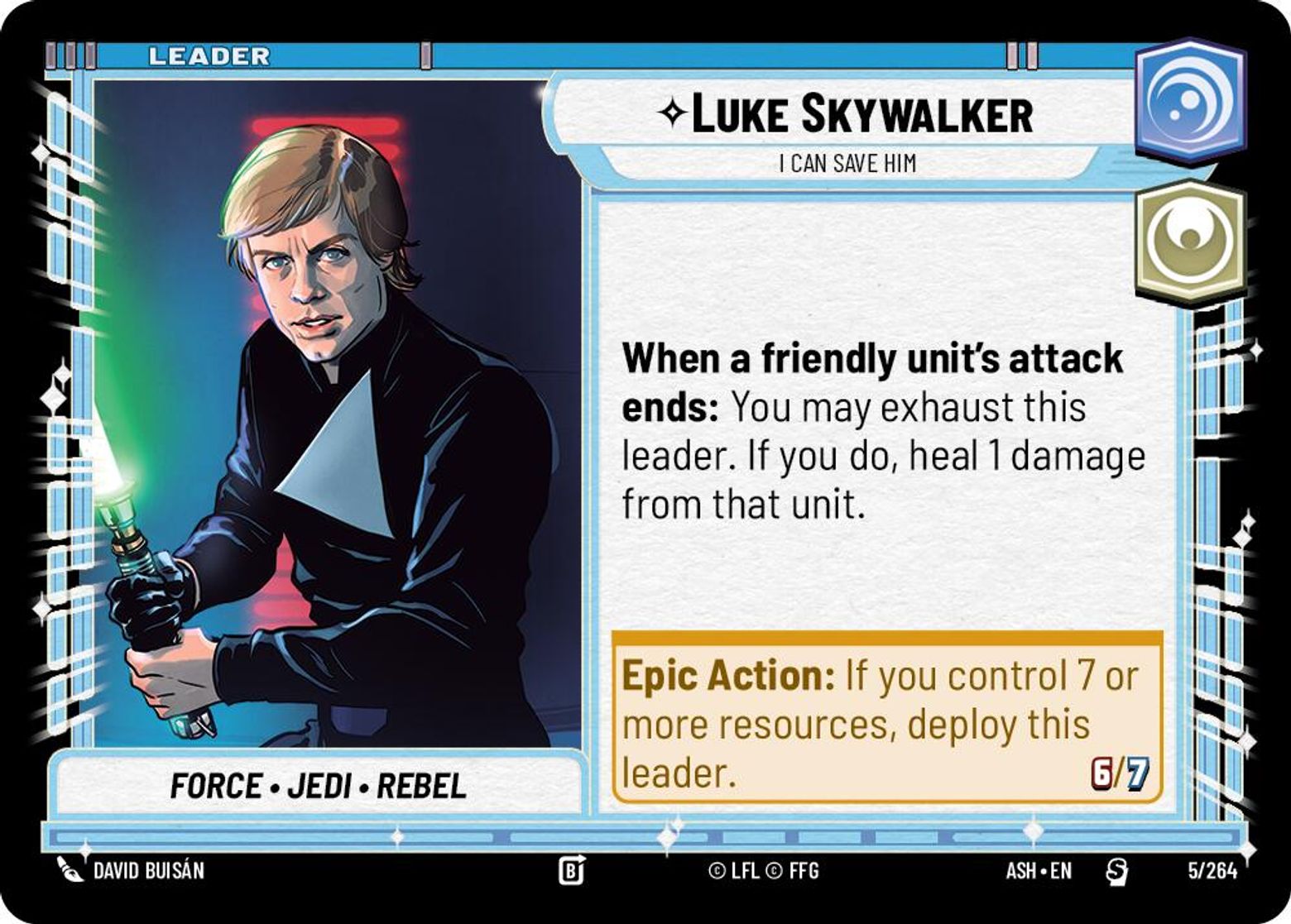
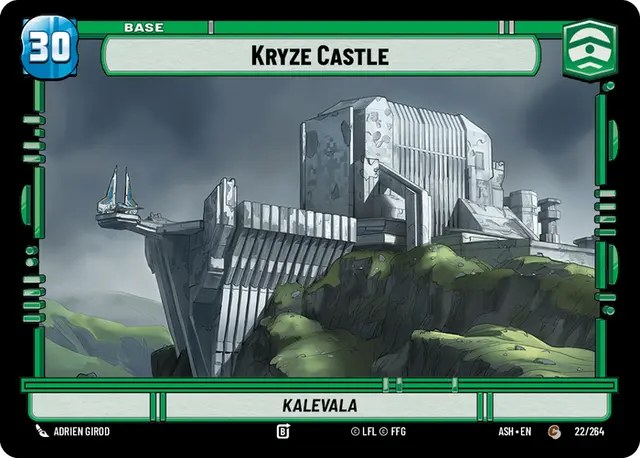
When you play a card, compare its aspect icons with the icons your leader and base provide. Each icon on the card that they don't provide adds 2 resources to its cost. Take the Luke Skywalker leader above (Vigilance, Heroism) with Kryze Castle (Command). That deck provides one Vigilance, one Heroism and one Command icon:

Three details trip up new players:

Mace Windu, Austere Centrist
Homeworlds #128
Two Command icons
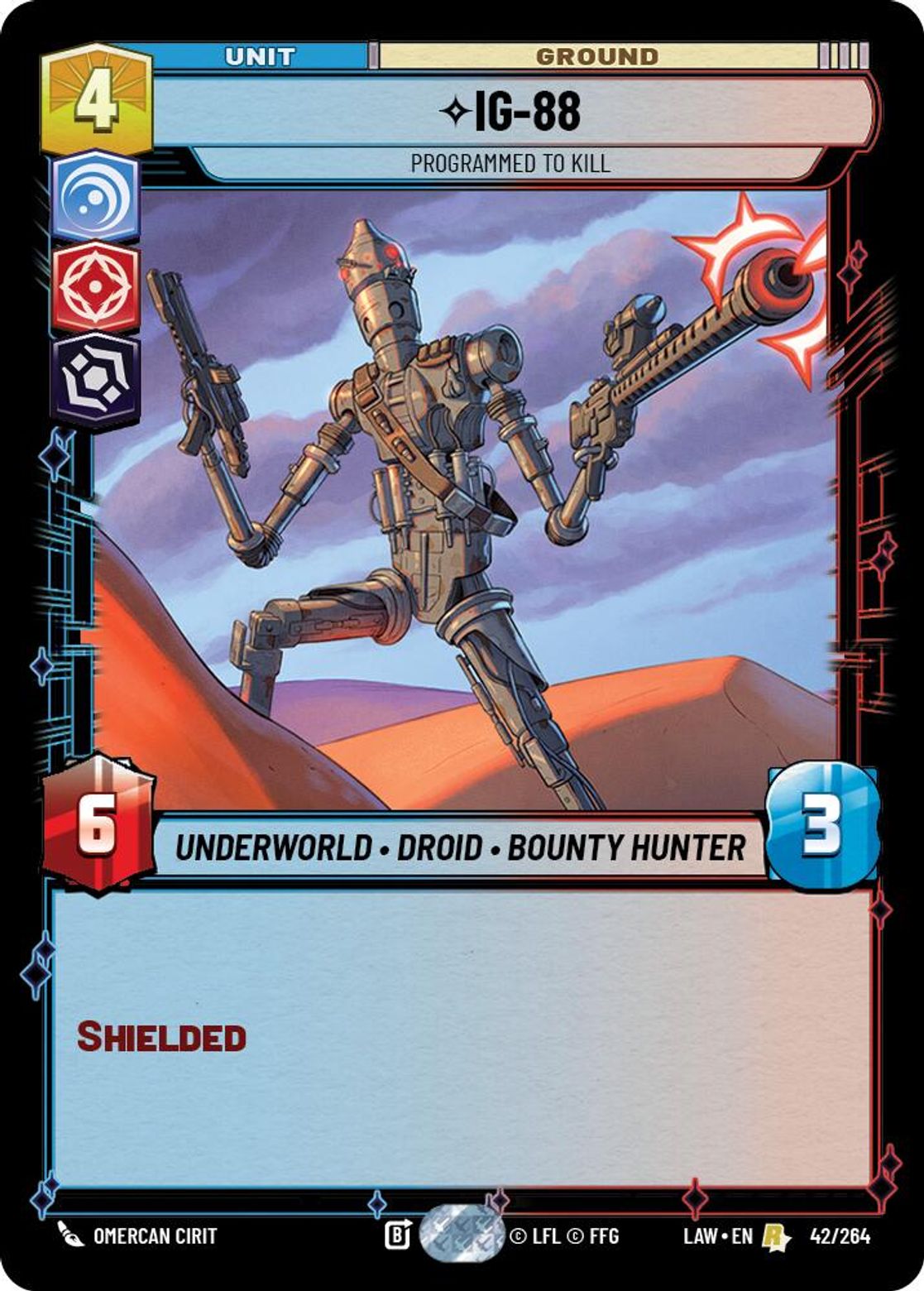
IG-88, Programmed to Kill
A Lawless Time #042
Three aspect icons
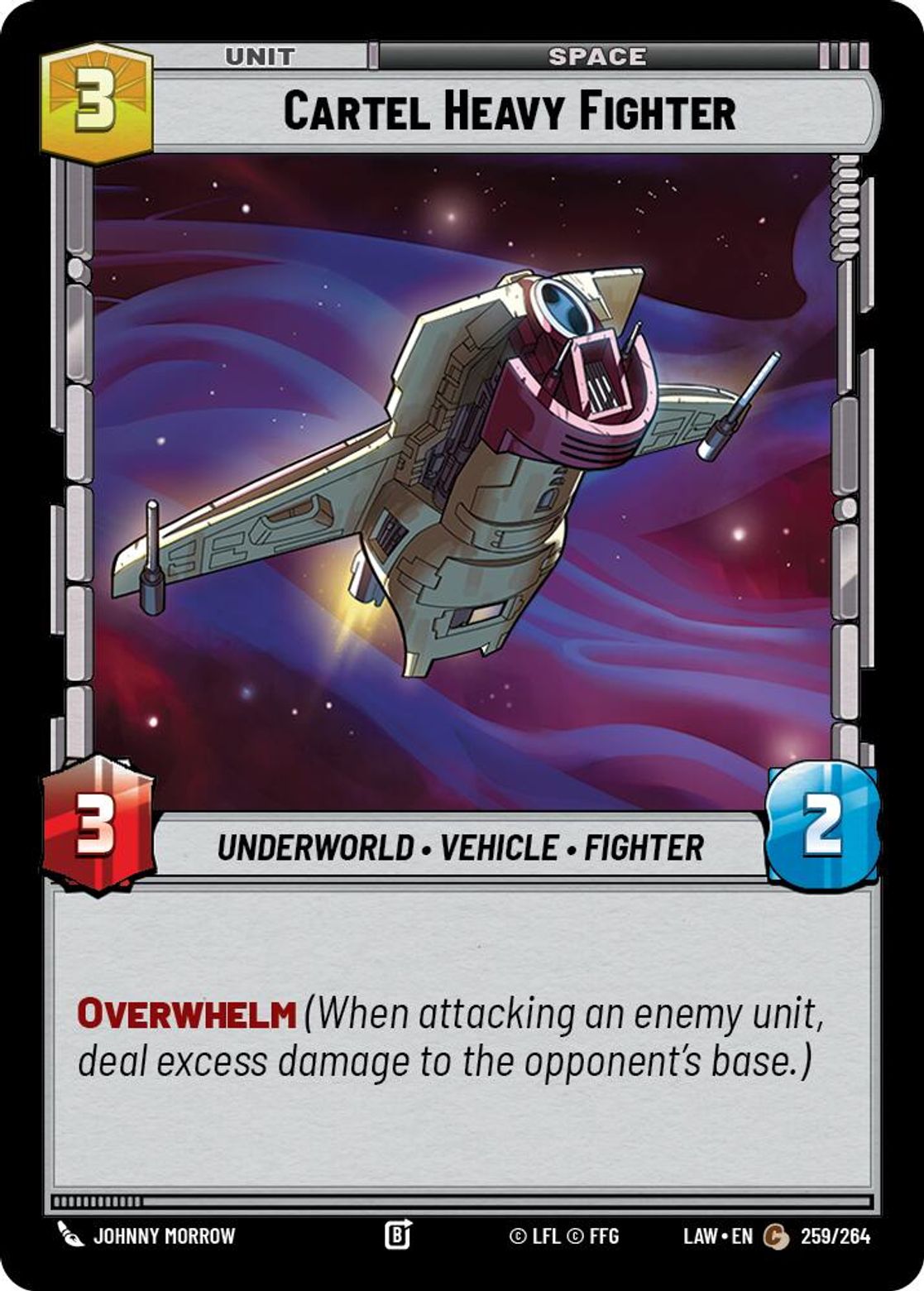
Cartel Heavy Fighter
A Lawless Time #259
Neutral: no icons
The penalty makes off-aspect cards a real choice rather than a ban. Paying 2 more for one card you need, such as a removal event your aspects lack, can be worth it. Paying 4 more for a card with two uncovered icons rarely is. A Lawless Time also printed common bases whose Epic Action plays a card while ignoring one of its Vigilance, Command, Aggression or Cunning penalties, once per game.
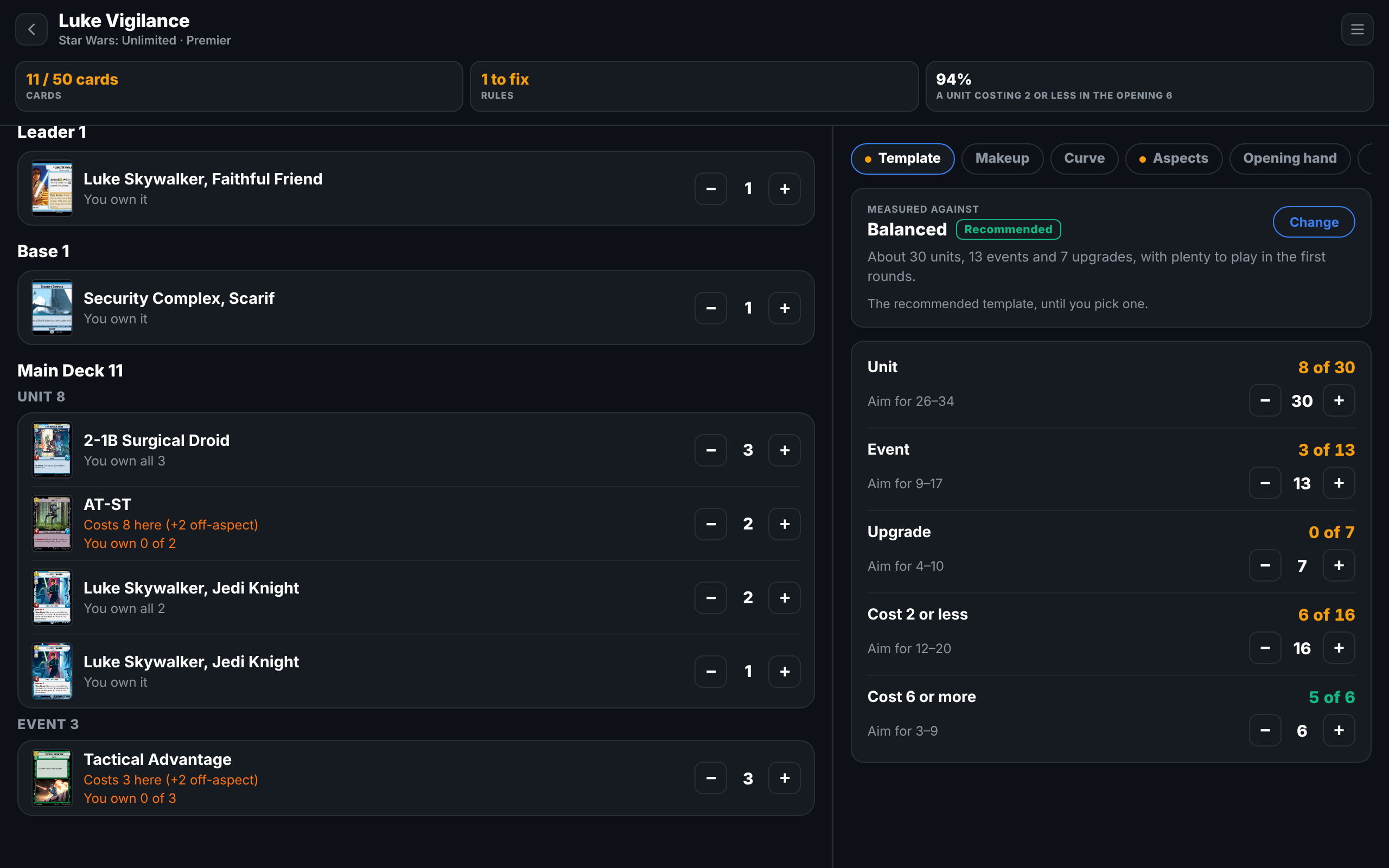
TurnZero HQ's deck builder shows each off-aspect card's real cost in your deck, such as "Costs 8 here (+2 off-aspect)", so you can see the penalty while you build.
What each aspect does
Aspects are not strict rules about what a card can do; any aspect can have a card that does almost anything. But the keywords and effects cluster, and the counts below (from the six Premier sets) show where. A card with two aspects counts for both.
Vigilance (blue)
Vigilance protects your base and removes threats. It has the most Sentinel cards (49 of 106), the most Shielded cards (25 of 43), the most Restore cards (36 of 68) and the most Grit cards (24 of 40). About 17% of Vigilance cards heal, more than any other aspect, and 14% defeat something outright. A Vigilance deck tends to win slowly, by surviving until its bigger cards take over.
Command (green)
Command fields the largest army. It has the most units of the four style aspects (266), the most Overwhelm cards (33 of 67) and the most cards that hand out Experience tokens. It also has the most cards that refer to resources, from putting extra cards into your resources to units that grow stronger the more resources you control.
Aggression (red)
Aggression deals damage. About 36% of Aggression cards deal damage directly, more than twice the share of any other aspect. It has the most Raid (30) and Saboteur (21) cards, and its units have the highest power for their cost. An Aggression deck usually wants to end the game before the opponent's bigger cards matter.
Cunning (yellow)
Cunning wins on timing. It has the most Ambush (35) and Hidden (27) cards and the most events (77 of its 345 cards). It leads in exhausting enemy units, returning units to their owner's hand and discard effects. Cunning cards often trade a card for tempo: a round your opponent loses rather than a unit they lose.
Heroism and Villainy
Heroism and Villainy mark the side a card is on more than a play style. Heroism holds the Rebels, Jedi and Republic; Villainy holds the Empire, the Sith, the Separatists and much of the Underworld. Because your leader provides one of them, they shape your deck through the leader you choose. Many cards check for your side's traits (Rebel, Imperial, Jedi, Separatist), so a Heroism or Villainy deck often builds around those traits.
Choosing your aspects
Start from the leader, since the leader sets two of your three aspects and gives your deck its main ability. Then pick a base whose aspect covers the cards you most want to play. A base that adds a third aspect widens your card pool; a base that doubles one of your leader's aspects lets you play double-icon cards at printed cost.
For a first deck, a two-player starter deck is the simplest start, because its leader, base and cards already match. Once you build your own, keep most of your cards inside your three aspects and treat off-aspect cards as a small, deliberate exception. Which pairing is strongest changes with each set and each Premier rotation, so it's worth checking what players are building before an event.
The deck building guide covers the rest of the Premier rules, and the card reading guide shows where the aspect icons sit on each card type.
Frequently Asked Questions
What are the aspects in Star Wars: Unlimited?
Aspects are the game's six colors: Vigilance (blue), Command (green), Aggression (red), Cunning (yellow), Heroism (white) and Villainy (black). Each card shows its aspects as icons, and your leader and base provide the aspects your deck plays at printed cost.
What is the aspect penalty in Star Wars: Unlimited?
When you play a card with an aspect icon that your leader and base don't provide, the card costs 2 more resources for each of those icons. The card is still legal to put in your deck and to play; it just costs more.
Can you play cards outside your aspects in Star Wars: Unlimited?
Yes. Any card can go in any deck, and you can play an off-aspect card by paying 2 extra resources for each aspect icon your leader and base don't cover. Neutral cards, which have no aspect icons, never pay a penalty.
How many aspects can a Star Wars: Unlimited deck have?
There is no limit on the cards you include, but the penalty-free aspects come from your leader and base. Most leaders provide two aspects and every base but one provides one, so a typical Premier deck covers three aspects at printed cost.
What does a card with two of the same aspect icon mean?
Each icon is counted separately. A card with two Command icons needs two Command icons from your leader and base to play at printed cost. If they provide only one, the card costs 2 more.
What is the best aspect in Star Wars: Unlimited?
None of them is best in general. Each aspect is strong at different things, and the strongest pairing changes with each set and with Premier rotation. For a first deck, pick the play style you enjoy, then use a leader and base that cover it.
See the real cost of every card in your deck.
Build a Star Wars: Unlimited deck in TurnZero HQ and it checks the Premier rules and shows each off-aspect card's cost with the penalty. Free to start.
Create Free AccountStar Wars: Unlimited card names and images are the property of Lucasfilm Ltd. and Fantasy Flight Games. © & ™ Lucasfilm Ltd. TurnZero HQ is not affiliated with, sponsored, or endorsed by Lucasfilm Ltd., Disney, Fantasy Flight Games, or Asmodee. Card data comes from swu-db.com, and prices from TCGplayer.