Star Wars: Unlimited Beginner Series
How to Win Star Wars: Unlimited
You win Star Wars: Unlimited by destroying your opponent's base: put damage on it equal to its HP, which is 30 on most bases. This guide covers every way a game can end and how to plan the race to get there first.
The short answer
Each player has one base, which starts in play and stays there all game. When the damage on your opponent's base equals or passes its printed HP, it is destroyed, the game ends immediately, and you win. A player whose base reaches 0 remaining HP can't take any more actions or resolve any abilities, so there's no last-second answer.
Damage reaches a base in two ways: a unit attacks it and deals damage equal to its power, or a card ability deals damage to it directly. Units in either arena can attack the base, and the base never deals damage back. This page follows the publisher's Comprehensive Rules version 9.0, dated October 9, 2026.
How much HP a base has
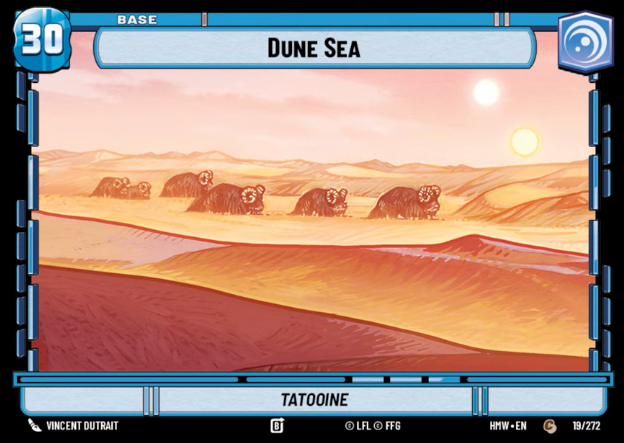
Base HP is printed on the base, and it's the length of the game. Across the six Premier-legal sets as of October 2026, bases range from 25 to 35 HP:
That's the tradeoff to weigh when you pick a base. A 25-HP base gives an aggressive opponent 5 fewer damage to deal, which is often a full attack, in exchange for its ability. A 35-HP base buys time at a cost you pay from the first draw. The base also provides one of your deck's aspects, which the aspects guide covers.


Every way a game ends
Running out of cards doesn't end the game by itself. If your deck is empty, you keep playing with the cards in your hand and in play. Each time you would draw from an empty deck, you deal 3 damage to your own base for each card you couldn't draw. The regroup phase draws 2, so an empty deck costs you 6 HP a round, and that damage can destroy your base like any other. A long game against a deck that heals can end this way.
Some cards heal a base, so the damage on it can go down as well as up. Healing can't take a base above its printed HP. The Restore keyword is the most common source.
Winning Twin Suns
Twin Suns, the multiplayer format, ends differently. When one player's base is destroyed, that player is eliminated, and the game doesn't stop right away: it ends at the end of the current phase. Then the player with the most HP remaining on their base wins, and players tied for the most share the victory.
Two rules shape the end of a Twin Suns game. The player who eliminates someone (by dealing the last damage to their base) heals 5 damage from their own base. And the blast counter, one of the three counters players can take each round, deals 1 damage to each opponent's base. Knocking out the weakest player is rarely the whole plan; you also want the healthiest base when the phase ends.
Planning the race
Most games are a race: both players are damaging each other's base, and the question is who gets there first. These habits help you win more of them.
Count the clock
Each round, add up the power your units can send at the opposing base and divide the HP it has left by that number. That's roughly how many rounds you need. Do the same for your opponent. If you need fewer rounds, attack the base and make them answer you. If you need more, trade with their units, protect your base and wait for your bigger cards. Raid counts toward the total; Restore on either side changes it.
Use both arenas
Ground units can't block space units, and Sentinel only protects its own arena. If your opponent has built a ground wall, a single space unit can attack their base every round, and the reverse is true for you. Watch the arena your opponent isn't defending.
Get damage past their units
Overwhelm turns a won fight into base damage. Saboteur ignores Sentinel. Direct damage events can finish a base with no attack at all. When the opposing base is low, these are the cards that close the game, and they're worth holding for the final round rather than spending early.
Time your leader and the initiative
A leader that deploys as a unit enters ready, so it can attack the round it arrives. Deploying when your opponent has no good blocker can mean a large chunk of base damage they can't prevent. The initiative matters most at the end: the player who acts first in the final round can attack before the other side heals or sets up a Sentinel. The turns guide covers when taking it is worth the rest of your round.
Don't ignore your own base
Damage on your base doesn't come off unless something heals it. A few points of chip damage early add up, and an opponent at 5 HP who attacks first beats a player at 6 HP who attacks second. Trading a unit to stop an attack is often worth it, even when you're ahead.
Tracking base damage
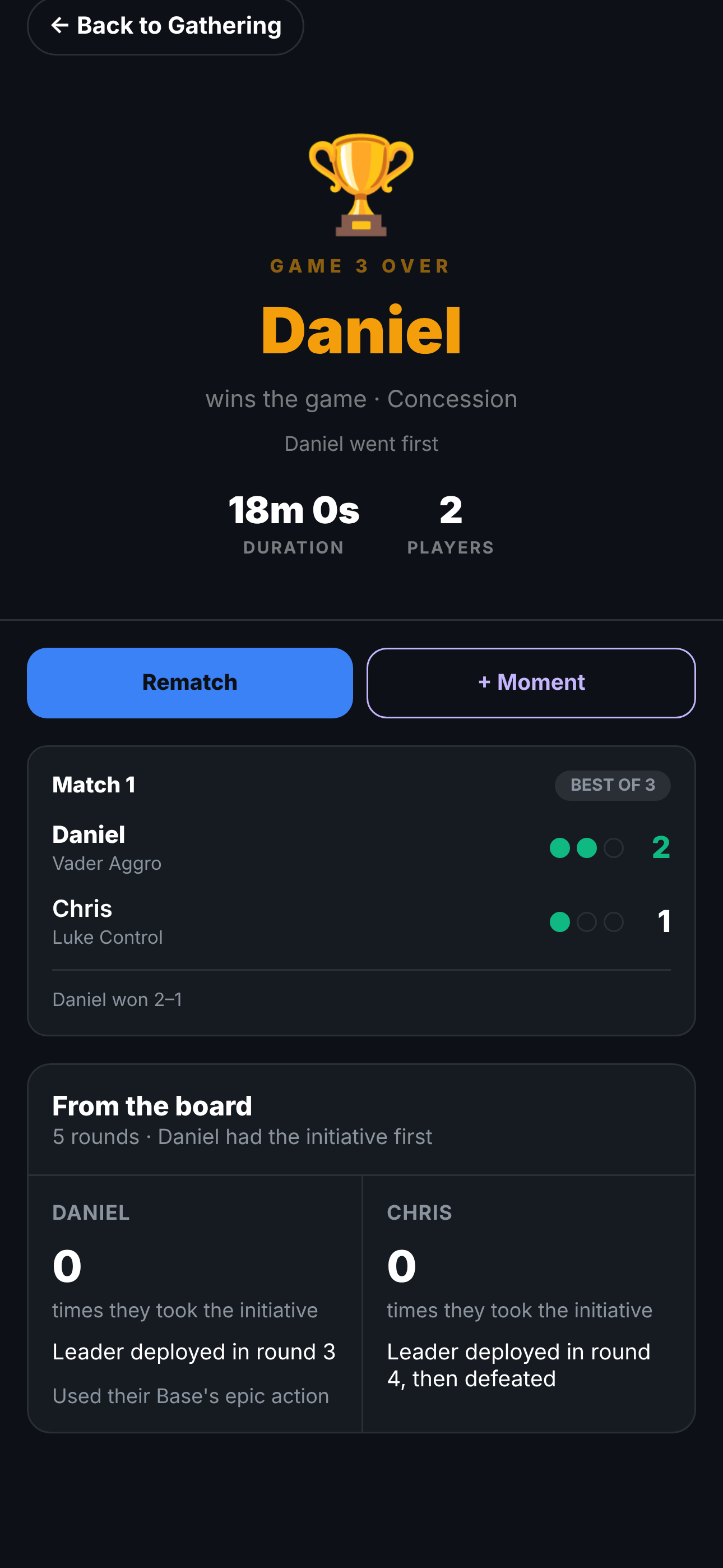
You can track base damage with dice, counters or a pen, and the rules allow any object as a counter. TurnZero HQ's damage tracker keeps each base's HP on one phone, starting from your deck's base, along with the initiative, the round and each leader. The table can watch along, and the result is saved when the game ends, single games or best of three.
Frequently Asked Questions
How do you win in Star Wars: Unlimited?
You win by destroying your opponent's base. A base is destroyed when the damage on it equals or passes its HP, and its owner loses immediately. Most of that damage comes from your units attacking the base, and some comes from card abilities.
How much HP does a base have in Star Wars: Unlimited?
It's printed on the base. In the six Premier-legal sets as of October 2026, bases range from 25 to 35 HP, and 40 of the 69 have 30. Bases with less HP usually have an ability, and bases with more usually have a drawback.
What happens if you run out of cards in Star Wars: Unlimited?
You keep playing with what you have. Each time you would draw from an empty deck, you deal 3 damage to your own base instead, so two missed draws in a regroup phase cost 6 HP. That damage can destroy your base and lose you the game.
Can Star Wars: Unlimited end in a draw?
Yes. If both bases reach 0 remaining HP at the same time, the game is a draw. In Twin Suns, players tied for the most base HP at the end share the win.
How do you win Twin Suns?
Once one player is eliminated, the game ends at the end of the current phase, and the player with the most HP left on their base wins. The player who eliminates someone heals 5 damage from their own base. Ties for the most HP share the victory.
Can you heal your base in Star Wars: Unlimited?
Yes. Restore heals your base each time the unit with it attacks, and other cards heal it directly. A base can't be healed above its printed HP, and once it reaches 0 the game is over.
Track every base, every game.
TurnZero HQ keeps each base's HP, the initiative and the round on one phone, records who won and shows your record by leader and base. Free to start.
Create Free AccountStar Wars: Unlimited card names and images are the property of Lucasfilm Ltd. and Fantasy Flight Games. © & ™ Lucasfilm Ltd. TurnZero HQ is not affiliated with, sponsored, or endorsed by Lucasfilm Ltd., Disney, Fantasy Flight Games, or Asmodee. Card data comes from swu-db.com, and prices from TCGplayer.