Yu-Gi-Oh! Formats
Yu-Gi-Oh! Goat Format
Goat Format is Yu-Gi-Oh! as it was played in the summer of 2005, kept alive by players rather than Konami. Here is its card pool, its banlist, the rules that differ from today's game, and the decks that define it.
What Goat Format is
Goat Format was the TCG's official format in the summer of 2005. When the game moved on, players kept playing it, and they still do. GoatFormat.com, which publishes the format's card pool, rules and rulings, puts it plainly: "Goat Format is not supported by Konami and is maintained by a dedicated and passionate group of players."
Players come to it for a slower, more interactive game than modern Yu-Gi-Oh!. There are no Synchro, Xyz, Pendulum or Link Monsters, and no Extra Monster Zone. Format Library describes it as a format that rewards "reading, bluffing, and resource management."
The card pool
The pool is fixed to one date. GoatFormat.com says most events use a ruleset based on Shonen Jump Championship Indianapolis, so the legal cards are the ones "legal for premier event play on August 17, 2005." Format Library dates its Goat entry to the same event.
Two promo lines stop partway: Shonen Jump promos are legal up to Archfiend of Gilfer, and the SP1 promos up to Embodiment of Apophis. GoatFormat.com's card pool page has the full promo list; check it before you play a promo-only card.
The April 2005 Forbidden & Limited List
Every version of Goat Format uses the TCG's April 2005 list, not the current one. It is short by modern standards, but it hits the cards that defined the early game.
Several of these sit on the opposite side of today's list. Pot of Greed is Forbidden in the current TCG Advanced Format and Limited in Goat, while Dark Hole and Raigeki are Forbidden in Goat and Unlimited today. Check a card's Goat status against GoatFormat.com's list, never against its current TCG status. The current TCG list →
Rules that differ from today's game
Most of the rules are the same. GoatFormat.com's rule is that anything it doesn't list as different works "the exact same way as it does in the current format." These are the differences it lists:
Two of these change how you play most. The draw on the first turn removes the usual cost of going first, so winning the coin flip matters more. The Ignition Effect window, which 2005 players called priority, lets the turn player use an effect such as Tribe-Infecting Virus right after it's Summoned, before the opponent can answer with Book of Moon. The 40-card minimum still applies, and most online simulators cap a deck at 60.
The decks
Goat Control is the deck the format is named after. Scapegoat Special Summons four Sheep Tokens, and Metamorphosis can Tribute one of those Level 1 tokens to Special Summon a Level 1 Fusion Monster: Thousand-Eyes Restrict, which stops other monsters on the field from attacking or changing their battle position and can equip one of the opponent's monsters to itself.
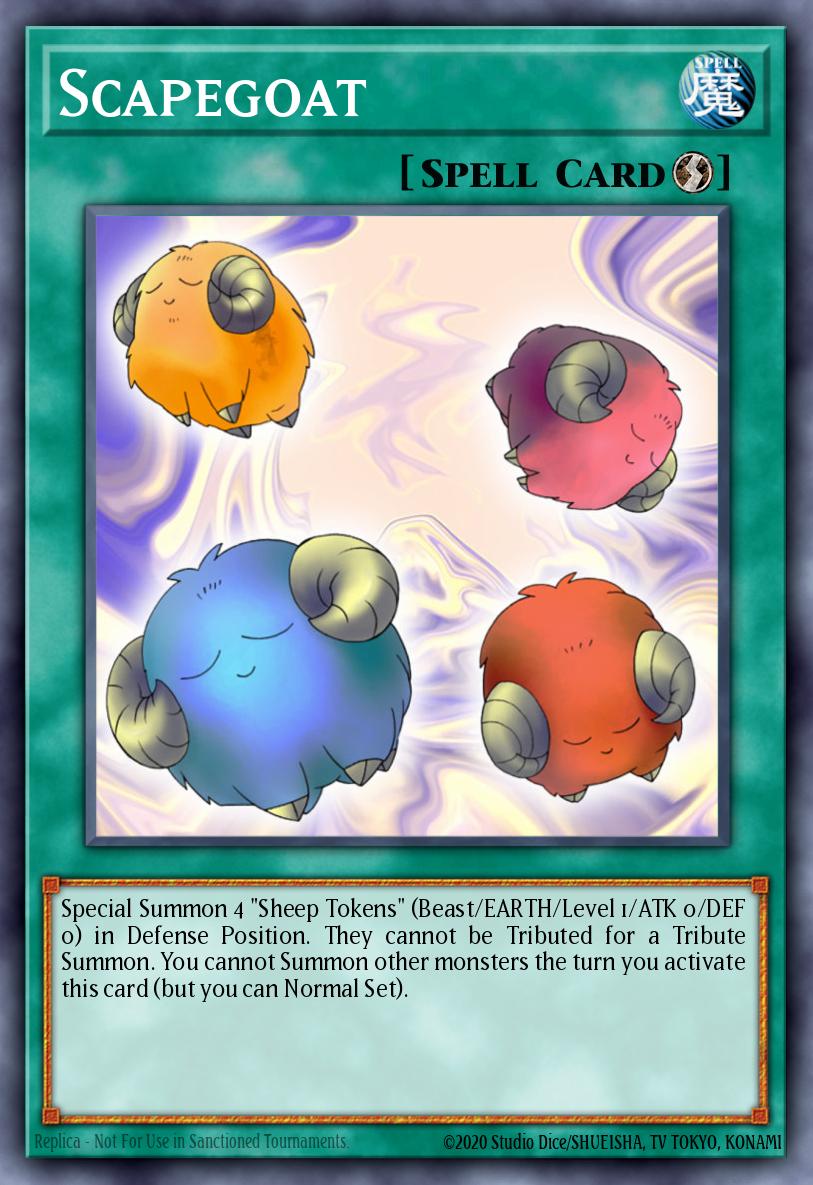
Scapegoat
BP01-EN042
3 copies allowed in Goat.
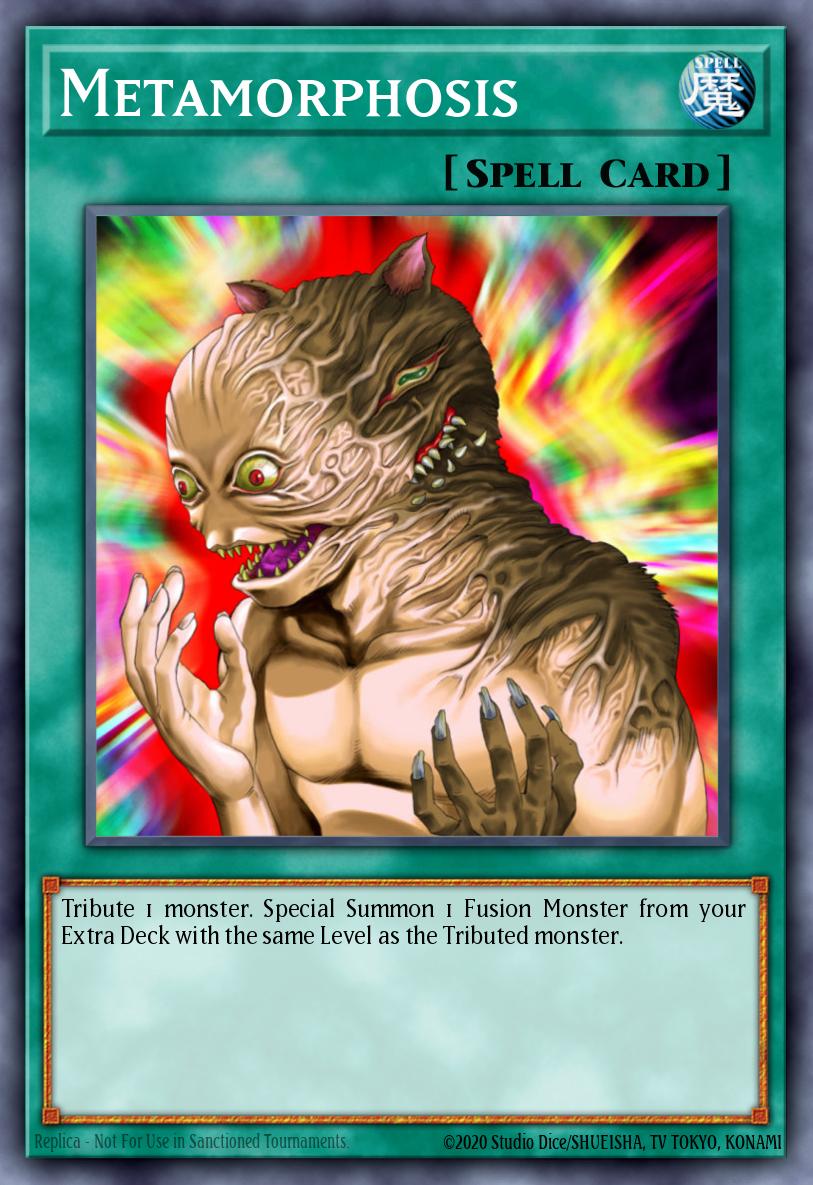
Metamorphosis
CP01-EN003
Turns a Sheep Token into a Level 1 Fusion.

Thousand-Eyes Restrict
DB1-EN195
The lock piece of Goat Control.
The modern Goat metagame has moved on from that deck. Format Library says it "revolves around Chaos Turbo," decks built to banish a LIGHT and a DARK monster from the Graveyard for Black Luster Soldier - Envoy of the Beginning (Limited to one) and Chaos Sorcerer. Small, flexible monsters such as Tribe-Infecting Virus and Sinister Serpent, both Limited in Goat, fill out most decks.

Black Luster Soldier - Envoy of the Beginning
CT10-EN005
Limited on the April 2005 list.

Chaos Sorcerer
DR2-EN023
The other half of Chaos Turbo.

Tribe-Infecting Virus
DR1-EN131
Limited; the classic priority example.
The card images and links show each card's current printing and text. Goat players use the 2005 rulings, which GoatFormat.com lists card by card, so read those before relying on a card's modern wording.
Where to play
Most Goat Format is played online. GoatFormat.com's card pool page walks new players through DuelingBook's deck builder, which can search for the legal cards, and its site covers the community's own events, including the Goat Format World Championship, the Goat Format Championships and the Goat Grand Prix. Format Library keeps decks and event results for Goat and other retro formats.
In paper, Goat is a store-by-store thing. It isn't a Konami format, so a store that runs it sets its own event, and you should confirm the card pool and list it uses before you build.
Frequently Asked Questions
What is Goat Format in Yu-Gi-Oh!?
Goat Format is Yu-Gi-Oh! played the way it was in the summer of 2005: only cards legal for premier events on August 17, 2005, the April 2005 Forbidden & Limited List, and the rules of the time. Konami doesn't support it; a community of players maintains it, led by GoatFormat.com.
Why is it called Goat Format?
After Scapegoat. The winning deck of 2005, Goat Control, used Scapegoat's Sheep Tokens as defense and as material for Metamorphosis, which turned a Level 1 Sheep Token into Thousand-Eyes Restrict.
What sets are legal in Goat Format?
Every core set from Legend of Blue Eyes White Dragon to The Lost Millennium, the Starter, Evolution and Structure Decks of the time, Dark Beginning 1 and 2, Dark Revelation 1, and a list of promos GoatFormat.com prints in full. Cybernetic Revolution and Exarion Universe aren't legal.
Is Pot of Greed legal in Goat Format?
Yes, at one copy. The April 2005 list has Pot of Greed, Graceful Charity and Delinquent Duo Limited, while Monster Reborn, Dark Hole, Raigeki, Change of Heart and Harpie's Feather Duster are Forbidden.
Where can I play Goat Format?
Mostly online. GoatFormat.com points new players to online play and to DuelingBook's deck builder, which can search the legal card pool, and the community runs its own events, such as the Goat Format World Championship and the Goat Grand Prix. Some stores run it in paper, but you will usually need to ask.
Does TurnZero HQ check Goat Format decks?
No. The Deck Lab checks Yu-Gi-Oh! decks in Advanced, Traditional or Unlimited against the current TCG list. It has no Goat setting, so it won't flag a card from Cybernetic Revolution or a card the April 2005 list Forbids.
Know what your 2005 cards are worth.
TurnZero HQ tracks your Yu-Gi-Oh! collection by printing and edition, with daily TCGplayer prices, so you can see which old cards you own before you build. Free to start.
Create Free AccountYu-Gi-Oh! card names and images are the property of Konami Digital Entertainment and their respective owners. ©Studio Dice/SHUEISHA, TV TOKYO, KONAMI. TurnZero HQ is not affiliated with, sponsored, or endorsed by Konami. Card data comes from YGOPRODeck, and prices from TCGplayer via TCGCSV.