Every Yu-Gi-Oh! turn has six phases in a fixed order: Draw, Standby, Main Phase 1, Battle, Main Phase 2 and End. Most of what you do happens in the two Main Phases, and the player who goes first skips both their first draw and their first Battle Phase.
Konami's official rulebook (Version 10) divides every turn into these phases. The player whose turn it is, the
turn player, moves through them in order and announces each one.
PhaseWhat happensCan be skipped?
1. Draw PhaseDraw 1 card.Only the draw, by the first player on turn one.
2. Standby PhaseResolve effects and pay costs that happen "during the Standby Phase."No, but it is often over in a moment.
3. Main Phase 1Summon or Set monsters, change battle positions, activate cards and Set Spells and Traps.No.
4. Battle PhaseAttack with your monsters, one at a time.Yes, and the first player cannot have one on turn one.
5. Main Phase 2The same actions as Main Phase 1, after your attacks.It only happens if you had a Battle Phase.
6. End PhaseResolve end-of-turn effects, then discard down to 6 cards.No.
You draw one card from the top of your Deck. If you have to draw and your Deck is empty, you lose the duel on
the spot, which is one of the three ways a duel is won. The player who
goes first does not draw in their first Draw Phase.
After the draw, either player can activate Trap Cards, Quick-Play Spells and Quick Effects before the duel moves
to the Standby Phase.
2. Standby Phase
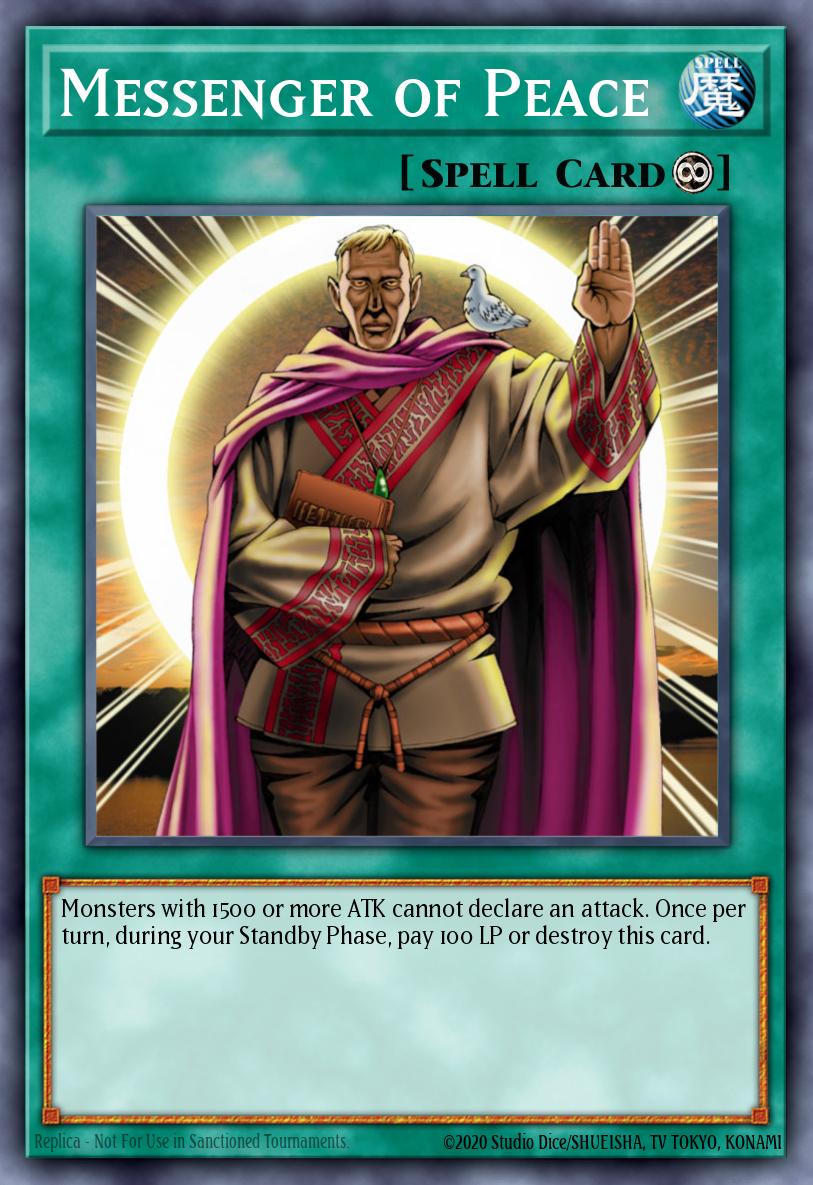
The Standby Phase exists for cards that name it. Messenger of Peace, for example,
stops monsters with 1500 or more ATK from attacking, and once per turn during your Standby Phase you pay 100 LP
or destroy it. If nothing on the field mentions the Standby Phase, you announce it and move on, though Traps
and Quick-Play Spells can still be activated here.
Main Phase 1 is where you play most of your cards, in any order you like. Most deck strategies happen here,
because what you summon and remove now decides which attacks are worth making next.
ActionLimit
Normal Summon or Set a monsterOnce per turn in total, including a Tribute Summon. Normal Summoning and Normal Setting share the same allowance.
Special SummonAs many times as your cards allow. Fusion, Synchro, Xyz, Link, Pendulum and Ritual Summons are all Special Summons.
Flip Summon a face-down monsterAny number, but not a monster Set this turn.
Change a monster's battle positionOnce per monster per turn, and not for a monster that came onto the field this turn.
Activate Spells, Traps and monster effectsAs many as you can pay for, within each card's own limits.
Set Spells and Traps face downAs many as you have space for in your five Spell & Trap Zones.
The Battle Phase is where your monsters attack. It has four steps: the Start Step, the Battle Step, the Damage
Step and the End Step. You repeat the Battle Step and Damage Step once for each attack, and each face-up Attack
Position monster can attack once per turn unless a card says otherwise.
The Battle Phase is optional, even when you have monsters, and the player who goes first cannot conduct one on
their first turn. Battle has enough rules of its own that it has a separate page:
how battle works in Yu-Gi-Oh!.
5. Main Phase 2
If you had a Battle Phase, your turn moves on to Main Phase 2, where you can do everything you could in Main
Phase 1. The once-per-turn limits carry over: if you used your Normal Summon in Main Phase 1, it is gone, and a
monster that attacked cannot change its battle position in Main Phase 2.
Main Phase 2 is where you prepare for your opponent's turn. Set the Traps you want available, summon a monster
you held back so it would not be attacked into, or use an effect that is better after battle.
6. End Phase
Announce the end of your turn. Cards that say "during the End Phase" resolve here. Then, if you have more than
six cards in your hand at the end of the phase, you choose cards and discard them to the Graveyard until you
have six. After that, it is your opponent's turn, starting with their Draw Phase.
The first turn of a duel
The winner of the coin toss, die roll or rock-paper-scissors chooses whether to go first. In later games of a
match, the loser of the previous duel chooses. Two rules apply only to the first player's first turn:
RuleWhat it means
No draw in the first Draw PhaseThe first player plays their first turn with the five cards they started with.
No Battle PhaseNo attacks at all on turn one, even if you summon monsters. Your opponent always gets a turn before they can be attacked.
So the first turn is spent building a board: summoning monsters, Setting Traps and using effects that will
stop or slow down the opponent's first turn. The second player draws normally and can attack on their first
turn.
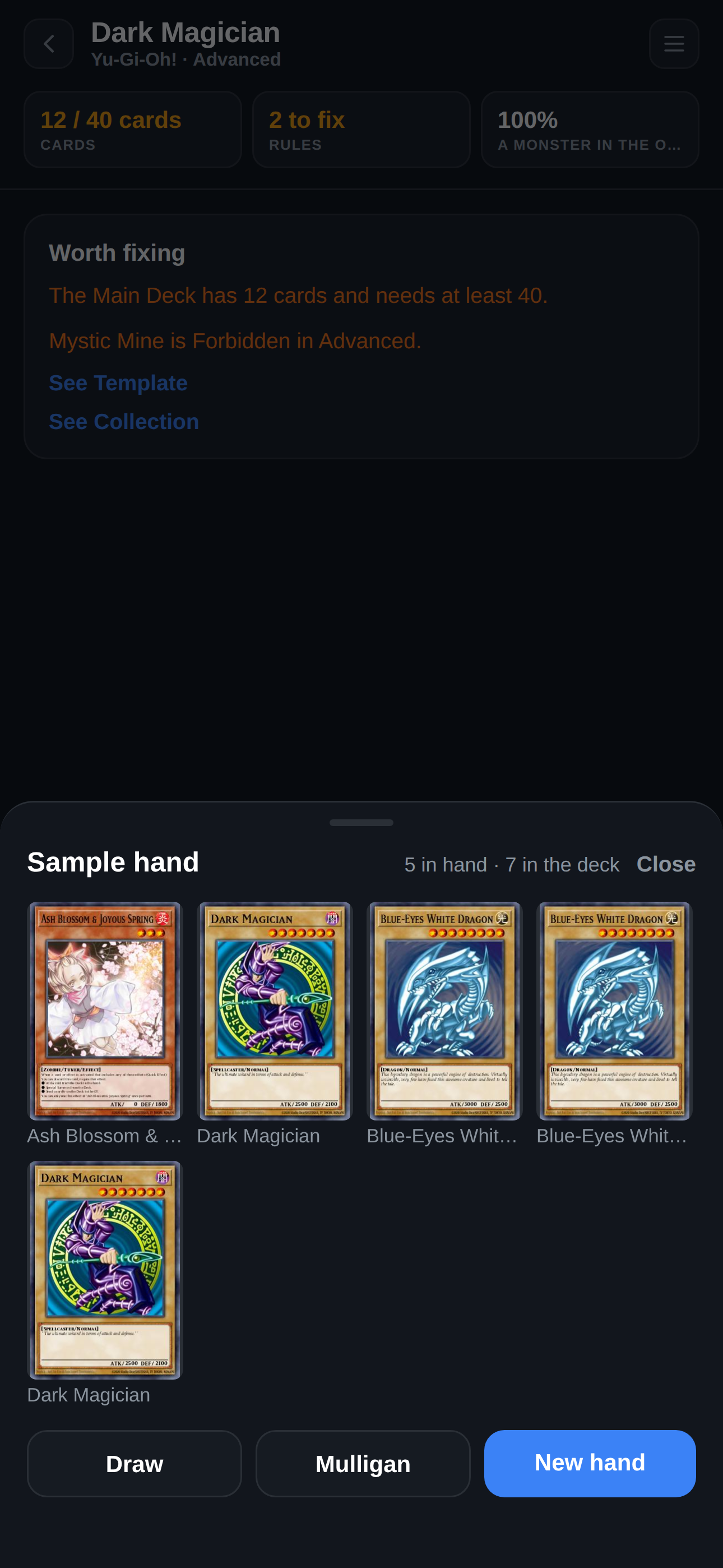
Both players start with five cards. TurnZero HQ's Deck Lab deals sample hands from your own list, so you can see what a first turn will look like. View full size
What your opponent can do on your turn
The turn player always starts each phase and step with priority, the right to activate a card
first. Once you activate something, or announce that a phase is ending, your opponent can respond. In practice
that means your opponent can say "before the end of your Main Phase, I activate this card," and you cannot
move on until it resolves.
Your opponent can use cards with Spell Speed 2 or higher on your turn: Trap Cards they Set on an earlier turn,
Quick-Play Spells they Set on an earlier turn, and monsters' Quick Effects, including the ones some monsters can
use straight from the hand, such as Ash Blossom & Joyous Spring. How responses stack up is covered in the guide to
chains and Spell Speed.
A sample turn
The second player's first turn
1
Draw Phase: you draw your sixth card. Your opponent has one face-down monster and one face-down Spell or Trap.
2
Standby Phase: nothing on the field mentions it, so you announce Main Phase 1.
3
Main Phase 1: you Normal Summon a Level 4 monster with 1900 ATK, which needs no Tribute. That uses your Normal Summon for the turn.
4
Battle Phase: you attack the face-down monster. It is flipped face up in the Damage Step, and its DEF of 1200 is lower than your ATK, so it is destroyed. Your opponent takes no damage, because it was in Defense Position.
5
Main Phase 2: you Set two Trap Cards for your opponent's turn. You cannot summon again, since you used your Normal Summon.
6
End Phase: you have four cards in hand, under the limit of six, so you pass the turn.
Common mistakes with turn structure
✕
Attacking on the very first turn of the duel. The first player has no Battle Phase on turn one.
✕
Activating a Trap the same turn you Set it. A Trap can be activated starting from the next turn, unless its own text says otherwise.
✕
Normal Summoning a second monster. You get one Normal Summon or Set per turn; extra monsters have to come from Special Summons.
✕
Switching a monster to Defense Position the turn it was summoned. A monster cannot change position the turn it came onto the field.
✕
Forgetting a Standby Phase cost. A card like Messenger of Peace asks you to pay or destroy it every turn.
✕
Discarding for hand size during the turn. The limit of six only applies at the end of your own End Phase.
Frequently Asked Questions
What are the phases of a turn in Yu-Gi-Oh!?
Six, in this order: Draw Phase, Standby Phase, Main Phase 1, Battle Phase, Main Phase 2 and End Phase. The Battle Phase is optional. If you skip it, your turn goes from Main Phase 1 straight to the End Phase.
Can you attack on the first turn in Yu-Gi-Oh!?
No. The player who goes first cannot conduct a Battle Phase on their first turn, and they also skip their first draw. The second player draws and can attack on their first turn.
Can you summon in Main Phase 2?
Yes. Main Phase 2 allows everything Main Phase 1 does, including your Normal Summon or Set if you have not used it yet. Anything limited to once per turn that you already did in Main Phase 1 cannot be done again.
What is the hand size limit in Yu-Gi-Oh!?
Six cards. If you have more than six cards in hand at the end of your End Phase, you discard down to six. The limit only applies in your own End Phase, so you can hold more than six at other times.
What happens in the Standby Phase?
Cards that say "during the Standby Phase" resolve their effects or ask for their costs, such as Messenger of Peace, which makes you pay 100 LP or destroy it. If nothing on the field mentions the Standby Phase, you move on, though either player can still activate Traps and Quick-Play Spells there.
Can my opponent do anything during my turn?
Yes. Your opponent can activate Trap Cards, Set Quick-Play Spells and Quick Effects in any phase of your turn, in response to what you do or when you pass priority, including just before a phase ends.