Yu-Gi-Oh! Beginner Series
How Battle Works in Yu-Gi-Oh!
In the Battle Phase, each of your face-up Attack Position monsters can attack once. Against a monster in Attack Position you compare ATK with ATK, against Defense Position you compare ATK with DEF, and against an empty field you deal your monster's full ATK as damage. This page covers each case, the four steps of the Battle Phase and the rules around them.
The four steps of the Battle Phase
The Battle Phase is the fourth of the six phases of a turn. You never have to enter it, and the player who goes first cannot enter it on their first turn. Once you do, it runs in four steps:
You repeat the Battle Step and Damage Step once for each attack, so a turn with three attacks goes Battle, Damage, Battle, Damage, Battle, Damage, then the End Step. After the Battle Phase, your turn continues with Main Phase 2.
Declaring an attack
In the Battle Step you pick one of your monsters and one of your opponent's monsters as its target, then declare the attack. The rules that decide what can attack:
Only a face-up Attack Position monster can attack. Defense Position and face-down monsters cannot.
Each monster can attack once per turn, unless a card gives it more attacks. You do not have to attack with any monster.
You can attack your opponent directly only if they control no monsters at all. A monster in the Extra Monster Zone counts.
The rules give way to card text. A monster with an effect that lets it attack directly while your opponent controls monsters, or attack twice, does what the card says.
You choose one attack at a time, and you see how each one turns out before declaring the next, so the order you attack in matters. The worked example below shows how.
Working out battle damage
What you compare depends on the position of the monster you attack. Against Attack Position, it is ATK against ATK. Against Defense Position, it is your ATK against its DEF. Battle damage is always the difference, and it is subtracted from a player's Life Points, which start at 8000.

Attacking a monster in Attack Position
Attacking a monster in Defense Position
Attacking directly
With no monsters to stop it, the attack hits your opponent's Life Points for your monster's full ATK. A direct attack is where most of the damage in a duel comes from, which is why clearing your opponent's monsters is usually the first step toward winning.
Two more rules from the rulebook: a monster with 0 ATK cannot destroy anything by battle, and two Attack Position monsters with 0 ATK that battle do not destroy each other. Battle damage is also its own category, separate from effect damage dealt by a card, so a card that stops "battle damage" does not stop an effect that burns Life Points.
Attacking a face-down monster
A face-down monster is always in Defense Position. When you attack it, it is flipped face up in the Damage Step, and you then compare your ATK with the DEF you can now see. If it has a Flip effect, the effect activates after damage calculation, and it cannot target a monster that was already destroyed in that battle.
That is the risk of attacking into a face-down monster: you do not know its DEF until it is too late to change your mind, and a monster like Man-Eater Bug destroys a monster when it is flipped.
Replays
Sometimes the field changes between your attack declaration and the Damage Step. Your target might be destroyed by a Trap, or your opponent might Special Summon a new monster. If the number of monsters your opponent controls changes in that window, a replay happens, and you choose again:
Attack again with the same monster, at any target, or directly if the field is now empty.
Attack with a different monster. The first monster still counts as having declared an attack, so it cannot attack again this turn.
Do not attack at all.
What you can do in the Damage Step
The Damage Step is restricted. Konami's rulebook allows only two kinds of cards to be activated in it, and only up until the start of damage calculation:
Counter Trap Cards.
Cards whose effects directly change a monster's ATK or DEF.
Honest is the classic example of the second kind. When a LIGHT monster you control battles, you can send Honest from your hand to the Graveyard during the Damage Step, and your monster gains ATK equal to the ATK of the monster it is battling. A card whose own text names damage calculation as its timing can be used then, because card text takes precedence over the basic rules.
Cards like destruction Traps, by contrast, are used earlier, usually when the attack is declared in the Battle Step.
Cards that change how battle works
A lot of Yu-Gi-Oh! strategy is about bending these rules. A few kinds of effect you will meet early:
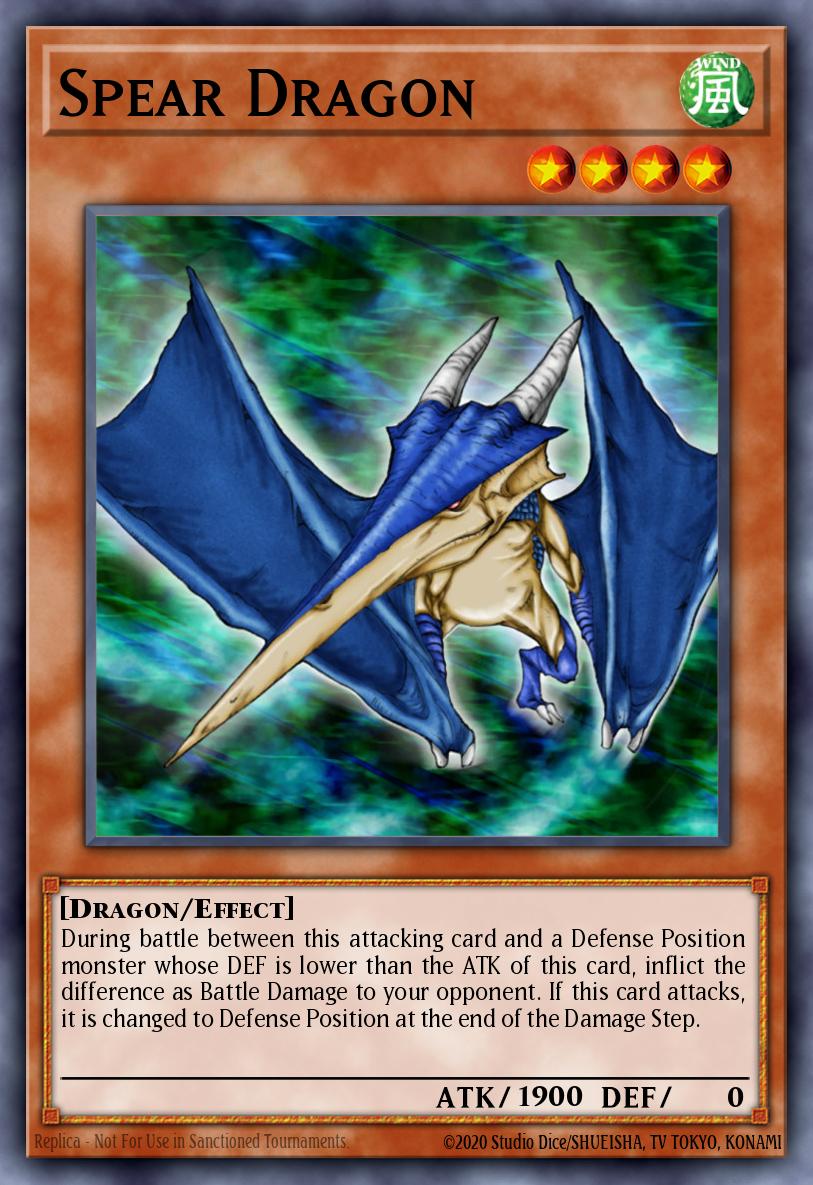
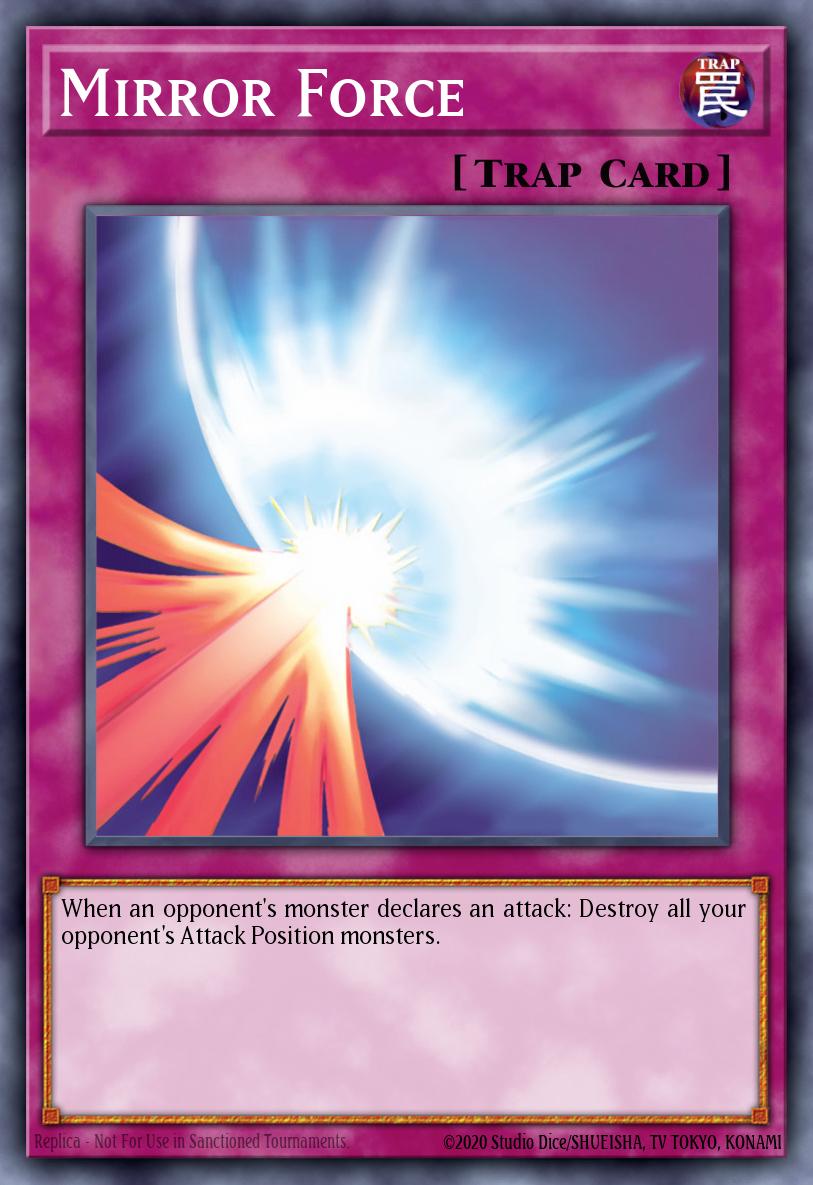
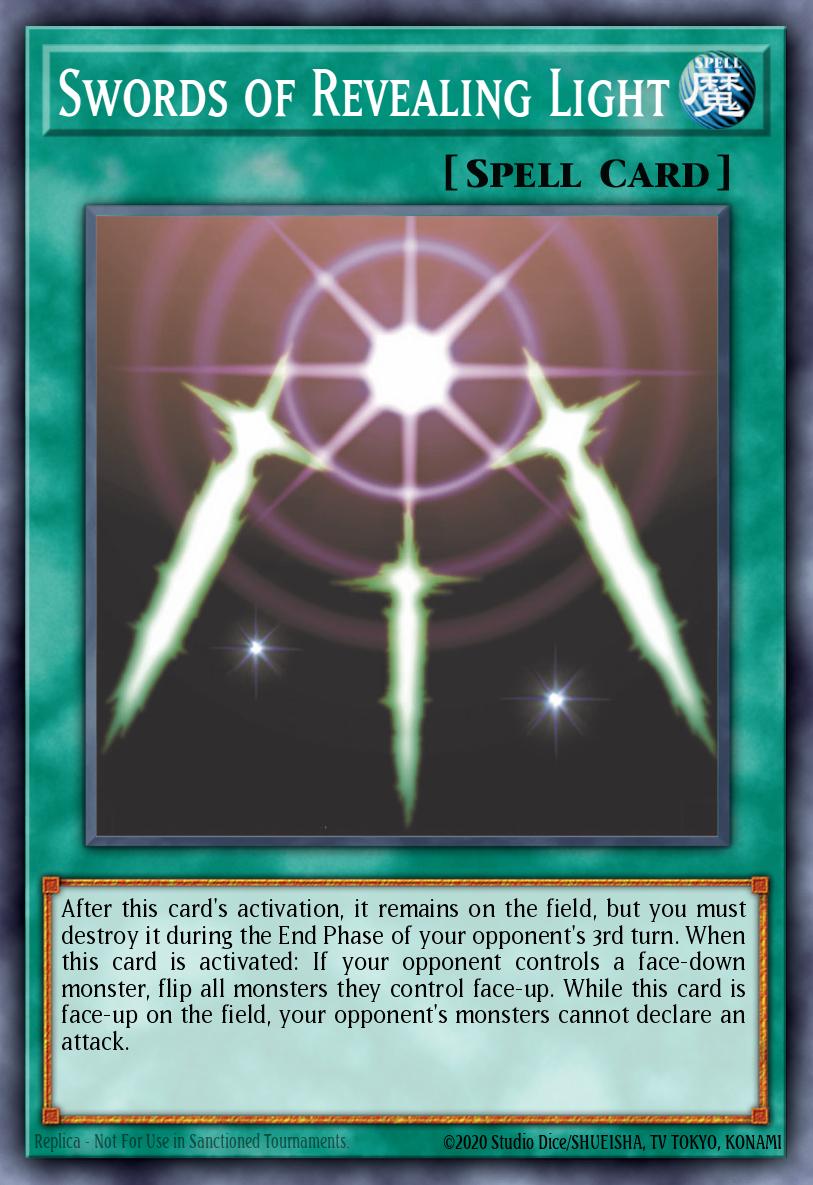
Attack Position or Defense Position?
The position you leave a monster in decides what happens when your opponent attacks it, so it is a choice you make in your Main Phases with their turn in mind.
Remember the position limits: a monster cannot change position the turn it came onto the field, cannot change in Main Phase 2 if it attacked, and can change only once per turn. Link Monsters can never be in Defense Position.
A worked example
Three attacks, one Battle Phase
You control Blue-Eyes White Dragon (3000 ATK) and Summoned Skull (2500 ATK), both in Attack Position. Your opponent, at 8000 LP, controls Dark Magician (2500 ATK) in Attack Position and a face-down monster.
Summoned Skull attacks Dark Magician. 2500 against 2500 is a tie, so both are destroyed and no one takes damage.
Blue-Eyes attacks the face-down monster. It flips up in the Damage Step: DEF 1200. 3000 is higher, so it is destroyed. No damage, because it was in Defense Position.
Your opponent now controls no monsters, but both of your monsters have attacked. You announce the End Step with your opponent still at 8000 LP.
Had you attacked the face-down monster first with Summoned Skull, Blue-Eyes could have destroyed Dark Magician and dealt 500 damage instead. The order of attacks matters.
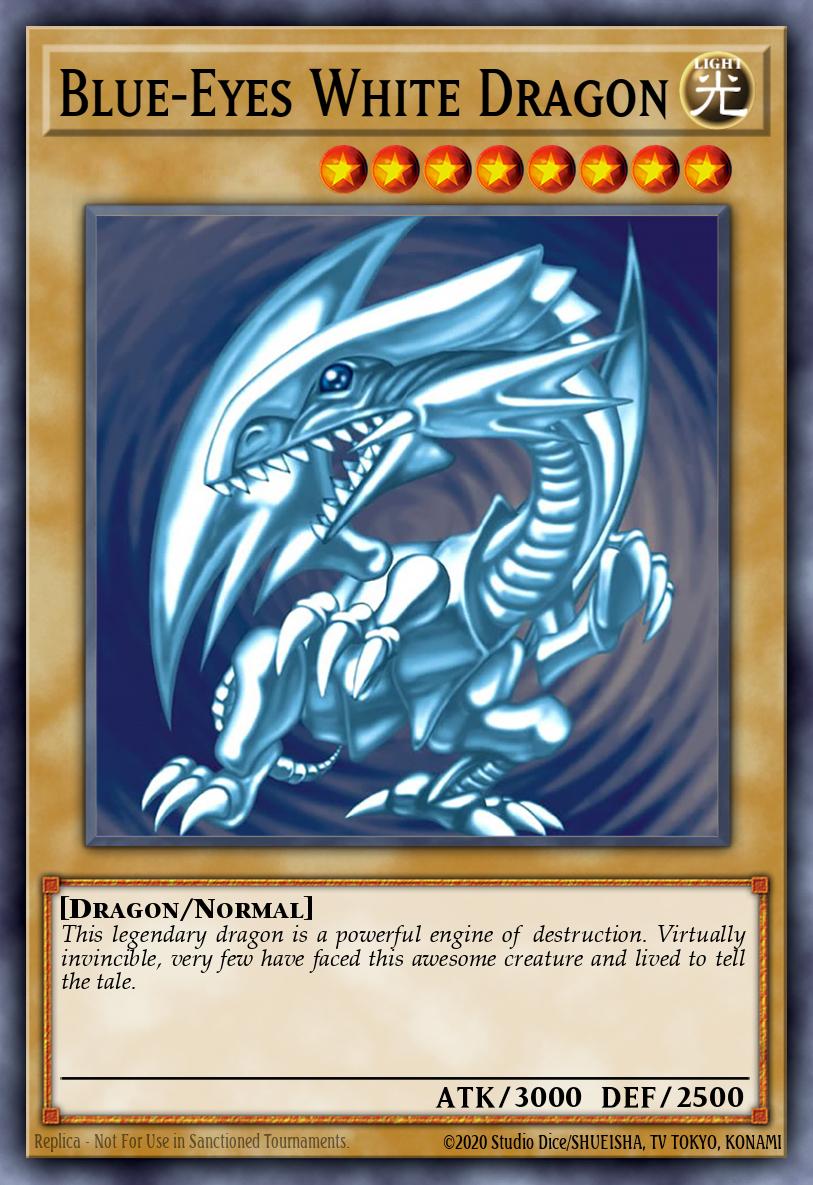
Blue-Eyes White Dragon
2020-EN001
3000 ATK: your strongest attacker.
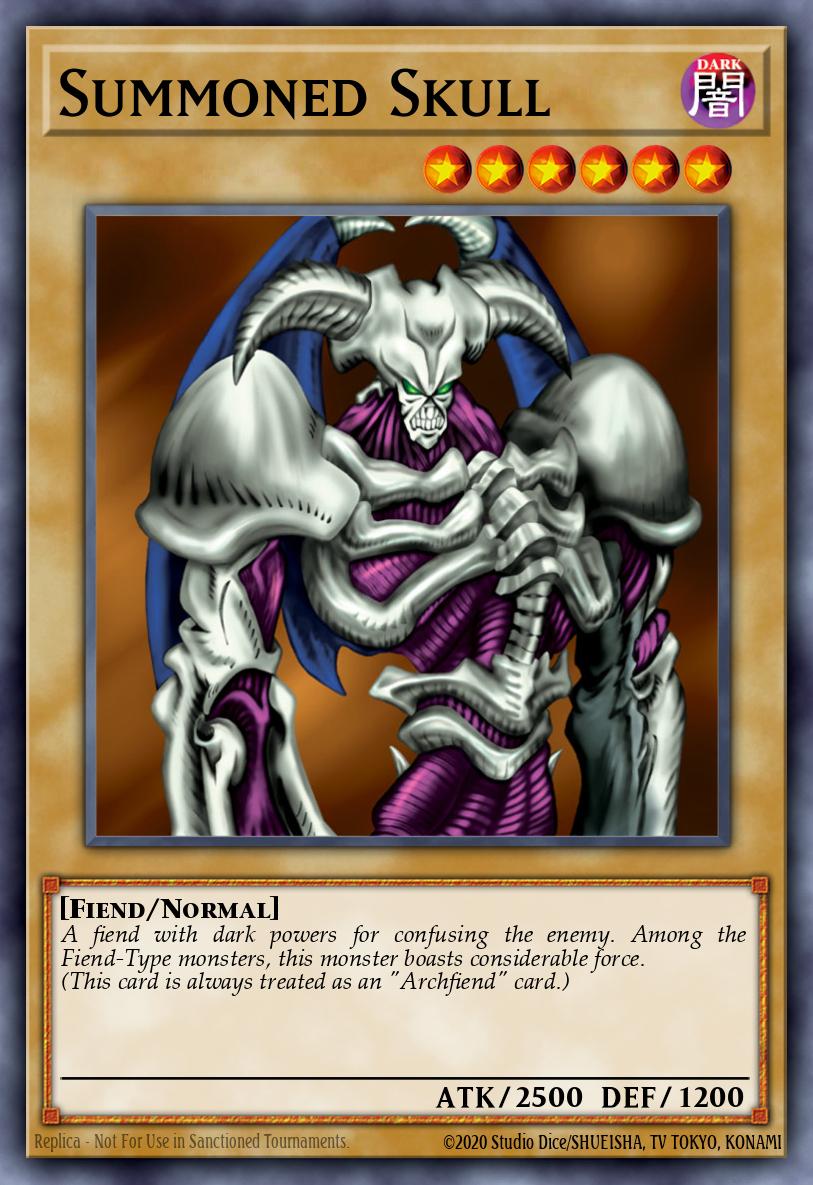
Summoned Skull
BLGG-EN001
2500 ATK: ties with Dark Magician.

Dark Magician
2021-EN001
2500 ATK: your opponent's monster.
To keep Life Points straight in a real duel, the Yu-Gi-Oh! Life Point Calculator page explains how TurnZero HQ tracks a game with each player starting on 8000.
Common battle mistakes
Dealing damage when you destroy a Defense Position monster. Unless your monster pierces, nobody takes damage.
Attacking directly while your opponent controls a monster in the Extra Monster Zone. Any monster they control blocks a direct attack.
Attacking with a monster in Defense Position. Switch it to Attack Position in Main Phase 1 first, if it is allowed to change this turn.
Activating a destruction Trap in the Damage Step. Only Counter Traps and ATK or DEF changes are allowed there.
Comparing ATK with ATK against a Defense Position monster. Use its DEF.
Frequently Asked Questions
How does attacking work in Yu-Gi-Oh!?
In your Battle Phase, you pick one of your face-up Attack Position monsters and one of your opponent's monsters to attack. If your opponent has no monsters, you can attack their Life Points directly. Compare your monster's ATK with the target's ATK if it is in Attack Position, or with its DEF if it is in Defense Position. Each monster can attack once per turn.
Do you take damage when you attack a Defense Position monster?
Only if its DEF is higher than your monster's ATK. Then you take the difference as battle damage and nothing is destroyed. If your ATK is higher, the defending monster is destroyed and nobody takes damage, unless your monster has a piercing effect. If they are equal, nothing happens.
What happens if two monsters have the same ATK?
If both are in Attack Position, both are destroyed and neither player takes battle damage. A 0 ATK monster is the exception: two Attack Position monsters with 0 ATK do not destroy each other.
Can a monster in Defense Position attack?
No. Only face-up Attack Position monsters can declare an attack. A Defense Position monster protects your Life Points, because your opponent cannot attack you directly while you control any monster.
Can you attack on the first turn in Yu-Gi-Oh!?
Not if you went first. The player who goes first cannot conduct a Battle Phase on their first turn. The second player can attack on their first turn.
What is a replay in Yu-Gi-Oh!?
If the number of monsters your opponent controls changes after you declare an attack but before the Damage Step, for example because the target was destroyed or a new monster was Summoned, a replay happens. You can attack again with the same monster, attack with a different one, or not attack. If you choose a different monster, the first one still counts as having declared an attack.
What can you activate during the Damage Step?
Only Counter Traps and cards with effects that directly change a monster's ATK or DEF, and only up to the start of damage calculation, unless a card's own text says it can be used during damage calculation.
Track Life Points and results in TurnZero HQ.
Start a Yu-Gi-Oh! game with each player on 8000, keep score at the table and save how every duel ended. Free on iPhone, Android and the web.
Create Free AccountYu-Gi-Oh! card names and images are the property of Konami Digital Entertainment and their respective owners. ©Studio Dice/SHUEISHA, TV TOKYO, KONAMI. TurnZero HQ is not affiliated with, sponsored, or endorsed by Konami. Card data comes from YGOPRODeck, and prices from TCGplayer via TCGCSV.