Yu-Gi-Oh! TCG
Rare Yu-Gi-Oh! Cards
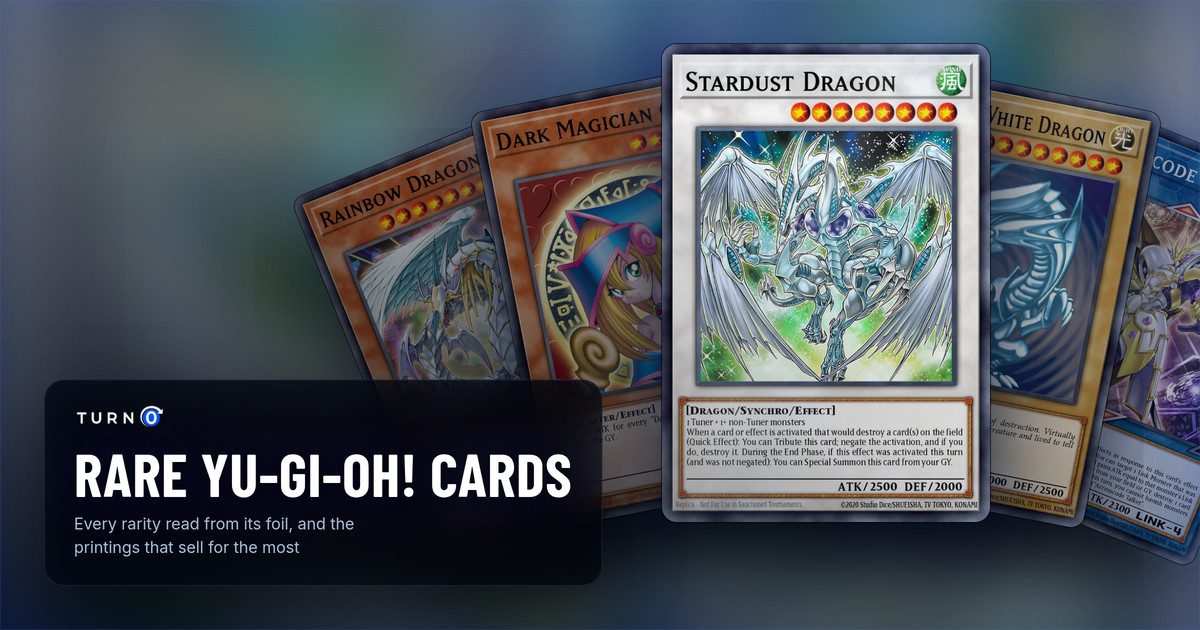
A rare Yu-Gi-Oh! card can mean two things: a card printed in a high rarity, which you read from its foil, or a card that few people own, such as an early 1st Edition copy or a tournament prize. This guide covers both, with catalog prices for the printings that sell for the most.
Two meanings of rare
Every Yu-Gi-Oh! card is printed at a rarity, and "Rare" is one rung of that ladder: a card with a silver foil name. Collectors also say "rare" about cards that are hard to find at all, whatever their printed rarity. A 1st Edition Pot of Greed from the first North American booster set (LOB-119) is only a Rare, yet its market price of $86.00 is many times the $4.72 of a 2024 Secret Rare such as Fiendsmith Engraver.
The two meanings overlap but are not the same. Rarity tells you how often a printing turned up in packs. Scarcity also depends on the edition, how many copies survived in good condition, and whether the card was ever sold in packs at all.
The rarity ladder, read from the foil
Yu-Gi-Oh! cards carry no printed rarity symbol, so you identify a rarity by where the foil sits and what color it is. The core five appear in most booster sets.
The set code under the artwork names the printing, not the rarity, and a code can exist at several rarities in the same set. When a code has more than one, the foil is the only way to tell them apart. Where the set code sits on a card →
The chase rarities
Above Secret Rare sit the treatments collectors chase. Not every set has them, and each one appears only in the products Konami chose to put it in.
Some formats have their own treatments as well, such as the Duel Terminal parallel rarities, which are named for the arcade cards they were printed alongside. If you can't place a foil, look up the set code and compare the rarities that code was printed in.
One card, many rarities
The clearest way to see what rarity is worth is to compare one card at the same set code. In these examples the card text and the art are the same; only the foil changes, and the price moves with it. All prices are TCGplayer market prices for ungraded copies, as of October 2, 2026.
The multiplier is not fixed. It depends on how many copies of the top rarity a set produced and how badly players and collectors want that card, which is why the gap runs from about seven times to almost forty times in this small sample.
The most expensive printings
The printings at the top of the market mostly fall into three groups: 1st Edition copies of the earliest sets, top-rarity printings of cards people still want, and promos. The cards below each link to their page, which lists every printing and edition with its price.
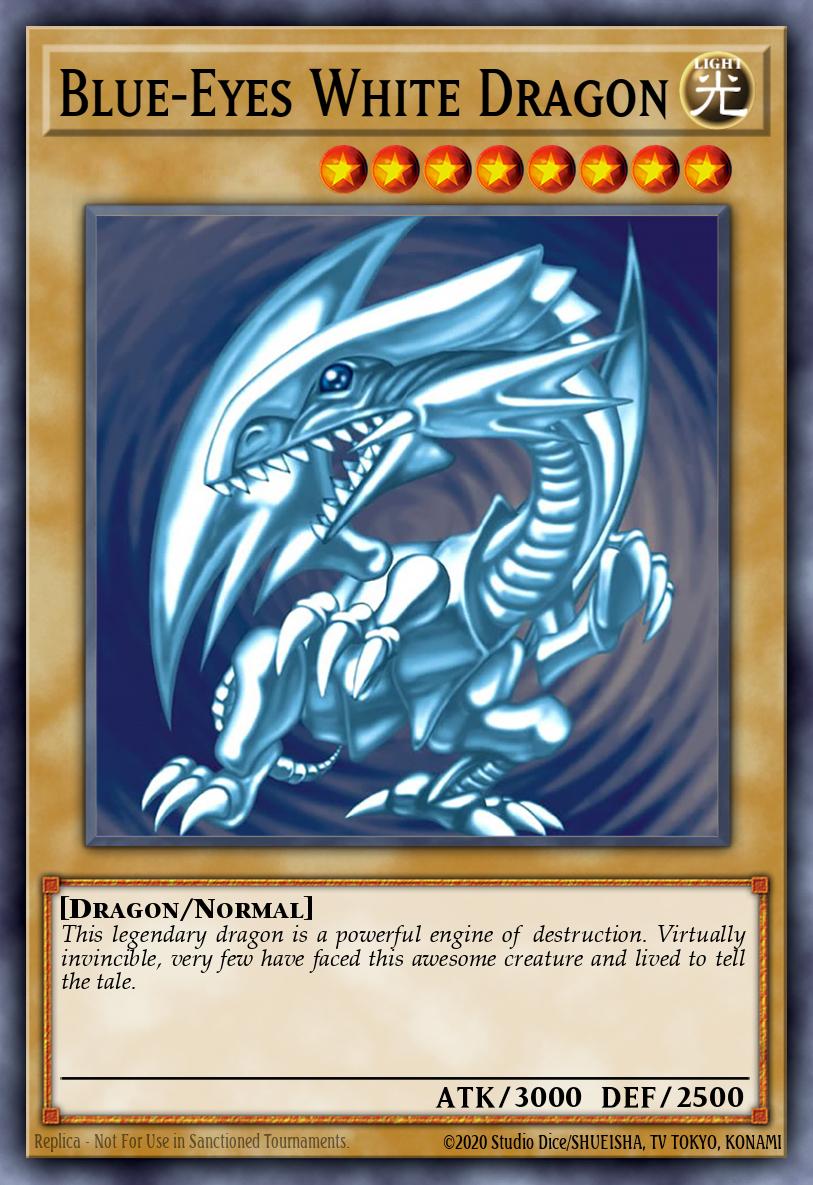
Blue-Eyes White Dragon
LOB-001 · Ultra Rare
1st Edition from the first North American set: $3,799.92. The Unlimited copy is $122.77.
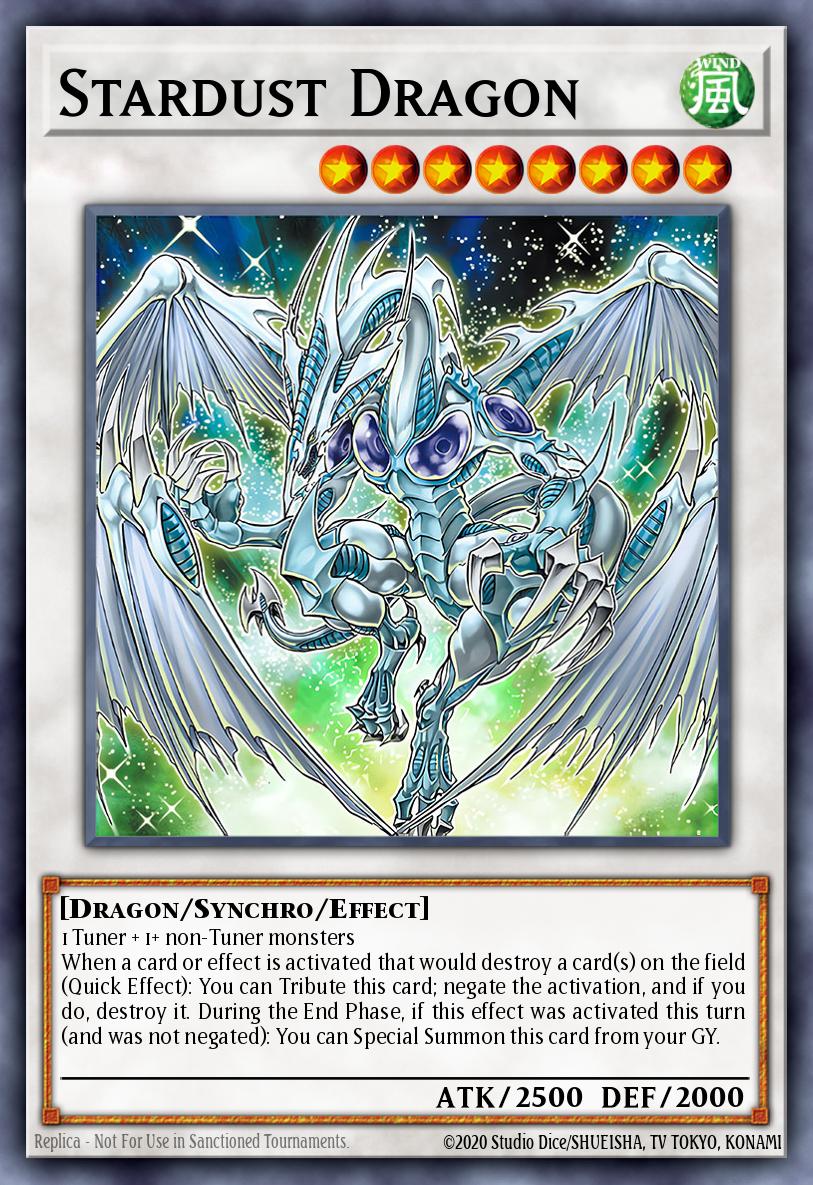
Stardust Dragon
TDGS-EN040 · Ghost Rare
1st Edition Ghost Rare: $1,212.50, about twice its Unlimited copy.
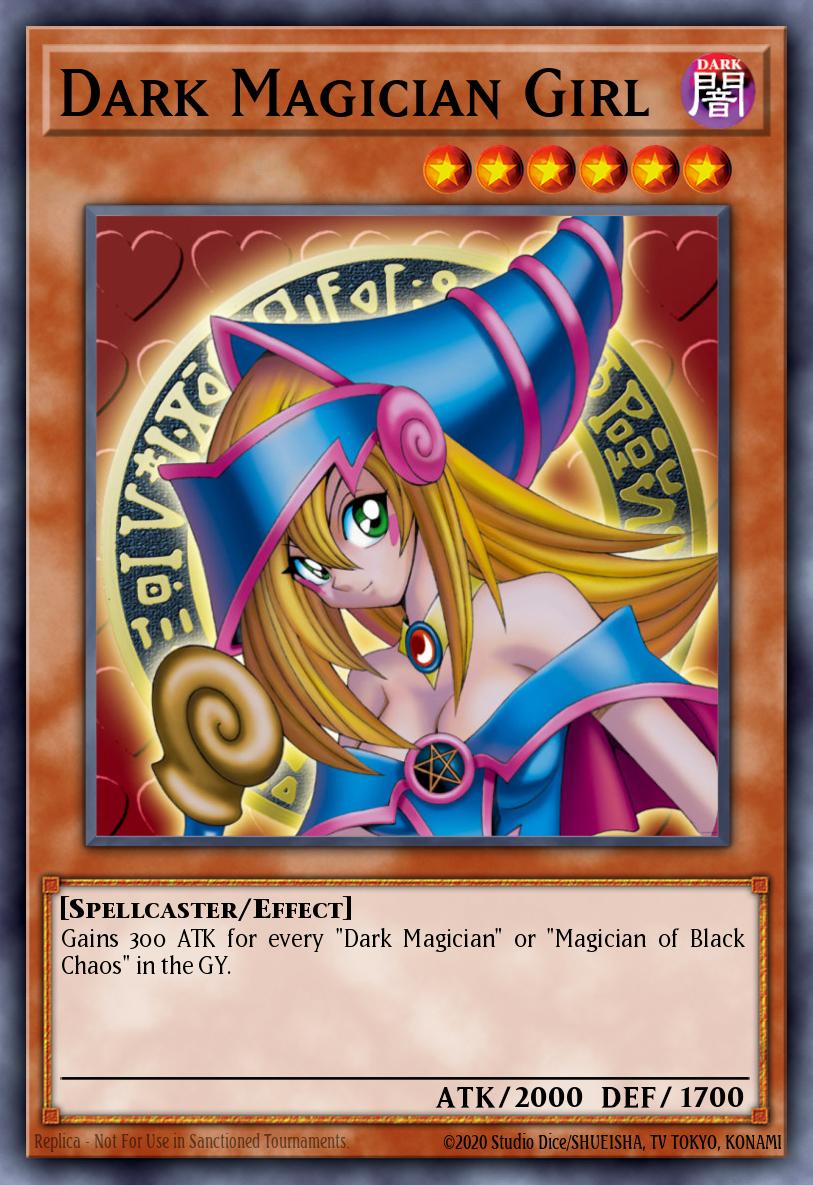
Dark Magician Girl
MFC-000 · Secret Rare
1st Edition Secret Rare from Magician's Force: $1,094.50.

Dark Magician
LOB-005 · Ultra Rare
1st Edition: $1,207.76, against $42.15 for Unlimited.
Promos can sit even higher. The Prismatic Secret Rare Blue-Eyes White Dragon from the Dark Duel Stories promotional cards (DDS-001) has a market price of $1,450.56, and its 1st Edition Ghost Rare from Ghosts From the Past: The 2nd Haunting (GFP2-EN175) is $337.86. All of these are ungraded TCGplayer market prices as of October 2, 2026. A high grade from a grading company can multiply them, and a worn copy sells for less.
Not every expensive card is old. Recent chase rarities of played cards, like the Quarter Century Secret Rare Fiendsmith Engraver, can outsell most cards from the 2000s. For the edition side of the story, see which 1st Edition cards are worth checking →
One-of-a-kind prize cards
The rarest Yu-Gi-Oh! cards were never in a pack. Konami has awarded cards as tournament prizes and made a few as one-offs, and those trade so rarely that no market price describes them.
Tyler the Great Warrior is the best documented. Tyler Gressle designed it through the Make-A-Wish Foundation, using concept art from Yu-Gi-Oh! creator Kazuki Takahashi, and it was unveiled in 2005 as a single copy. YGOrganization reported that Gressle sold it at auction on eBay on April 29, 2023, for US$311,211.
The Tournament Black Luster Soldier was the champion's prize at the first Duel Monsters tournament, held in Tokyo in February 1999. It was printed on a stainless steel plate rather than card stock and is reported to be one of a kind. Figures quoted for it online are rumors or asking prices, not confirmed sales, so treat any number you read with caution.
Some prize cards were made in small runs rather than as singles, such as the Ultra Rare Crush Card Virus given as a 2007 Shonen Jump Championship prize (SJCS-EN004). TCGplayer lists it, but so few copies change hands that a market figure for it reflects very few sales.
Tracking rare copies in TurnZero HQ
In TurnZero HQ's Yu-Gi-Oh! collection, each copy can carry its printing, which includes the rarity, plus its edition, condition and grade. It's valued from TCGplayer's market price for that printing and edition, updated daily, so a Starlight Rare isn't priced as the Secret Rare with the same code. The scanner reads the set code and asks you for the rarity when the code was printed in more than one. How the collection tracker prices cards →
Frequently Asked Questions
What is the rarest Yu-Gi-Oh! card?
The rarest cards are one-of-a-kind prizes and gifts, not anything you can pull from a pack. Tyler the Great Warrior, made for Tyler Gressle through the Make-A-Wish Foundation in 2005, exists as a single copy, and the stainless steel Black Luster Soldier awarded at a 1999 tournament in Japan is reported to be one of a kind as well. Among pack cards, the scarcest printings are usually the top foil treatments of a set, such as Starlight Rare and Ghost Rare.
What is the highest rarity in Yu-Gi-Oh!?
There isn't one fixed top rung, because each product has its own rarity list. In recent booster sets the scarcest pulls are usually Starlight Rare and Quarter Century Secret Rare, above Secret Rare and Ultra Rare. Older sets topped out at Ultimate Rare or Ghost Rare. Check the set's own rarity list rather than assuming an order across all products.
How do I tell what rarity my Yu-Gi-Oh! card is?
Read the foil. A Common has no foil, a Rare has a silver foil name, a Super Rare has foil artwork, an Ultra Rare adds a gold foil name, and a Secret Rare has rainbow foil on the name and a fine diagonal pattern in the art. Higher rarities add embossing, a pale holographic image or full-card foil. No rarity symbol is printed on the card, so the set code tells you the printing and the foil tells you the rarity.
Does a higher rarity always mean a more expensive card?
No. Rarity sets how scarce a printing is, but demand decides its price. A Starlight Rare of a card nobody plays can sell for less than a Secret Rare of a staple. Within one card, though, the top rarity of a set is usually the most expensive version of that set code.
Are old Yu-Gi-Oh! cards rare?
Some old printings are scarce, mostly 1st Edition copies of the earliest sets in good condition. Many old cards were printed in large numbers and are worth little. Age alone doesn't make a card rare; the printing, edition and condition do.
Know which of your cards are rare.
Add your Yu-Gi-Oh! cards by printing, rarity and edition, and TurnZero HQ values each copy from daily TCGplayer prices. Free to start.
Create Free AccountYu-Gi-Oh! card names and images are the property of Konami Digital Entertainment and their respective owners. ©Studio Dice/SHUEISHA, TV TOKYO, KONAMI. TurnZero HQ is not affiliated with, sponsored, or endorsed by Konami. Card data comes from YGOPRODeck, and prices from TCGplayer via TCGCSV.