Yu-Gi-Oh! Beginner Series
Yu-Gi-Oh! Chains and Spell Speed Explained
A chain is what happens when players respond to each other's cards. Each response is added as a new Chain Link, and when both players are done, the chain resolves backwards: the last card activated resolves first. Spell Speed decides which cards are allowed to respond.
What a chain is
Whenever a card or effect is activated, your opponent always gets the chance to respond before it does anything. If they activate a card in response, that card becomes the second link of a chain. You can then respond to their response, and so on. The first activation is Chain Link 1, the first response is Chain Link 2, and every further response adds one.
If your opponent passes, you can respond to your own card too, by adding a second effect as Chain Link 2. The chain keeps growing until both players decline to add anything.
How a chain resolves
A finished chain resolves in reverse order. The highest Chain Link, the last card activated, resolves first, then the one below it, down to Chain Link 1. That order is what makes responses work: a card that negates another has to resolve before the card it negates.
Each link resolves using the game state at that moment. If an earlier-resolving link destroyed the card a later one targets, or negated it, the later link does nothing, or does as much as it still can. Magic players will recognize this as the same idea as the stack.
The three Spell Speeds
Every effect has a Spell Speed of 1, 2 or 3. Two rules decide what can be chained: a response must be Spell Speed 2 or higher, and it must be equal to or higher than the Spell Speed of the link it responds to.
Spell Speed is also why some cards can be used on your opponent's turn and others cannot. Spell Speed 1 Spells and Ignition effects are used in your own Main Phase, and Trigger effects activate when their condition is met. Spell Speed 2 and 3 cards can generally be used in any phase, including in response to your opponent. The pages on Spell Cards and Trap Cards go through each kind. Some Spell Speed 1 Trigger effects can still be Chain Link 2 or higher, when several of them activate at the same time; see below.
The rulebook's example chain
Konami's rulebook illustrates chains with three classic cards. Heavy Storm is on the current Forbidden list, so you will only see this exact chain in casual play, but the logic is the same for any cards.
A three-link chain resolving backwards
Heavy Storm is activated first but resolves last. Seven Tools of the Bandit, activated last, resolves first and negates Threatening Roar, so Player A can still attack.
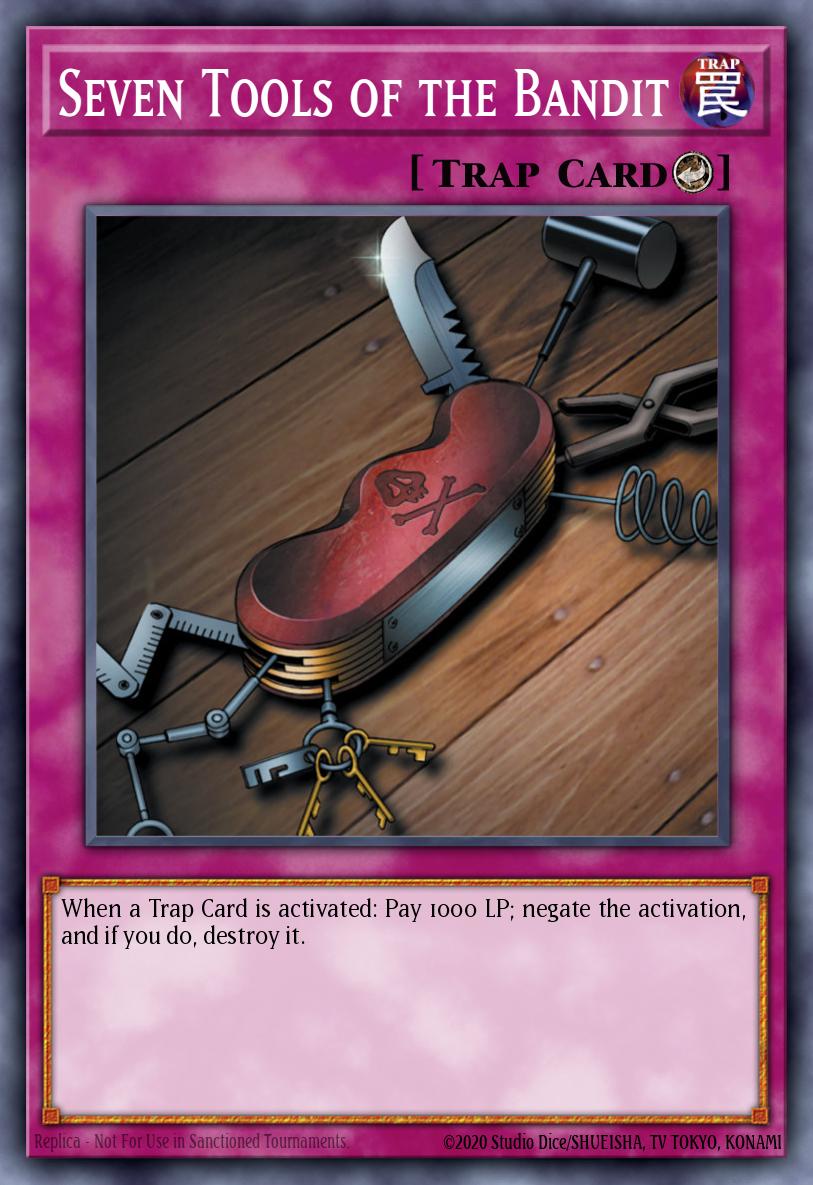
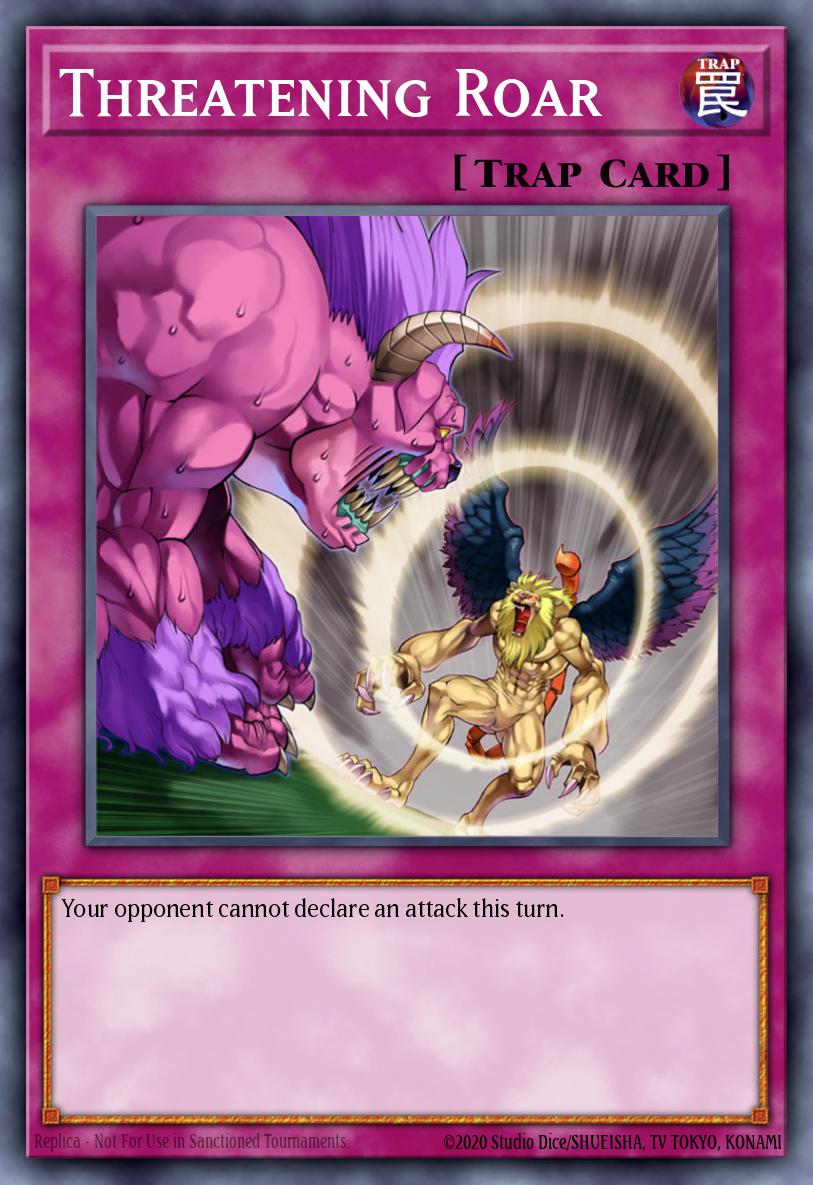
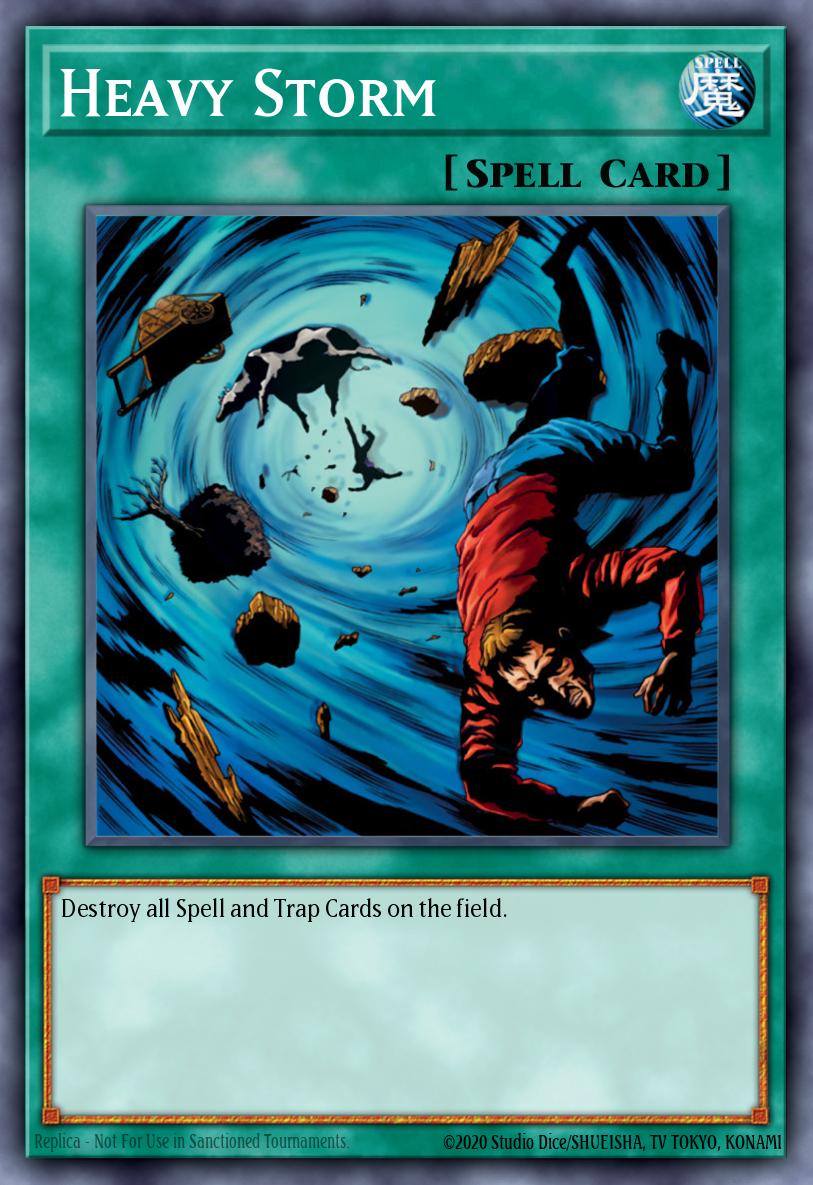
- Link 3: Seven Tools, its 1000 LP paid when it was activated, negates Threatening Roar.
- Link 2: Threatening Roar was negated, so it does nothing.
- Link 1: Heavy Storm destroys every Spell and Trap left. Player A can still attack.
Heavy Storm, Threatening Roar, Seven Tools of the Bandit
Chain Link 1: Player A activates Heavy Storm (Spell Speed 1), which destroys all Spell and Trap Cards on the field.
Chain Link 2: Player B responds with their Set Threatening Roar (Spell Speed 2): their opponent cannot declare an attack this turn.
Chain Link 3: Player A responds with Seven Tools of the Bandit (a Counter Trap, Spell Speed 3): pay 1000 LP to negate the activation of a Trap Card and destroy it.
Both players pass. Chain Link 3 resolves first: Seven Tools negates Threatening Roar.
Chain Link 2 has been negated, so it does nothing. Player A can still attack.
Chain Link 1 resolves: Heavy Storm destroys all remaining Spells and Traps on the field.
Responding from the hand
Most responses come from Set Traps and Quick-Play Spells, but some monsters have Quick Effects that are used by discarding them from your hand. Players call them hand traps. They are Spell Speed 2, so they can be chained to most of your opponent's plays.
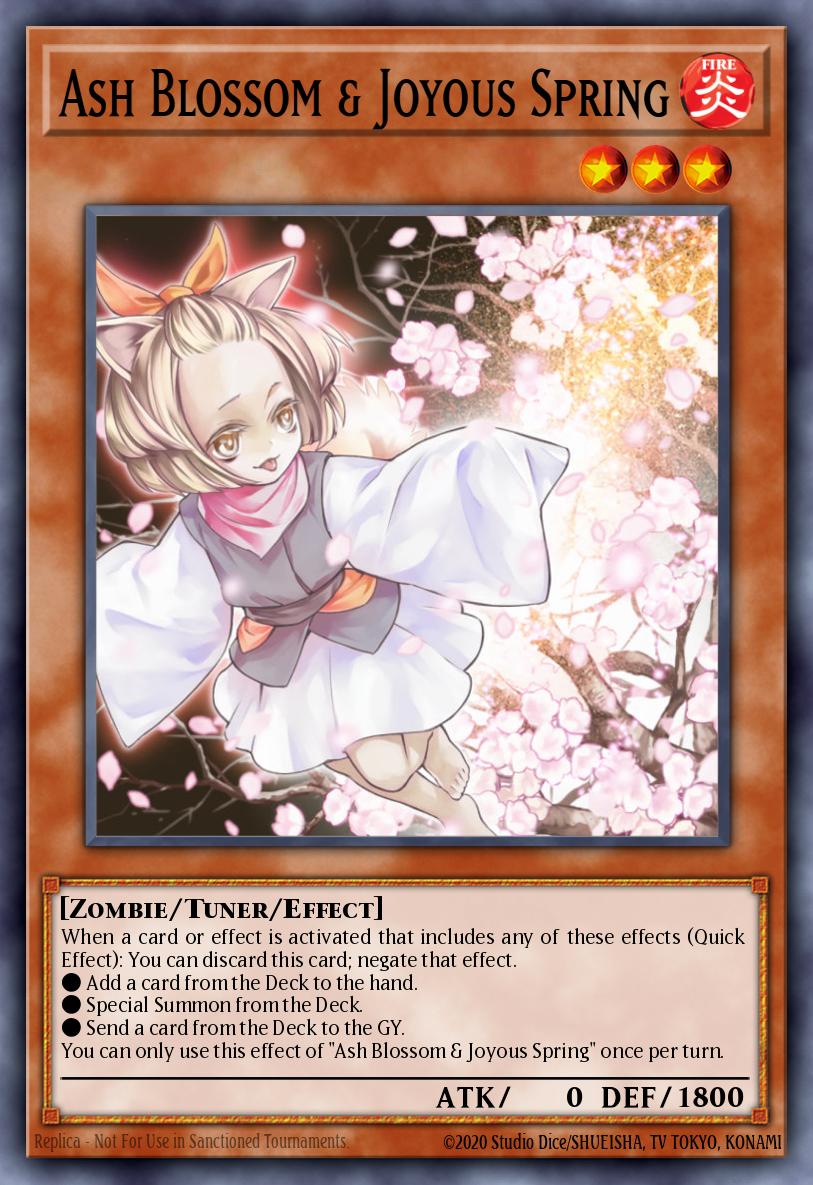
Ash Blossom & Joyous Spring
Your opponent activates a card effect that adds a card from their Deck to their hand. That is Chain Link 1.
You discard Ash Blossom & Joyous Spring from your hand to activate its Quick Effect as Chain Link 2.
Chain Link 2 resolves first and negates the search effect. Chain Link 1 then resolves with no effect.
Ash Blossom & Joyous Spring answers effects that add a card from the Deck to the hand, Special Summon from the Deck or send a card from the Deck to the Graveyard, once per turn.
What you cannot chain to
A chain only starts from an activation. These actions are not activations, so neither player can respond to them with a chain:
Summoning a monster, including a Normal Summon and Synchro, Xyz or Link Summons.
Tributing.
Changing a monster's battle position.
Paying a cost.
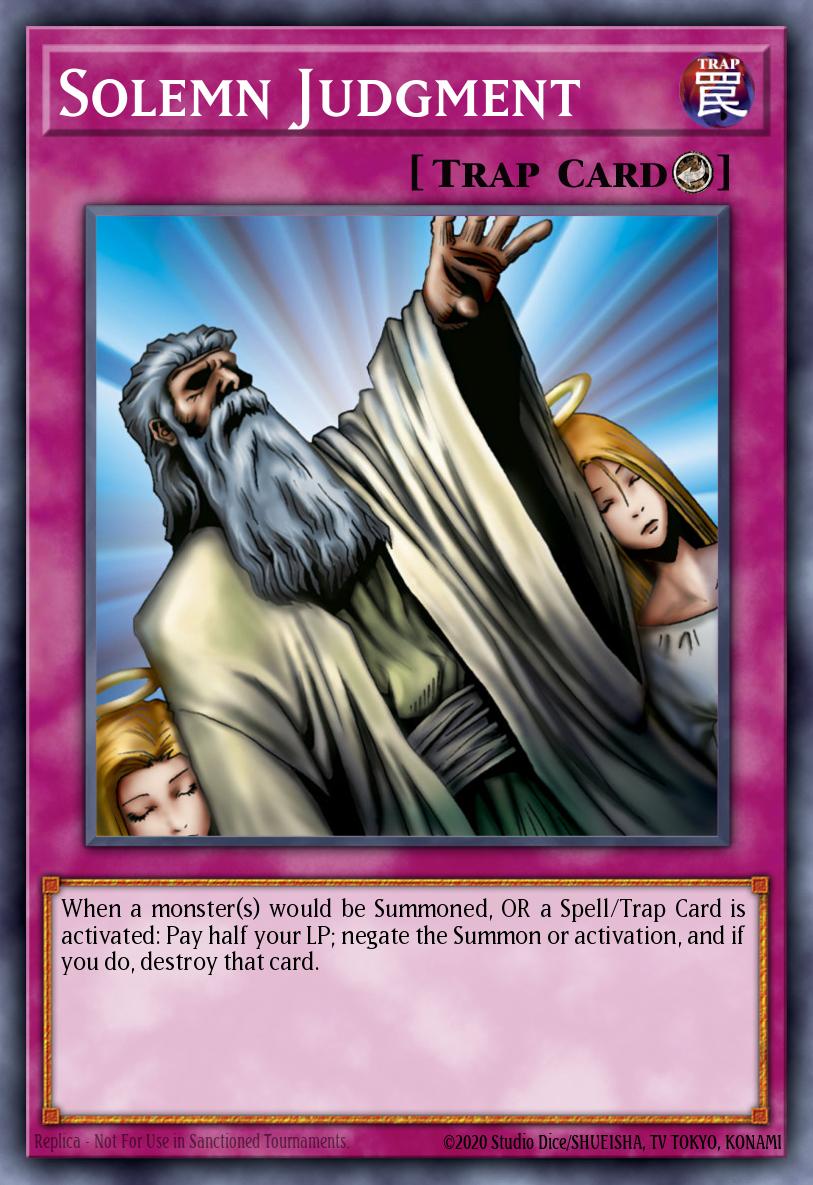
You can still respond to the effects these actions cause, such as a monster's "when this card is Summoned" trigger. A few cards are written to stop a summon itself. Solemn Judgment, a Counter Trap, is activated "When a monster(s) would be Summoned," and negates the summon for half your LP. Solemn Judgment is Limited on the current Forbidden & Limited List.
Costs and targets
Card text tells you what happens when. Konami's rulebook explains the punctuation: text before a colon (:) is the condition and timing, text before a semicolon (;) is what you do when you activate, which includes costs and targets, and the rest is what happens when the effect resolves.
Seven Tools of the Bandit reads "When a Trap Card is activated: Pay 1000 LP; negate the activation, and if you do, destroy it." The timing is "When a Trap Card is activated," the 1000 LP is paid at activation, and the negation happens at resolution. If Seven Tools is itself negated, the 1000 LP is not refunded.
Effects that trigger at the same time
When several Spell Speed 1 effects, usually Trigger effects, activate at the same moment, they are placed on a chain together in a fixed order:
- The turn player's mandatory effects, in any order they choose.
- The opponent's mandatory effects, in any order.
- The turn player's optional effects, in any order.
- The opponent's optional effects, in any order.
The chain then resolves backwards as usual, so the opponent's optional effects resolve first. Both players can respond to the finished chain with Spell Speed 2 or higher cards.
Priority: who gets to act first
The turn player starts every phase and step with priority, the right to activate a card first. While the turn player has priority, the opponent can only activate effects that trigger automatically. After an activation, or at the end of any phase or step, priority passes to the opponent. That is why your opponent can say "before the end of your Main Phase, I activate this card" when you announce the Battle Phase. For where each phase begins and ends, see Yu-Gi-Oh! turn phases.
Common chain mistakes
Resolving your card before asking whether your opponent responds. The rulebook says always to give them the chance first.
Resolving the chain from Chain Link 1 up. It resolves from the last link down.
Responding to a Trap with a Spell Speed 1 card, or to a Counter Trap with a Normal Trap. A response needs an equal or higher Spell Speed, and at least 2.
Trying to negate a Normal Summon with a Normal Trap. Nothing can be chained to a summon; only cards written to negate a summon can stop one.
Expecting a cost back after a negation. Costs are paid at activation and stay paid.
Frequently Asked Questions
What is a chain in Yu-Gi-Oh!?
A chain is a list of card effects activated in response to each other. When a card or effect is activated, your opponent can respond with another, you can respond to that, and so on. Each one is a Chain Link. When neither player adds anything, the chain resolves in reverse order, starting with the last Chain Link.
Why does a chain resolve backwards?
Because each response is meant to happen before the card it answers takes effect. A negation added as Chain Link 2 has to resolve before Chain Link 1, or there would be nothing left to negate.
What are the Spell Speeds in Yu-Gi-Oh!?
Spell Speed 1 covers Normal, Equip, Continuous, Field and Ritual Spells and monsters' Ignition, Trigger and Flip effects. Spell Speed 2 covers Normal and Continuous Traps, Quick-Play Spells and monsters' Quick Effects. Spell Speed 3 is Counter Traps. You can only respond with Spell Speed 2 or higher, and no lower than the Chain Link you are responding to.
Can you respond to a Counter Trap?
Only with another Counter Trap. Counter Traps are Spell Speed 3, the highest, and only another Spell Speed 3 card can be chained to them.
Can you chain to a Normal Summon?
No. Summoning, Tributing, changing a monster's battle position and paying costs are not activations, so nothing can be chained to them. You can respond to effects that trigger because of a summon, and a few cards, such as Solemn Judgment, are written to negate a summon itself when a monster would be Summoned.
Do you get your cost back if your card is negated?
No. Costs are paid when you activate the card, before the chain resolves. If the activation is negated, the cost stays paid.
Build and check your Yu-Gi-Oh! deck in TurnZero HQ.
Put your hand traps and Counter Traps in a deck, deal sample hands, and check the list against the Forbidden & Limited List. Free on iPhone, Android and the web.
Create Free AccountYu-Gi-Oh! card names and images are the property of Konami Digital Entertainment and their respective owners. ©Studio Dice/SHUEISHA, TV TOKYO, KONAMI. TurnZero HQ is not affiliated with, sponsored, or endorsed by Konami. Card data comes from YGOPRODeck, and prices from TCGplayer via TCGCSV.