Yu-Gi-Oh! Beginner Series
Yu-Gi-Oh! Summoning Mechanics: Every Way to Summon a Monster
Yu-Gi-Oh! has one summon you can make once per turn, the Normal Summon, and Special Summons you can make as often as your cards allow. Ritual, Fusion, Synchro, Xyz, Pendulum and Link Summons are all Special Summons, and each has its own recipe. This guide goes through all of them, following Konami's rulebook and its 2021 Rules Update.
Every summon at a glance
The rulebook sorts summons into two groups: what you can do once per turn, and what you can do as many times as you want. The first group is your Normal Summon or Set, including a Tribute Summon. Everything else, every Flip Summon and every Special Summon, belongs to the second.
A card's frame color tells you which of these it uses, as the card colors guide explains. Every summon here happens in your Main Phase unless a card's effect says otherwise.
Normal Summon and Normal Set
A Normal Summon is the most common way to play a monster: put it from your hand onto the field in face-up Attack Position. All Normal Monsters, and most Effect Monsters, can be Normal Summoned. You get one per turn.
A Normal Set puts the monster face down in Defense Position instead, and it uses the same once-per-turn allowance. You cannot play a monster from your hand in face-up Defense Position. A Set monster is not considered Summoned, and most monsters' effects do not work while they are face down. It can become face up later through a Flip Summon, by being attacked, or by a card effect.
Tribute Summon
A monster of Level 5 or higher needs Tributes before you can Normal Summon or Set it. Tributing means sending a monster you control to the Graveyard, face up or face down. It is a cost, so the Tributed monster is not treated as destroyed.
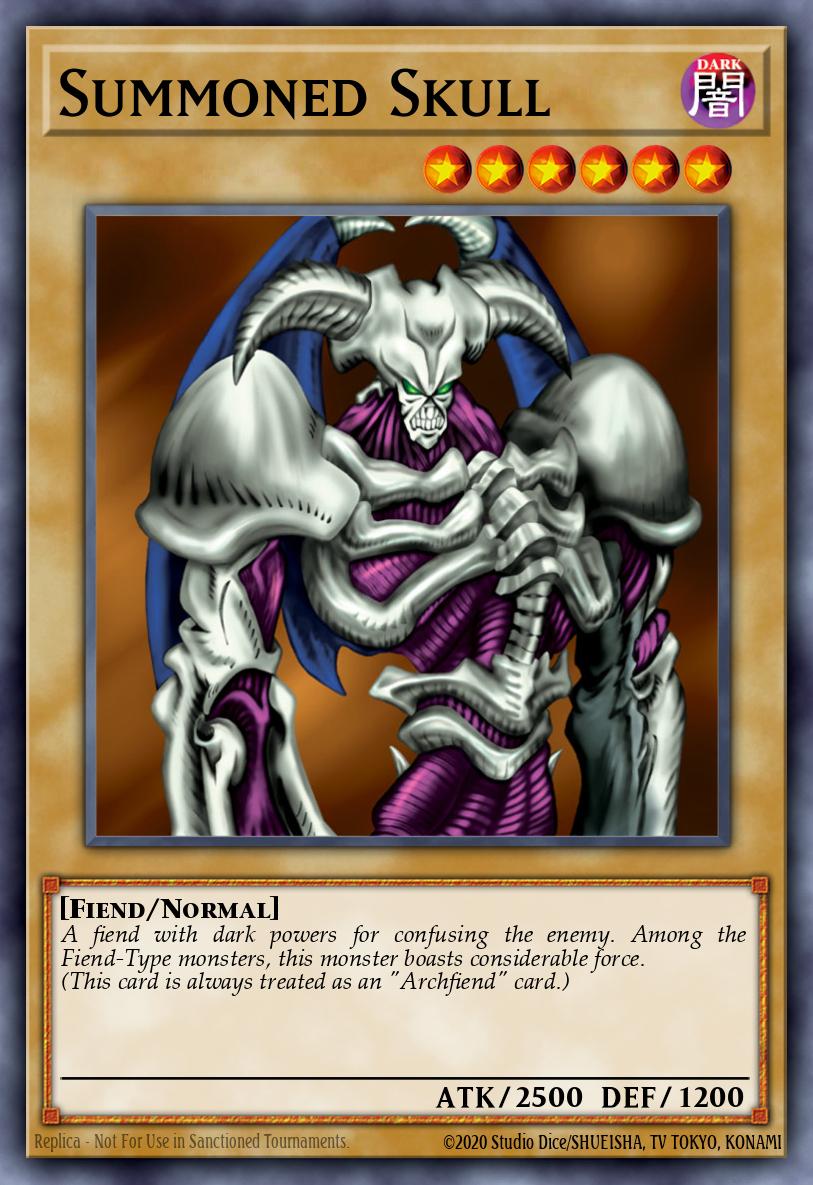
Summoned Skull
BLGG-EN001
Level 6: Tribute 1 monster to Normal Summon it.

Dark Magician
2021-EN001
Level 7: Tribute 2 monsters.
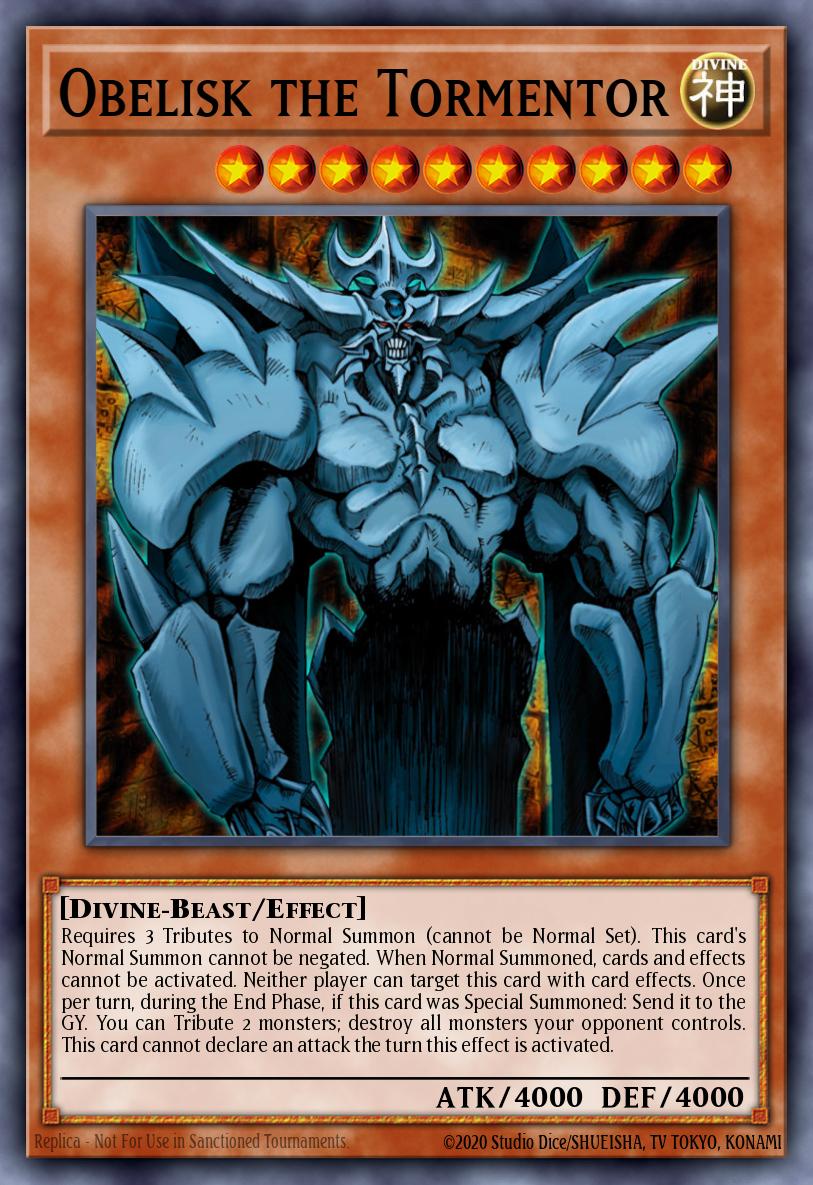
Obelisk the Tormentor
BP01-EN021
Prints its own rule: 3 Tributes to Normal Summon, and it cannot be Normal Set.
A Tribute Summon is still your Normal Summon for the turn. Setting a Level 5 or higher monster face down the same way is called a Tribute Set. When a card prints its own Tribute requirement, as Obelisk the Tormentor does, follow the card.
Flip Summon
A Flip Summon turns one of your face-down Defense Position monsters to face-up Attack Position, without a card effect. You cannot flip it to face-up Defense Position, and you cannot Flip Summon a monster the same turn you Set it. Flip Summons do not use your Normal Summon, so you can make as many as you have face-down monsters.
Monsters whose text starts with "FLIP:" have an effect that activates whenever they are turned face up, whether by a Flip Summon, by being attacked, or by a card. Man-Eater Bug reads "FLIP: Target 1 monster on the field; destroy it," which is why a face-down monster makes an opponent think twice before attacking it.
Special Summon
A Special Summon is any summon that is not a Normal Summon or a Flip Summon. There is no limit on how many you make in a turn, and it is how modern decks fill the field. A Special Summoned monster goes onto the field in your choice of face-up Attack or face-up Defense Position, unless a card says otherwise.
There are two kinds. The first is a summoning method: the six covered below, plus monsters whose own text gives a way to Special Summon them, such as Gate Guardian, which you Special Summon from your hand by Tributing three specific monsters. The second is a card effect that Special Summons something, such as Monster Reborn: "Target 1 monster in either GY; Special Summon it." Monster Reborn is Limited to one copy on the current Forbidden & Limited List.
The two interact through one rule worth learning early. A monster that must be Summoned a particular way, which includes every Fusion, Synchro, Xyz, Link and Ritual Monster, has to be properly Summoned first before a card like Monster Reborn can bring it back. If a Synchro Monster goes from your Extra Deck straight to the Graveyard without being Synchro Summoned, Monster Reborn cannot Special Summon it.
Ritual Summon (blue cards)
Ritual Monsters live in your Main Deck, but you need three things in hand or on the field to Summon one: the Ritual Monster, its matching Ritual Spell, and monsters to Tribute as that Spell requires.
- With the Ritual Monster in your hand, activate the Ritual Spell Card.
- Tribute monsters from your hand or field, as listed on the Ritual Spell. Most ask for total Levels equal to, or at least, the Ritual Monster's Level.
- Place the Ritual Monster on the field in face-up Attack or Defense Position, then send the Ritual Spell to the Graveyard.
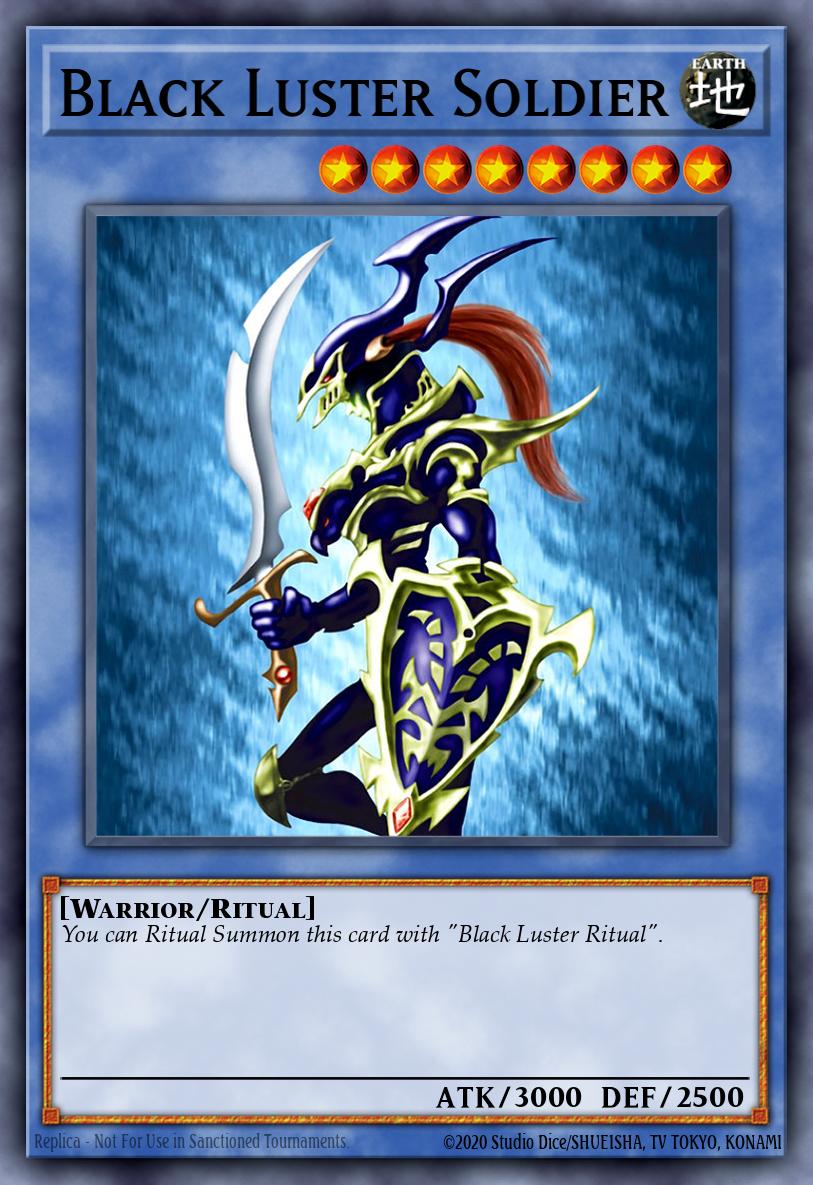
Black Luster Soldier
DPBC-EN006
A Level 8 Ritual Monster.
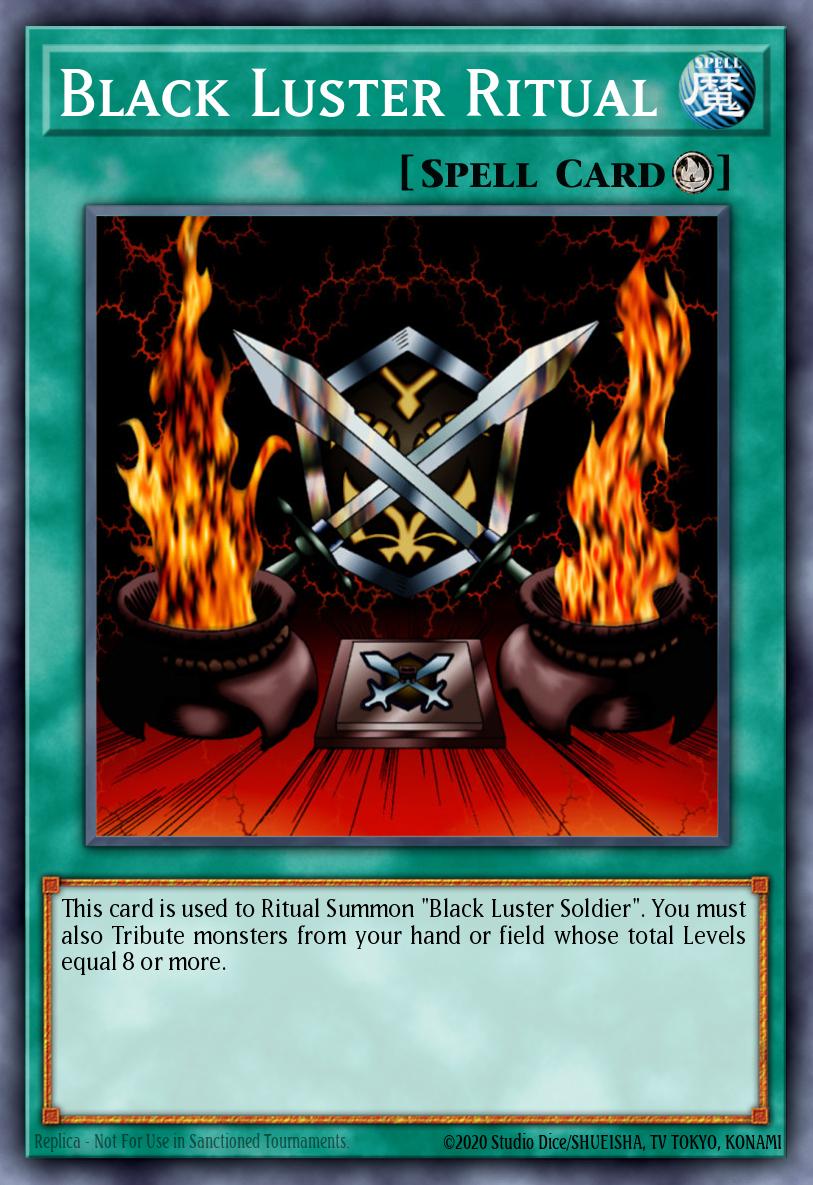
Black Luster Ritual
DPBC-EN007
Its Ritual Spell: Tribute monsters whose total Levels are 8 or more.
Rituals take more cards than other methods, which is why Ritual decks usually include cards that search out the Ritual Spell or the monster.
Fusion Summon (purple cards)
A Fusion Monster starts in your Extra Deck and lists its Fusion Materials at the top of its text. You need a card that Fusion Summons, most famously Polymerization, which reads: "Fusion Summon 1 Fusion Monster from your Extra Deck, using monsters from your hand or field as Fusion Material."
- With the listed materials in the places your Fusion card allows, activate the Fusion card.
- Send the Fusion Materials to the Graveyard.
- Place the Fusion Monster from your Extra Deck on the field in face-up Attack or Defense Position, then send the Fusion card to the Graveyard.
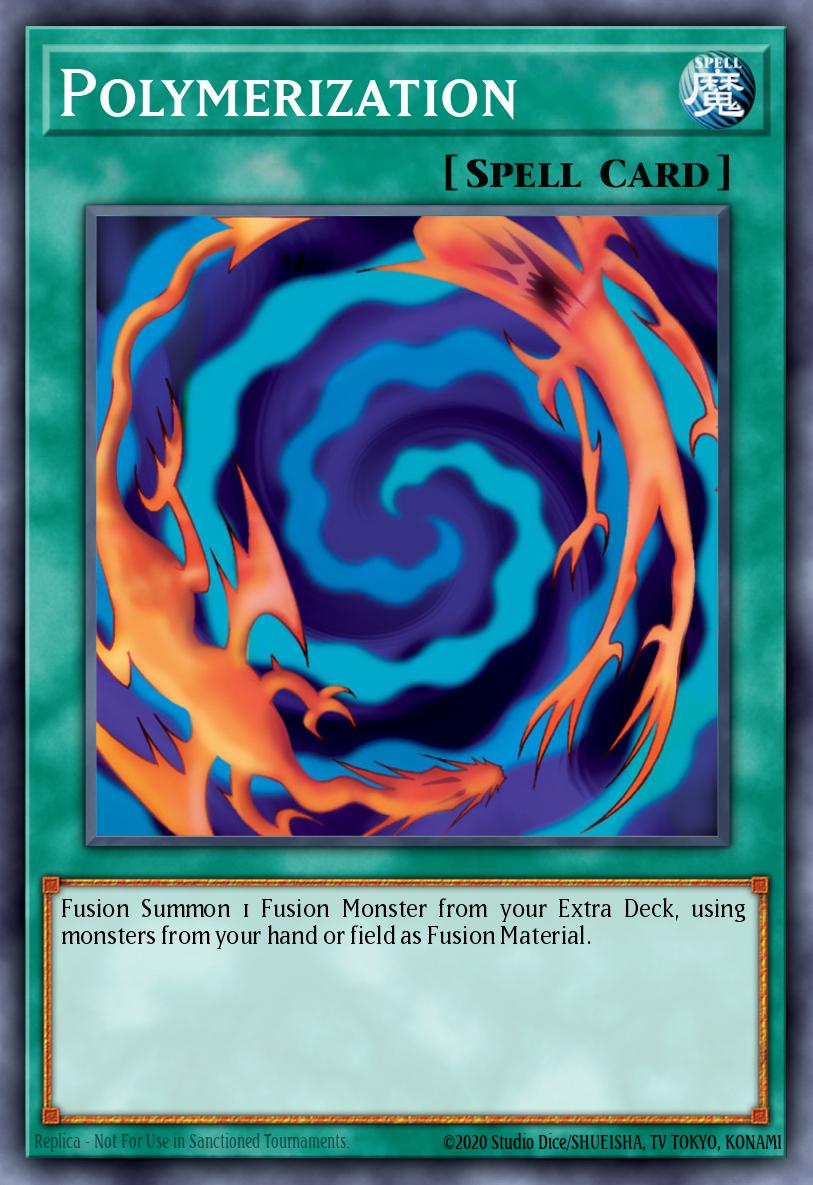
Polymerization
DB1-EN119
The original Fusion Spell.
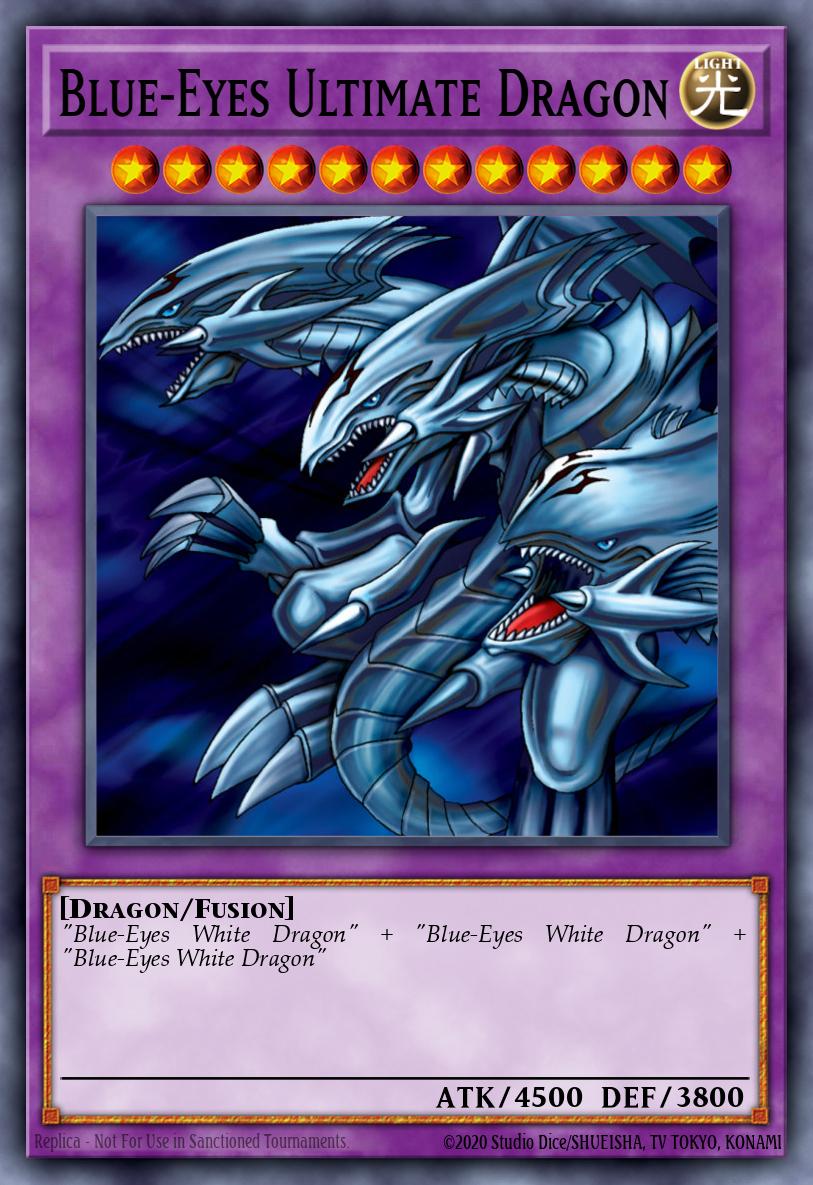
Blue-Eyes Ultimate Dragon
BATT-EN001
Materials: 3 Blue-Eyes White Dragon.
Many newer Fusion cards let you use materials from your Deck or Graveyard. The card that performs the Fusion Summon decides where the materials can come from, so read it rather than assuming hand or field.
Synchro Summon (white cards)
A Synchro Summon needs no Spell. You use one face-up Tuner, a monster with "Tuner" in its type line, and any number of face-up non-Tuner monsters, and their Levels must add up to exactly the Synchro Monster's Level.
- In your Main Phase, declare a Synchro Summon and check that your Tuner and non-Tuners add up to the Synchro Monster's Level.
- Send those Synchro Materials from the field to the Graveyard.
- Place the Synchro Monster from your Extra Deck in face-up Attack or Defense Position.
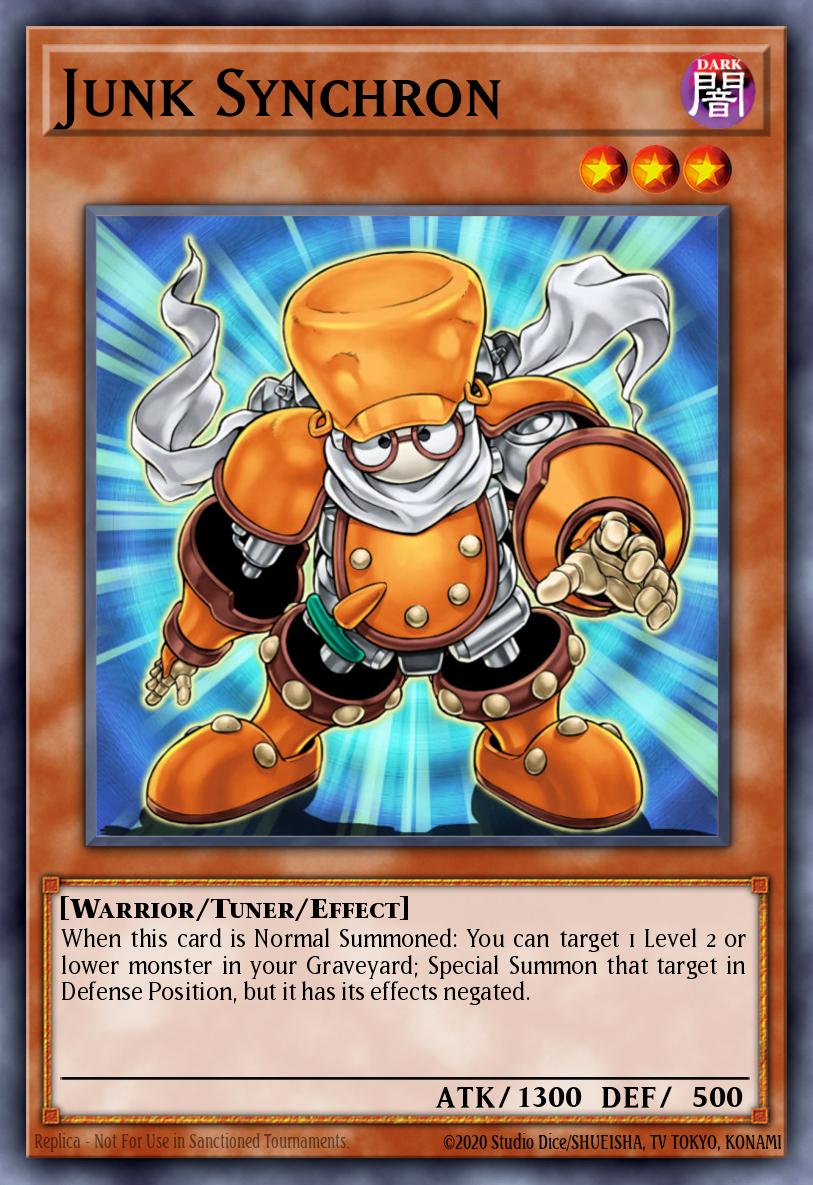
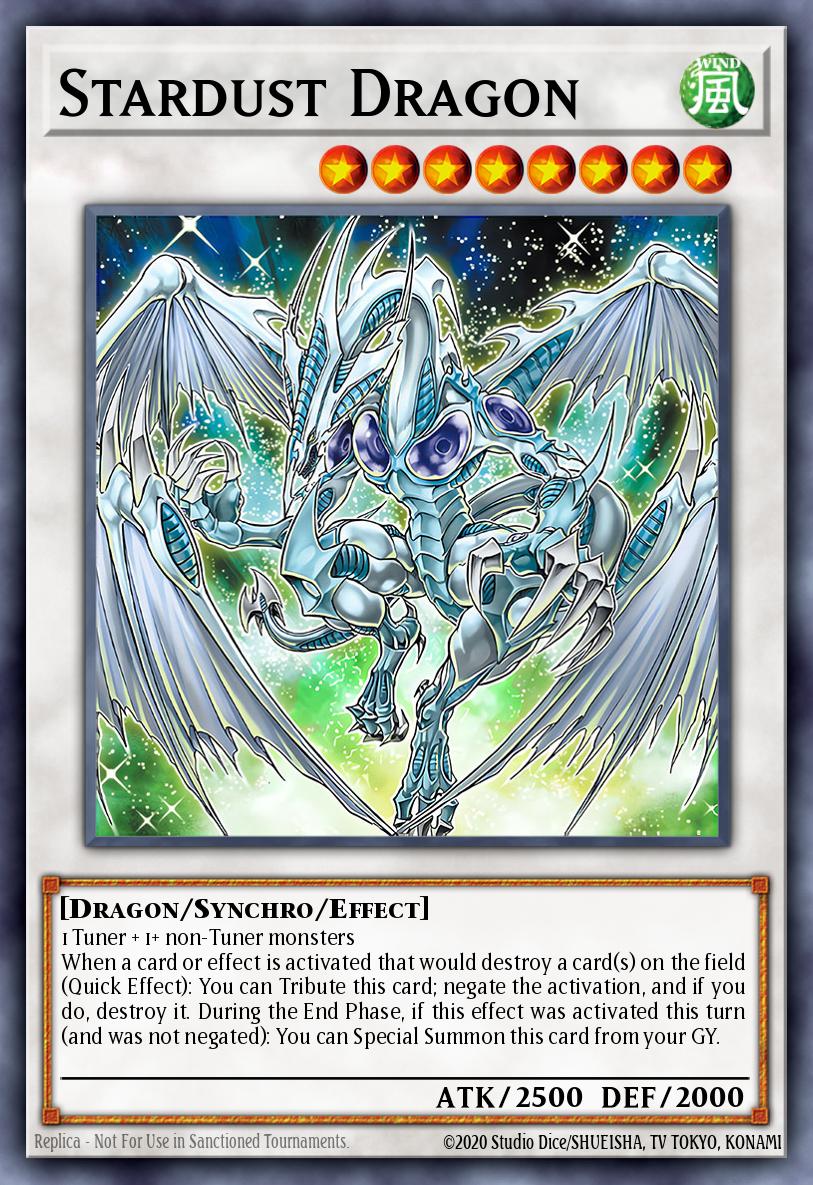
A Level 8 Synchro
You control Junk Synchron, a Level 3 Tuner, and a Level 5 non-Tuner monster.
3 + 5 = 8, the Level of Stardust Dragon, whose materials are 1 Tuner + 1 or more non-Tuner monsters.
Send both to the Graveyard and Special Summon Stardust Dragon from your Extra Deck.
Xyz Summon (black cards)
Xyz (pronounced "ik-seez") Monsters use monsters of the same Level. Instead of going to the Graveyard, the materials are stacked underneath the Xyz Monster and stay attached to it as Xyz Materials.
- Check that you control the face-up monsters the Xyz Monster lists, such as "2 Level 4 monsters."
- In your Main Phase, declare an Xyz Summon and stack those monsters on top of each other.
- Place the Xyz Monster from your Extra Deck on top of the stack, in face-up Attack or Defense Position.
Xyz Monsters have a Rank, shown as stars on the left, not a Level, so a Rank 4 Xyz Monster cannot be used where a card asks for a Level 4 monster. Many Xyz effects tell you to "detach" a material: move one card from under the Xyz Monster to the Graveyard. Number 39: Utopia detaches one to negate an attack. Attached materials are not cards on the field, and when the Xyz Monster leaves the field they all go to the Graveyard. The rulebook also says Tokens cannot be used as Xyz Materials.
Pendulum Summon (two-tone cards)
Pendulum Monsters can be played as Spells in your leftmost and rightmost Spell & Trap Zones, which then become Pendulum Zones. Each has a Pendulum Scale, the number on both sides of its middle text box. With a Pendulum Monster in each zone, you can Pendulum Summon once per turn.
- In your Main Phase, activate a Pendulum Monster in each of your two Pendulum Zones.
- Declare a Pendulum Summon, once per turn.
- Special Summon any number of monsters from your hand, and face-up Pendulum Monsters from your Extra Deck, whose Levels are between the two Scales.
"Between" means strictly between. With Scales of 1 and 8, you can Pendulum Summon monsters of Level 2 through 7. When a Pendulum Monster on your field would go to the Graveyard, from either a Monster Zone or a Pendulum Zone, it is placed face up in your Extra Deck instead, so you can Pendulum Summon it again later. Odd-Eyes Pendulum Dragon has a Scale of 4 on both sides.
Link Summon (dark blue cards)
A Link Monster has a Link Rating instead of a Level, printed as LINK- and a number, and the same number of red Link Arrows around its art. You Link Summon it by sending face-up monsters you control to the Graveyard, and the summon has to satisfy three conditions at once:
- The number of materials matches the materials line on the card, such as "2+ Effect Monsters."
- The materials meet any other requirement on that line, such as a Type or "Effect Monsters."
- The materials add up to the Link Rating. Each monster counts as 1, but a Link Monster used as material can count as 1 or as its own Link Rating.
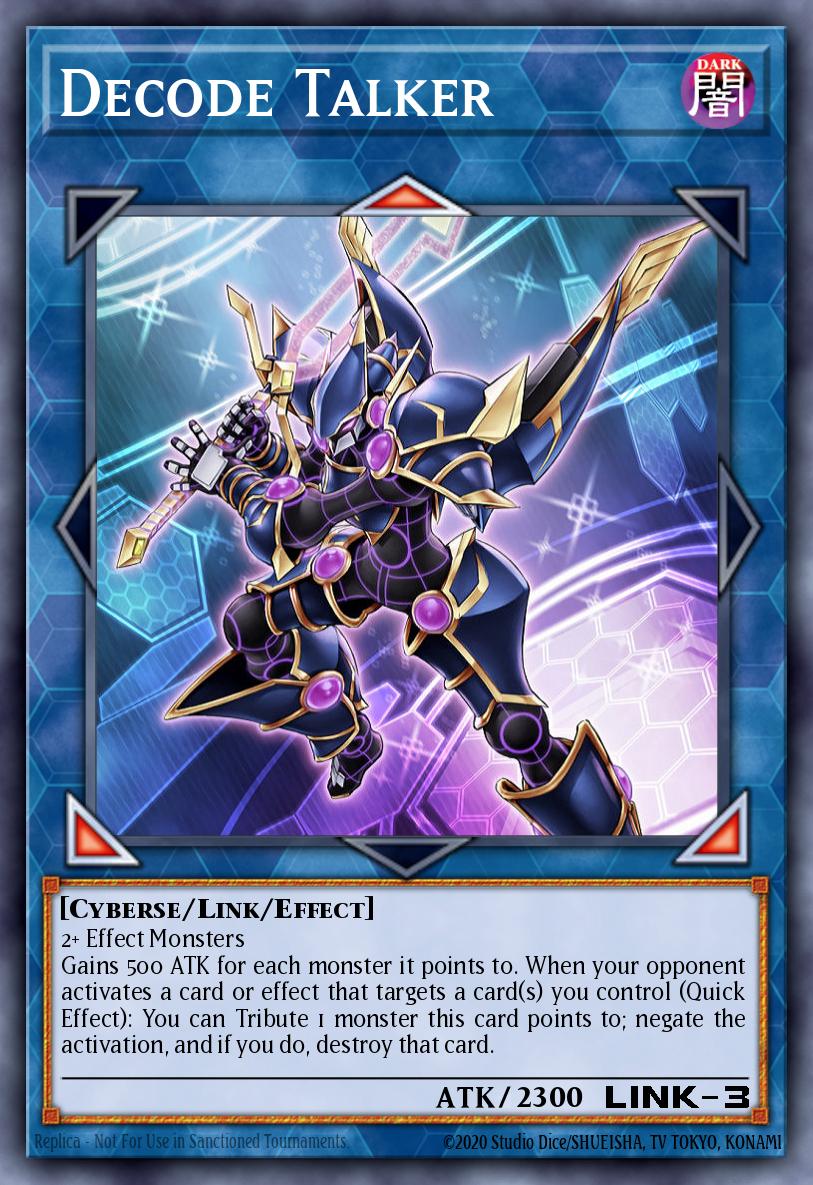
Summoning a Link-3 with two materials
Decode Talker is LINK-3, and its materials are 2+ Effect Monsters.
You control a LINK-2 Link Monster and one other Effect Monster.
The LINK-2 counts as 2 and the Effect Monster as 1, for a total of 3, using two materials. Send both and place Decode Talker in the Extra Monster Zone or a zone another Link Monster points to.
Link Monsters have no DEF and can never be in Defense Position, not even face down. Their arrows are what make them useful beyond their stats: a Main Monster Zone a Link Monster points to can take a monster from the Extra Deck, as the next section explains. Tokens, and Trap Cards that are treated as monsters, can be Link Materials if they meet the requirements.
Where Extra Deck monsters go
Each player has five Main Monster Zones, and between the two players are two Extra Monster Zones, of which each player can normally use one. Konami's 2021 Rules Update decides which monsters need them:

The restriction only applies to a summon from the Extra Deck. A Link Monster revived from the Graveyard or from banishment goes to a Main Monster Zone like any other monster. Konami's Version 10 rulebook PDF predates this update and still sends every Extra Deck monster to the Extra Monster Zone, so older guides that follow it are out of date on this point.
Common summoning mistakes
Normal Summoning, then Tribute Summoning in the same turn. Both use your one Normal Summon.
Treating an Xyz Monster's Rank as a Level. Its stars are a Rank, so it cannot be Xyz material where a card asks for a Level, and Link Monsters have neither.
Synchro Summoning when the Levels do not add up exactly, or with two Tuners. You need one Tuner, unless the Synchro Monster says otherwise, and an exact total.
Using a face-down monster as Synchro, Xyz or Link material. Those methods use face-up monsters.
Reviving a Fusion, Synchro, Xyz or Link Monster that was sent to the Graveyard without being properly Summoned.
Pendulum Summoning a monster whose Level equals one of the Scales. The Level must be strictly between them.
Frequently Asked Questions
How many times can you summon in a turn in Yu-Gi-Oh!?
You get one Normal Summon or Set per turn, and a Tribute Summon uses it. Special Summons, which include Fusion, Synchro, Xyz, Link, Pendulum and Ritual Summons, have no limit beyond what your cards allow, and neither do Flip Summons.
How many Tributes does a monster need?
A Level 4 or lower monster needs none. A Level 5 or 6 monster needs 1 Tribute, and a Level 7 or higher monster needs 2. A few monsters print their own requirement, such as Obelisk the Tormentor, which needs 3.
What is the difference between a Normal Summon and a Special Summon?
A Normal Summon plays a monster from your hand in face-up Attack Position, once per turn, with Tributes if its Level is 5 or higher. A Special Summon happens through a summoning method or a card effect, can be done any number of times, and puts the monster in face-up Attack or Defense Position unless a card says otherwise.
Can you Normal Summon a monster in Defense Position?
Not face up. You can Normal Set it instead, face-down in Defense Position, and that uses your Normal Summon for the turn. A Set monster is not considered Summoned until it is flipped face up.
Where do Extra Deck monsters go on the field?
Since Konami's 2021 Rules Update, Fusion, Synchro and Xyz Monsters can be Summoned from the Extra Deck to any of your Main Monster Zones or to the Extra Monster Zone. Link Monsters, and Pendulum Monsters Summoned from the Extra Deck, must go to the Extra Monster Zone or a Main Monster Zone that a Link Monster points to.
What is a Tuner in Yu-Gi-Oh!?
A Tuner is a monster with "Tuner" in its type line. A Synchro Summon needs exactly one face-up Tuner plus face-up non-Tuner monsters, unless the Synchro Monster says otherwise, and their Levels must add up exactly to the Synchro Monster's Level.
Can you use Monster Reborn on a Synchro Monster that was never summoned?
No. Fusion, Synchro, Xyz and Link Monsters, Ritual Monsters and monsters that say they must first be Special Summoned a certain way have to be properly Summoned before another card can revive them. A Synchro Monster sent from the Extra Deck straight to the Graveyard cannot be Special Summoned by Monster Reborn.
Build your Main and Extra Deck in TurnZero HQ.
TurnZero HQ's Deck Lab keeps your Main, Extra and Side Decks apart and checks them against the Forbidden & Limited List. Free on iPhone, Android and the web.
Create Free AccountYu-Gi-Oh! card names and images are the property of Konami Digital Entertainment and their respective owners. ©Studio Dice/SHUEISHA, TV TOKYO, KONAMI. TurnZero HQ is not affiliated with, sponsored, or endorsed by Konami. Card data comes from YGOPRODeck, and prices from TCGplayer via TCGCSV.