Yu-Gi-Oh! TCG
Yu-Gi-Oh! Spell Cards
A Spell Card is the green card you play from your hand during your Main Phase for an effect. There are six kinds, each marked by an icon, and the difference between them decides when you can use one and whether it stays on the field.
What a Spell Card is
A Spell Card is a green card with an effect, and normally you can only activate it during your own Main Phase. You announce it, place it face up in one of your five Spell & Trap Zones, and if the activation isn't stopped, you do what the card says. Spells have no Level, ATK or DEF. Under the name they're labeled [Spell Card], with a small icon on that line when the Spell is one of the special kinds.
Spells and Traps share the same zones, but they behave differently. You can play a Spell straight from your hand on your turn. A Trap has to be Set first, and its strength is that it can be activated on your opponent's turn. How Trap Cards work →
The six Spell types
Konami's rulebook names six kinds of Spell. A Normal Spell has no icon; the other five each have one, printed next to [Spell Card] under the name.
Normal Spells
A Normal Spell is used once. It resolves and goes to the Graveyard. Most of the famous Spells are Normal Spells, such as Raigeki, whose full text is "Destroy all monsters your opponent controls."
Quick-Play Spells
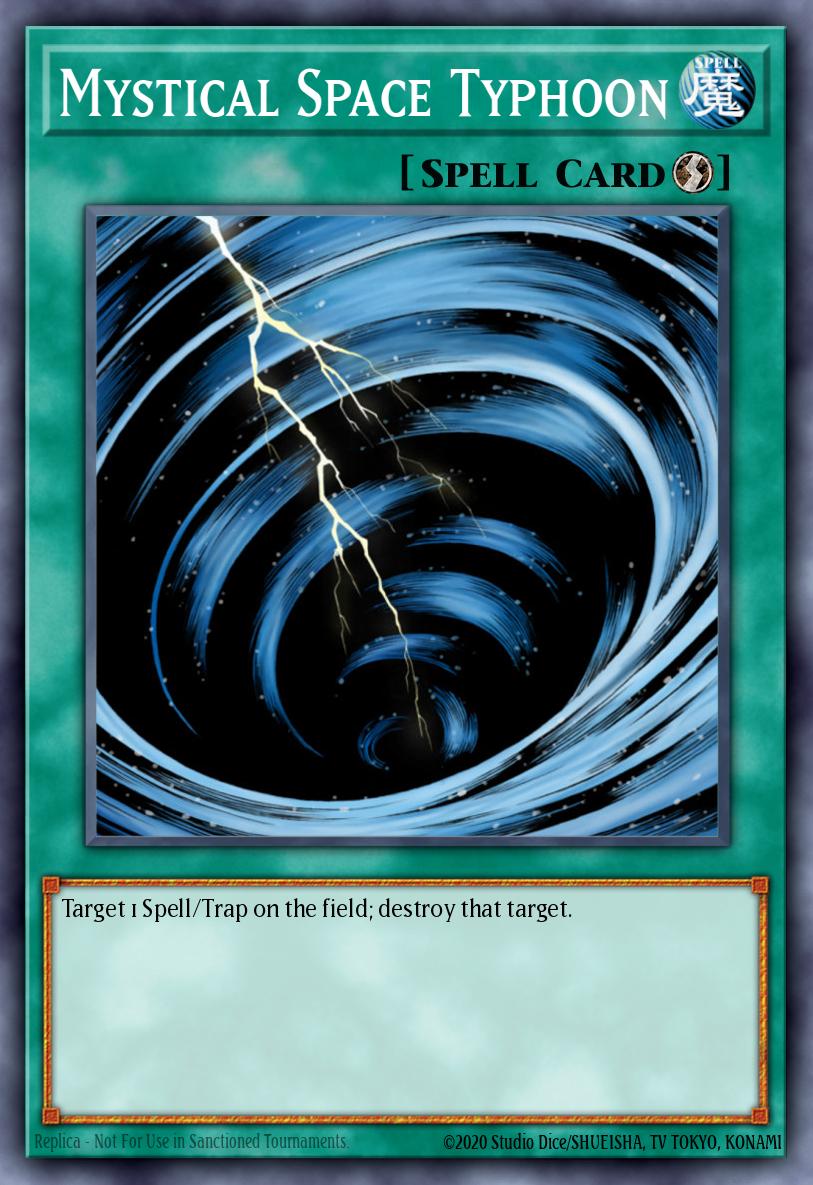
A Quick-Play Spell can be activated from your hand during any phase of your turn, not only the Main Phase, so you can use one in the Battle Phase. If you Set it face down, you can also activate it on your opponent's turn, but not on the turn you Set it. Mystical Space Typhoon ("Target 1 Spell/Trap on the field; destroy that target.") and Book of Moon are classic examples.
Continuous Spells
A Continuous Spell stays on the field after you activate it, and its effect keeps applying while it is face up. Messenger of Peace stops monsters with 1500 or more ATK from declaring an attack, and asks you to pay 100 LP during each of your Standby Phases to keep it. The risk with any Continuous Spell is that your opponent removes it before it pays you back.
Equip Spells
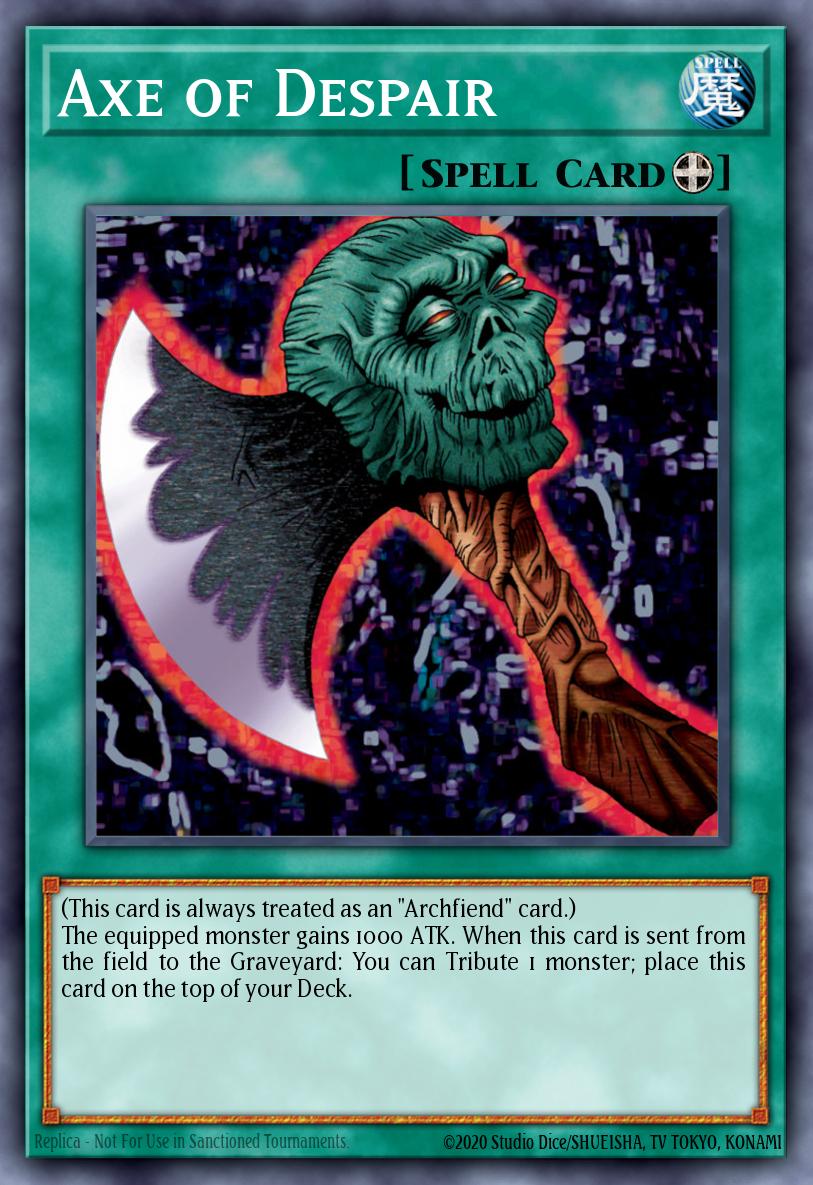
An Equip Spell attaches to 1 face-up monster, yours or your opponent's depending on the card, and still takes up one of your Spell & Trap Zones. If that monster is destroyed, flipped face down or leaves the field, the Equip Spell is destroyed. Axe of Despair gives the equipped monster 1000 ATK.
Field Spells
A Field Spell goes in your Field Zone, not a Spell & Trap Zone. Each player can have 1 on their own side of the field, and to play a new one you send your old one to the Graveyard. Many Field Spells affect both players: Yami raises the ATK and DEF of all Fiend and Spellcaster monsters on the field by 200, whoever controls them.
Ritual Spells
A Ritual Spell is how you Ritual Summon a Ritual Monster, and you use it the way you would use a Normal Spell. Black Luster Ritual Ritual Summons "Black Luster Soldier" by Tributing monsters from your hand or field whose Levels total 8 or more. How Ritual and Fusion Summons work →
Setting Spells and Spell Speed
You can Set a Spell face down instead of activating it, but setting doesn't make it faster. A Set Normal, Continuous, Equip or Ritual Spell can still only be activated during your Main Phase, though it can be activated the same turn you Set it. Players Set Spells mostly to bluff, since a face-down card might be a Trap. Quick-Play Spells are the exception, as covered above: Set, they work on your opponent's turn, but not on the turn you Set them.
Spell Speed decides what can respond to what in a chain. A response has to be Spell Speed 2 or higher and no slower than the card it answers.
That's why a Quick-Play Spell can answer your opponent's Spell, and a Normal Spell can't. Chains and Spell Speed in the rules guide →
Famous Spells and their status today
Several of the best-known Spells come from the first sets, and some are too strong for today's tournaments. The Forbidden & Limited List sets how many copies you can run: Forbidden is 0, Limited is 1, Semi-Limited is 2, and anything else is up to 3. Statuses below are the TCG list as of October 2026.
Pot of Greed
BP01-EN034
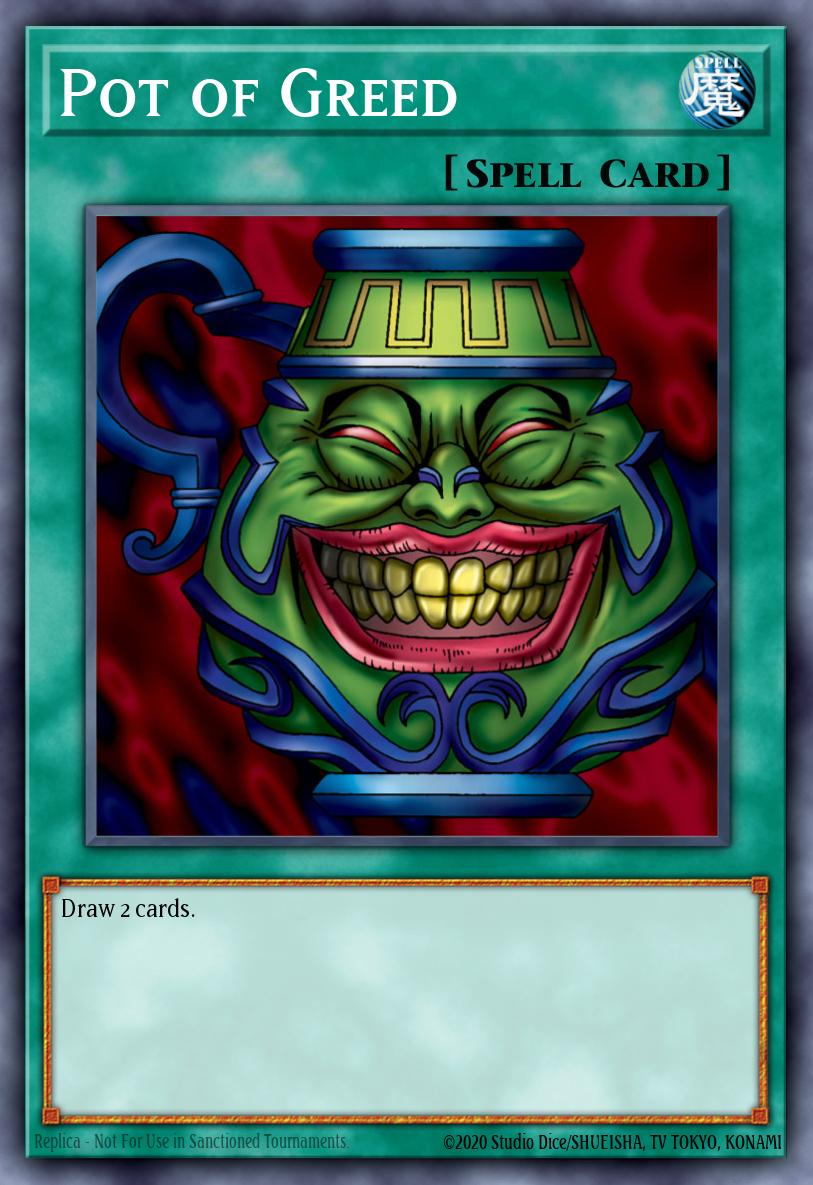
Forbidden in the TCG as of October 2026, so 0 copies in a tournament deck.
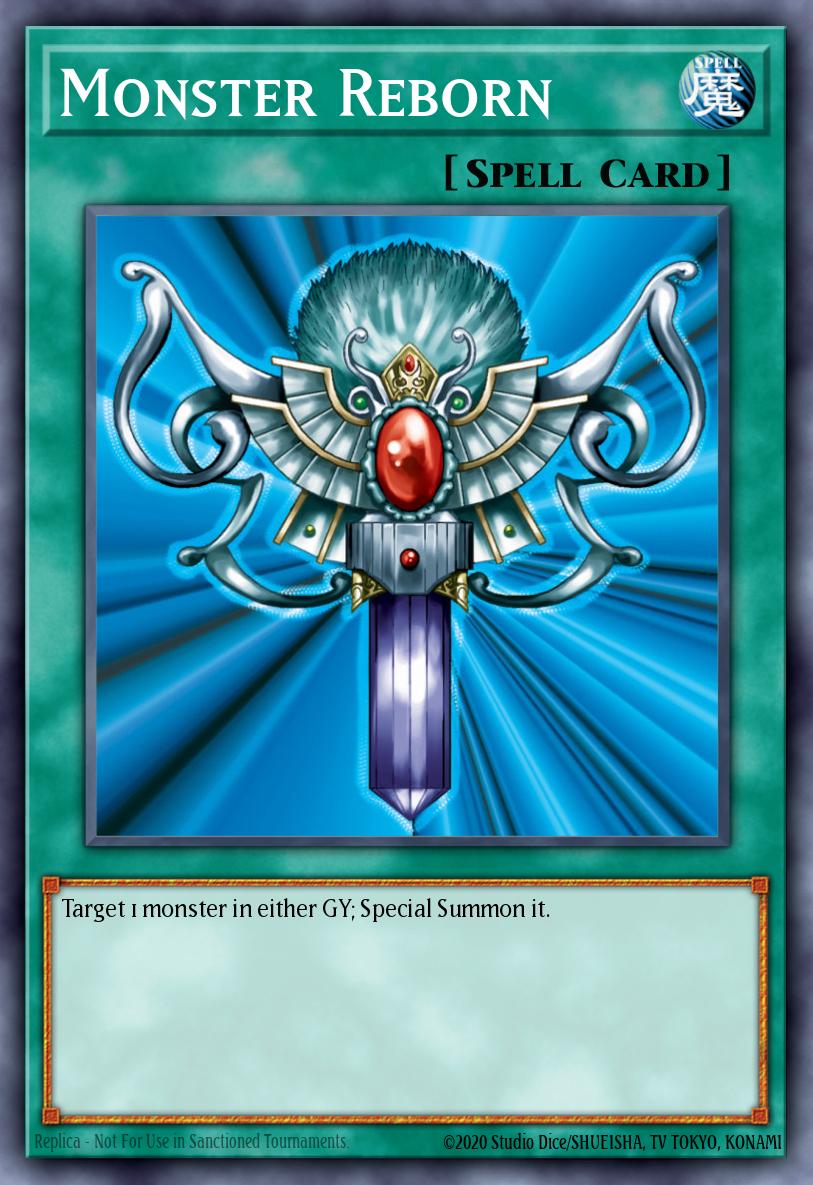
Monster Reborn
26LP-EN001
Limited to 1. "Target 1 monster in either GY; Special Summon it."
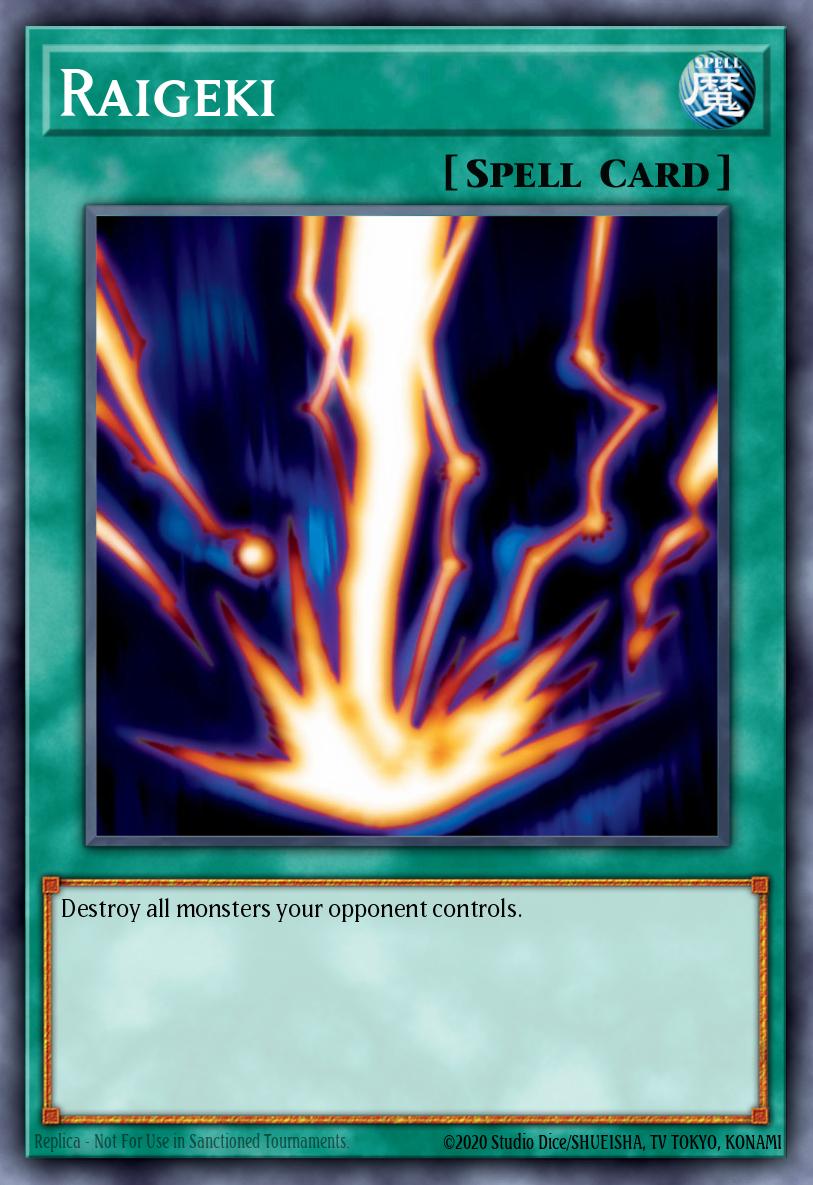
Raigeki
BP01-EN032
Unlimited as of October 2026, so a deck can run up to 3.
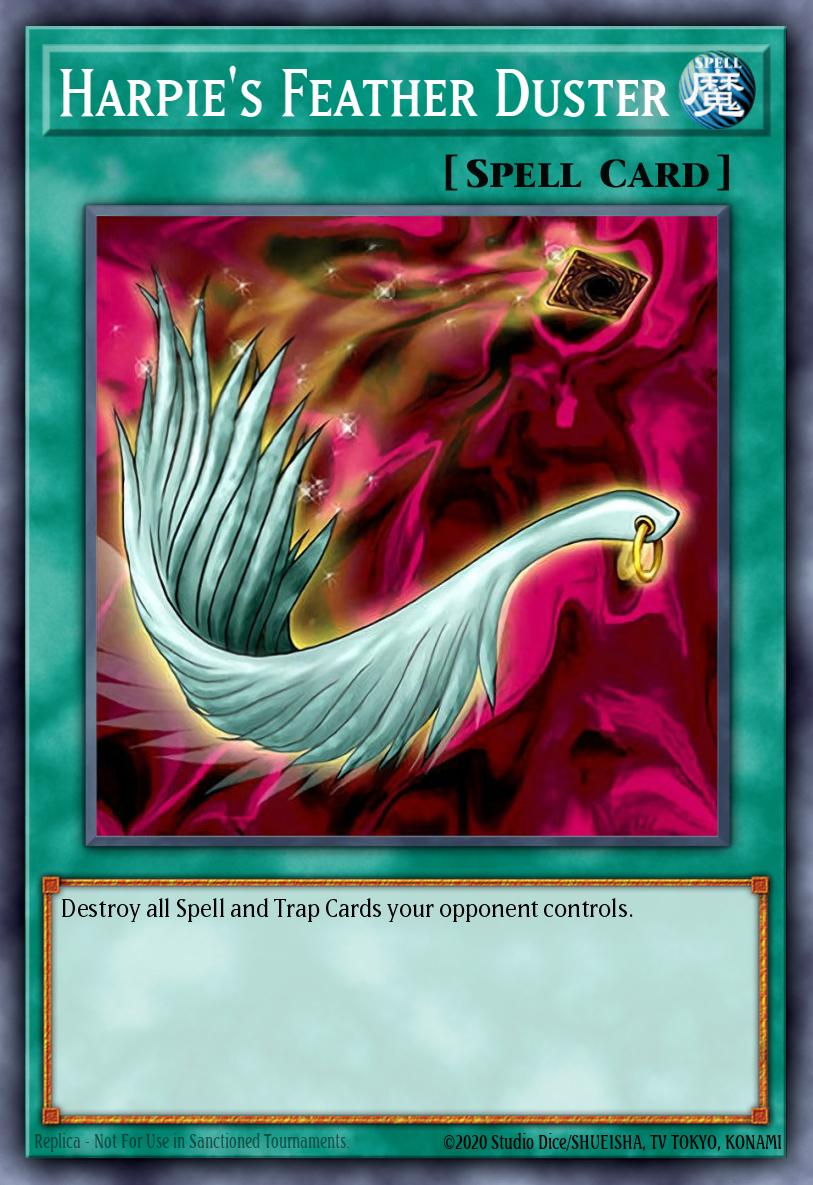
Harpie's Feather Duster
BP01-EN035
Limited to 1. Clears every Spell and Trap your opponent controls.
Unlimited only means the list doesn't restrict a card. Whether Raigeki or Dark Hole belongs in a deck is a separate question that depends on the strategy and what you expect to face. The list changes regularly, so check a card's current status before a tournament. Each card page on TurnZero HQ shows its TCG Forbidden & Limited status.
Spells in today's tournament decks
Modern Spells are usually longer and more specific than the classics. Called by the Grave is a good example: a Quick-Play Spell that banishes 1 monster from your opponent's Graveyard and negates that monster's effects, and the effects of monsters with the same original name, until the end of the next turn. It's Limited in the TCG as of October 2026, and it was among the five Spells appearing most often in tournament deck lists collected by KOTACARDS in the second half of September 2026.
The rest of that list was made up of Spells from specific strategies, which is common: a deck's own Spells, which search and summon its monsters, take most of its Spell slots, and general Spells fill what's left. Which ones you play depends on your deck and what you expect to face. How to build a Yu-Gi-Oh! deck →
What Spell Cards are worth
A Spell's price depends on the printing, the edition and whether people still play it, not on how famous it is. Monster Reborn shows the range. As of October 2, 2026, TCGplayer's market price for a 1st Edition LOB-118 Ultra Rare from Legend of Blue Eyes White Dragon was $475.00, the Unlimited copy of the same printing was $16.26, and its cheapest Common reprints were under $0.30.
Being Forbidden takes away play demand, but it doesn't always take away collector demand. Pot of Greed's cheapest priced printing was still $4.31, while Mystic Mine, a Forbidden Field Spell from 2019, was under $1 in every priced printing. For a played card like Called by the Grave, a Common reprint and a premium rarity can be hundreds of times apart.
If you want to know what your own Spells are worth, TurnZero HQ prices a Yu-Gi-Oh! collection per printing and edition from TCGplayer's market prices, updated daily, and its deck builder checks a list against the Forbidden & Limited List. How much are my Yu-Gi-Oh! cards worth? →
Frequently Asked Questions
Can you activate a Spell Card on your opponent's turn?
Only a Quick-Play Spell, and only if you Set it face down first. You then have to wait until a later turn to activate it, so you can't Set it and use it in the same turn. Every other kind of Spell can only be activated during your own Main Phase, even if it is Set.
Can you activate a Spell the same turn you Set it?
Yes, for every kind except Quick-Play. A Set Normal Spell, for example, can be flipped and activated later in the same Main Phase. A Set Quick-Play Spell has to wait until the next turn. Traps work the other way: no Trap can be activated the turn it is Set unless a card says otherwise.
Is Pot of Greed banned in Yu-Gi-Oh!?
Yes. As of October 2026, Pot of Greed is Forbidden on the TCG Forbidden & Limited List, so you can't put a copy in a deck for official tournaments. Graceful Charity is Forbidden too. You can still play either one in casual games where both players agree.
How many Spell Cards should a Yu-Gi-Oh! deck run?
There is no fixed number. The rules only cap each card at 3 copies across your Main Deck and Side Deck, fewer if the card is Limited or Semi-Limited. How many Spells you play depends on your deck: some strategies lean on Spells that search or summon, others need more monsters or Traps.
Can you use a Spell Card during the Battle Phase?
Only a Quick-Play Spell. It can be activated from your hand in any phase of your turn, including the Battle Phase, or from a face-down Set on a later turn. Normal, Continuous, Equip, Field and Ritual Spells can only be activated in your Main Phase.
Know what your Spells are worth.
Add your Yu-Gi-Oh! cards by printing and edition and TurnZero HQ values each copy from daily TCGplayer prices. Free to start.
Create Free AccountYu-Gi-Oh! card names and images are the property of Konami Digital Entertainment and their respective owners. ©Studio Dice/SHUEISHA, TV TOKYO, KONAMI. TurnZero HQ is not affiliated with, sponsored, or endorsed by Konami. Card data comes from YGOPRODeck, and prices from TCGplayer via TCGCSV.