Yu-Gi-Oh! TCG
So You Want to Get Into Yu-Gi-Oh!: Collecting
Yu-Gi-Oh! has more product types, more rarities and more reprints than most card games, which is good news if you want a binder of dragons and a trap if you buy the wrong box first. This guide covers what to buy, what makes a printing valuable, and how not to overpay.
What kind of collector are you?
This is part 1 of "So You Want to Get Into Yu-Gi-Oh!", a beginner series in four parts: Collect, Build, Play and Connect. This part is about collecting. Building a deck, playing it and finding people to play with come next.
Decide what you want from the hobby before you spend anything, because it changes what you should buy. Most collectors start as one of these, and plenty end up as two.
The product ladder
Konami sells several kinds of sealed product, and they differ more in what they are for than in price. The table runs from the cheapest way in to the most collector-focused. Every MSRP is the one Konami lists on its product page; stores may charge more or less, especially once a product has been out for a while.
For a first purchase, buy one Structure Deck and a few packs of the newest core set. That is about $30 at MSRP, it gets you a deck that works and a look at the current set, and it tells you what kind of collector you are before you spend on a box.
Two more products are on Konami's calendar. Magnificent Maestros (November 13, 2026, MSRP $34.99 a box) has 18 reimagined anime cards, each with a Grand Master Rare version serial-numbered from 001 to 100. Glorious Victors follows on December 4. Konami had not listed a 2026 tin on its site as of October 22, 2026, so wait for an announcement before trusting a preorder listing. Every 2026 set, with its chase cards →
Current prices: Blue-Eyes White Destiny Legendary Modern Decks 2026 Beyond the Brave
Reading a card like a collector
Three details on a Yu-Gi-Oh! card tell you which copy you hold, and the price follows them rather than the card's name.
The set code, under the artwork on the right, such as BETB-EN052: the set, the language (EN for English) and the card's number in the set. One card can have dozens of set codes, and each is priced on its own.
The edition: 1st Edition, Limited Edition, or no mark for Unlimited. On older cards it sits under the artwork on the left; recent sets such as Beyond the Brave print it on the bottom edge beside the passcode. It matters a lot on 2002 to 2004 cards and usually much less on new ones.
The finish. No rarity symbol is printed on the card. You read the rarity from where the foil sits and what it looks like.
Every part of a card, explained → 1st Edition vs. Unlimited →
The rarities that move prices
Most new collectors only need to recognize the top few finishes, because those are where the money is. The same card at the same set code can cost several times more in its top rarity.
Rarity Collections and tins add Platinum Secret, Prismatic Secret and Ultimate Rares as well. The full rarity ladder, with prices →
OCG vs. TCG
The OCG is the Japanese and Asian version of the game, with Japanese, Korean and Asian-English cards. It usually gets new cards months before the TCG, which is the version sold in North America, Europe and Oceania, and its products and rarities are different. OCG cards are official, but they aren't used in TCG-sanctioned events, and their prices are separate from the TCG printings. Collect them on purpose, and check which game a cheap "Asian-English" listing is for before you buy it.
Your first $50 or $100
Both plans below mix a deck, a few packs and one single, so you get something playable, the fun of opening packs, and one card you chose. Sealed prices are Konami's MSRPs; single prices are TCGplayer market prices for 1st Edition copies on October 22, 2026.
The $50 plan
That comes to $41.94 and leaves about $8 toward sleeves.
The $100 plan
That is $69.94, which leaves about $30 for sleeves and one single you want, in the rarity you want. Either plan is a starting point: if you find you only want the shiny cards, put the deck money toward singles instead.
Chase cards right now
These are some of the most valuable cards from 2025 and 2026 sets, with each printing's market price on October 22, 2026. Look at the gap between rarities: in this list the top finish of a card at the same set code costs from about 1.4 times to more than 4 times as much as the lower one.

Dominus Spark
BLZD-EN077
Secret Rare $76.83, Starlight Rare $106.32. From Blazing Dominion.

Dark Magician of Destruction
MZMU-EN011
Secret Rare $59.75, Collector's Rare $126.83. Dark Magician support from Maze of Muertos.

Dark Magician Girl the Magician's Apprentice
ALIN-EN004
Secret Rare $45.25, Quarter Century Secret Rare $187.36.

Dominus Impulse
BLGG-EN146
Starlight Rare $530.49. Its cheapest printing, the Prismatic Secret Rare in the 2025 tin, is $45.09.

Dark Time Wizard
BETB-EN052
Ultra Rare $11.99, Starlight Rare $51.86. From Beyond the Brave, the newest core set.
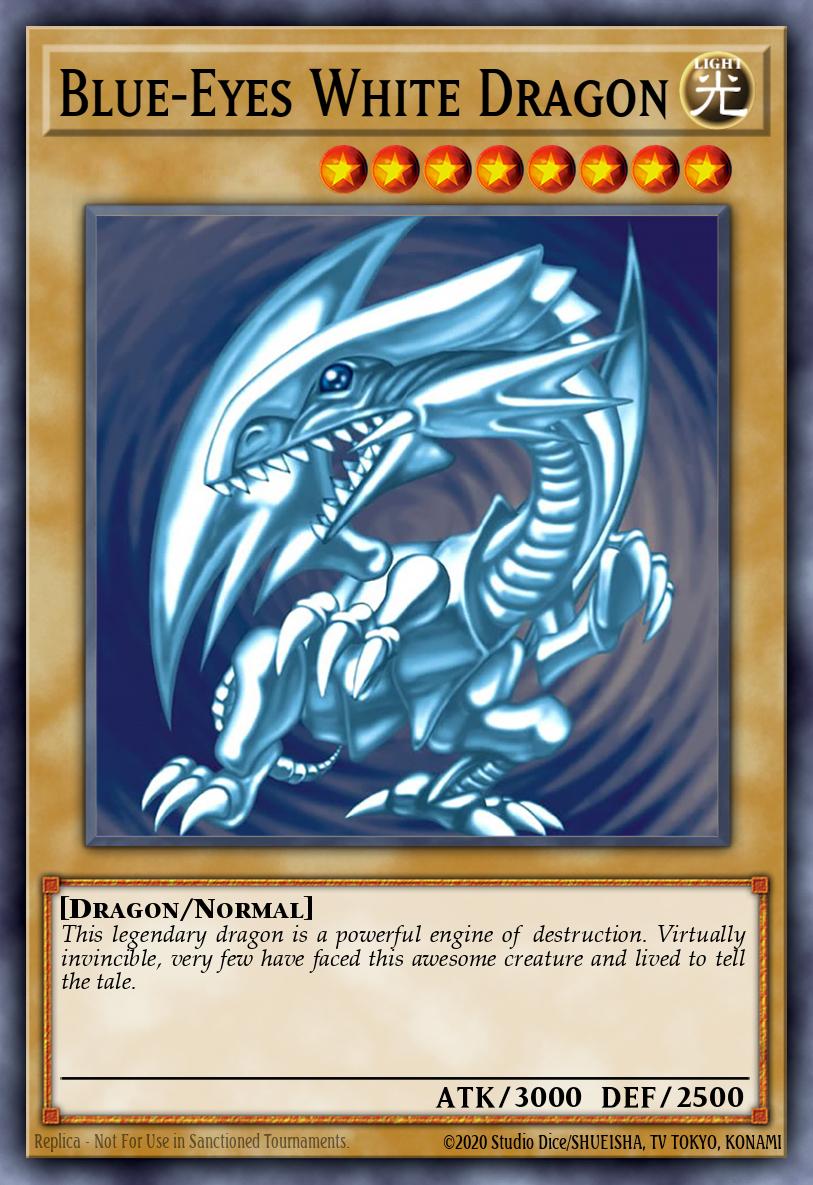
Blue-Eyes White Dragon
LOB-001
1st Edition $3,799.92. A Common reprint (YSKR-EN001) is $0.64.
Each card links to its page, which lists every printing and edition with today's price. Beyond the Brave is built around reimagined versions of Joey Wheeler's favorite cards, and Konami's next set, Magnificent Maestros, adds the serial-numbered Grand Master Rares, so expect the list above to change.
Singles vs. sealed, and why reprints matter
Konami reprints popular cards often, in tins, Rarity Collections, Legendary Decks and Battles of Legend sets. That keeps playable cards affordable, and it means the card's name doesn't hold value on its own. The printing does.
Mulcharmy Fuwalos shows how far apart printings of one card can sit. It first came out in Rage of the Abyss and has been reprinted in Quarter Century Stampede, the 2025 Mega-Pack Tin, three Legendary Decks boxes and a Winner's Pack. On October 22, 2026, its Common from Legendary 5D's Decks was $8.54, and its Quarter Century Secret Rare from Rage of the Abyss (ROTA-EN024) was $310.68.
What that means for each kind of collector:
Playing: buy singles. Opening packs to find one card is the most expensive way to get it, and the cheapest printing plays exactly the same.
Opening packs: budget for it like any other night out, and stop when you notice you are chasing one card.
Collecting for value: the scarce finishes and the original printings are what reprints don't replace. A plain Ultra Rare of a played card is the copy a reprint competes with.
Keeping sealed: a reprint of a set's chase cards can lower what the sealed box is worth, so a box is not a safe store of value by default.
The cards from the show deserve their own note. The original Legend of Blue Eyes White Dragon printings from 2002 are where the biggest 1st Edition premiums are, and the edition, condition and exact set code decide whether a copy is worth $1 or thousands. Every Blue-Eyes printing → 1st Edition cards worth checking →
Protect and organize
Yu-Gi-Oh! cards are smaller than Magic and Pokémon cards, so buy small sleeves, sold as Japanese size, which fit cards up to 59 by 86 millimeters. Standard sleeves let the cards slide around.
Sleeves on anything worth more than a few dollars, and on every card in a deck you play.
Toploaders for your best cards, with the card sleeved first.
A side-loading binder for the collection you want to look at. Ring binders can dent the cards nearest the rings.
Storage boxes for bulk, kept somewhere dry, since foils curl in humidity.
Grading is for cards whose value justifies the fee, such as early 1st Edition copies and top-rarity printings in excellent condition. On most modern cards the fee is more than a grade adds.
Once cards start piling up, TurnZero HQ keeps track of them. Add each card by printing and edition, by search, by scanning the set code, or from a CSV, and it values every copy from TCGplayer's daily market prices, sorts them into binders and shows how much of each set you own. It tracks cards, not sealed product. How the collection tracker works →
Mistakes to avoid
Buying fakes. Counterfeits are common online, especially "anime" and Egyptian God cards. A genuine TCG card has a set code and the Eye of Anubis hologram in the bottom right corner, which shifts as you tilt it.
Ignoring the set code. A listing for "Dark Magician Ultra Rare" could be any of many printings at very different prices. Match the code, the rarity and the edition before you pay.
Paying well over MSRP in release week. Check Konami's MSRP first. New products are often restocked, and a release-week premium can fade.
Mixing up OCG and TCG. Japanese and Asian-English cards are official but separate, and priced separately.
Buying old booster boxes from strangers. A resealed vintage box looks like the real thing. Buy older sealed product from a seller you trust.
Using standard-size sleeves. Get small, Japanese-size sleeves.
How to spot unofficial anime prints → How to price what you own →
Frequently Asked Questions
How do I start collecting Yu-Gi-Oh! cards?
Decide what you want first: cards to play, packs to open, rare finishes, or the cards you remember from the show. Then start small. A Structure Deck (MSRP $11.99 for Blue-Eyes White Destiny) and a few packs of the newest booster set cost about $30 and show you which part you enjoy before you buy a box.
What Yu-Gi-Oh! product should a beginner buy first?
A Structure Deck or the 2-Player Starter Set. The Starter Set (MSRP $19.99) has two ready-to-play decks and a 64-page comic that walks through a full duel. For more cards per dollar, a Legendary Decks box such as Legendary Modern Decks 2026 has three complete decks and 168 cards for an MSRP of $31.99.
Is it cheaper to buy Yu-Gi-Oh! singles or open packs?
For a specific card, singles are almost always cheaper. Opening packs to find one card means paying for every other card in them. Open packs when the opening is the fun, and buy the cards you need as singles.
What size sleeves do Yu-Gi-Oh! cards use?
Small sleeves, sold as Japanese size, which fit cards up to 59 by 86 millimeters. Yu-Gi-Oh! cards are smaller than Magic or Pokémon cards, so standard sleeves are too loose.
Can I use Japanese or Asian-English Yu-Gi-Oh! cards in TCG tournaments?
No. Japanese and Asian-English cards belong to the OCG, a separate product line from the TCG sold in North America, Europe and Oceania, and they aren't used in TCG-sanctioned events. They are official cards and many collectors want them, but buy them on purpose and know which game a listing is for.
Start your Yu-Gi-Oh! collection.
Add your cards by printing and edition and TurnZero HQ values every copy from daily TCGplayer prices. Free on iPhone, Android and the web.
Create Free AccountYu-Gi-Oh! card names and images are the property of Konami Digital Entertainment and their respective owners. ©Studio Dice/SHUEISHA, TV TOKYO, KONAMI. TurnZero HQ is not affiliated with, sponsored, or endorsed by Konami. Card data comes from YGOPRODeck, and prices from TCGplayer via TCGCSV.