Yu-Gi-Oh! TCG
Yu-Gi-Oh! Anime Cards
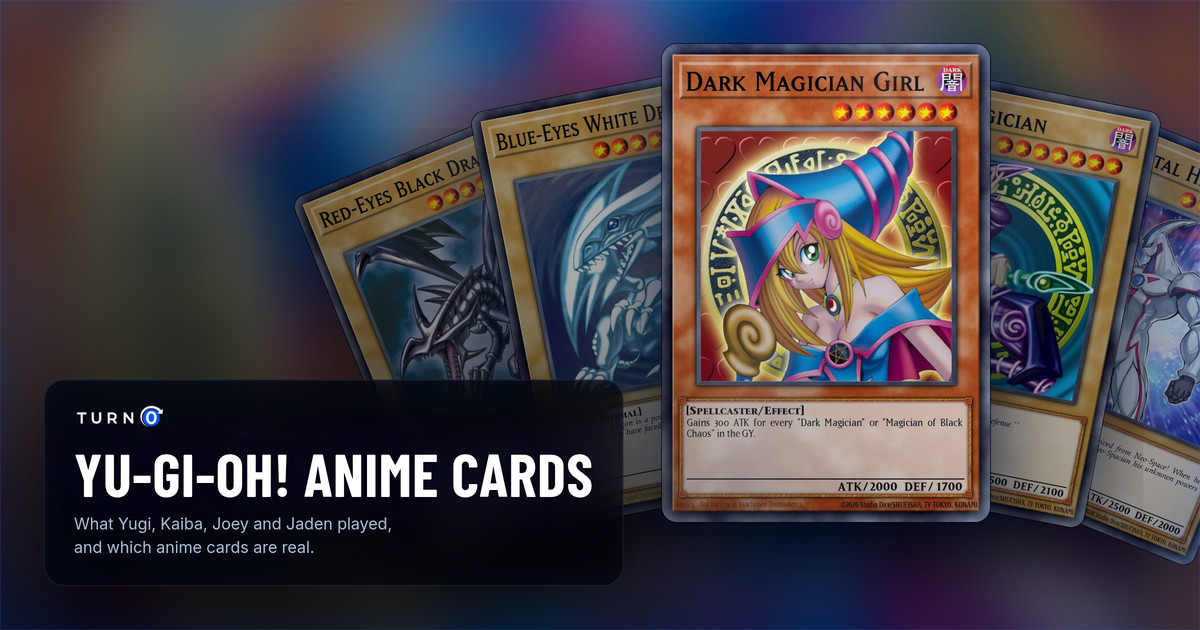
Most of the cards Yugi, Kaiba, Joey and Jaden played on screen are real cards you can buy and play. Some changed on the way to print, and some listings sold as anime cards aren't official at all. Here's how to tell them apart.
The short answer
"Yu-Gi-Oh! anime cards" can mean two different things. Usually it means the real cards the characters played, which Konami prints for the TCG and which you can collect, price and play. It can also mean fan-made cards printed to look like the ones on screen, which aren't official and can't be played in a sanctioned tournament.
Between those sit the cards that appeared in the anime first and were printed later. Those are real, but their printed text often differs from what the show did, and the printed text is what counts.
The characters' cards, printed for real
The main characters' signature monsters have all been printed, most of them many times. The original printings are the expensive ones; modern reprints of the same cards are usually cheap.

Dark Magician
2021-EN001
Yugi. The 1st Edition LOB-005 Ultra Rare was about $1,208.
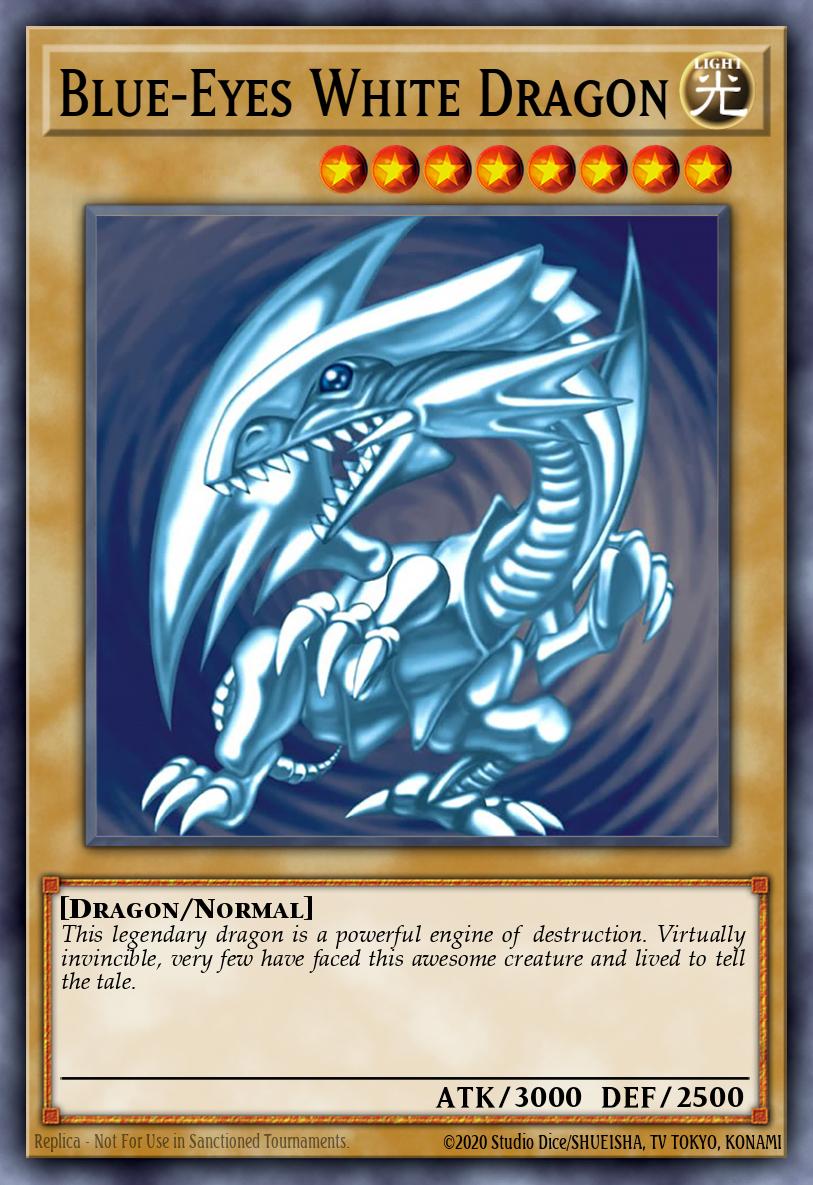
Blue-Eyes White Dragon
2020-EN001
Kaiba. The 1st Edition LOB-001 Ultra Rare was about $3,800.
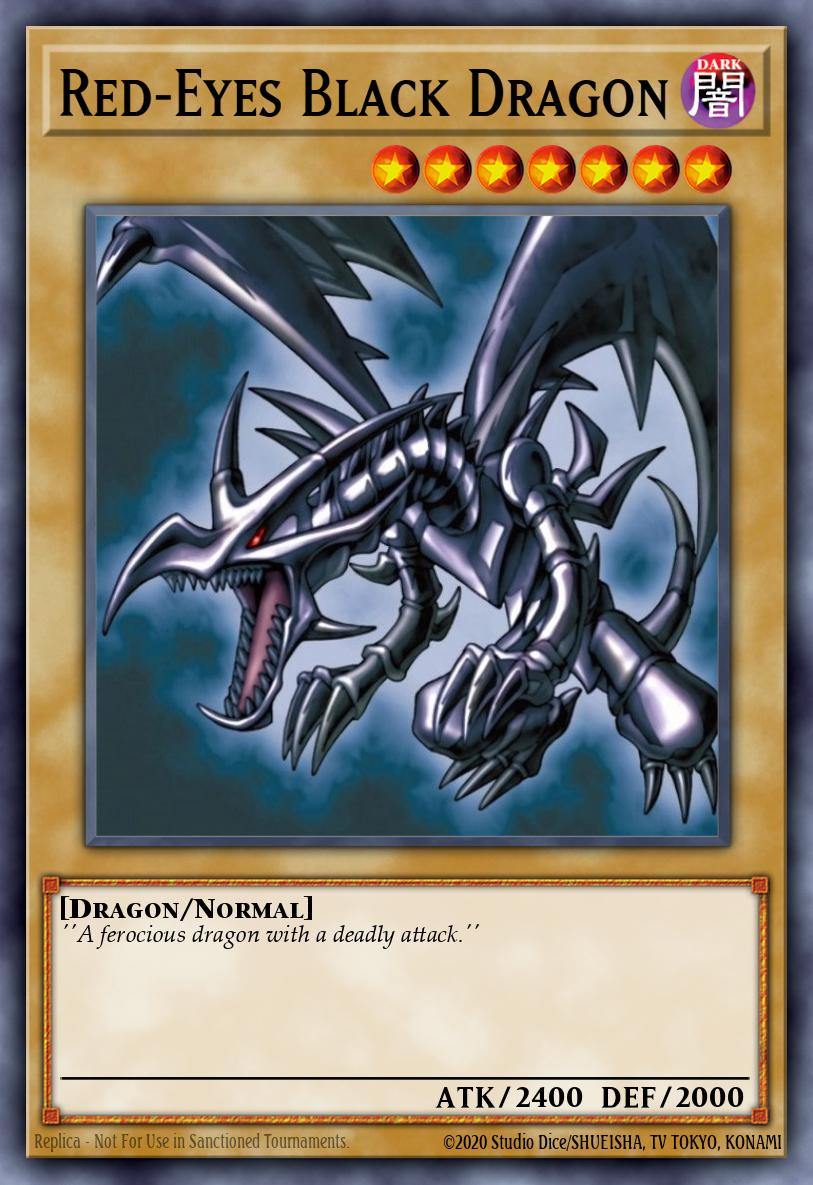
Red-Eyes Black Dragon
BPT-005
Joey. Printed in LOB, and reprinted in Legendary Decks II and Speed Duel.
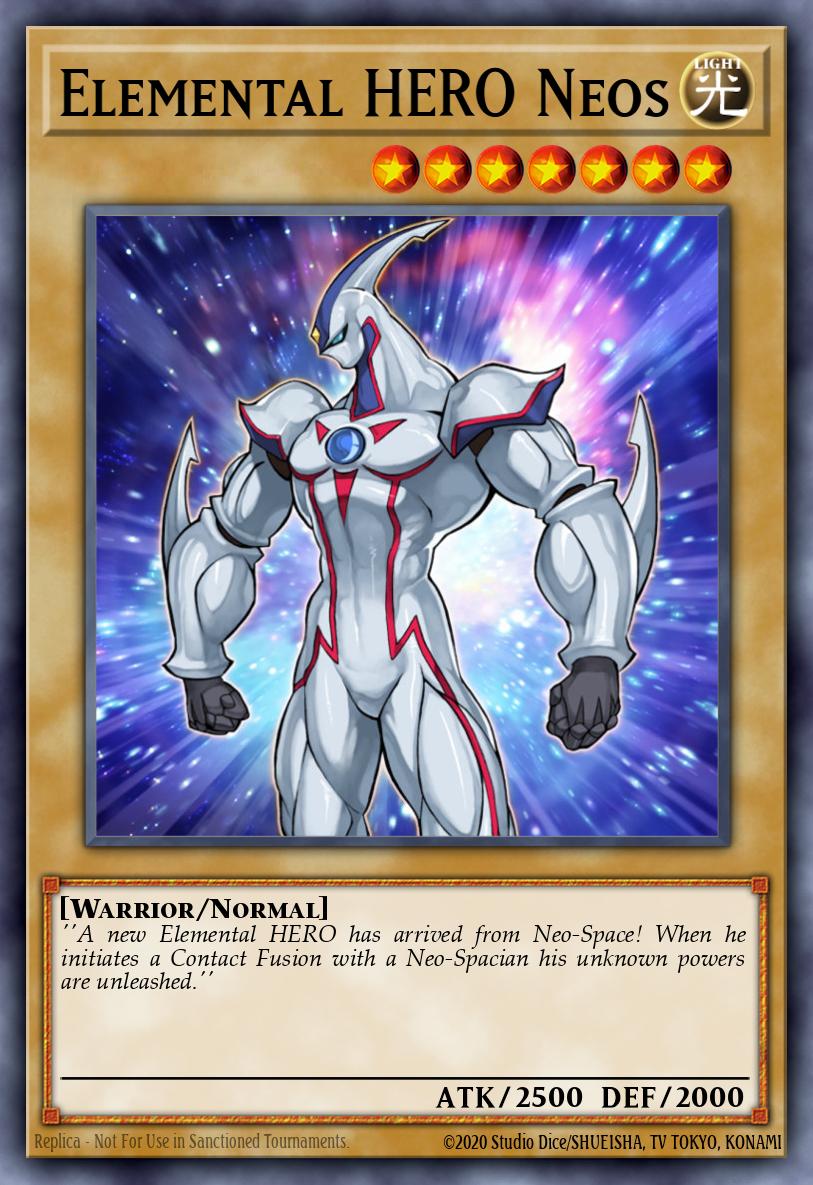
Elemental HERO Neos
BLMM-EN003
Jaden, from Yu-Gi-Oh! GX. Reprints start under $1.
Every price on this page is a TCGplayer market price from TurnZero HQ's catalog as of October 2, 2026, for the printing, rarity and edition named. The same card reprinted in a recent product is usually worth a small fraction of its first printing. Why first printings cost more →
Anime effects vs. printed text
The anime told a story, so cards did what the plot needed. The printed card is written for a game, and when the two disagree, the printed TCG text is the rule. How far apart they are varies a lot by card.
Some are close. In Battle City, Dark Magician Girl gained 300 ATK for each Dark Magician or Magician of Black Chaos in either player's Graveyard. The printed card reads: "Gains 300 ATK for every "Dark Magician" or "Magician of Black Chaos" in the GY." In current card text, "the GY" with no owner means both players' Graveyards, so the effect matches the show.
Exodia the Forbidden One matches too. The printed card says that if you have the four limbs "in addition to this card in your hand, you win the Duel", just as Yugi did against Kaiba. In the current TCG, all five Exodia pieces are Limited, so a deck can run one of each, which is all the win needs.
Others changed a lot. In the anime, Obelisk the Tormentor could tribute two monsters to wipe the opponent's field, with its ATK becoming infinite. The printed card keeps a fixed 4000 ATK and reads: "You can Tribute 2 monsters; destroy all monsters your opponent controls. This card cannot declare an attack the turn this effect is activated." It also needs 3 Tributes to Normal Summon and goes to the GY at the End Phase if it was Special Summoned. The Egyptian Gods have the longest history of changes, covered in the Yu-Gi-Oh! god cards guide →
Anime cards that were printed later
Some cards appeared only on screen for years before Konami printed them, and printing often meant redesigning them. The Legendary Dragons from the original series' Waking the Dragons story are a clear example. On screen, Timaeus, Critias and Hermos were dragon monsters with their own unusual card type, and Yugi, Kaiba and Joey each received one.
When they reached the TCG in Dragons of Legend (2014), they became Spell Cards. The Eye of Timaeus is a Normal Spell that is "also always treated as "Legendary Dragon Timaeus"" and reads: "Target 1 "Dark Magician" monster you control; Fusion Summon 1 Fusion Monster from your Extra Deck that lists that monster on the field as Fusion Material, using it as the Fusion Material."
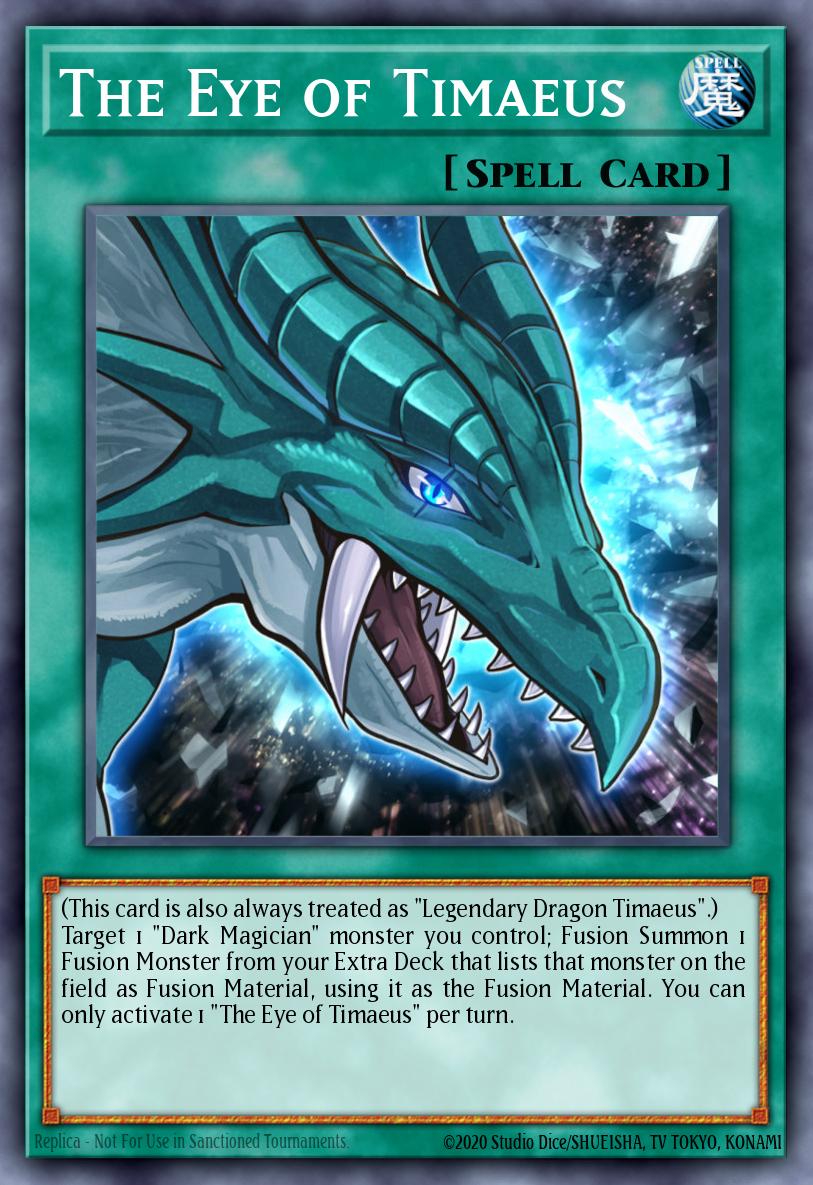
The Eye of Timaeus
DLCS-EN007
A dragon on screen, a Spell Card in print. Its DRLG-EN005 1st Edition Secret Rare was about $10.
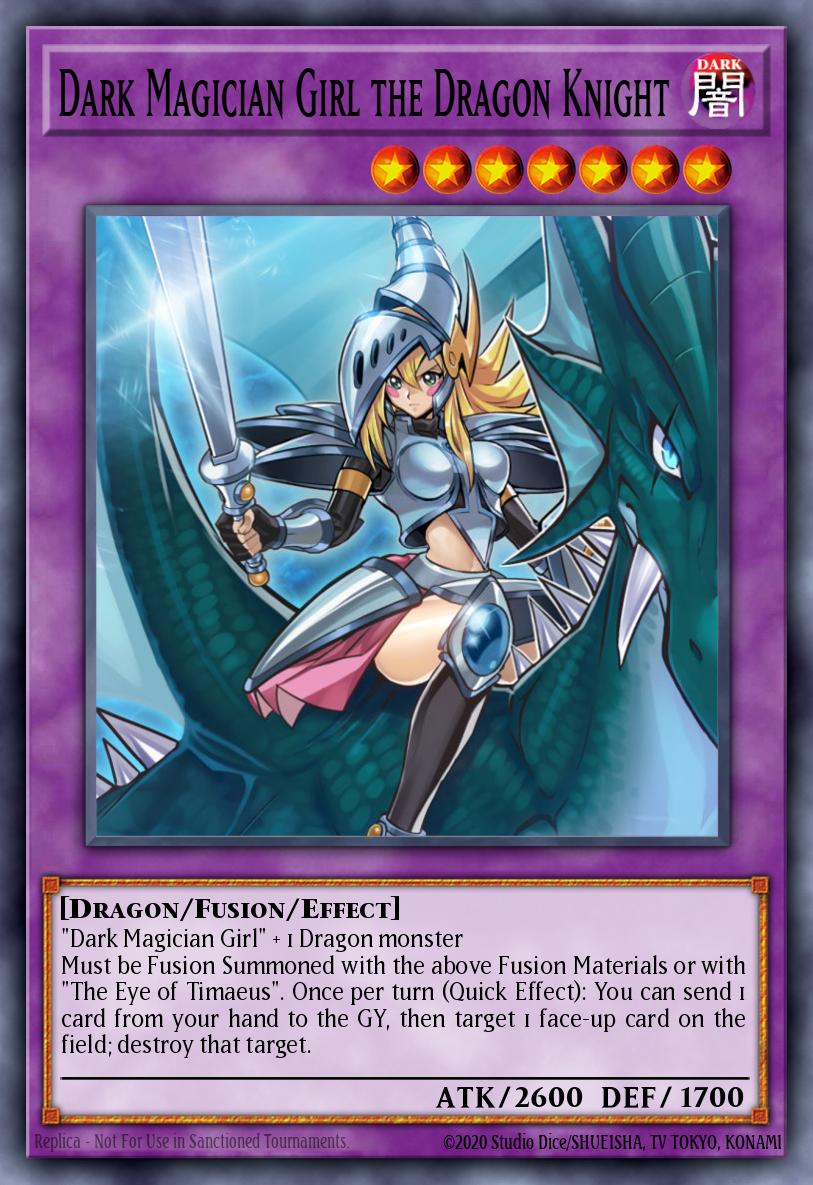
Dark Magician Girl the Dragon Knight
DLCS-EN006
A Fusion Monster that lists The Eye of Timaeus as a way to summon it.
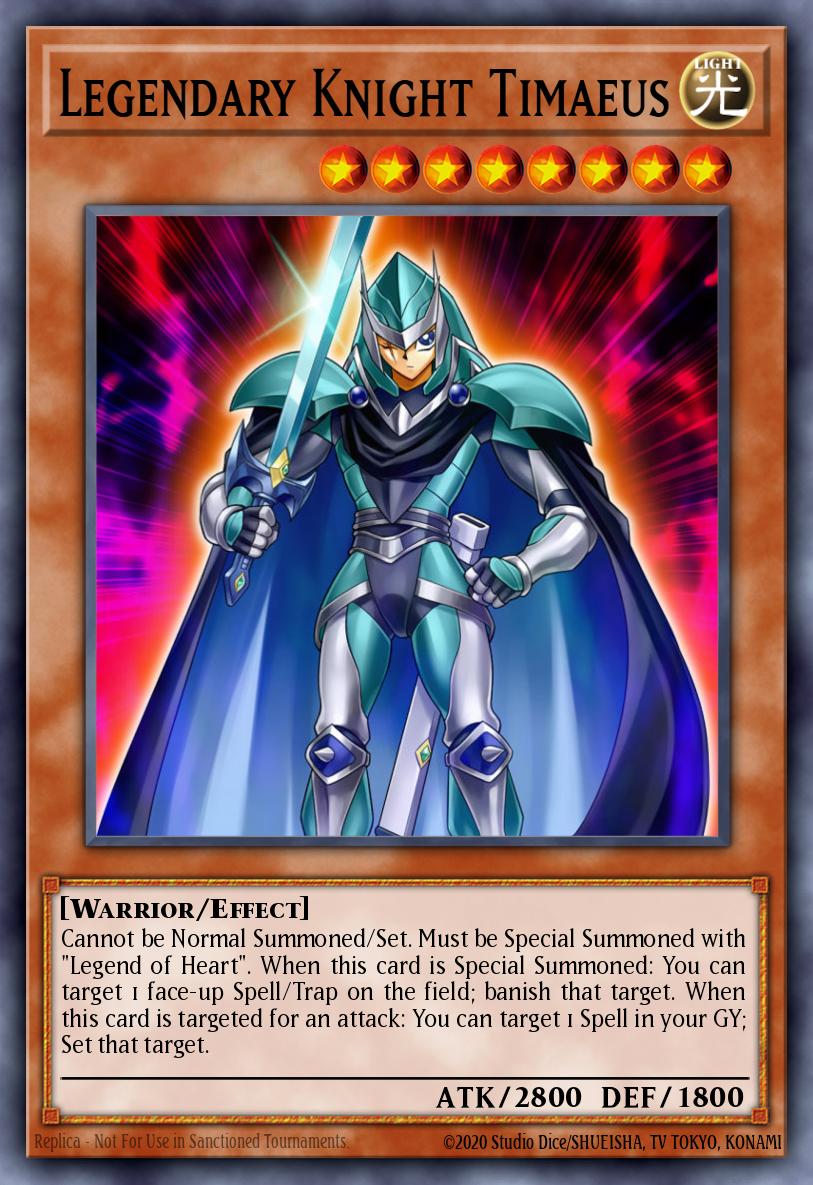
Legendary Knight Timaeus
DLCS-EN001
Printed in the same set, and Special Summoned only with Legend of Heart.
The pattern holds across the later series too: a card from the show gets a printed version, its text is rebalanced for real games, and sometimes it gets support the show never had. If you're buying a card because of a scene, read its card page first so you know what it does at the table.
Products that collect the characters' decks
Konami has released several products built around the anime's characters. These are the ones you'll see most often, and each card in them is an official TCG printing with its own set code.
Speed Duel cards are legal in the regular Advanced Format except the Skill Cards, which only work in Speed Duels. The Egyptian God cards in Yugi's Legendary Decks were made to be collected, not played, so check which product a God card came from before you build around it. For how a player turns a character's cards into a working deck, see how to build a Yu-Gi-Oh! deck →
Unofficial "anime cards" and how to spot them
Many listings sold as "Yu-Gi-Oh! anime cards" on marketplaces are fan-made, often called orica (short for "original card"). Some copy the card frames from the show, and some invent cards that were never printed. They aren't Konami products. Konami's tournament policy allows only official Yu-Gi-Oh! TCG cards, and counterfeits and proxies can't be used in a sanctioned tournament.
Some people buy fan-made cards knowing what they are, for display or casual games with friends, and that's their choice. The problem is buying one by mistake. A few checks help:
TurnZero HQ's Yu-Gi-Oh! catalog lists official TCG printings by set code. A copy in your collection is recorded by its printing (set code and rarity) and edition, and priced from TCGplayer's market price for that combination, updated daily. If the set code on a copy you bought isn't one of that card's printings there, look closer before you trust it. How the collection tracker works →
Frequently Asked Questions
Are the cards from the Yu-Gi-Oh! anime real?
Most of the main characters' signature cards are. Dark Magician, Blue-Eyes White Dragon, Red-Eyes Black Dragon, Exodia and Elemental HERO Neos are all official TCG cards. Some anime cards were printed later with different card types or effects, and some were never printed at all.
Do anime cards have the same effects as the real cards?
Sometimes. Dark Magician Girl's printed effect is close to what the show used, while Obelisk the Tormentor's printed card keeps the idea of tributing two monsters to destroy the opponent's monsters but has a fixed 4000 ATK and restrictions the show didn't. Always go by the printed TCG text.
Can I play anime-style cards from eBay or Etsy in a tournament?
No. Fan-made anime-style cards, often called orica, are not Konami products. Konami's tournament policy allows only official Yu-Gi-Oh! TCG cards, and counterfeits and proxies can't be used in a sanctioned tournament.
What's the best product for Yugi's or Kaiba's anime deck?
Legendary Decks II has playable decks for Yugi, Kaiba and Joey, including tournament-legal versions of the Egyptian God cards. Speed Duel products are built around anime characters and play a faster format. For Kaiba collectors, the 25th Anniversary Ultimate Kaiba Set reprints 61 cards Kaiba used as Ultra Rares.
Are Speed Duel cards legal in regular Yu-Gi-Oh!?
Yes, except Skill Cards. Speed Duel monsters, Spells and Traps are legal in the regular Advanced Format. Skill Cards can only be used in Speed Duels.
Collect the cards from the show.
Add your Yu-Gi-Oh! cards by printing and edition, and TurnZero HQ values each copy from daily TCGplayer prices. Free to start.
Create Free AccountYu-Gi-Oh! card names and images are the property of Konami Digital Entertainment and their respective owners. ©Studio Dice/SHUEISHA, TV TOKYO, KONAMI. TurnZero HQ is not affiliated with, sponsored, or endorsed by Konami. Card data comes from YGOPRODeck, and prices from TCGplayer via TCGCSV.