Riftbound
Focus and Priority in Riftbound
Riftbound uses two words for who may act. Priority is the right to act at all, and it exists in every part of the turn. Focus exists only in showdowns, and it says whose turn it is to play a card there. This guide explains both, and the four turn states that decide which cards are legal, under Riot's Core Rules as of October 2026.
The four turn states
At every moment, the turn is in one of four states, built from two questions. Is a showdown or combat going on? That makes it a Showdown state, or a Neutral state if not. Does a chain exist? That makes it Closed, or Open if not. Which cards are legal depends on the state, not on whose turn it is.
Action and Reaction are the keys to these states. Action lets a card or ability be used in Showdown Open. Reaction includes everything Action allows, and also lets it be used in either Closed state. Riftbound turn structure covers where these states fall inside a turn.
Priority: the right to act
Priority is the right to take a discretionary action: playing a card, using an ability, moving a unit. At most one player has it at a time, and a player without it can't act unless the game asks them to make a choice.
In Neutral Open, only the turn player has priority, which is why you can't play an Action card in the middle of your opponent's Main Phase. The one exception is team play: in 2v2, the turn player can invite a teammate to play spells and use abilities, even ones without Action or Reaction, with the turn player's own priority.
Focus: whose turn it is in a showdown
A showdown is the window that opens when a battlefield is contested, either for a combat or because a unit moved onto an empty battlefield. How combat works covers what a showdown decides; this section covers how players take turns inside it.
The player with focus can do one thing: play one legally timed card or ability, or pass. Playing a card starts a chain, which puts the turn into Showdown Closed. Everyone can then add Reactions in turn order as on any chain, and the chain guide covers how that resolves. Focus moves on only once the chain is empty.
A showdown, step by step
Moving onto an empty battlefield
On your turn, you move a 3 Might unit onto an empty battlefield. It becomes contested, and a non-combat showdown begins. You applied contested, so you have focus.
You pass. Focus goes to your opponent.
Your opponent plays Void Seeker, an Action spell, choosing your unit. A chain exists, so only Reactions can be added. You answer with Discipline (a Reaction: give a unit +2 Might this turn, draw 1) on your unit.
Both players pass. Discipline resolves first, and your unit is now 5 Might. Then Void Seeker resolves and deals 4, which isn't lethal. The chain is empty, so focus passes to the next player, you.
You pass, then your opponent passes. Every player has passed once in a row, so the showdown ends. You are the only player with units there, so you take control and score a conquer if you haven't scored that battlefield this turn.

Void Seeker
OGN-024/298
Void Seeker has Action: legal when its controller has focus.
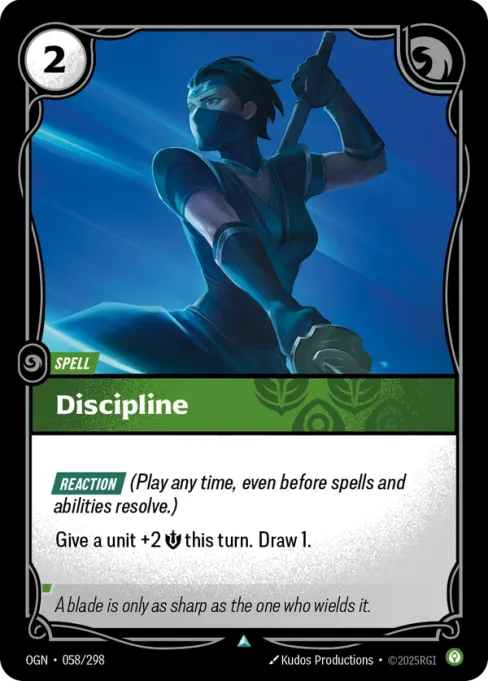
Discipline
OGN-058/298
Discipline has Reaction: legal on a chain, too.
Notice step 5. You passed in step 2, but your opponent played a card after that, so the passing started over. A showdown ends only when every player passes in a row with nothing played in between.
When focus doesn't pass
Focus passes after a chain only if the focus holder started it by playing a card or ability. If the chain began with a triggered ability or an ability that adds Energy or Power, focus stays where it was when the chain empties.
The rules give the most common case. When combat starts, attack and defend triggers go on the chain, the attacker's first, then the other non-defending players' in turn order, then the defender's. When that combat chain is done, focus hasn't moved. In a combat that opened with its own showdown, the attacker has it and gets the first real decision. If combat joined a showdown already under way, whoever had focus keeps it.
Acting on your opponent's turn
On another player's turn you never have priority in Neutral Open, so there are only two ways to play a card:
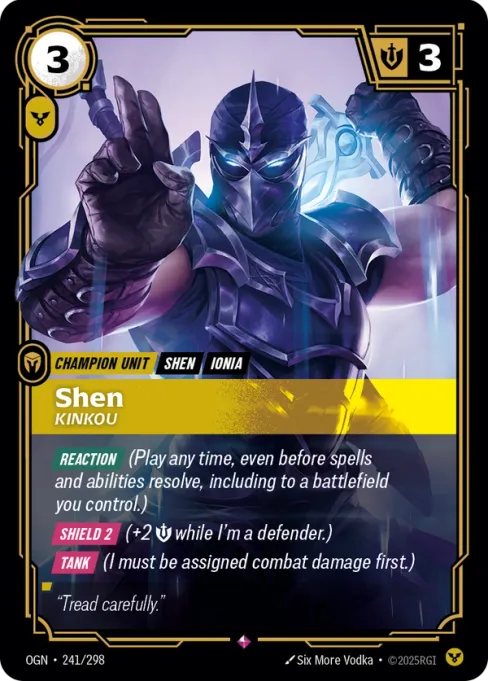
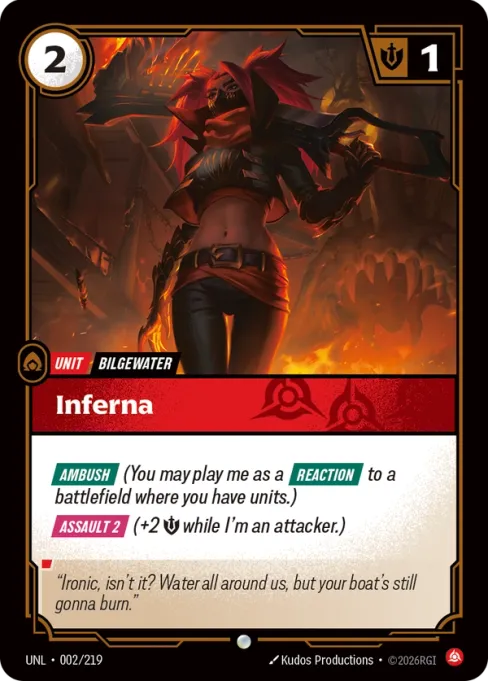
Units follow the same timing. Shen, Kinkou has Reaction, so you can play it on your opponent's turn, but a unit with Reaction still goes only to your base or a battlefield you control. Ambush is the keyword that lets a unit be played as a Reaction to a battlefield where you have units, which is how a defender adds a unit to a fight it doesn't control.
Moves and abilities in showdowns
A unit's normal move, called the standard move, is allowed only in your Main Phase, outside showdowns, with no chain. You can't walk extra units into a fight once its showdown has begun. Spells with Action that move units, such as Ride the Wind, are how units get in or out mid-showdown.
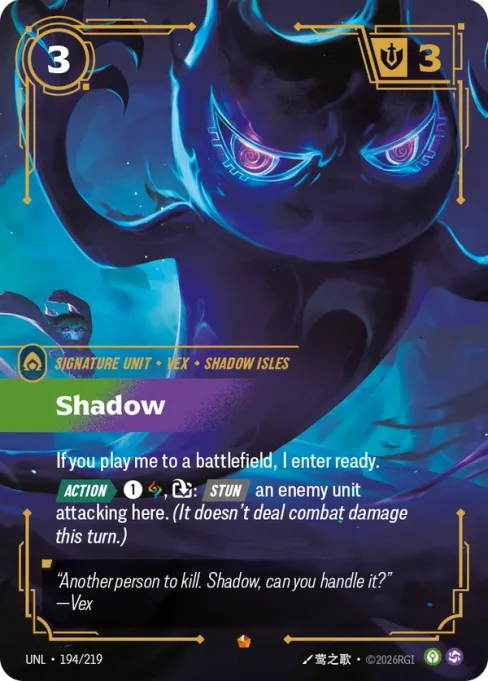
Activated abilities on units, gear and Legends follow the same default: your own Main Phase, Neutral Open only. An exhaust ability with no timing keyword can't be used in a showdown, even your own. Compare these two:

Common focus and priority mistakes
Playing an Action card during your opponent's Main Phase with nothing happening. Action cards work on their turn only in showdowns.
Thinking that passing once in a showdown means you are out. If anyone plays a card after your pass, you get focus again.
Passing focus after a combat's attack triggers resolve. A chain started by triggers doesn't move focus; the attacker still acts first.
Using a unit's exhaust ability mid-combat. Without Action or Reaction, activated abilities are Main Phase, outside-showdown only.
Moving another unit into a combat with its normal move. Standard moves aren't allowed during a showdown or combat.
Frequently Asked Questions
What is the difference between focus and priority in Riftbound?
Priority is the right to take an action at all, and only one player has it at a time. Focus exists only during showdowns: it marks whose turn it is to play a card in the showdown. The player who gains focus also gains priority, and a player who passes priority on a chain keeps focus.
Who gets focus first in a Riftbound showdown?
The player who made the battlefield contested, which is usually the player who moved in. In a combat that player is the attacker. Focus then passes in turn order each time a chain started by the focus holder finishes resolving, or when they pass.
How does a Riftbound showdown end?
When every player passes focus once in a row without playing a card or using an ability. If anyone plays something, the passing starts over after it resolves, so passing earlier doesn't lock you out.
Can you play cards on your opponent's turn in Riftbound?
Yes, but only two ways. In a showdown or combat on their turn, you can play Action and Reaction cards when you have focus. Outside showdowns, you can only play Reaction cards and abilities in answer to something on the chain.
Can I use a unit's exhaust ability during a showdown?
Only if the ability has Action or Reaction. Without one of those keywords, a unit's activated ability works only in your own Main Phase, outside showdowns, when no chain exists.
Can I move units during a showdown in Riftbound?
Not with a unit's normal move, which is allowed only in your Main Phase outside showdowns and chains. A spell with Action that moves units, such as Ride the Wind, can move them during a showdown.
Track every game you play
TurnZero HQ's Riftbound score tracker records each point by battlefield and whether it came from a conquer or a hold. Free to start.
Create Free AccountTurnZero was created under Riot Games' "Legal Jibber Jabber" policy using assets owned by Riot Games. Riot Games does not endorse or sponsor this project. Card data comes from Riot Games' official Riftbound card gallery, and prices from TCGplayer via TCGCSV.