Riftbound
Every Riftbound Keyword Explained
A keyword is a word in brackets on a Riftbound card that stands for a rule, usually with its reminder text in parentheses after it. Riot's Core Rules define 28 of them as of October 2026. This guide is a cheat sheet first, then each keyword in plain words, grouped by what it does.
Riftbound keywords cheat sheet
Every keyword on a released card, in the order a new player is likely to meet them. "Cards" counts the distinct cards from Origins through Vendetta whose text prints or grants the keyword.
Counts are from Riot's card gallery data on October 15, 2026. Riot can change card text, and its current Core Rules decide any question this page doesn't.
Timing keywords: Action, Reaction, Hidden, Ambush
Without a timing keyword, a card can only be played in your own Main Phase when nothing else is happening. These keywords widen that window, and they are the most common in the game.
Action
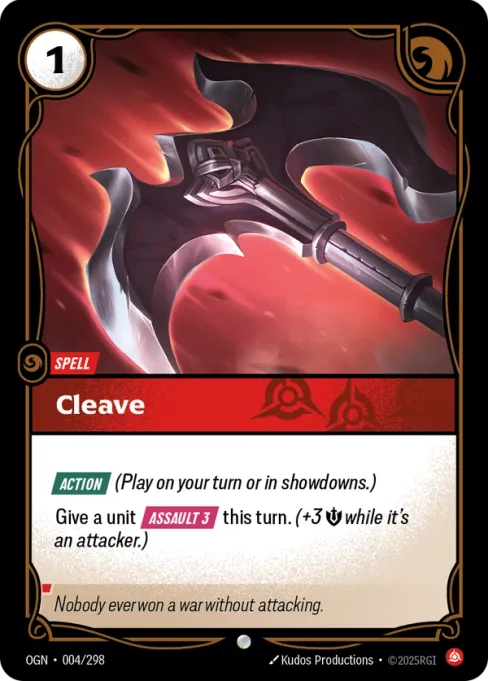
A card with Action can also be played during a showdown, on your turn or anyone else's. Showdowns happen during every combat and whenever a unit moves onto an empty battlefield, so Action cards are your combat tricks. A unit ability marked Action works the same way.
Reaction
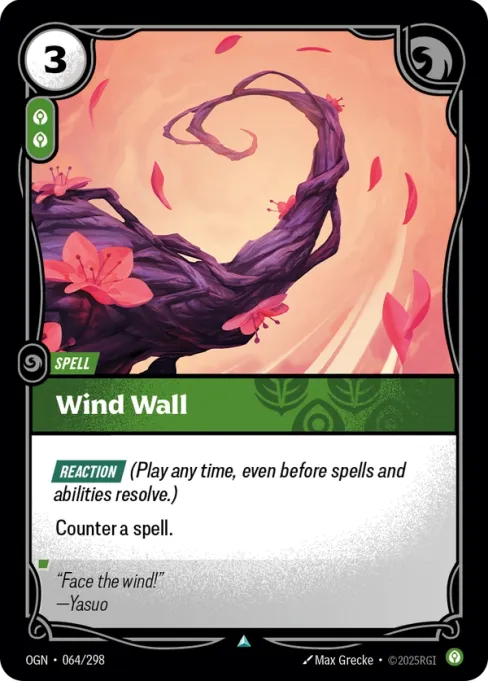
Reaction does everything Action does and one thing more: you can play the card while a spell or ability is waiting to resolve. That is what lets a card like Wind Wall counter a spell. Your runes' abilities have Reaction, which is why you can pay for a Reaction at any of those moments.
Hidden
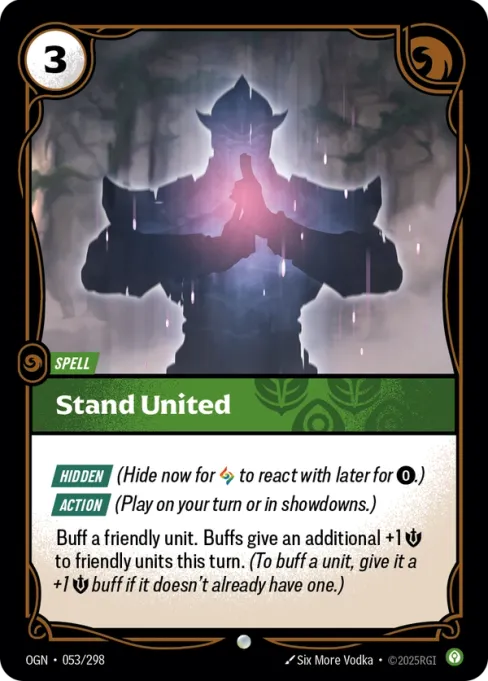
On your turn, you can pay 1 Power of any domain to put a card with Hidden facedown at a battlefield you control, as long as no other card is hidden there. From your next turn on, you can play it from there as a Reaction, ignoring its cost, but its choices are limited to that battlefield, and you lose it if you lose control of the battlefield. You can also just play it from your hand for its normal cost. Riftbound Hidden cards covers it in detail.
Ambush
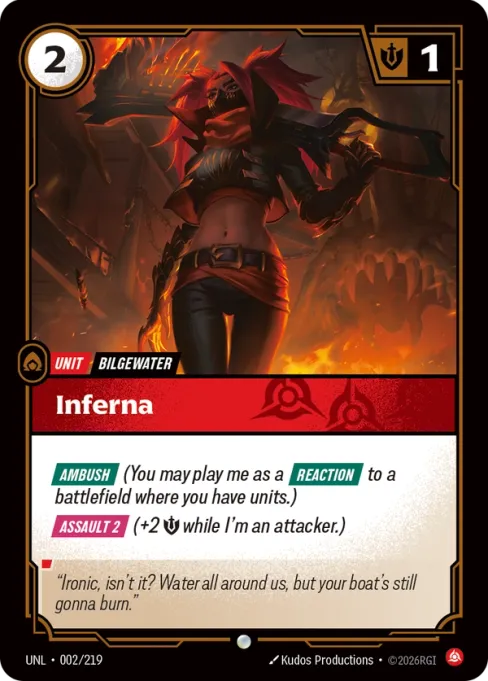
A unit with Ambush can be played as a Reaction to a battlefield where you already have units, which normally isn't allowed in a showdown. It is how a defender adds a unit in the middle of a fight.
Combat keywords: Assault, Shield, Tank, Backline, Deflect
Assault and Shield
Assault gives a unit +1 Might while it is an attacker. Shield gives +1 Might while it is a defender. A number after the keyword raises the bonus, so Assault 2 is +2, and if a unit gets the keyword from two sources, the numbers add up.
Tank and Backline
Both change the order of combat damage. A Tank unit must be assigned lethal damage before its allies without Tank, so it protects the units behind it. A Backline unit is assigned damage only after every ally without Backline has lethal damage, so it is the last to be hit.
Deflect
Deflect taxes removal. An opponent's spell or ability that chooses a Deflect unit or gear costs 1 more Power of any domain, or more for Deflect 2 and up. It doesn't stop combat damage.
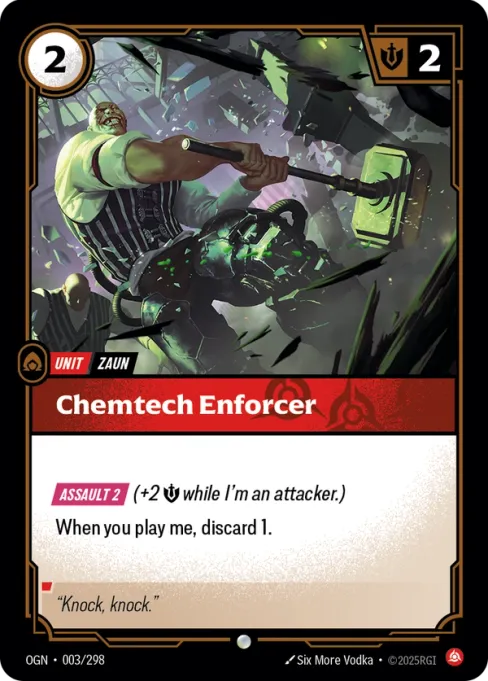
Chemtech Enforcer
OGN-003/298
Assault 2
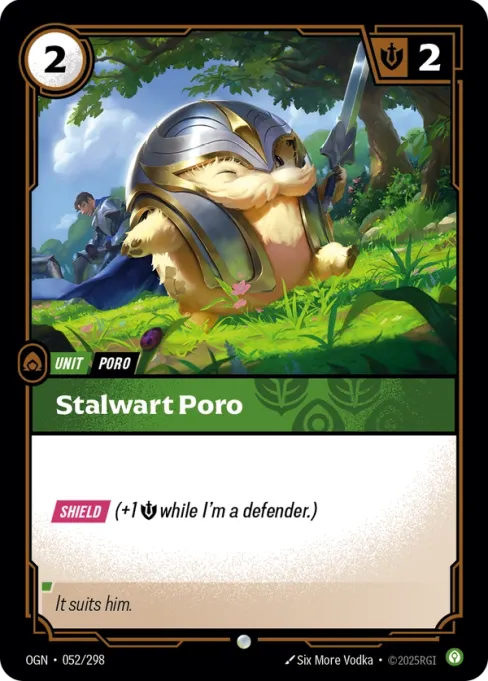
Stalwart Poro
OGN-052/298
Shield
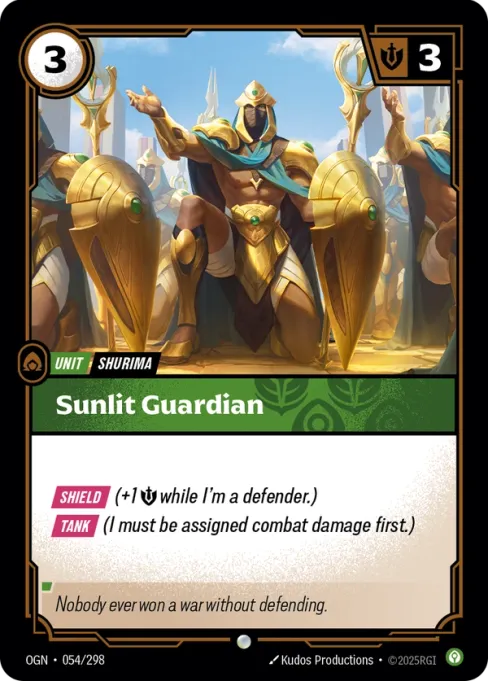
Sunlit Guardian
OGN-054/298
Shield and Tank
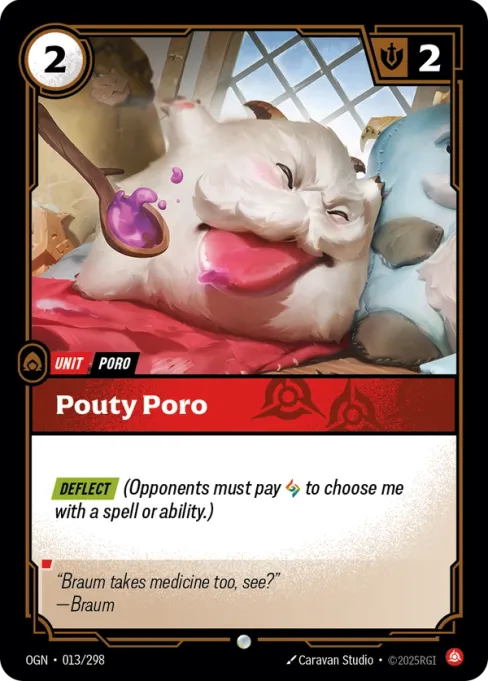
Pouty Poro
OGN-013/298
Deflect
How combat works in Riftbound shows these keywords in a full damage step.
Movement and speed: Ganking, Accelerate
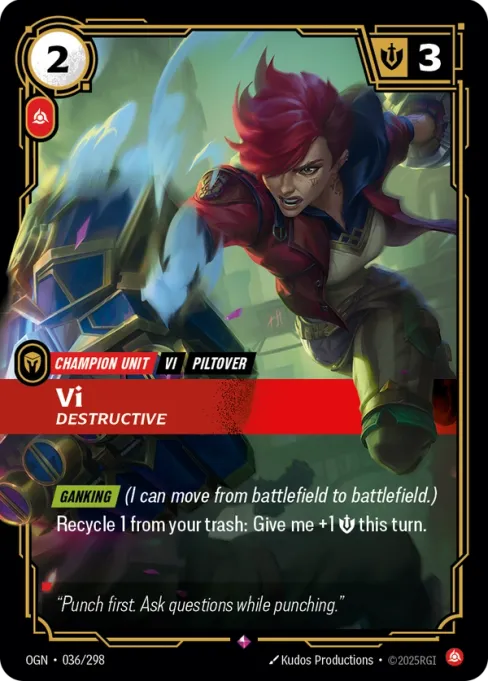
Ganking
Normally a unit's move goes from your base to a battlefield or back. A unit with Ganking can also move straight from one battlefield to another, which lets it take an empty battlefield after winning a fight, or attack from where it stands. The name is League of Legends slang for a surprise attack from another lane.
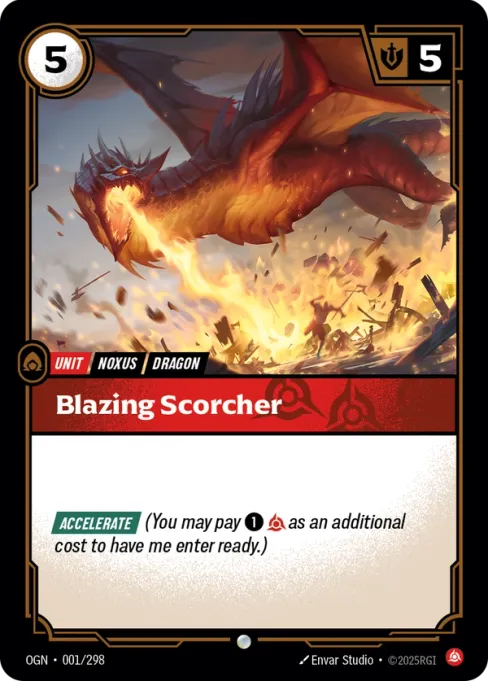
Accelerate
Units enter play exhausted, so they normally can't move the turn you play them. Accelerate lets you pay 1 Energy and 1 Power of the unit's domain on top of its cost to have it enter ready instead. It is optional, and it only matters as you play the unit.
Triggers and conditions: Deathknell, Vision, Temporary, Legion, Empowered
Extra costs and Equipment: Repeat, Flow, Empower, Equip, Weaponmaster, Quick-Draw, Unique
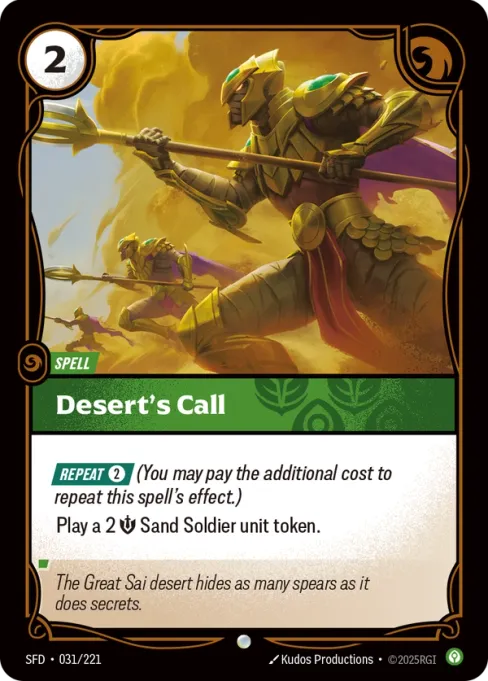
Repeat
Pay the Repeat cost as you play the spell and its effect happens twice. You make new choices for the second time, so a damage spell can hit two different units. Paying it doesn't count as playing a second card.
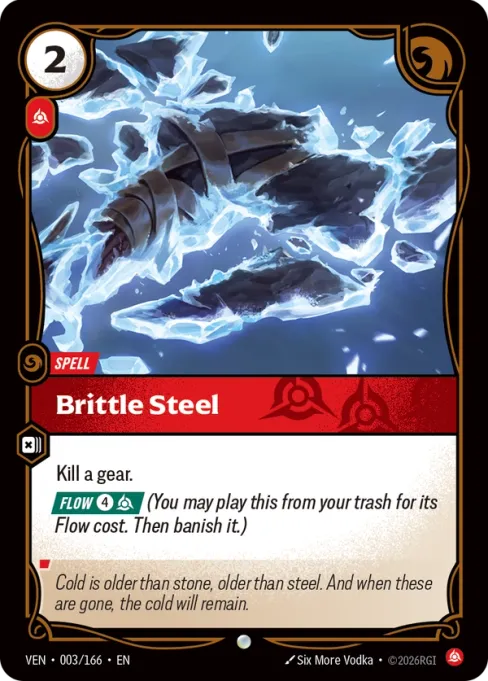
Flow
A spell with Flow can be played again from your trash for its Flow cost, at the same timing it normally has. After that it is banished instead of going back to the trash, so you get two uses at most.
Empower and Empowered
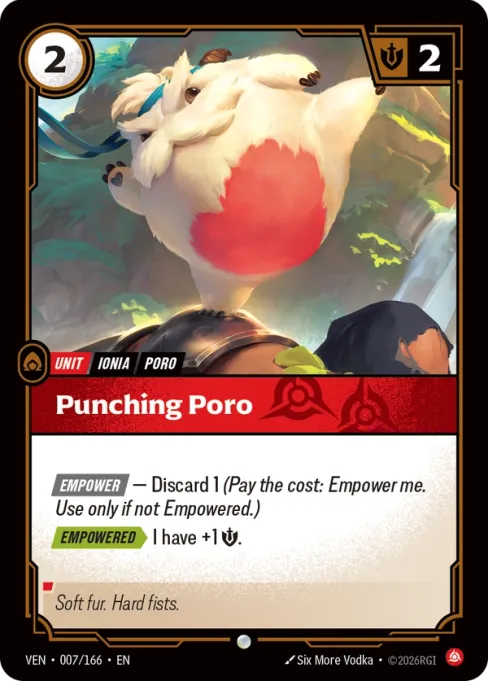
Empower is an ability: pay its cost and the card becomes Empowered, which you can normally do only once. Empowered is the payoff: text after it only works while the card is Empowered. Vendetta built its Legends around this pair.
Equip, Weaponmaster and Quick-Draw
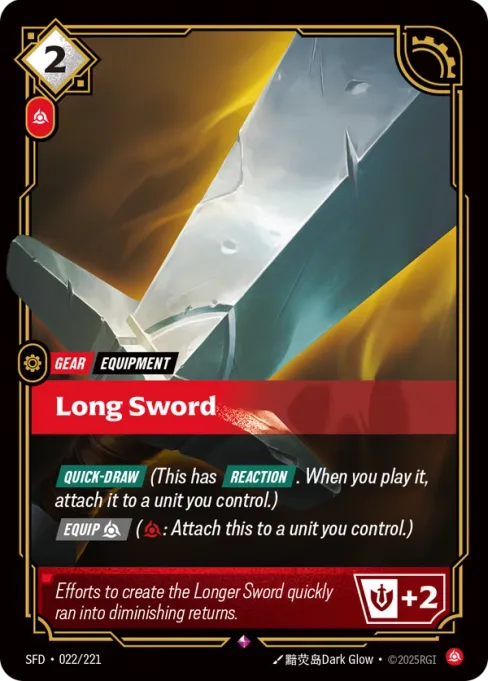
Equipment is gear that attaches to a unit. Equip is the ability that attaches it, by paying the cost after the word. Weaponmaster is on units: when you play one, you may attach one of your Equipment to it for 1 Power less, even if that Equipment is on another unit. Quick-Draw Equipment has Reaction and attaches as you play it, so you can arm a unit in the middle of a fight.
Unique
A deckbuilding rule rather than a game effect: your deck can have only one copy of a card with Unique, instead of the usual three.
XP: Hunt and Level
XP is a counter each player keeps, introduced in Unleashed. Cards gain it and spend it, it is public, and in 2v2 teammates track it separately.
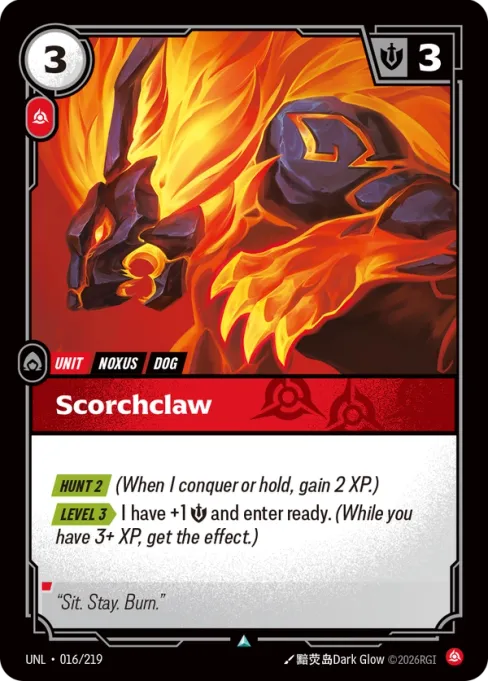
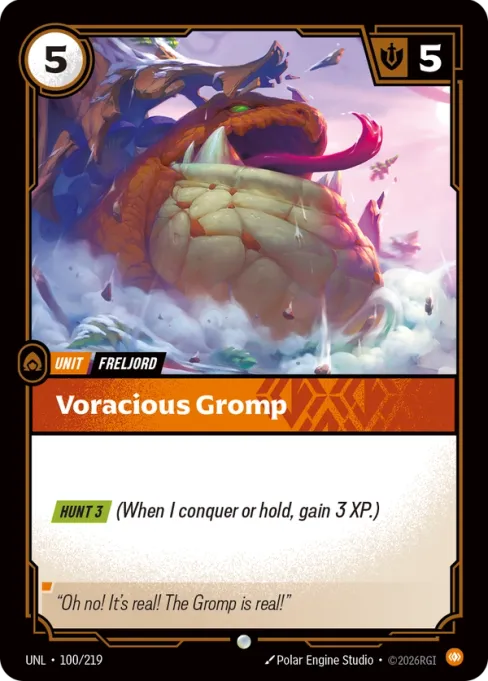
Hunt is how you gain it: when a unit with Hunt conquers or holds, you gain 1 XP, or more for Hunt 2 and up. Level is how you use it: text after Level 6 works while you have 6 or more XP, and stops working if you spend below that.
New in Radiance: Deploy, Disarm and Show Off
Radiance releases on October 23, 2026, and its previews add three keywords. Deploy gear can only be played to a battlefield, including one with enemy units, and dies when an opponent holds that battlefield. Disarm triggers when the unit attacks and gives an enemy unit there -1 Might this turn, or more for Disarm 2 and up. Show Off lets you reveal a card from your hand, or pick a friendly one on the board, as you play the card, and the card's other text says what showing off does. The Radiance set guide lists the previewed cards.
Game terms that aren't keywords
Some bracketed words on cards are actions or states from the rules rather than keywords. New players run into these just as often:
Frequently Asked Questions
How many keywords are in Riftbound?
Riot's Core Rules glossary defines 28 keywords as of October 2026. 25 of them are on cards released through Vendetta, and Radiance (October 23, 2026) adds Deploy, Disarm and Show Off.
What is the difference between Action and Reaction in Riftbound?
Action lets a card be played during showdowns on any player's turn, as well as in your own Main Phase. Reaction allows everything Action does and also lets you play the card while another spell or ability is waiting to resolve, so you can answer it.
What does Tank do in Riftbound?
A unit with Tank must be assigned lethal combat damage before its allies without Tank. If several units have Tank, the player assigning the damage picks the order among them, but must get through all of them before reaching the rest.
What is the difference between Assault and Shield?
Both add Might in combat. Assault adds it while the unit is an attacker and Shield adds it while the unit is a defender. Assault 2 or Shield 2 adds 2, and the keyword alone adds 1.
What does Legion mean in Riftbound?
A Legion ability turns on if you have already played another card this turn. Playing any one card turns on every Legion ability you have for the rest of the turn.
What does Ganking do in Riftbound?
A unit with Ganking can use its normal move to go from one battlefield straight to another, instead of only between your base and a battlefield.
Is Stun a keyword in Riftbound?
Not in the glossary. Stun is a game action: a stunned unit deals no combat damage this turn and stays stunned until the end of the turn. Buff, Predict and Burn work the same way, as actions cards tell you to take.
Look up any card you own
Scan your Riftbound cards into TurnZero HQ to see each one's text, printings and price, and build decks from what you have. Free to start.
Create Free AccountTurnZero was created under Riot Games' "Legal Jibber Jabber" policy using assets owned by Riot Games. Riot Games does not endorse or sponsor this project. Card data comes from Riot Games' official Riftbound card gallery, and prices from TCGplayer via TCGCSV.