Riftbound
How Combat Works in Riftbound
Combat in Riftbound happens at a battlefield when units of two players are there at once. It runs in three steps: a showdown for Action and Reaction cards, a damage step where each side deals its total Might, and a resolution step that decides who controls the battlefield. This guide follows each step under Riot's Core Rules of October 9, 2026.

How combat starts
Combat starts when units controlled by two different players are at the same battlefield. Most of the time that is because you used a unit's move to go from your base onto a battlefield where an opponent's units are standing. A spell that moves units can start one too, and so can a unit with Ambush played into a battlefield.
Combat only happens at battlefields. Units in a base are never in combat, which is why keeping a unit at home protects it from fights but not from spells that can reach it. A combat is always between exactly two players, and in a three- or four-player game, nobody else can move into a battlefield where a combat is going on.
The player whose units moved in is the attacker and the other is the defender. If two battlefields have a combat waiting at once, the player whose turn it is picks which one goes first.
The three steps of combat
Step 1: the showdown
The showdown is the part of combat where cards get played. The attacker has focus first and can play one card or ability with Action or Reaction, or pass. Then focus goes to the next player, who does the same. Each card played can be answered with Reactions before it resolves. The showdown ends when every player passes in a row without playing anything.
Spells without Action or Reaction can't be played here, and you can't move units with their normal move during a showdown. That makes the cards you hold back for showdowns some of the most important in your deck: a +3 Might trick or a removal spell at this moment decides most fights.
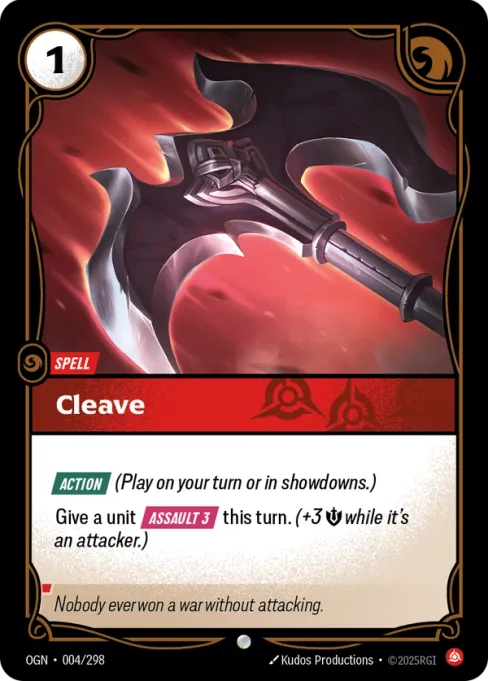
Cleave
OGN-004/298
Cleave has Action: give an attacker Assault 3 in the showdown.
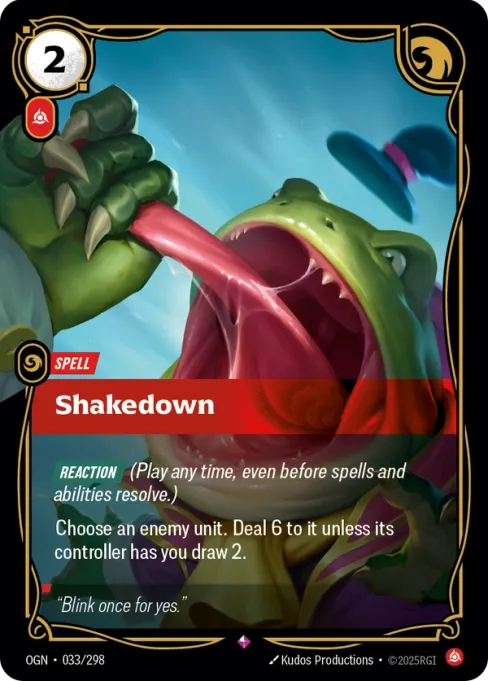
Shakedown
OGN-033/298
Shakedown has Reaction: play it even while another spell waits to resolve.
Units can leave or arrive during the showdown. If a spell kills or moves away every unit on one side, there is nothing left to fight, the damage step is skipped, and the side still standing wins.
Step 2: damage
If both players still have units at the battlefield when the showdown ends, each side adds up the Might of its units there. That total is how much damage it deals. The attacker assigns theirs first, then the defender, and only after both have assigned is the damage dealt, all at the same time. A unit that dies still deals its damage.
Assigning damage has rules, and they are where most new players get it wrong:
A worked example
You move a 4 Might unit and a 2 Might unit onto a battlefield your opponent controls. They have a 3 Might unit with Tank and a 5 Might unit there. Nobody plays anything in the showdown.
The defender is the only player with a unit left, so they keep the battlefield, and the surviving unit heals back to full. With one Action card that gave your 4 Might unit +2 Might, you would have had 8 damage: 3 to the Tank and 5 to the other unit, killing both. Your 6 Might unit would still have died to their 8, so with no units left on either side, nobody would control the battlefield afterward.
Step 3: who takes the battlefield
After damage, units with lethal damage die and go to their owners' trash. Every surviving unit then heals, so damage never carries over out of a combat. Then the result is decided:
That last row follows from a broader rule: you only control a battlefield while you have units there. If your last unit at a battlefield dies or leaves outside a showdown, you lose control of it, and you can't hold it at the start of your next turn. How to win at Riftbound covers what a conquer is worth and why the last point is harder to get.
Keywords that change combat
Several keywords exist only to change how a fight goes. These are the ones to know first:
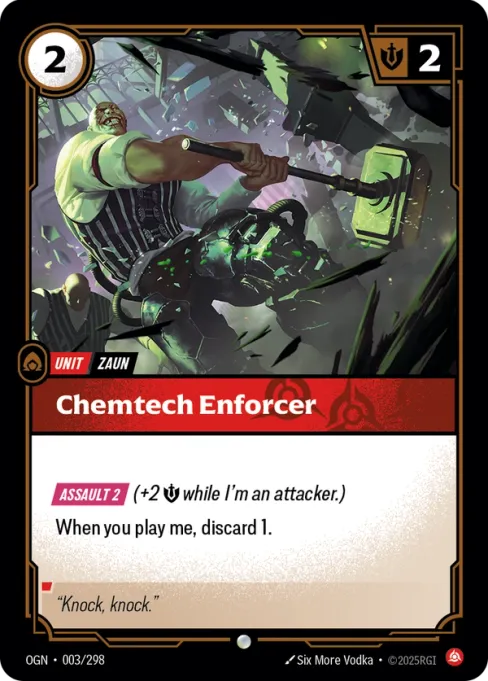
Chemtech Enforcer
OGN-003/298
Assault 2: a 2 Might unit that attacks as a 4.
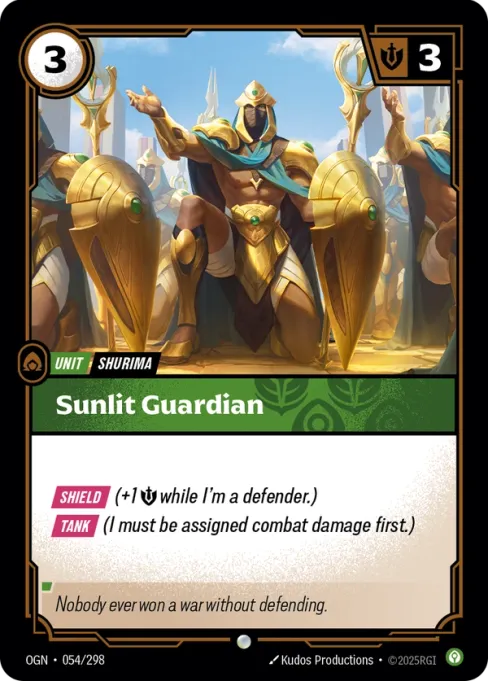
Sunlit Guardian
OGN-054/298
Shield and Tank: a 4 when defending, and it must be assigned lethal damage first.
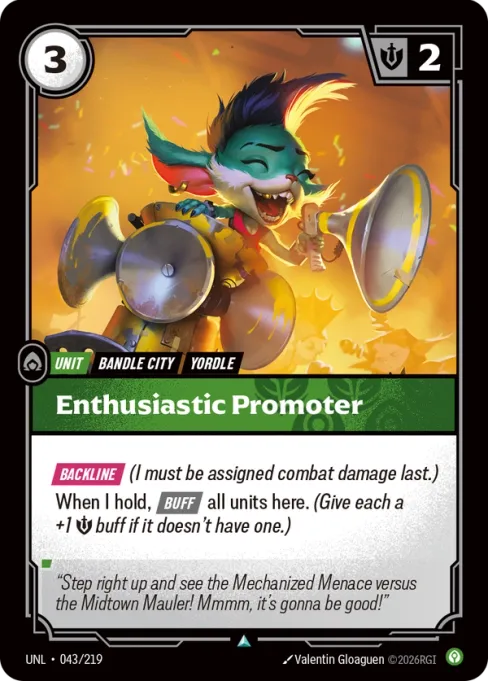
Enthusiastic Promoter
UNL-043/219
Backline: assigned damage last.
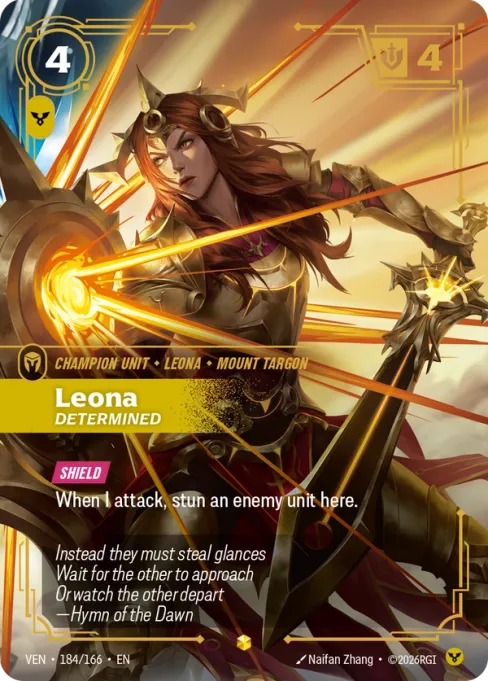
Leona, Determined
VEN-184/166
Leona stuns an enemy unit when she attacks.
Every keyword, including the ones that don't touch combat, is on the Riftbound keywords list.
Showdowns without combat
Moving onto a battlefield with no enemy units still opens a showdown, just not a combat. Your opponent gets a chance to play Action and Reaction cards: they could kill your unit, or play a unit with Ambush there, which turns the showdown into a combat. If you are the only player with units there when the showdown ends, you take control, and it is a conquer if you haven't scored that battlefield this turn.
Frequently Asked Questions
How does combat work in Riftbound?
Combat starts when units of two players are at the same battlefield, usually because one player moved in. It has three steps: a showdown where both players can play Action and Reaction cards, the damage step where each side deals damage equal to its total Might, and resolution, where dead units go to the trash and the side with units left takes the battlefield.
What is the difference between a showdown and combat in Riftbound?
A showdown is the window where players take turns playing Action and Reaction cards. Every combat starts with one. Moving onto a battlefield with no enemy units also opens a showdown, but no combat: if you still have units there when it ends, you take control.
How is combat damage assigned with multiple units?
Each side adds up the Might of its units in the combat and splits that much damage among the enemy units, attacker first. You must give one unit lethal damage (at least its Might) before assigning any to the next, Tank units must get lethal damage first and Backline units last. All the damage is then dealt at the same time.
What happens if both sides survive a Riftbound combat?
The attacker's surviving units return to their base and the defender keeps the battlefield. Damage on every surviving unit is healed right after combat, so a unit that survives is back to full Might.
What happens if every unit dies in a Riftbound combat?
Nobody wins the combat and the battlefield becomes uncontrolled, even if the defender controlled it before. Controlling a battlefield requires having units there.
Who is the attacker in Riftbound combat?
The player whose units contested the battlefield, which usually means the player who moved in. The attacker gets the first chance to play a card in the showdown and assigns combat damage first.
Can you attack units in a base in Riftbound?
No. Combat only happens at battlefields. Units in a base can only be hit by spells and abilities that can reach them.
Track every conquer
TurnZero HQ's Riftbound score tracker records each point by battlefield and whether it came from a conquer or a hold. Free to start.
Create Free AccountTurnZero was created under Riot Games' "Legal Jibber Jabber" policy using assets owned by Riot Games. Riot Games does not endorse or sponsor this project. Card data comes from Riot Games' official Riftbound card gallery, and prices from TCGplayer via TCGCSV.