Yu-Gi-Oh! Rules Explained
What Is SEGOC in Yu-Gi-Oh!?
SEGOC stands for Simultaneous Effects Go On Chain. When several Spell Speed 1 effects, usually Trigger Effects, activate at the same moment, they go on one chain in a fixed order: the turn player's mandatory effects, the opponent's mandatory effects, the turn player's optional effects, then the opponent's optional effects. The chain then resolves backwards, so the order decides what happens first.
The rule
SEGOC is a player term. Konami's rulebook covers it under "When multiple cards are activated simultaneously":
Konami Official Rulebook, Version 10 · Page 50
"If effects of Spell Speed 1 cards (like Trigger Effects) are activated at the same time, they will be resolved in a special Chain. This Chain is made starting with the turn player's mandatory effects. If there is only 1 effect, that will be Chain Link 1. If there are 2 or more effects, the turn player builds the Chain starting with their mandatory effects, in any order. Then the opponent continues the Chain with their mandatory effects in any order. Afterwards, the turn player adds their optional effects in any order, and finally the opponent adds their optional effects in any order."
This is also the one exception to the rule that Spell Speed 1 effects cannot be Chain Link 2 or higher. Konami's rulebook says Spell Speed 1 effects "cannot be Chain Link 2 or higher, unless multiple Spell Speed 1 effects are activated simultaneously" (page 44). The basics of chains are on the Chains and Spell Speed page.
Mandatory vs. optional
A mandatory effect must be activated when its condition is met. An optional effect gives its controller the choice, and its text usually says "You can". The difference decides which group an effect goes in.


What counts as simultaneous
Effects activate at the same time when the events that trigger them happen at the same time. One card that destroys several monsters at once, such as Dark Hole, is the usual case: every destroyed monster is sent to the GY together, so all their "sent to the GY" effects trigger together.
Within one effect, the joining word tells you whether two events are simultaneous. Konami's Part 7 Problem-Solving Card Text article says "also", "and if you do" and "and" are simultaneous, while "then" makes the second part happen afterward. That difference matters most for optional effects worded "When ... you can", which respond only to the last thing that happened. The page on card text covers the four conjunctions.
A four-link example
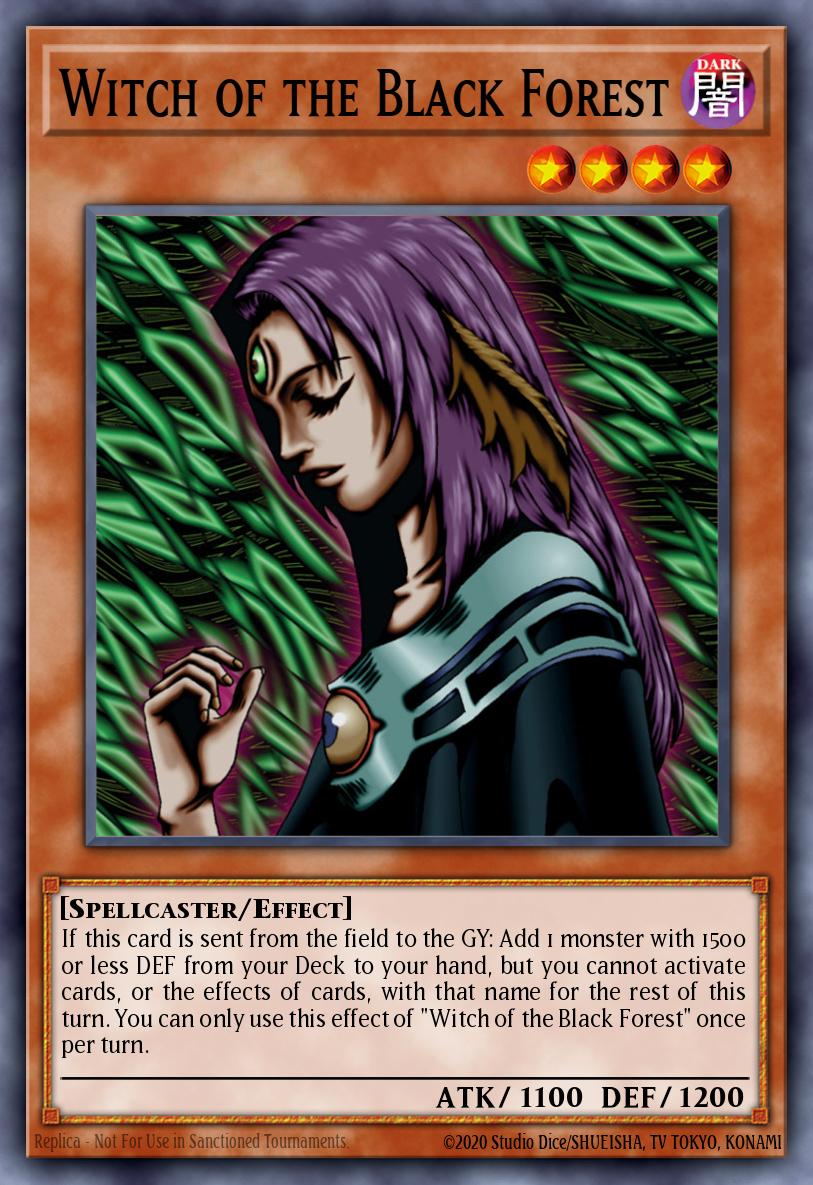
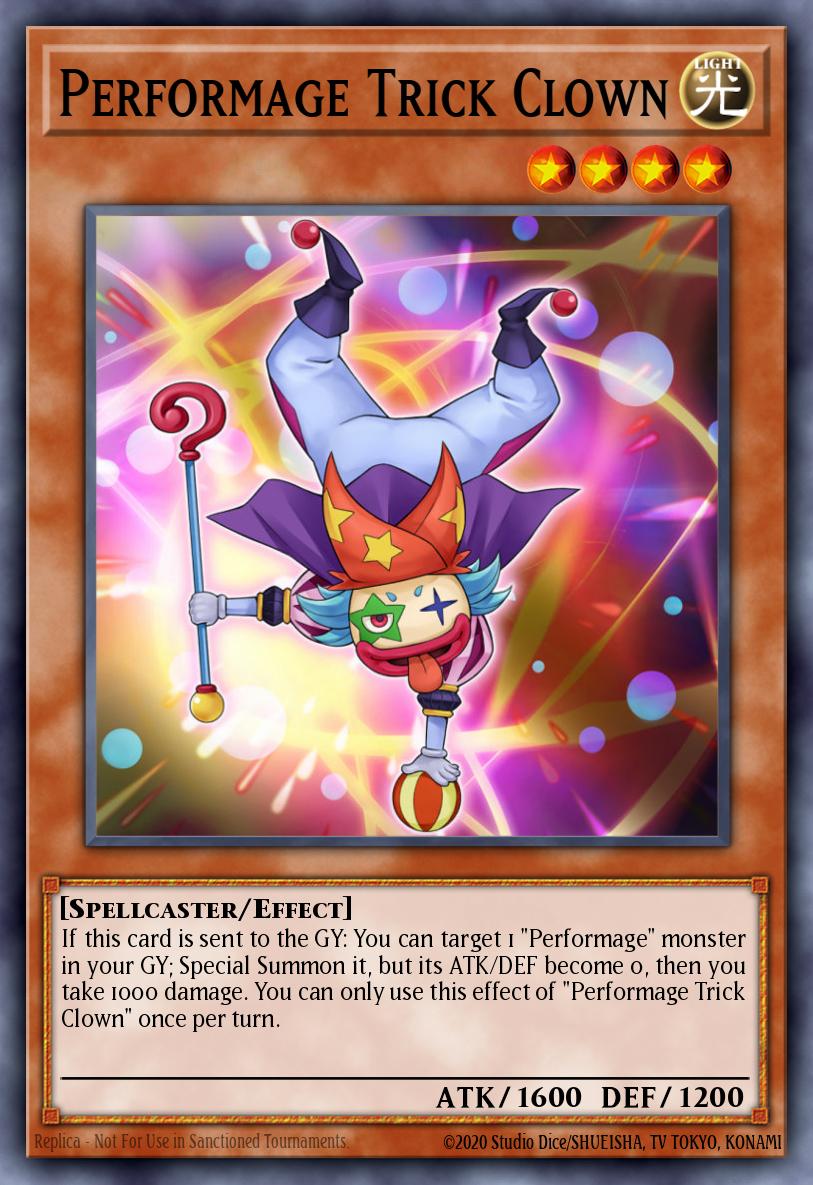
It is your turn. You control Sangan and Performage Trick Clown, and you have another "Performage" monster in your GY. Your opponent controls Witch of the Black Forest and Peten the Dark Clown. You activate Dark Hole, which resolves and destroys all four monsters at once. All four effects trigger together.
Building the chain
Chain Link 1: your Sangan. You are the turn player, and its effect is mandatory.
Chain Link 2: your opponent's Witch of the Black Forest. Mandatory, so it goes on next.
Chain Link 3: your Performage Trick Clown, if you choose to use it. Optional, and yours, so it comes after both mandatory effects. You target the other Performage monster in your GY.
Chain Link 4: your opponent's Peten the Dark Clown, if they choose to use it. Its cost, banishing Peten from the GY, is paid now.
Either player may now add Spell Speed 2 or higher responses. Neither does.
Resolving the chain
Chain Link 4 resolves first: your opponent Special Summons a Peten the Dark Clown from their hand or Deck.
Chain Link 3: you Special Summon your targeted Performage monster with 0 ATK and DEF, then take 1000 damage.
Chain Link 2: your opponent adds a monster with 1500 or less DEF from their Deck to their hand.
Chain Link 1 resolves last: you add a monster with 1500 or less ATK from your Deck to your hand.
Peten's effect is worded "When ... You can", which is the kind of effect that can miss the timing. It does not here: being sent to the GY by Dark Hole was the last thing that happened, and it activates in the same chain as the other three.
Choosing your own order
Within each group, the controlling player picks the order. If the turn player has two mandatory effects, they choose which is Chain Link 1 and which is Chain Link 2. The one placed later resolves earlier.
That choice matters when one effect changes what the other can do. Put the effect you want to resolve first on the chain last within your group. You cannot move your effects out of their group, though: the turn player's optional effects always go on after both players' mandatory effects, however you would prefer to order them.
When a card moves before its effect can activate
Sometimes a Trigger Effect's condition is met in the middle of a chain, and it has to wait until it has a chance to activate. Konami's 2021 Rules Update added a rule for what happens if the card moves in the meantime:
Konami, 2021 Rules Update · Trigger Effects
"If a monster's Trigger Effect meets its activation conditions, BUT hasn't yet had a chance to actually activate yet (because it's still in the middle of a chain or card effect, for example) and is therefore being 'saved for later', BUT its location changes between the time its Trigger Effect activation is met, and the time it actually has a chance to activate, its effect does not activate."
The locations Konami lists are the field, the GY, the hand, banished, and the Deck. So if your Sangan is sent from the field to the GY by Chain Link 2 of a chain, and Chain Link 1 then banishes it from the GY, Sangan's effect does not activate when the chain finishes. Its location changed from the GY to banished before it had the chance.
When both players act at once
A related rule covers single effects that ask both players to do something. Konami's rulebook says that for cases like "Each player targets 1 monster", the turn player resolves their part first, and then the other player makes their selection (page 50). Creature Swap, where each player chooses a monster they control, is the kind of card this covers.
Common SEGOC mistakes
Building the chain in the order the cards were destroyed, or alternating players. Mandatory effects go on before optional ones, and within each, the turn player's go on before the opponent's.
Putting the turn player's optional effect before the opponent's mandatory one. Every mandatory effect goes on first.
Resolving Chain Link 1 first. A SEGOC chain resolves backwards like any other.
Skipping a mandatory effect because you would rather not use it. Mandatory effects must be activated.
Activating a waiting Trigger Effect after its card has moved. Since the 2021 Rules Update, it does not activate.
Frequently Asked Questions
What does SEGOC stand for?
Simultaneous Effects Go On Chain. It is the players' name for the rulebook section "When multiple cards are activated simultaneously": Spell Speed 1 effects that activate at the same time are placed on one chain in a fixed order. Konami's rulebook does not use the acronym.
What order do simultaneous effects go on the chain?
The turn player's mandatory effects first, then the opponent's mandatory effects, then the turn player's optional effects, then the opponent's optional effects. Within each group, the player who controls the effects puts them on in any order.
Which SEGOC effect resolves first?
The last one added, as with every chain. That is usually one of the opponent's optional effects if there are any. The turn player's first mandatory effect is Chain Link 1, so it resolves last.
Is it better to be Chain Link 1 or the highest Chain Link?
It depends on the effects. A higher Chain Link resolves earlier, so it acts on the game before the others. A lower Chain Link resolves later, so it sees what the others did. Since the turn player's mandatory effects always go on first, they always resolve after everything else in that chain.
Can you respond to a SEGOC chain?
Yes. Once the simultaneous effects are on the chain, either player can add to it with Spell Speed 2 or higher cards, following the normal chain rules.
Build and check your Yu-Gi-Oh! deck in TurnZero HQ.
Build a deck, deal sample hands to see which triggers you are likely to open with, and check the list against the Forbidden & Limited List. Free on iPhone, Android and the web.
Create Free AccountYu-Gi-Oh! card names and images are the property of Konami Digital Entertainment and their respective owners. ©Studio Dice/SHUEISHA, TV TOKYO, KONAMI. TurnZero HQ is not affiliated with, sponsored, or endorsed by Konami. Card data comes from YGOPRODeck, and prices from TCGplayer via TCGCSV.