Yu-Gi-Oh! Rules Explained
Targeting in Yu-Gi-Oh!: Cannot Be Targeted vs. Cannot Be Destroyed
A card targets only when its text says "target" as part of activating it. That one word decides whether protection like Obelisk the Tormentor's applies, and the word the card uses for the target when it resolves decides what happens if the target changes in the meantime.
What counts as targeting
Problem-Solving Card Text writes targeting out with the word "target", in the activation part of the effect, before the semicolon. Konami's Part 3 article lists targeting next to costs as something that "happens WHEN YOU ACTIVATE a card". If an effect never says "target", it does not target, even when it picks out a card.


When targets are chosen
Targets are picked when the effect is activated, so your opponent sees exactly which card you are going after before they decide whether to respond. That is what lets a player chain a card to save the target, or use the targeted card in response, as in the Gemini Spark example on the card text page.
A non-targeting effect gives no such warning. Creature Swap's choices happen when it resolves, after the chain is built, so neither player knows in advance which monster the other will give up.
"That target", "it" and "both"
Between activation and resolution, the target can change: its ATK drops, it is flipped face-down, it changes control. Konami's Part 4 article says the word used for the target in the resolution text tells you whether that matters.
Trap Hole reads "When your opponent Normal or Flip Summons 1 monster with 1000 or more ATK: Target that monster; destroy that target." Because it says "that target", the monster must still have 1000 or more ATK when Trap Hole resolves. Adreus, Keeper of Armageddon says "destroy it", so its target only had to be a face-up card your opponent controls when Adreus targeted it. In either case, a target that has left the field cannot be affected.
Without "both", an effect with several targets still applies to whichever ones are left. Konami's example is Pain Painter, which targets up to 2 Zombie monsters and says "they become Level 2": if one target is gone, the other still becomes Level 2.


Cannot be targeted vs. cannot be destroyed
These two protections answer different cards, and neither covers the other. "Cannot be targeted" stops effects that say "target". "Cannot be destroyed" stops effects, or battles, that destroy. Each card says exactly which kind it has, and often by what.
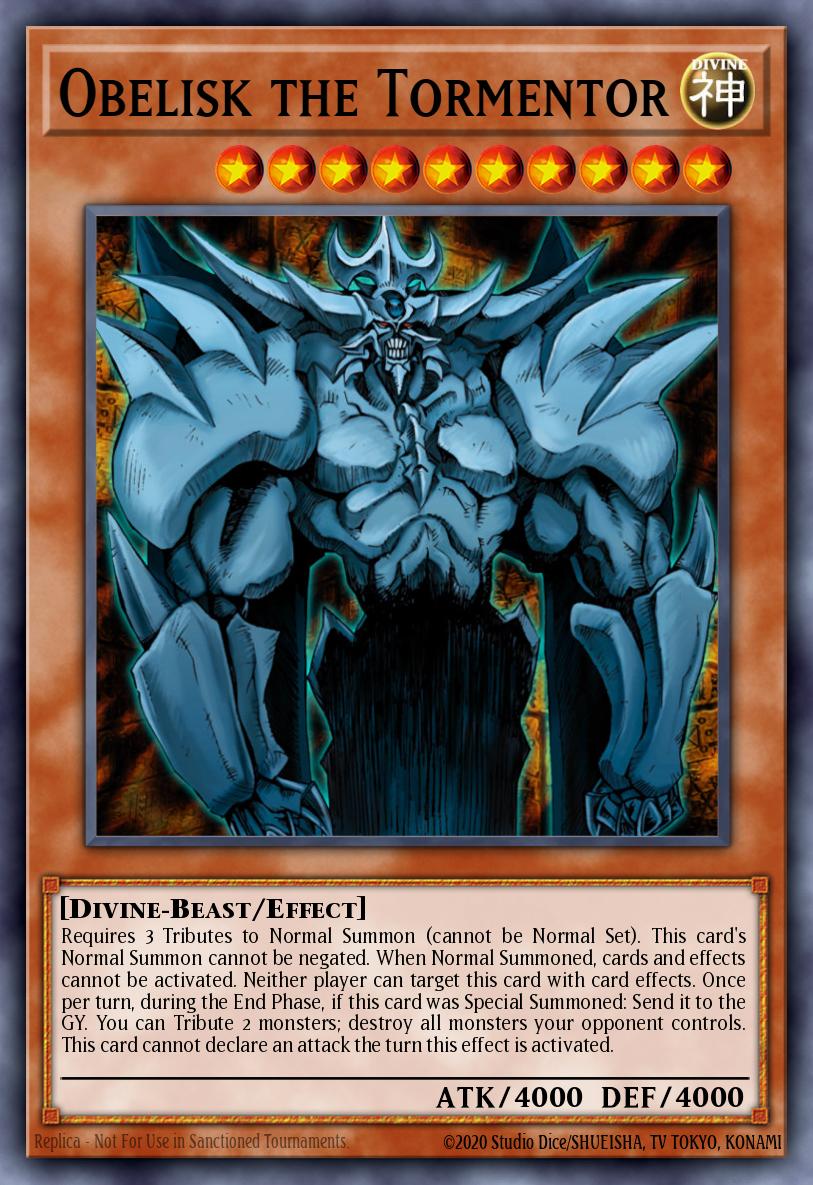
Obelisk the Tormentor says "Neither player can target this card with card effects." It has no protection from destruction, so Dark Hole destroys it. Spirit Reaper reads "Cannot be destroyed by battle. After resolving a card effect that targets this face-up card, destroy this card." It survives battle, but any card effect that targets it, even one that does nothing harmful, ends with Spirit Reaper destroying itself.
Some cards carry both, and the scope still matters. Blue-Eyes Alternative Ultimate Dragon says "Your opponent cannot target or destroy this card with card effects." That covers your opponent's card effects only, and not battle.


What counts as destroyed
"Cannot be destroyed" protects against less than it sounds like, because destruction is a narrow term in Yu-Gi-Oh!:
Konami Official Rulebook, Version 10 · Glossary, page 53
"A card is destroyed when it is sent to the Graveyard due to battle between monsters or by an effect that destroys a card. A card that is returned from the field to the hand or Deck, or, that is sent to the Graveyard as a cost or Tribute, is NOT considered 'destroyed.'"
A monster that cannot be destroyed can still be returned to the hand, shuffled into the Deck, Tributed, banished or have its effects negated. Penguin Soldier ("FLIP: You can target up to 2 monsters on the field; return those targets to the hand.") removes a monster without destroying it, so a monster protected only from destruction can still be bounced by it.
Worked examples
Trap Hole after an ATK drop
Your opponent Normal Summons a monster with 1500 ATK. You activate Trap Hole and target it.
Before Trap Hole resolves, another Chain Link lowers that monster's ATK to 800.
Trap Hole resolves. It says "destroy that target", and the monster no longer has 1000 or more ATK, so it is not destroyed.
Book of Moon on Obelisk, then Dark Hole
You want to deal with your opponent's Obelisk the Tormentor. Book of Moon says "Target 1 face-up monster", and Obelisk cannot be targeted by card effects, so you cannot choose it.
You activate Dark Hole instead. It does not target, and Obelisk has no protection from destruction, so it is destroyed along with every other monster on the field.
Common targeting mistakes
Treating "cannot be targeted" as immunity. Effects that do not say "target", like Dark Hole, still apply.
Treating "cannot be destroyed" as immunity. Returning to the hand, banishing and Tributing are not destruction.
Choosing targets when the effect resolves. Targets are chosen at activation, before your opponent can respond.
Assuming an attack is a target for card-effect purposes. "Cannot be targeted by card effects" does not stop attacks.
Ignoring "that target". If the resolution text says it, the target must still meet every requirement.
Frequently Asked Questions
How do you know if a Yu-Gi-Oh! card targets?
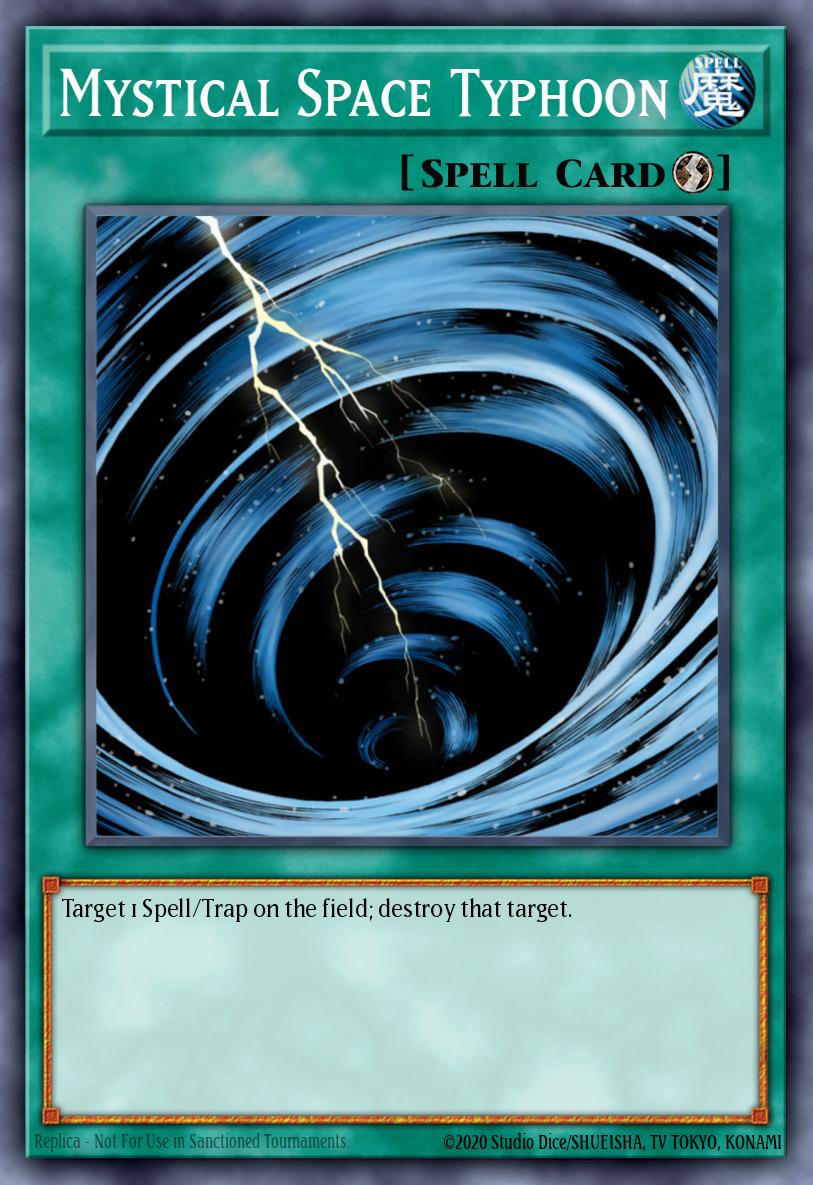
A card that targets says "target" in the part you do when you activate it, before the semicolon, as in Mystical Space Typhoon's "Target 1 Spell/Trap on the field; destroy that target." A card that just says "destroy all monsters" or "each player chooses" does not target.
Can Dark Hole destroy a monster that cannot be targeted?
Yes. Dark Hole reads "Destroy all monsters on the field" and never targets, so a monster that only says it cannot be targeted is still destroyed. To survive Dark Hole, the monster needs protection from destruction by card effects.
Does "cannot be destroyed" stop banishing or returning a card to the hand?
No. Konami's rulebook defines destroying as sending a card to the Graveyard by battle or by an effect that destroys. Returning a card to the hand or Deck, Tributing it, or sending it to the Graveyard as a cost is not destruction, and banishing is a different action again.
What happens if the target is gone when the effect resolves?
The effect does nothing to that target. Targets are chosen at activation, so if the target has left the field, or no longer fits a "that target" requirement, the effect has nothing to apply to. Any cost paid to activate it stays paid.
Is attacking a monster the same as targeting it?
No. Card text describes an attack as a monster being "targeted for an attack", which is different from targeting with a card effect. Obelisk the Tormentor says neither player can target it with card effects, so it can still be attacked.
Build and check your Yu-Gi-Oh! deck in TurnZero HQ.
Look up any card's current text, build a deck, deal sample hands, and check the list against the Forbidden & Limited List. Free on iPhone, Android and the web.
Create Free AccountYu-Gi-Oh! card names and images are the property of Konami Digital Entertainment and their respective owners. ©Studio Dice/SHUEISHA, TV TOKYO, KONAMI. TurnZero HQ is not affiliated with, sponsored, or endorsed by Konami. Card data comes from YGOPRODeck, and prices from TCGplayer via TCGCSV.