One Piece Card Game · Rules Explained
How [Blocker] Works in the One Piece TCG
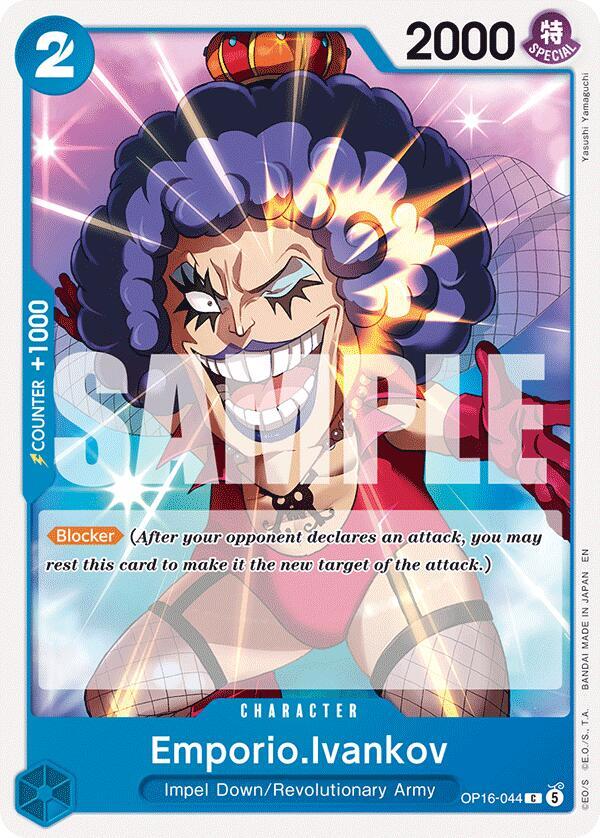
[Blocker] doesn't stop an attack. It moves the attack onto the Blocker, and the battle carries on against it. By the time you can block, the attacker has picked its target and its [When Attacking] effects have already resolved, which is where most blocking mistakes start.
What [Blocker] does
When one of your other cards is attacked, you may rest an active Character with [Blocker] during the Block Step, and that Character takes the place of the card being attacked. The rules here are from Bandai's Comprehensive Rules, version 1.2.1, last updated August 28, 2026, current as of October 2026, and Bandai's rules Q&A.
Comprehensive Rules · 10-1-4-1
[Blocker] is a keyword effect with an activation timing that is fulfilled when one of your other cards is being attacked, allowing you to activate it by resting this card during the Block Step. The [Blocker] card takes the place of the card being attacked.
"One of your other cards" covers your Leader and your other Characters, so a Blocker can protect a rested Character as well as your Leader. The attack itself continues: the attacker's power is compared with the Blocker's in the Damage Step, and if the attacker's is equal or higher, the Blocker is K.O.'d (rule 7-1-4-1-2).

The order of an attack
You decide whether to block only after the attacker has done several things. This is the full sequence up to the block:
Steps 3 and 4 are why a Blocker on the table is not a guaranteed block. A [When Attacking] effect that rests, returns or K.O.s your Blocker resolves before the Block Step, and so does anything your own [On Your Opponent's Attack] effects do. Bandai's Q&A adds that [On Your Opponent's Attack] activates even when the attack targets a different card from the one with the effect.
The limits on blocking
Some Characters have [Blocker] only some of the time. A card that "gains [Blocker]" under a condition can block only while the condition holds, so check it at the moment of the Block Step, not when the card was played.


What happens after the block
Once the Blocker is the target, the battle carries on against it. In the Counter Step you can boost it with Counter cards like any other target; Bandai's Q&A confirms that. If its power is still lower than the attacker's or equal to it in the Damage Step, it is K.O.'d. If it is higher, nothing happens to either card.
Blocking also changes what the attack can do. [Double Attack] and [Banish] only work when the attack deals damage to a Leader (rules 10-1-2-1 and 10-1-3-1), so a blocked attack loses both. Your Leader takes no damage from it, which means no Life card is moved and no [Trigger] is revealed.
The cost is that your Blocker is now rested. It stays rested for the rest of your opponent's turn, because only your own Refresh Phase stands your cards up (rule 6-2-4), so it can't block again and becomes a legal target for their next attack. Rested vs. active covers that state in full.
What stops a block

A block, step by step
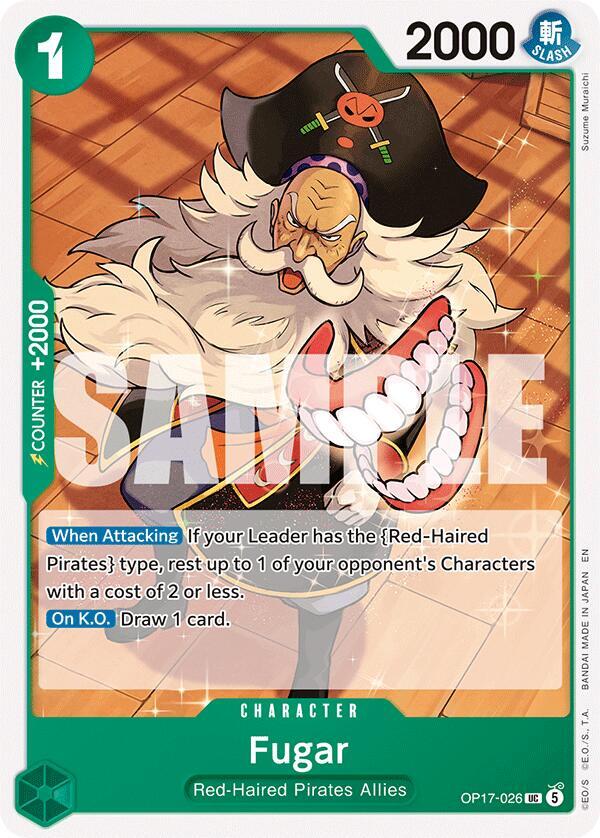
Your opponent's Fugar attacks your Leader; you have Emporio.Ivankov and Helmeppo
Attack Step: your opponent rests Fugar and chooses your Leader. Their Leader has the {Red-Haired Pirates} type, so Fugar's [When Attacking] rests up to 1 of your Characters with a cost of 2 or less. They rest Emporio.Ivankov.
Block Step: Emporio.Ivankov is rested and can't block. Helmeppo is active, so you rest it to block. Helmeppo is now the target.
Helmeppo's [On Block] activates: you rest up to 1 of your opponent's Characters with a cost of 5 or less, which sets up a target for your next turn.
Counter Step: Fugar has 2000 printed power plus any DON!! given to it. Helmeppo has 5000, so you need no Counter unless your opponent gave Fugar 3 or more DON!!.
Damage Step: if Fugar's power is lower than Helmeppo's, nothing happens. Your Leader took no damage either way.
Common mistakes
Blocking with the Character that was attacked. [Blocker] protects your other cards only.
Blocking after seeing the Counter Step. The Block Step comes first.
Using a second Blocker in the same battle. Only one [Blocker] per battle.
Forgetting that [When Attacking] resolves before blocks. A Blocker it rests can't block.
Expecting [Double Attack] to deal 2 damage to a Blocker. Blocked attacks deal no Leader damage.
Frequently Asked Questions
When can you block in the One Piece TCG?
In the Block Step, after your opponent has rested their attacker, chosen a target and resolved their [When Attacking] effects, and after your [On Your Opponent's Attack] effects. You block before the Counter Step, so you decide on the block before any Counter power is added.
Can you use two Blockers in one battle?
No. You can activate [Blocker] only once per battle (rule 7-1-2-1). Each new attack is a new battle, so a different active Blocker can block the next attack.
Can the Character being attacked use its own [Blocker]?
No. Bandai's rules Q&A says you can't activate the [Blocker] of the Character being attacked. [Blocker] protects your other cards: your Leader or another of your Characters.
Do you have to block with a Blocker?
No. Blocking is optional. Bandai's rules Q&A confirms you can choose not to activate [Blocker] even when you have one ready.
Can you use a Counter on a Blocker?
Yes. After your Blocker becomes the target, you can trash Counter cards and use [Counter] Events on it in the Counter Step, the same as on any other target.
Does blocking stop [Double Attack] and [Banish]?
Yes, for that attack. Both keywords only apply when the attack deals damage to a Leader (rules 10-1-2-1 and 10-1-3-1). Once a Blocker is the target, the most the attack can do is K.O. the Blocker.
Keep score at the table.
Track each player's Life and record who won, build and check a One Piece deck, and keep your collection in one place. Free on iPhone, Android and the web.
Create Free AccountONE PIECE CARD GAME card names and images are the property of Bandai and their respective owners. ©Eiichiro Oda/Shueisha, Toei Animation. TurnZero HQ is not affiliated with, sponsored, or endorsed by Bandai, Shueisha, or Toei Animation. Card data and prices come from TCGplayer.