One Piece Card Game · Beginner Series
How Battles Work in the One Piece TCG
In the One Piece Card Game, every attack is a battle: you compare the attacker's power with the target's, and the attacker wins ties. The defender's tools are [Blocker] Characters and the Counter cards in their hand. This lesson walks through the five steps of a battle and the math that decides it.
How do you attack?
During your Main Phase, you rest your active Leader or one active Character and choose a target: your opponent's Leader, or one of their rested Characters (rule 7-1). Players coming from Magic would call this combat; Bandai calls it a battle, and each attack is its own battle with one attacker and one target.
Three limits decide who can attack. Neither player can attack on their own first turn. A Character can't attack on the turn it was played unless it has [Rush]. And because attacking rests the card, each card normally attacks once per turn; your Leader can attack every turn, since it starts each turn active. You can't attack an active Character, so a Character that stays upright is safe from attacks, though effects can still rest or K.O. it.
Comprehensive Rules · 7-1
During the Main Phase, the turn player can rest an active Leader card in their Leader area, or an active Character card in their Character area, to attack an opponent's Leader card in their Leader area, or rested Character card in their Character area.
The five steps of a battle
Every battle runs through the same five steps. If the attacker or the target leaves play partway through, for example because an effect K.O.'d it, the battle skips straight to its end (rules 7-1-1-4, 7-1-2-3 and 7-1-3-1-3).
How does blocking work?
Blocking needs a Character with the [Blocker] keyword. After your opponent declares an attack on your Leader or one of your other Characters, you may rest an active [Blocker] to make it the new target of that attack (rule 10-1-4). Only one Blocker can be used per battle, and a rested Blocker can't block, so a Blocker that blocked once is usually done until your next turn. Blockers are common: 248 of the 2,103 Characters released so far open their text with [Blocker], and more gain it through a condition or another card's effect.
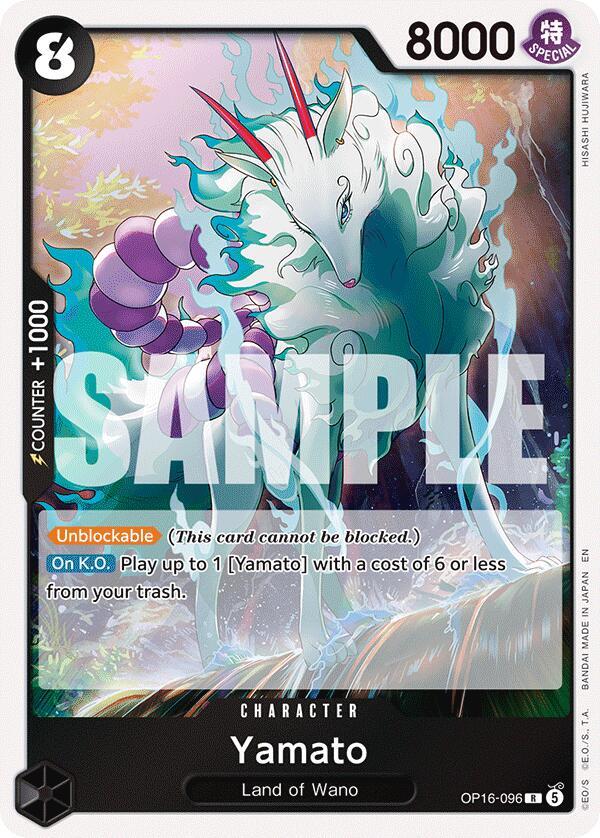
Blocking is a trade. The Blocker takes the hit instead of your Leader, which saves a Life card, but if the attacker's power is at least the Blocker's, the Blocker is K.O.'d. Attackers with [Unblockable] can't be blocked at all, and many [On Play] effects rest or remove a Blocker before the attack is declared.
How do counters work?
Counters are how the defender adds power during a battle. In the Counter Step, the player being attacked can do either of these, in any order and as many times as they can (rule 7-1-3):
This is the main reason hand size matters. Every card in your hand is a potential Counter, and every card you trash to survive an attack is a card you won't play later. It is also why active DON!! left over at the end of your turn is not wasted: it can pay for a [Counter] Event on your opponent's turn. Our guide to reading a One Piece card shows where to find a card's Counter value.
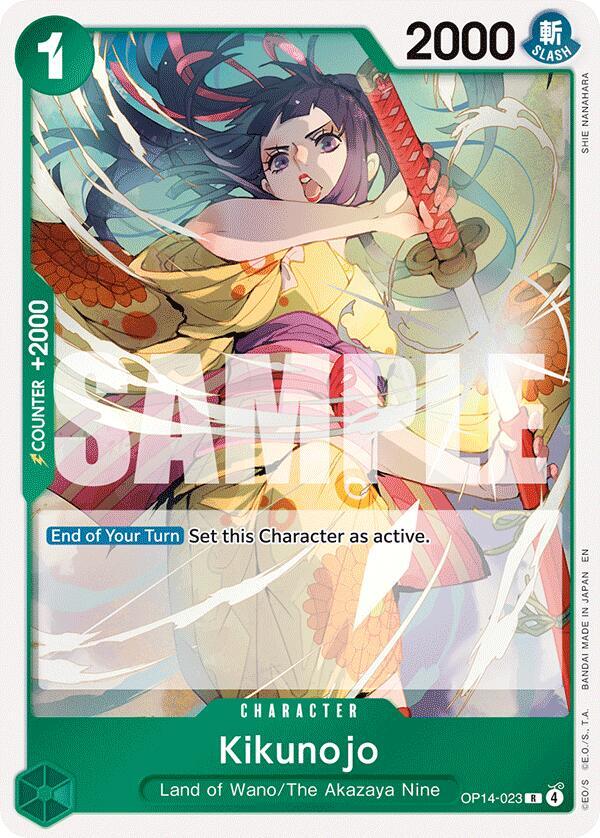
Kikunojo
OP14-023
A Character with a +2000 Counter
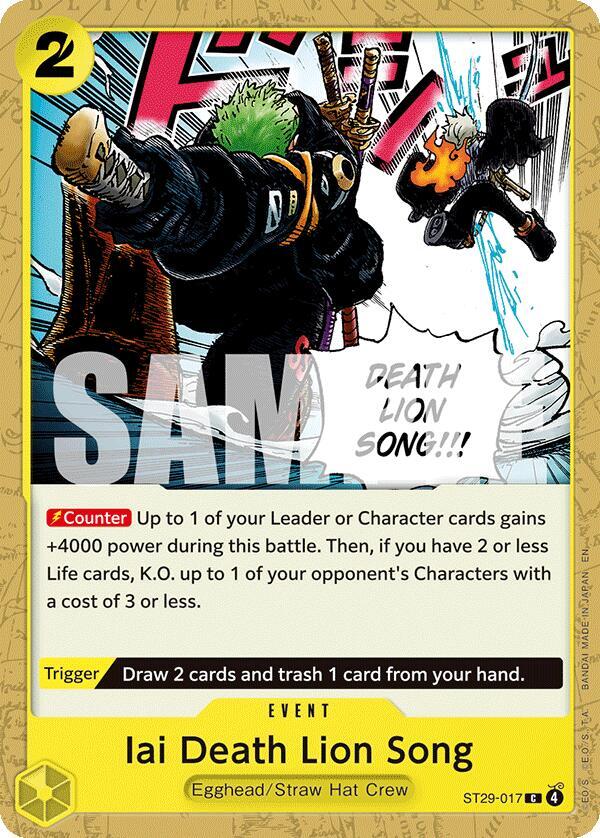
Iai Death Lion Song
ST29-017
A 2-cost [Counter] Event: +4000 for the battle
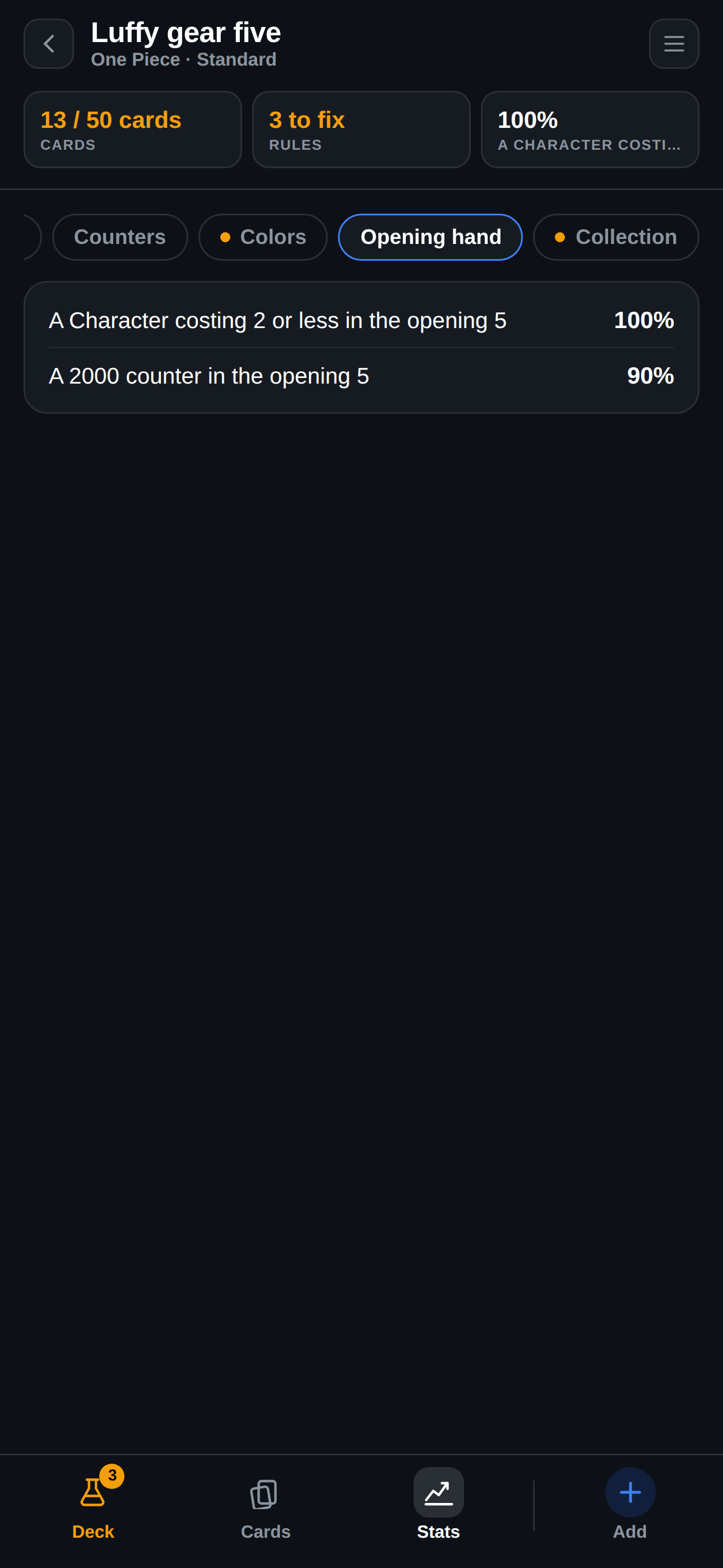
How many Counter cards you draw is set when you build the deck. TurnZero HQ's Deck Lab has an Opening hand view that gives the chance of holding at least one +2000 Counter in your opening 5, so you can see whether your deck can defend its first turns before you play it.
What happens when a battle is won or lost?
In the Damage Step you compare power once. If the attacker's power is greater than or equal to the target's, the attack succeeds (rule 7-1-4-1):
Losing an attack costs the attacker nothing beyond being rested. Unlike some card games, the attacking card is never damaged or K.O.'d by the defender's power. Leaders are never K.O.'d either; a Leader only loses Life. What Life cards and Triggers mean for the end of the game is the next lesson, how you win.
The power math: how much is enough?
Because ties go to the attacker and almost every power and Counter value is a multiple of 1000, a defender needs to finish at least 1000 above the attacker to survive. Most Leaders have 5000 printed power (131 of the 138 released Leaders whose power our catalog lists), so the numbers tend to look like this:
The attacker's side of the same math: each DON!! you give adds 1000, so giving one extra DON!! to an attacker forces the defender to find one more Counter. Spreading DON!! across several attackers makes your opponent pay for each attack separately; stacking it on one makes a single attack very hard to stop. Which is better depends on how many cards your opponent is holding and how much Life they have left.
A battle, step by step
Here is one attack with real cards: your Edward.Newgate Leader (Red, 5000 power) attacks your opponent's Shanks Leader (Green, 5000 power). Your opponent has Emporio.Ivankov in play and Kikunojo in hand.

Edward.Newgate
OP17-001
The attacker: a 5000-power Leader

Shanks
OP17-020
The target: a 5000-power Leader
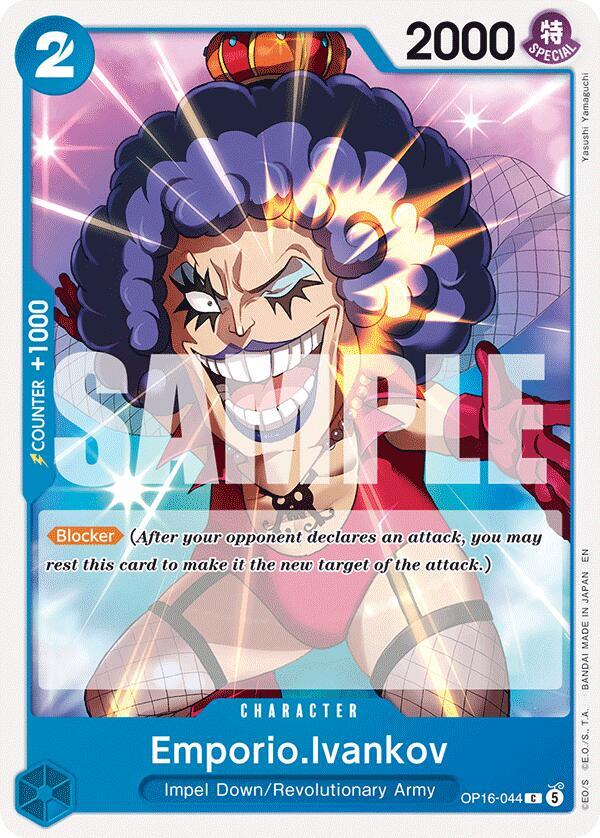
Emporio.Ivankov
OP16-044
The defender's 2000-power [Blocker]
Kikunojo
OP14-023
In the defender's hand: a +2000 Counter
Edward.Newgate, with 1 DON!! given, attacks Shanks
Attack Step: you rest Edward.Newgate and choose Shanks. With 1 DON!! given, Edward.Newgate attacks at 6000.
Block Step: Emporio.Ivankov could block, but at 2000 power it would be K.O.'d by a 6000 attacker, so your opponent lets the attack through.
Counter Step: your opponent trashes Kikunojo from their hand for its +2000 Counter. Shanks is now 7000 for this battle.
Damage Step: 6000 is less than 7000, so your attack loses. Nothing happens; Edward.Newgate stays rested.
End of Battle: the +2000 ends. You still have your Main Phase and can attack with a Character next, against a Shanks back at 5000 and a hand that is one card smaller.
With a second DON!! on Edward.Newgate (7000), Kikunojo alone would only tie at 7000, and ties go to the attacker. Your opponent would need a second Counter or a [Counter] Event. Edward.Newgate's own effect is [On Your Opponent's Attack], so it only works when Edward.Newgate's player is the one defending and plays no part here.
Keywords that change a battle
Each keyword, with how often it appears and example cards, is in One Piece TCG keywords and mechanics.
Common battle mistakes
Attacking an active Character. Only rested Characters and the Leader can be targeted.
Thinking a tie protects the defender. Equal power is a win for the attacker.
K.O.'ing your own attacker after a lost battle. A losing attacker just stays rested.
Using two Blockers in one battle. Only one [Blocker] can be activated per battle.
Counting DON!! on your Character when it defends. Given DON!! adds power only on your own turn.
Paying DON!! for a Character's Counter value. Trashing it from hand is free; only [Counter] Events cost DON!!.
Frequently Asked Questions
What can you attack in the One Piece TCG?
Your opponent's Leader, or one of their rested Characters. You can't attack a Character that is active (upright), and you can't attack Stages or DON!!.
Who wins a tie in a One Piece TCG battle?
The attacker. If the attacking card's power is equal to or greater than the defending card's power, the attack succeeds. A defender has to end up with strictly more power than the attacker to survive.
How do counters work in the One Piece TCG?
During the Counter Step, the defending player can trash Character cards from their hand to add each card's Counter value (+1000 or +2000) to their Leader or one Character for that battle, and can pay for Event cards marked [Counter]. They can use as many as they like, in any order.
What happens if your attack loses?
Nothing. The attacking card is not K.O.'d and takes no damage; it simply stays rested until your next Refresh Phase. The battle ends and you can keep taking actions in your Main Phase.
Can a Leader be K.O.'d in the One Piece TCG?
No. A successful attack on a Leader deals 1 damage instead, moving the top Life card to its owner's hand. Only Characters are K.O.'d.
How does [Blocker] work?
After your opponent declares an attack on your Leader or another of your Characters, you may rest an active Character with [Blocker] to make it the new target. You can block only once per battle, and a rested Blocker can't block.
Does DON!! on a Character help it defend?
No. Each DON!! given to a card adds +1000 power only during its owner's turn. On your opponent's turn, your cards defend with their printed power, Counter cards and other effects.
Keep score at the table.
Track each player's Life and record who won, build and check a One Piece deck, and keep your collection in one place. Free on iPhone, Android and the web.
Create Free AccountONE PIECE CARD GAME card names and images are the property of Bandai and their respective owners. ©Eiichiro Oda/Shueisha, Toei Animation. TurnZero HQ is not affiliated with, sponsored, or endorsed by Bandai, Shueisha, or Toei Animation. Card data and prices come from TCGplayer.