One Piece Card Game
PSA 10 One Piece Cards
A PSA 10 is a One Piece card PSA has judged Gem Mint: as close to perfect as a printed card gets. For a Manga or Super Alternate Art it can multiply the price, and for a base printing it almost never pays for itself. Here is what the grade takes, how the graders compare, and which cards are worth sending in.
What PSA 10 means
PSA (Professional Sports Authenticator) is the largest card grading company, and 10, Gem Mint, is the top of its scale. PSA describes a Gem Mint card as virtually perfect: four perfectly sharp corners, sharp focus, full original gloss and no staining, with the image centered within about 55/45 on the front and 75/25 on the back. A centering of 55/45 means the border on one side is no more than 55 percent of the two borders together.
A graded card is sealed in a tamper-evident plastic case, called a slab, with a label giving the card, the grade and a certification number you can look up. The grade is PSA's judgment of that one copy, which is why two copies of the same printing can sell for very different prices.
The PSA scale
PSA also gives half grades from 1.5 to 8.5; there is no 9.5. A card can carry a qualifier, such as OC for off-center or ST for staining, when one flaw keeps it below the grade the rest of it earns.
What graders check
Every grader looks at the same four things, and you can check them yourself before you pay anyone:
A card you just pulled isn't automatically a 10. Modern cards often miss on centering or surface straight out of the pack, and foil cards show scratches and print lines easily. Sleeve a card you might grade as soon as you open it.
Beckett, CGC and TAG
PSA is the most common grader, and its 10s usually sell for the most, but it is not the only one.
A 10 from one grader is not the same as a 10 from another, and buyers price them differently, so compare sales of the same printing from the same grader.
Which One Piece cards are worth grading
In One Piece, the printing decides almost everything. A card's base printing and its Manga or Super Alternate Art share a card number and play the same, but sell for very different prices raw, and grading only multiplies a price that is already there. These special printings had some of the highest ungraded prices on October 11, 2026:
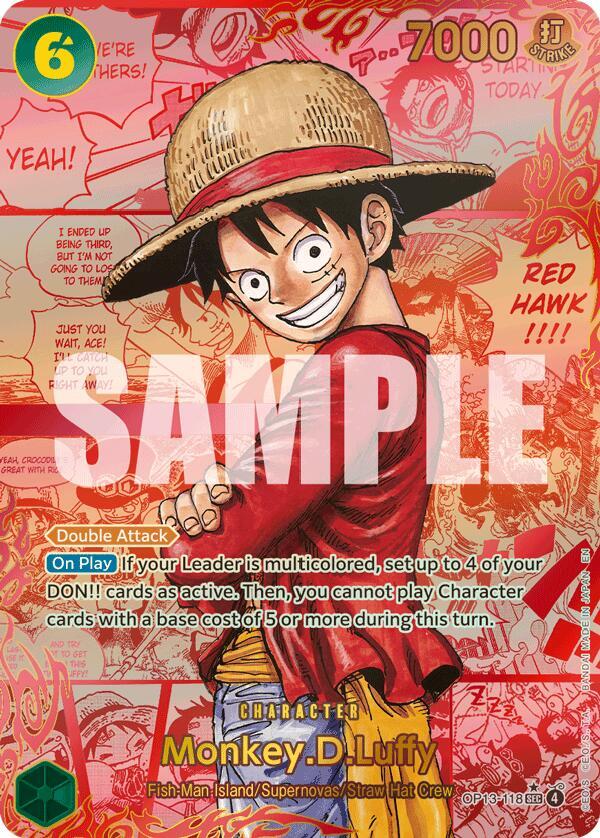
Monkey.D.Luffy (Red Super Alternate Art)
OP13-118
OP13-118, Red Super Alternate Art. $7,500.00 raw.
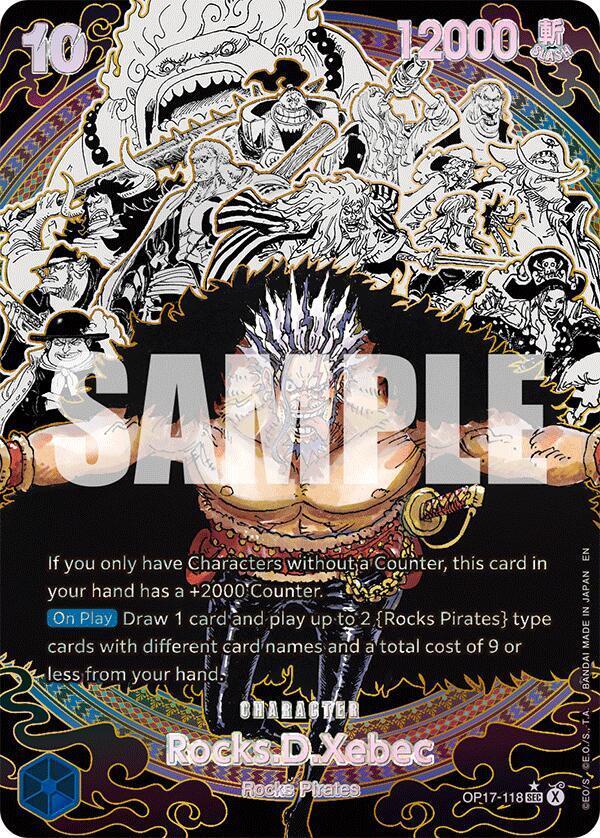
Rocks.D.Xebec (Super Alternate Art)
OP17-118
OP17-118, Super Alternate Art. $6,100.00 raw.
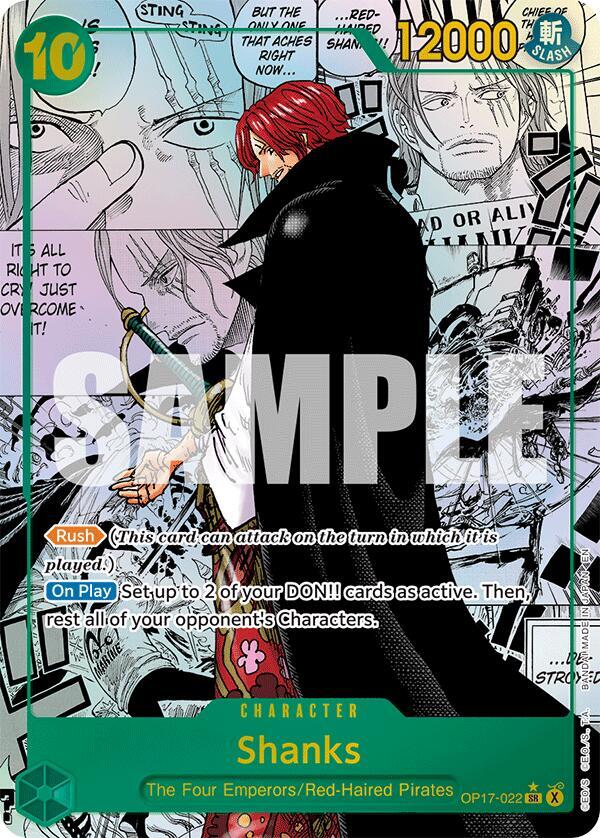
Shanks (Manga)
OP17-022
OP17-022, Manga. $1,502.19 raw.
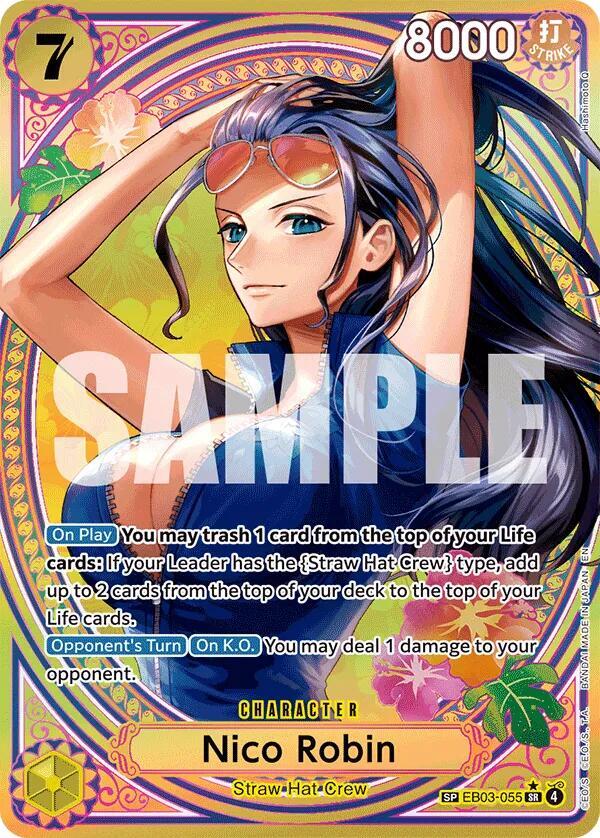
Nico Robin (SP)
EB03-055
EB03-055, SP. $1,457.99 raw.
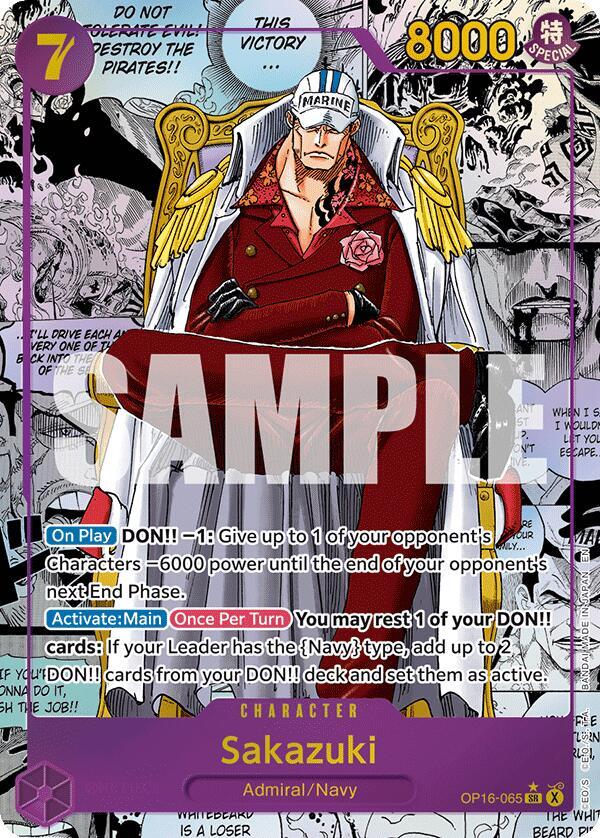
Sakazuki (Manga)
OP16-065
OP16-065, Manga. $1,111.83 raw.
Base printings are the opposite. In each of the six sets TurnZero HQ has card lists for, from OP-13 to OP-17 and EB-03, at least 90 percent of the base printings were under $1 on October 11, 2026, and the most valuable base printing in OP-17, Loki, was $25.38. How the printings differ →
Is it worth grading?
Grade a card when the graded price you can realistically expect is clearly above the raw price plus the cost of grading. PSA prices its service by declared value: the more the card will be worth graded, the higher the tier you have to use, so an expensive card costs more to grade. Add shipping and insurance both ways, and the wait.
Then account for the grade you might get. A card you hope is a 10 can come back a 9 or an 8, and for most cards the price falls sharply below 10. The math works best for valuable special printings in excellent condition, and worst for cards that are inexpensive raw. What your One Piece cards are worth raw →
Population reports
A population report is a grader's public count of how many copies of a card it has graded at each grade. A printing with few PSA 10s on the report is scarce at that grade, which supports its price, and a rising count of 10s can push the price down over time. Check the report for the grader you plan to use before you decide. TurnZero HQ does not show population reports.
Tracking graded cards
In TurnZero HQ, each copy in your One Piece collection can carry its grader and grade beside its condition and language. Market prices in the app are for ungraded cards, so a graded copy counts at the value you enter for it, and your collection's total stays honest about what is raw and what is slabbed. How the collection tracker works →
Frequently Asked Questions
What does PSA 10 mean on a One Piece card?
Gem Mint, the top grade from PSA, the largest card grading company. It means a virtually perfect card: four sharp corners, clean edges, full original gloss, no staining, and centering within about 55/45 on the front and 75/25 on the back. PSA grades One Piece cards on the same standards it uses for every game.
Which One Piece cards are worth grading?
Mostly the special printings: Manga, SP, Super Alternate Art and the most valuable Alternate Arts, which sold raw for hundreds or thousands of dollars on October 11, 2026. Base printings rarely are; in each of the six sets TurnZero HQ has card lists for, at least 90 percent of the base printings were under $1.
How much more is a PSA 10 One Piece card worth?
It depends on the card. For a scarce, popular printing, a PSA 10 can sell for several times the raw price, because few copies reach it. For a common printing, the premium can be smaller than the grading fee. Check recent sales of that printing at that grade before you send it in.
Does PSA grade Japanese One Piece cards?
Yes. PSA grades Japanese printings on the same standards as English ones. Japanese and English copies of the same card sell as separate markets, so compare graded sales in the language you own.
Can TurnZero HQ track graded One Piece cards?
Yes. Each copy in your One Piece collection can carry its grader and grade, beside its condition and language. TurnZero HQ's prices are market prices for ungraded cards, so a graded copy counts at the value you enter for it. TurnZero HQ does not show population reports.
Keep your slabs and raw cards in one place.
Record each One Piece card's grader and grade in TurnZero HQ, with your own value for graded copies. Free to start.
Create Free AccountONE PIECE CARD GAME card names and images are the property of Bandai and their respective owners. ©Eiichiro Oda/Shueisha, Toei Animation. TurnZero HQ is not affiliated with, sponsored, or endorsed by Bandai, Shueisha, or Toei Animation. Card data and prices come from TCGplayer.