One Piece Card Game · Rules Explained
The Counter Step in the One Piece TCG
You can't counter whenever you like. In the One Piece Card Game, Counters happen in one place: the Counter Step of a battle your opponent started, after any block and before power is compared. This page covers what you can do in that step, what you can't, and the cases that come up at the table.
When the Counter Step happens
The Counter Step is the third of a battle's five steps: Attack, Block, Counter, Damage and End of Battle. It comes after the Block Step, so by the time you counter you already know whether you blocked and which card is the target. The rules on this page are from Bandai's Comprehensive Rules, version 1.2.1, last updated August 28, 2026, current as of October 2026, and Bandai's rules Q&A.
Comprehensive Rules · 7-1-3-1
The player being attacked may perform the following actions in any order and as many times as they wish.
Only the player being attacked has actions here. The attacker has already given DON!! and declared the attack, and nothing in the step lets them add more power, so the defender counters knowing the attacker's final number unless an effect changes it. The five steps in full are in how battles work.
Counter cards and [Counter] Events
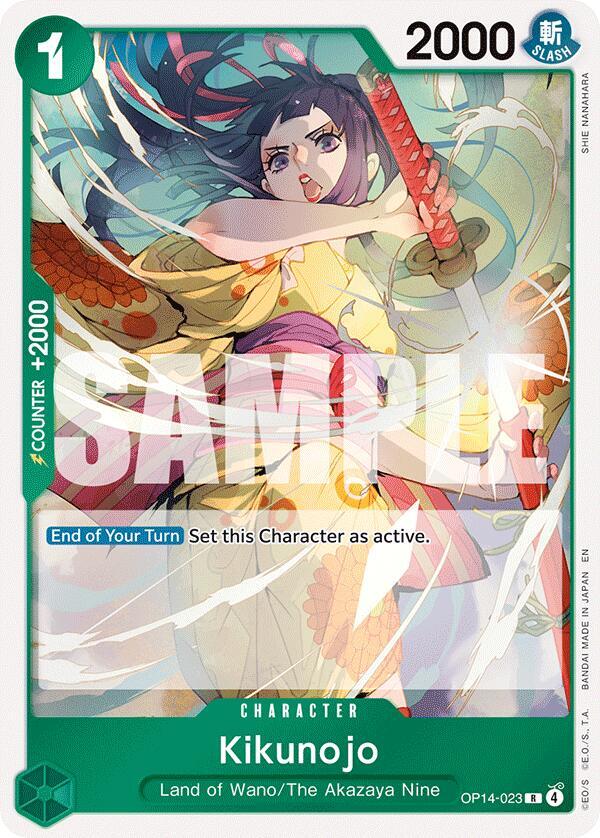
There are two actions you can take in the Counter Step, and they work differently:
If an effect gives a Character card a second Counter value, only the highest one applies (rule 2-10-4). And because [Counter] Events need active DON!!, the DON!! you leave unspent at the end of your own turn is your budget for them on your opponent's turn. DON!! given to your cards on your turn adds nothing here: it gives power during your turn only (rule 6-5-5-2).
Where the power goes
A Counter adds power to "your Leader or 1 Character", not only to the card being attacked. Bandai's Q&A says you can boost a card that isn't the target, and that the boost ends with the battle. In almost every game the right card to boost is the target, because only the target's power is compared in the Damage Step (rule 7-1-4-1).
A Character's Counter value lasts "during that battle" (rule 7-1-3-1-1), and so do most [Counter] Event boosts. Those effects end at the End of the Battle (rules 7-1-5-3 and 7-1-5-4), so the power doesn't carry into the next attack and each attack has to be answered on its own. A few [Counter] Events give a longer duration in their own text, and the card's wording is what counts.
Counters stack with blocking. If you block, the Blocker is the new target, and Bandai's Q&A confirms you can counter onto it. That is how a small Blocker survives a big attacker: block, then add Counter power to the Blocker. How blocking works is covered in how [Blocker] works.
Counters that remove the attacker
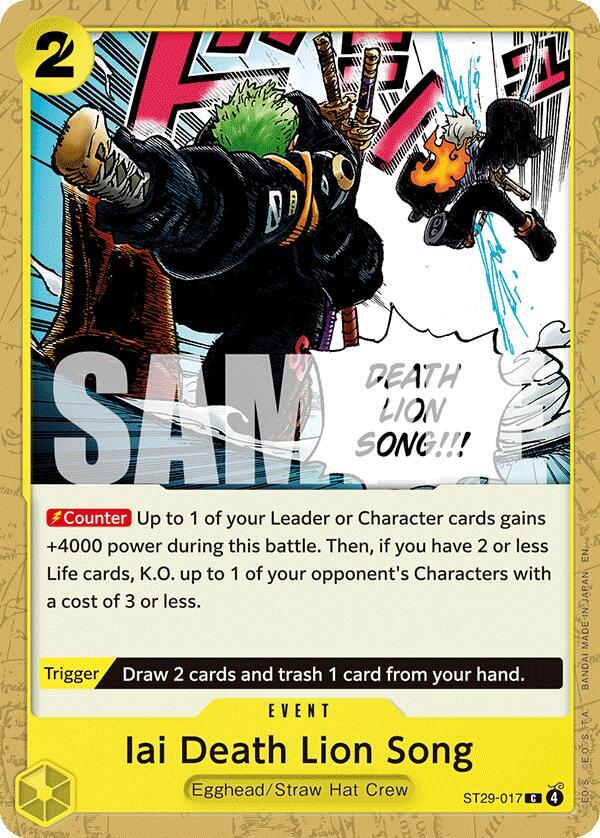
Some [Counter] Events K.O. a Character instead of, or as well as, adding power. If the attacking Character leaves the Character area during the Counter Step, the battle skips the Damage Step and goes straight to the End of the Battle (rule 7-1-3-1-3). The attack deals no damage and K.O.s nothing.
Comprehensive Rules · 7-1-3-1-3
If, at the end of the Counter Step, the attacking card or the target card for the attack has moved areas due to some method, proceed not to the Damage Step, but to the End of the Battle.
Two details make these cards better than they look. The attacker is normally rested in the Counter Step, because declaring the attack rested it, so an effect that K.O.s "rested Characters" can hit it unless something has set it active again. And "base power" means the power printed on the card (rule 4-9-2), so a limit like "6000 base power or less" ignores the DON!! your opponent gave the attacker (an effect that sets a card's base power is the exception). None of this works against a Leader, which can't be K.O.'d or moved out of the Leader area (rule 3-6-3).

Gum-Gum Snake Shot
OP13-039
[Counter] K.O. a rested Character with a cost of 4 or less, which an attacker normally is

There's No Way You Could Defeat Me!!
EB01-010
[Counter] K.O. a Character with 6000 base power or less
Iai Death Lion Song, shown above, uses "Then" between its two parts. Under rule 4-10-2, the K.O. after "Then" can still happen even if the first part did nothing, as long as its own condition (2 or less Life) is met.
When you can't counter
The last row is how many [Counter] Events double as Life cards. Gum-Gum Snake Shot's [Trigger] is "Activate this card's [Counter] effect", so revealing it from your Life area uses its K.O. outside the Counter Step. Triggers have their own rules, covered in how [Trigger] works.
A Counter Step, step by step
A 4-cost Character with 2 DON!! given attacks your 5000-power Leader
The attacker has 5000 printed power. With 2 DON!! given it attacks at 7000. You have 2 active DON!!, Kikunojo and Gum-Gum Snake Shot in hand.
Block Step: you have no Blocker, so the attack stays on your Leader.
Counter Step, option one: trash Kikunojo for +2000. Your Leader is 7000, a tie, and ties go to the attacker. You would need another Counter.
Option two: pay 2 DON!! for Gum-Gum Snake Shot and K.O. the attacker, which is rested and costs 4. The battle ends without a Damage Step, and you keep Kikunojo for the next attack.
The 2 DON!! that were given to the K.O.'d attacker go back to your opponent's cost area rested (rule 6-5-5-4), so the rule won't let them be given to a second attacker this turn.
Common mistakes
Using the Counter value of a Character in play. Counters work from hand only.
Paying DON!! for a Character's Counter. It's free; only [Counter] Events cost DON!!.
Countering to a tie. The attacker wins ties, so you need strictly more power.
Spending every DON!! on your turn when you hold [Counter] Events. They need active DON!! on your opponent's turn.
Using a K.O. Counter on a Leader's attack. Leaders can't be K.O.'d.
Frequently Asked Questions
When is the Counter Step in the One Piece TCG?
It is the third step of a battle, after the Block Step and before the Damage Step (rule 7-1-3). It happens only in battles your opponent starts, so you can counter only on your opponent's turn, while they are attacking.
Can you use a Counter from a Character in play?
No. Bandai's rules Q&A says you can only activate the Counters of cards in your hand. A Character's Counter value does nothing while it is on the field.
Can you counter on your own turn?
No. Only the player being attacked acts in the Counter Step (rule 7-1-3-1), and [Counter] Events can only be used during your opponent's Counter Step (rule 10-2-4-1). Bandai's Q&A confirms a [Counter] Event can't be used in your Main Phase.
Can you counter onto a Character that isn't being attacked?
Yes. Bandai's rules Q&A says a Counter can raise the power of a card that isn't being attacked. The boost ends at the end of the battle, so it rarely helps unless a card cares about that power during the battle.
How many Counters can you use in one battle?
As many as you can afford, in any order (rule 7-1-3-1). Counter cards from your hand cost nothing; [Counter] Events cost active DON!! from your cost area.
What happens if a Counter Event K.O.s the attacker?
The battle ends without a Damage Step (rule 7-1-3-1-3), so the attack deals no damage. This only works on an attacking Character; a Leader can't be K.O.'d or moved out of the Leader area.
Keep score at the table.
Track each player's Life and record who won, build and check a One Piece deck, and keep your collection in one place. Free on iPhone, Android and the web.
Create Free AccountONE PIECE CARD GAME card names and images are the property of Bandai and their respective owners. ©Eiichiro Oda/Shueisha, Toei Animation. TurnZero HQ is not affiliated with, sponsored, or endorsed by Bandai, Shueisha, or Toei Animation. Card data and prices come from TCGplayer.