Riftbound
Riftbound Runes Explained
Runes are how you pay for cards in Riftbound. Each player brings a separate deck of 12 runes in their Legend's two domains and puts 2 into play every turn. Exhausting a rune gives 1 Energy and recycling it gives 1 Power of its domain. This guide covers the rune deck, paying costs, splitting runes between domains, and the printings collectors look for.
What a rune is
A rune is a card type of its own, and it never goes in your main deck. There are six basic runes, one for each domain: Fury, Calm, Mind, Body, Chaos and Order. Every basic rune has the same two abilities, and its domain is the only thing that changes what it pays for.
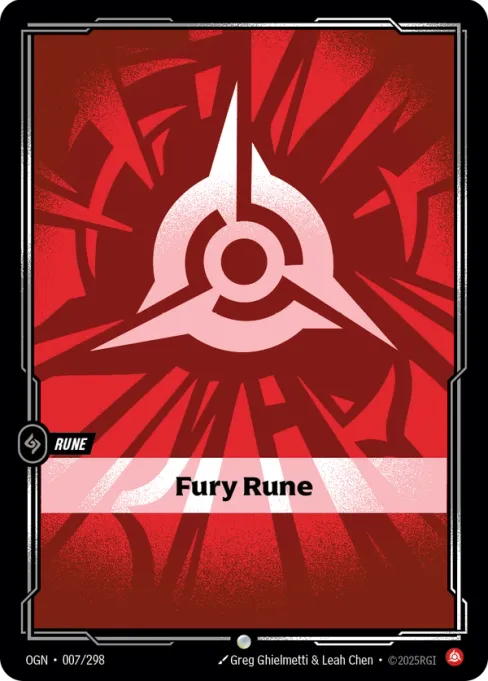
Fury Rune
OGN-007/298
Fury Rune from Origins, the basic printing.
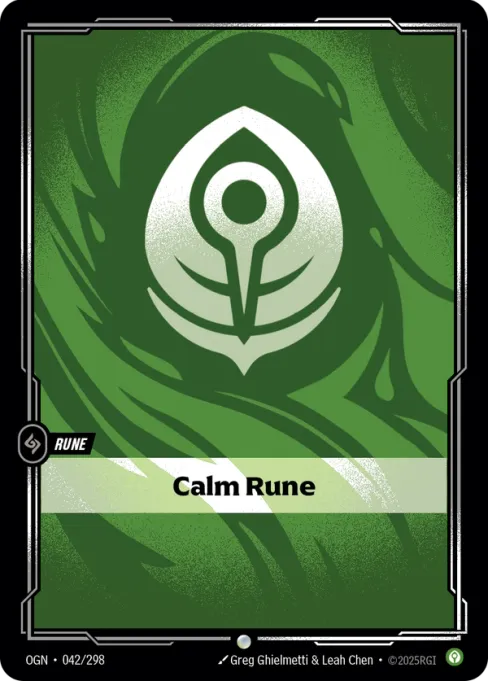
Calm Rune
OGN-042/298
Calm Rune. Same abilities, a different domain.
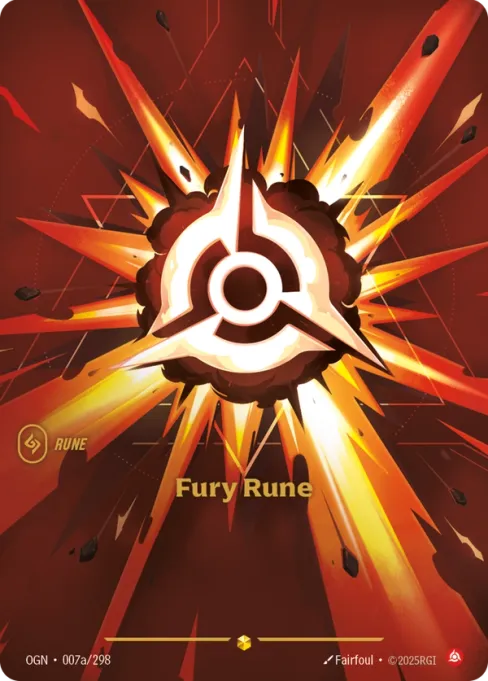
Fury Rune
OGN-007a/298
The Origins showcase Fury Rune, an alternate art foil.
Runes stay on the board once channeled, but the rules don't count them as permanents, and card effects that say "card" mean main deck cards, so a spell that affects cards doesn't touch your runes unless it names them.
The rune deck
Keeping runes in their own deck is the biggest difference from Magic's lands. You never draw a rune in place of a spell, and you never miss a rune drop: you get 2 every turn until the rune deck is empty.
Channeling runes
Channeling means putting the top runes of your rune deck onto the board. You channel 2 in your Channel Phase each turn, after you score your holds and before you draw, and they arrive ready, so you can use them right away. In 1v1, the player going second channels 3 on their first turn to make up for going second.
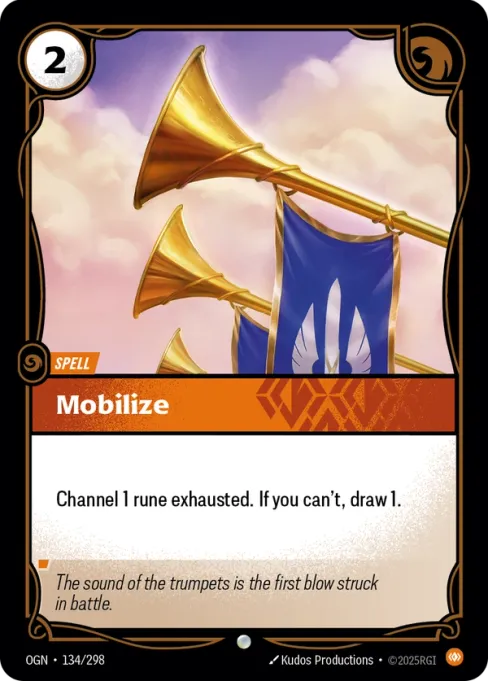
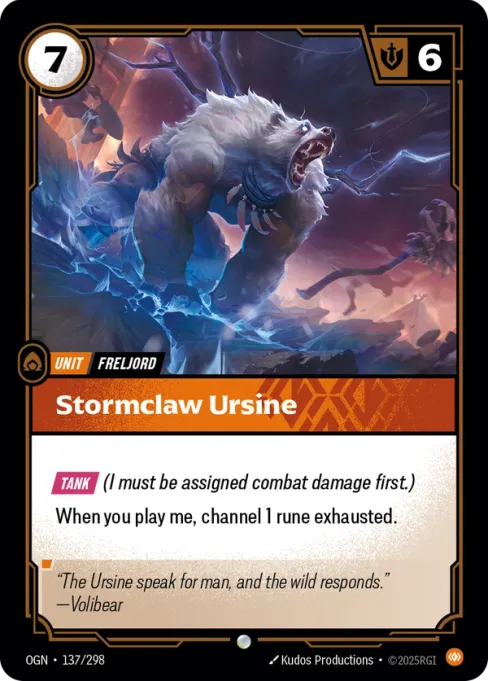
Some cards channel extra runes. Body has the most of them, 7 of the 22 cards through Vendetta, which fits Riot's description of Body as the domain that grows its resources fastest. Those cards usually say the rune comes in exhausted, so it helps from your next turn. If your rune deck has fewer runes than you're told to channel, you channel what is there. It refills as you play, because every rune you recycle goes to the bottom of it.
Energy and Power: paying with runes
A card's cost has two parts. The number in the circle at the top left is the Energy cost, and the domain symbols under it are the Power cost. Runes make both:
Recycling is the real decision. A recycled rune pays a domain cost now but leaves the board, so you have one fewer rune next turn until you channel it again. Spend Power on what matters this turn and keep the rest of your runes on the board to grow your Energy.
Both abilities can be used at Reaction speed, so you can pay for an Action or Reaction card on your opponent's turn. What you add goes into your rune pool, which empties at the start of your Main Phase and at the end of every turn, so add Energy and Power only when you're about to spend it. A few cards add Power of any domain, which the rules call universal Power. Riftbound turn structure shows where channeling and the pool fit into a turn.
How many runes of each domain
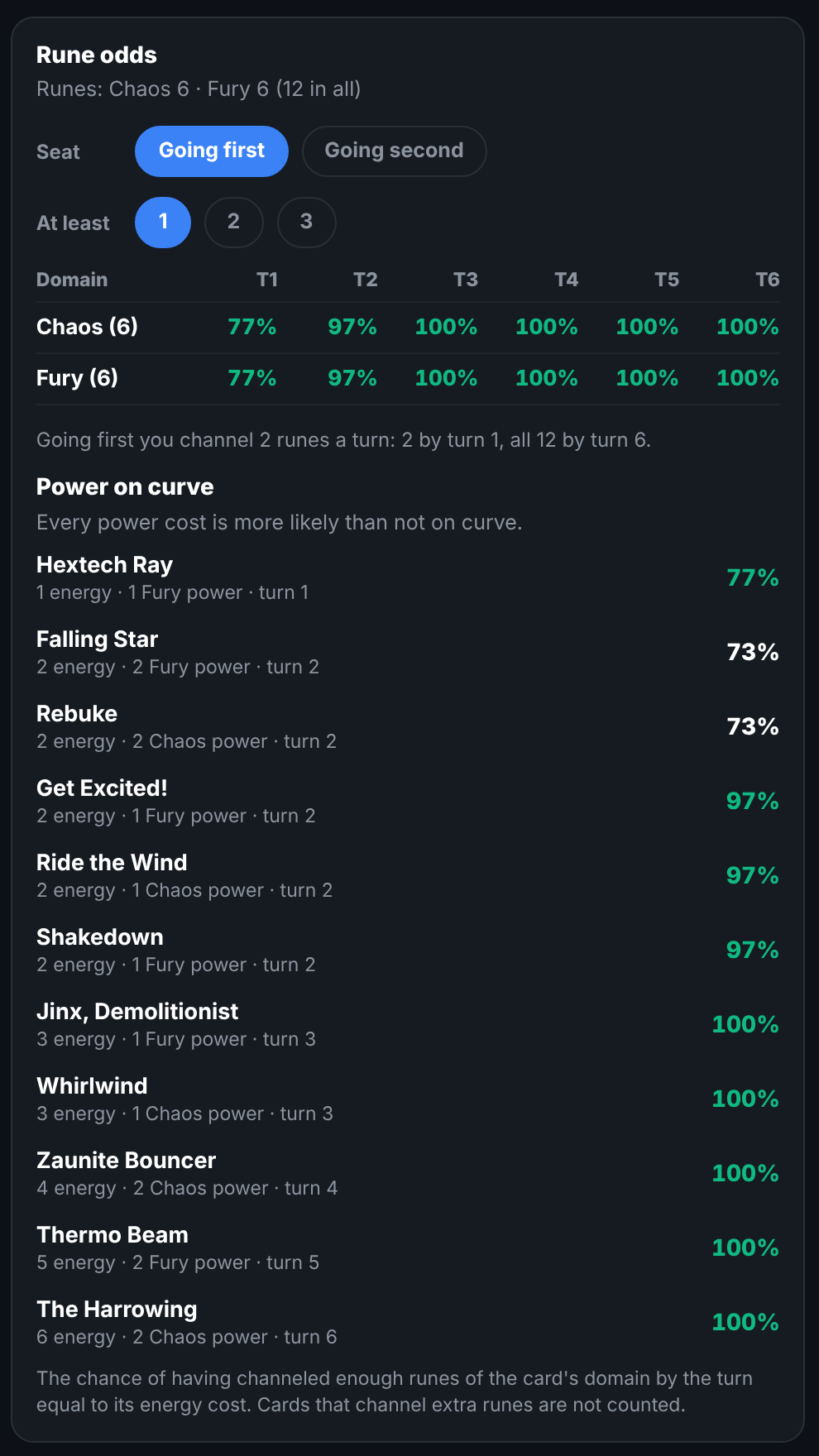
Split your 12 runes roughly in proportion to the Power symbols in your main deck. If most of your Power costs are Fury, play more Fury Runes. A 6 and 6 split is the common starting point, and it moves toward the domain your cheapest cards need, because those are the ones you want to play on turns 1 and 2.
Odds help here. TurnZero HQ's Deck Lab works out, for your split, the chance of having channeled at least 1, 2 or 3 runes of each domain by each of your first six turns, and the chance each card's Power is there on the turn its Energy cost says you could play it.
The guide to Riftbound's colors covers what each domain does, and how to build a Riftbound deck covers the rest of the deck.
Rune printings and prices
Every printing of a rune plays the same, so collectors are the only reason to care which one you have. These are the printings in the catalog, with TCGplayer market prices on October 14, 2026:
A booster pack's last slot is a token, a basic rune or an alternate art rune, so packs give at most one rune each. Buying a deck's worth that way is slow, which is why basic runes sell for about a dime and why sealed products like the Vendetta Vault include 36 runes, 6 of each. The Riftbound booster box guide lists every pack slot, and alternate art vs. foil explains how to tell the versions apart.
Frequently Asked Questions
How many runes are in a Riftbound deck?
Exactly 12, in a rune deck kept separate from your main deck. They don't count toward the 40-card main deck, and every rune has to be in one of your Legend's two domains.
What do runes do in Riftbound?
Runes pay for your cards. Exhaust a rune to add 1 Energy, which pays the number in a card's cost. Recycle a rune to the bottom of your rune deck to add 1 Power of its domain, which pays the domain symbols. You can do both with the same rune.
How many runes do you channel per turn in Riftbound?
Two, in your Channel Phase, and they come into play ready to use. In 1v1, the player going second channels 3 on their first turn. Some cards channel extra runes, usually exhausted.
What happens when your rune deck runs out?
Nothing bad. You channel as many as are left, and every rune you recycle goes back to the bottom of the rune deck, so it refills as you spend Power. Unlike the main deck, an empty rune deck never makes you burn out.
How should I split runes between my two domains?
Roughly in proportion to the Power costs in your main deck. A deck whose Power costs are mostly Fury wants more Fury runes. A 6 and 6 split is the usual starting point, and TurnZero HQ's Deck Lab shows the odds of having each domain's Power by each turn.
Are alternate art runes legal in Riftbound?
Yes. Every Fury Rune is the same card for deckbuilding and play, whichever printing it is, so a showcase or promo rune works exactly like the basic one. They differ only in look and price.
Check your rune odds
TurnZero HQ's Riftbound Deck Lab shows the chance of each domain's Power by turn for your rune split, and checks the deck is legal as you build. Free to start.
Create Free AccountTurnZero was created under Riot Games' "Legal Jibber Jabber" policy using assets owned by Riot Games. Riot Games does not endorse or sponsor this project. Card data comes from Riot Games' official Riftbound card gallery, and prices from TCGplayer via TCGCSV.