Riftbound
Riftbound Beginner's Guide
Everything a new player needs to play Riftbound, Riot Games' League of Legends card game, in nine short guides. Read them in order and you'll know how a turn runs, how fights at battlefields resolve, how to get to 8 points, and what every keyword and domain on your cards means.
Riftbound in one minute
Two players each bring a Champion Legend, a main deck of at least 40 cards, a deck of 12 runes and 3 battlefields. One battlefield from each player goes in the middle of the table. Each turn you channel 2 runes, which pay for your cards, draw a card, then play units and move them onto battlefields.
When your units arrive where your opponent's units are, they fight, and the side left standing controls the battlefield. Taking a battlefield scores 1 point and still controlling it at the start of your next turn scores another. The first player to 8 points wins, though the 8th point comes with a rule of its own.
The guide, step by step
- 1 How to Play What you bring, how a game starts, and a first pass at turns, combat and scoring.
- 2 Reading a Card Energy and Power costs, Might, domains, card types and the line along the bottom.
- 3 Turn Structure Every phase of a turn in order, what runes add, and when you can play what.
- 4 Runes The 12-card rune deck, Energy and Power, splitting runes between domains, and rune printings.
- 5 Combat Showdowns, attacker and defender, how damage is assigned, and who takes the battlefield.
- 6 How to Win Where your 8 points come from, why the last one is harder, and how to plan for it.
- 7 Keywords Every keyword on a released card, what it means, and the set that brought it.
- 8 Colors (Domains) The six domains, what each one is good and bad at, and how a Legend picks two.
- 9 Build a Deck The Legend, 40-card main deck, 12 runes and 3 battlefields, built step by step.
Steps 1 to 6 are enough to play a game. Keywords and domains make more sense once you've seen a few cards in action, and deckbuilding is the last step because the starter decks are built for you. Riot's own Core Rules PDF, which every part of this guide is checked against, is on the Riftbound Rules Hub.
What to start with
Proving Grounds, Riot's starter box, is the easiest start. It has four prebuilt decks led by Annie (Fury and Chaos), Master Yi (Calm and Body), Lux (Mind and Order) and Garen (Body and Order), so between them they cover all six domains, and it plays two to four people. The Proving Grounds guide lists what is in the box.
To learn with other people, look for a Nexus Night at a local game store. It is Riot's weekly casual event, and where to play Riftbound explains how to find one. If you came from League of Legends, Riftbound and League of Legends shows where the champions and items turn up.
Tips for your first games
Words you'll hear
Frequently Asked Questions
Is Riftbound hard to learn?
The core is quick to pick up: move units to battlefields, win fights there, and score points until someone has 8. The parts that take a few games are combat damage assignment, the final point rule and when Action and Reaction cards can be played. This guide covers each one on its own page.
What should a beginner buy first for Riftbound?
Proving Grounds, Riot's starter box. It has four ready-to-play decks led by Annie, Master Yi, Lux and Garen, which together cover all six domains, and it plays two to four people.
Do you need to know League of Legends to play Riftbound?
No. The champions, regions and items come from League of Legends, but the rules stand on their own. Knowing League helps you recognize names like Ganking or Baron Nashor, nothing more.
Where can I learn to play Riftbound in person?
At a local game store's Nexus Night, Riot's weekly casual event. Riot's event search on playriftbound.com lists them, and casual events are a good place to ask for a teaching game.
How many points do you need to win Riftbound?
8 in 1v1 and free-for-all games, 11 in 2v2. A conquer only gives you the last point if you have scored every battlefield that turn.
Track your first games
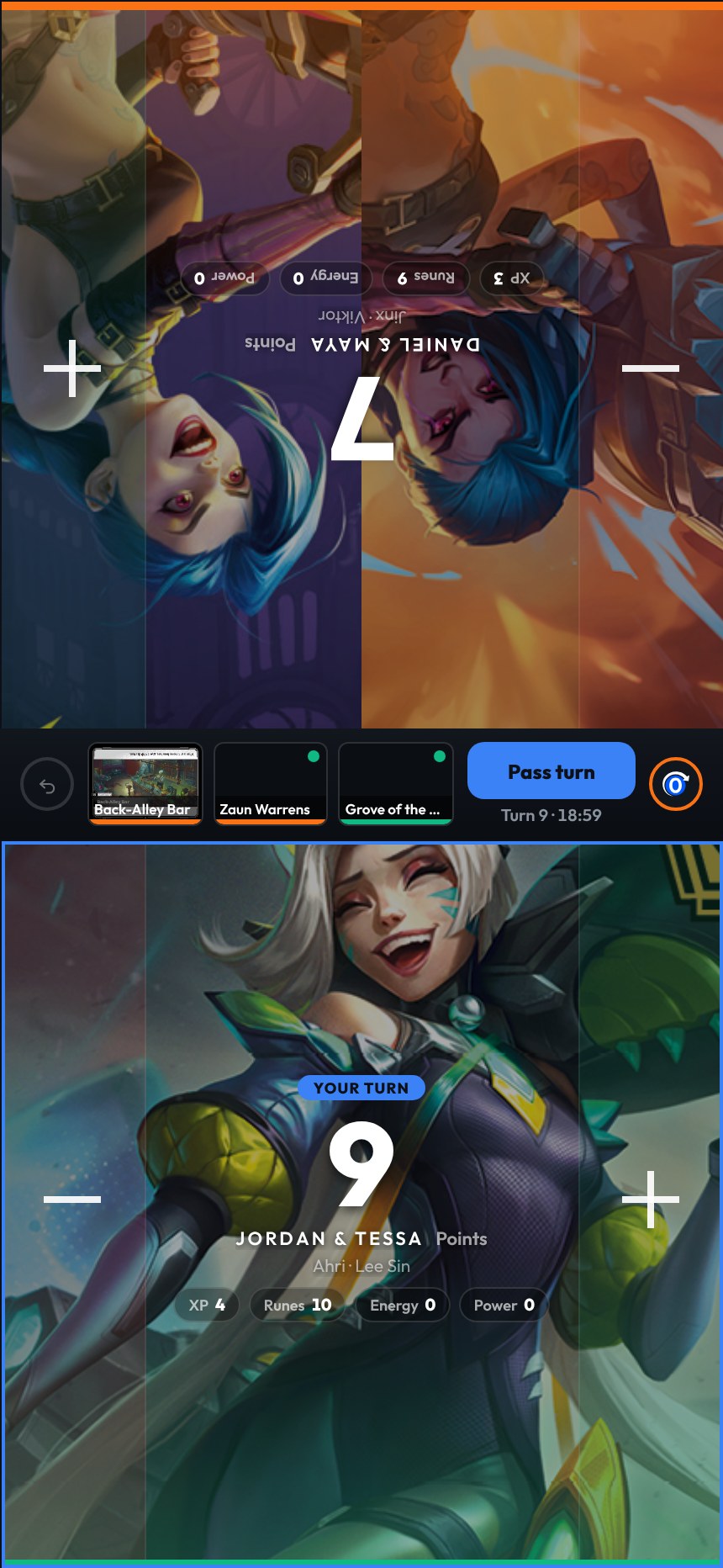
TurnZero HQ keeps each player's Riftbound points by battlefield, reminds you of the final point rule, and saves every game so you can see how your decks do. Free to start.
Create Free AccountTurnZero was created under Riot Games' "Legal Jibber Jabber" policy using assets owned by Riot Games. Riot Games does not endorse or sponsor this project. Card data comes from Riot Games' official Riftbound card gallery, and prices from TCGplayer via TCGCSV.