Star Wars: Unlimited
So You Want to Get Into Star Wars: Unlimited: Collecting
What to buy first, which versions of a card matter, and why the same Luke Skywalker sells for $4 in one version and over $400 in another.
What kind of collector are you?
This is part 1 of "So You Want to Get Into Star Wars: Unlimited," a four-part series that follows the way most people pick up a card game: collect, build, play and connect. This part is collecting. Building, playing and connecting come next.
Star Wars: Unlimited is a friendly game to collect. A deck that is ready to play costs about the same as a few packs, every booster pack has a leader in it, and the most expensive cards are alternate versions of cards rather than cards you need to win. The one thing to learn early is that a single card can come in six versions at very different prices. Before you spend anything, decide which of these you are:
The player wants decks that work. Buy ready-made decks and singles, and treat a shiny pull as a bonus.
The pack opener is here for the opening itself. Set a budget for booster boxes before you start.
The set completer wants all 272 Homeworlds cards in a binder. Packs get you most of the way; singles finish it.
The character collector wants every Vader or every Grogu. Showcase leaders and Prestige cards are where that money goes.
The serialized hunter cares about numbered cards and print runs, and should read the Carbonite part of this guide closely.
Most people are two of these at once. That's fine, as long as you know which one is spending the money today.
The product ladder
Star Wars: Unlimited has a short list of sealed products. The newest main set, Homeworlds (set code HMW), came out October 9, 2026 and has the full range. Icons 2027 Edition, a smaller set the publisher built as an entry point for new and returning players, follows on November 20, 2026. Prices below are the publisher's MSRP, from its own store. Where we couldn't find one, the table gives none.
Start with one Spotlight Deck and play a game before you open anything else. It is a complete deck, and it comes with a booster, so you still get to open a pack. If a friend is starting with you, the Icons Starter Box puts two decks in one box. Shopping for someone else instead? The gift guide sorts these by who they are for, and the Intro Battle: Hoth guide covers what is in that box.
Find them on TCGplayer: Homeworlds Spotlight Decks, Homeworlds booster displays and Carbonite Edition. The publisher's store listed every product above as sold out when we checked, so your local game store is the other place to find them at MSRP.
Reading a card like a collector
Every card has its set code and collector number along the bottom, and that number is the most useful thing on the card for a collector. Each version of a card gets a number of its own: the standard cards run from 001 to the set's printed total (272 for Homeworlds), and every other version is numbered past it. Luke Skywalker, Dreaming Farmboy from Homeworlds shows the whole ladder. Prices are TCGplayer market prices on October 22, 2026.
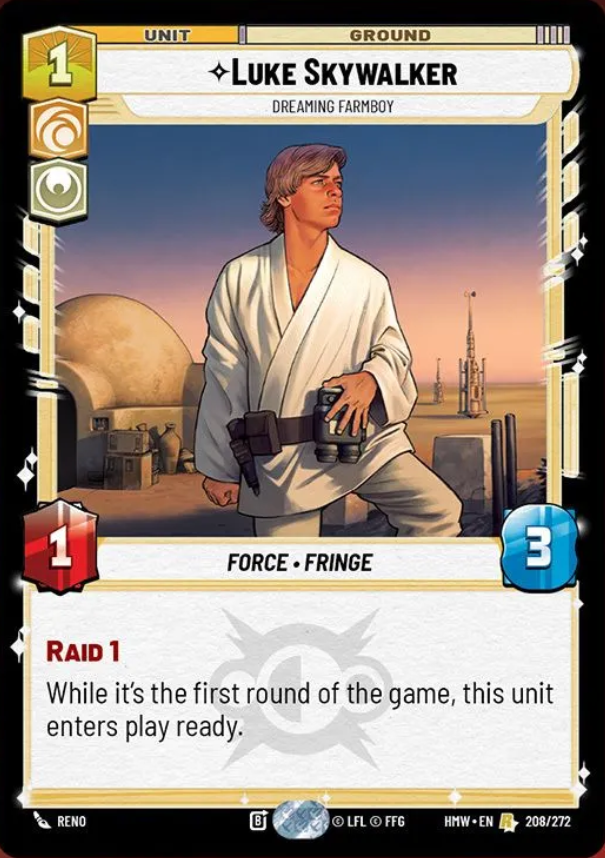
Luke Skywalker, Dreaming Farmboy
Homeworlds #208
208, Normal: $4.23. The version you'll open most.
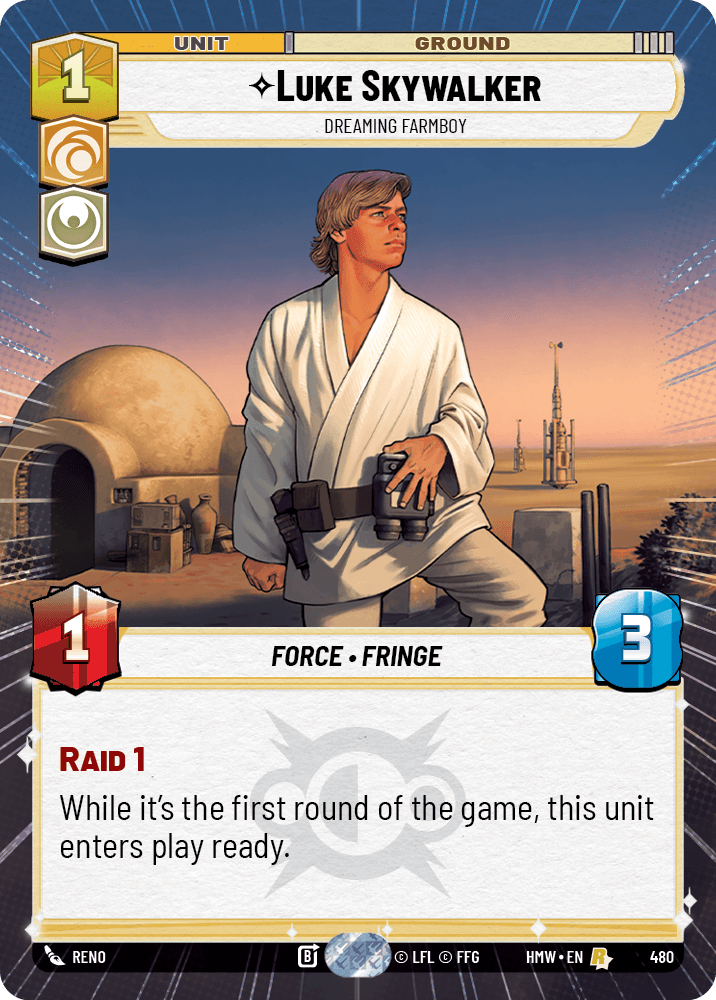
Luke Skywalker, Dreaming Farmboy
Homeworlds #480
480, Hyperspace: $4.62. The art runs past the frame.
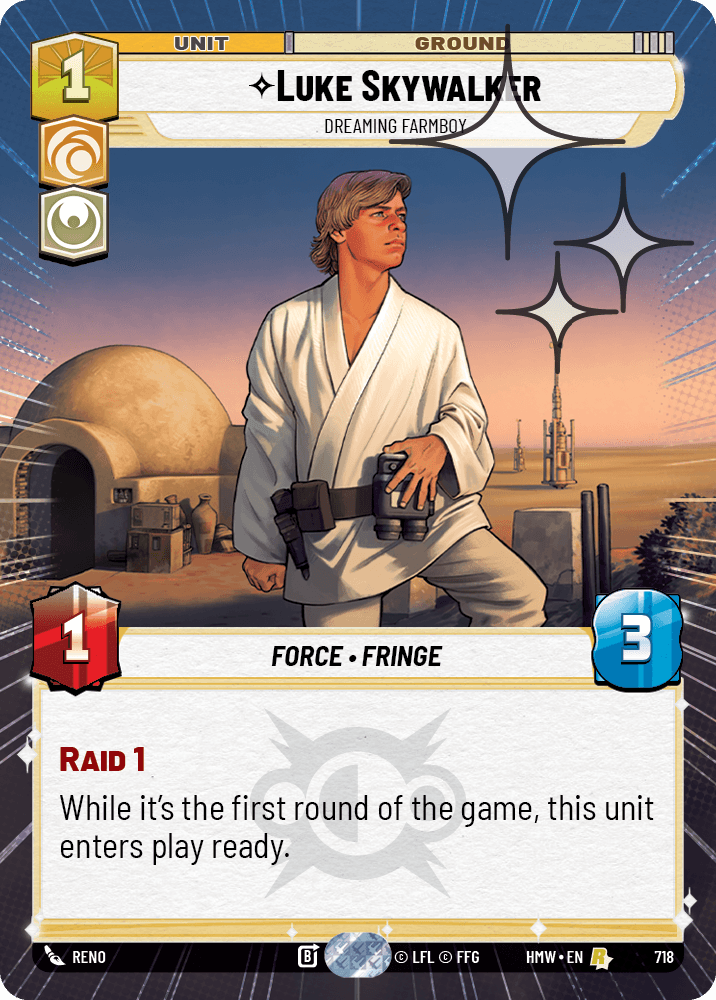
Luke Skywalker, Dreaming Farmboy
Homeworlds #718
718, Hyperspace Foil: $5.18.
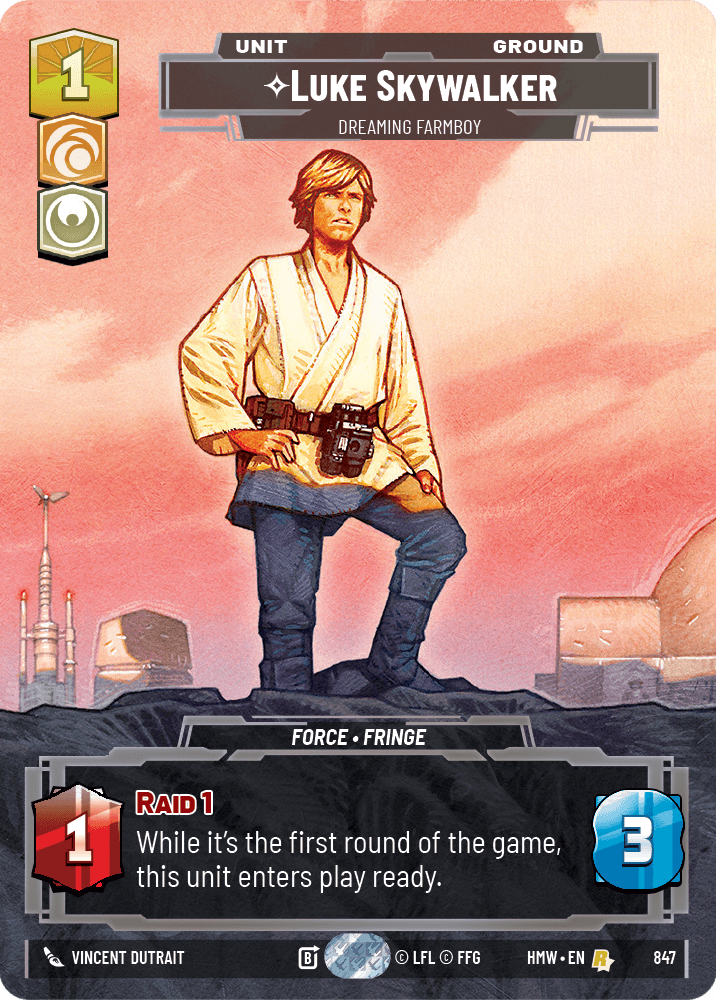
Luke Skywalker, Dreaming Farmboy
Homeworlds #847
847, Prestige: $7.66. New art by a different artist.
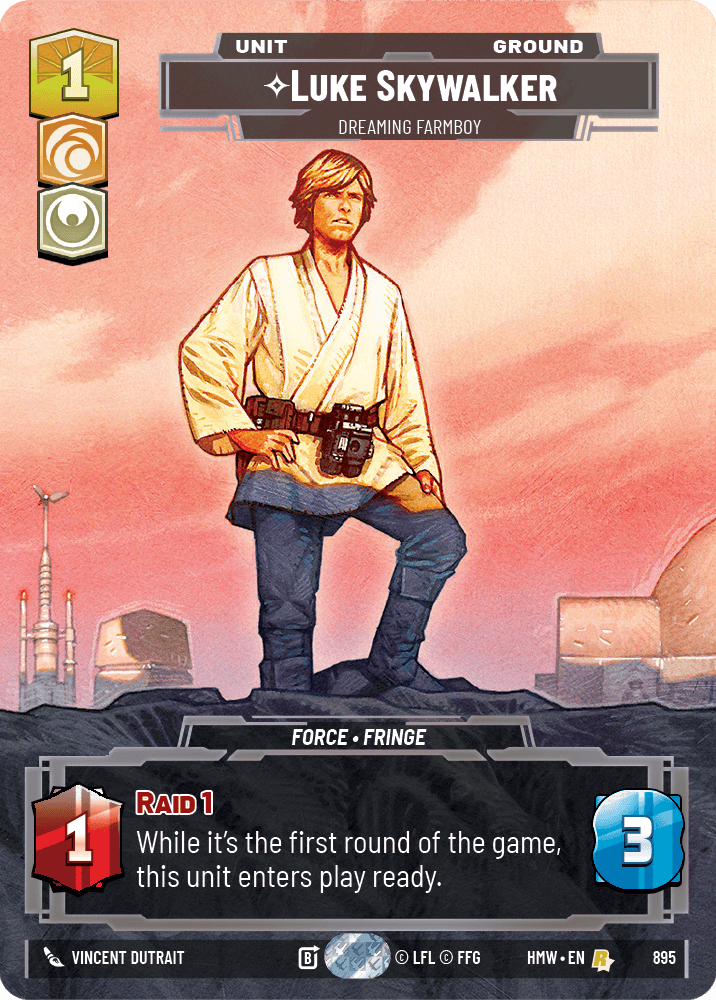
Luke Skywalker, Dreaming Farmboy
Homeworlds #895
895, Prestige Foil: $10.64. Carbonite packs only.
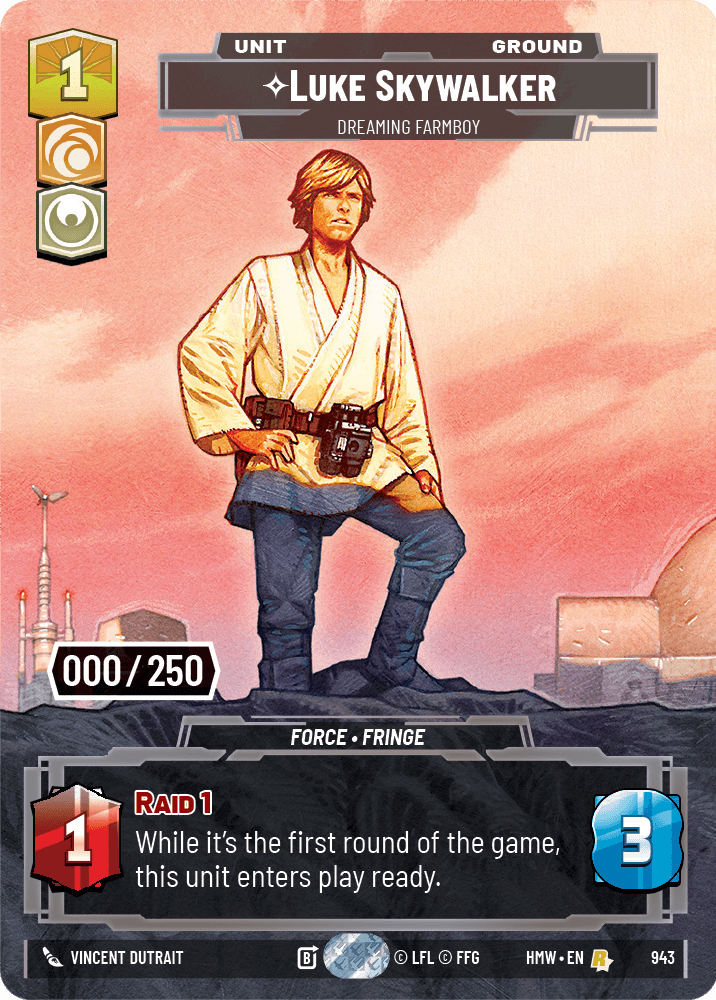
Luke Skywalker, Dreaming Farmboy
Homeworlds #943
943, serialized Prestige: $433.36. Individually numbered.
Since A Lawless Time, every pack has at least one Hyperspace card, so most Hyperspace commons and uncommons sell for close to their normal version. Serialized Prestige cards are the scarce ones: the publisher prints most of them in runs of 250, some in 100 and a few in 50. For how to tell each version apart in your hand, see Hyperspace vs. foil →
Leaders and bases change how you collect
Every deck is one leader, one base and at least 50 other cards, and every booster pack has a leader. Two things follow from that. First, you will pile up spare leaders and bases quickly, and most of them are cheap: Echo Base, Hoth from Spark of Rebellion was $0.12. Second, the leader you play is the best card to upgrade, because you only ever need one.
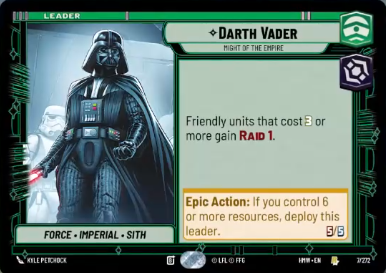
Darth Vader, Might of the Empire
Homeworlds #007
Normal: $0.40.
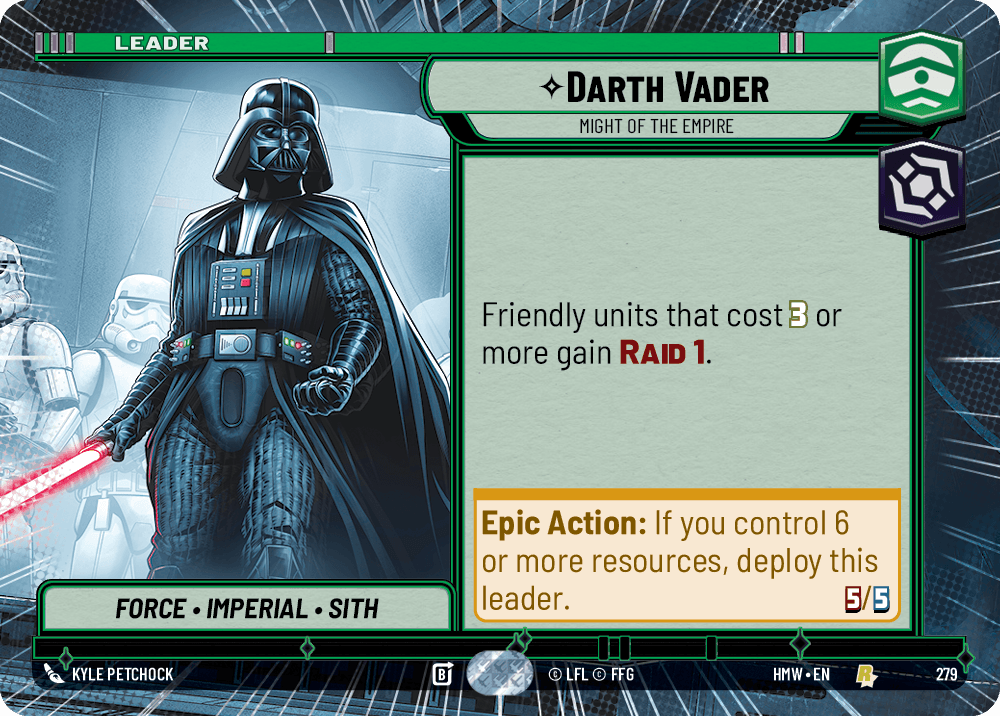
Darth Vader, Might of the Empire
Homeworlds #279
Hyperspace: $0.83.
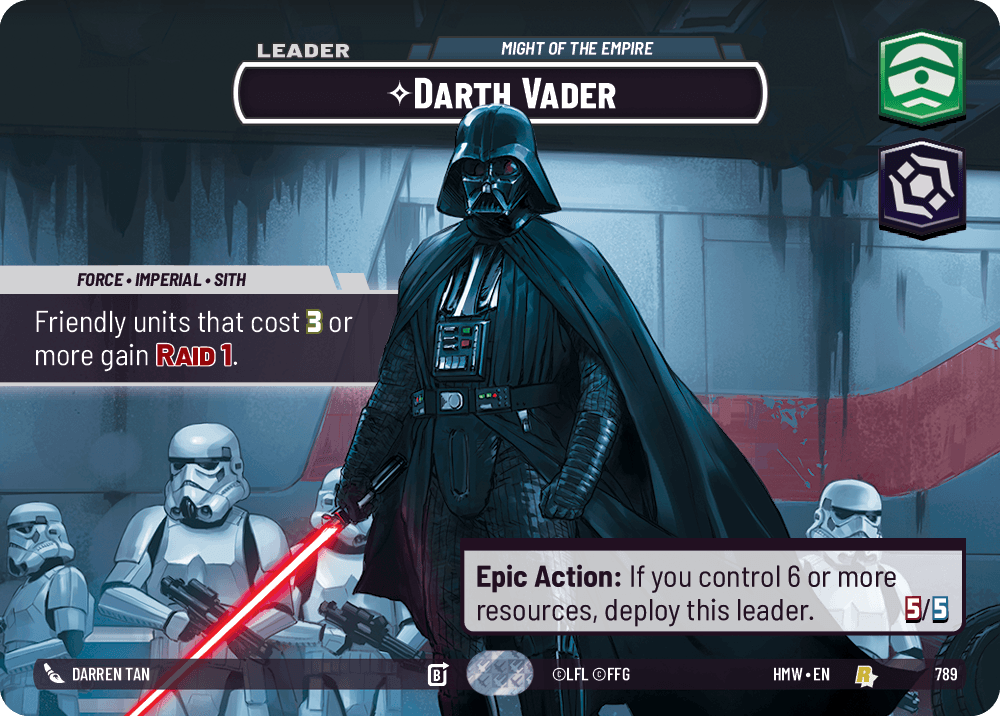
Darth Vader, Might of the Empire
Homeworlds #789
Showcase: $297.26.
Darth Vader, Might of the Empire shows the spread. A Hyperspace version of your leader is an upgrade for under a dollar; the Showcase is a different purchase entirely. Because Showcase leaders are the big pulls in regular packs, how popular a leader is drives most of the prices in a set. The card reading guide covers the rest of what's printed on a leader and a base.
Your first $50 and your first $100
With $50, buy one Homeworlds Spotlight Deck ($24.99 MSRP) and spend the rest on singles for that deck, or on a few loose packs if opening them is the point. Put singles money on the two or three rares your deck is missing before you open more packs, because a specific card is cheaper bought than pulled.
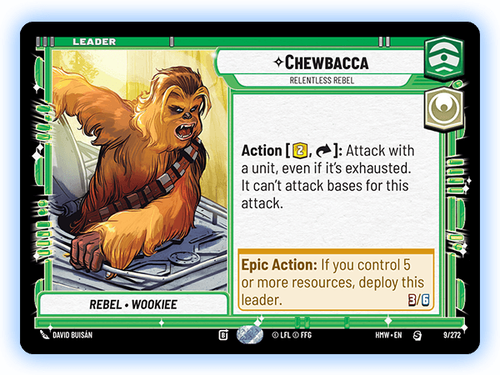
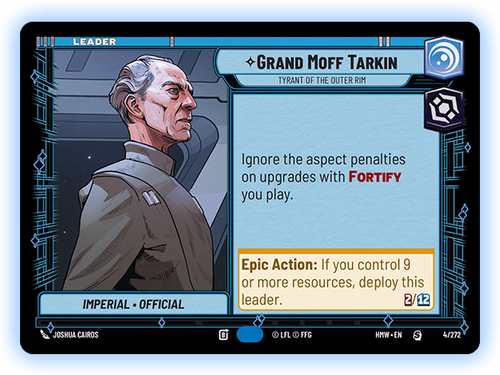
With $100, buy both Homeworlds Spotlight Decks (Chewbacca and Grand Moff Tarkin, $49.98) and the Icons 2027 Edition Starter Box when it comes out on November 20 ($34.99). That is four playable decks, enough for you and a friend, with about $15 left for sleeves and a binder. Leave the booster box for the second month, once you know which leaders you like.
Chase cards right now
The highest prices in Star Wars: Unlimited sit in two places: Showcase leaders, which come out of regular packs, and serialized Prestige cards, which come out of Carbonite packs. Homeworlds was two weeks old on October 22, 2026, so its prices were still settling. Treat these as a snapshot, and open a card's page for today's price.
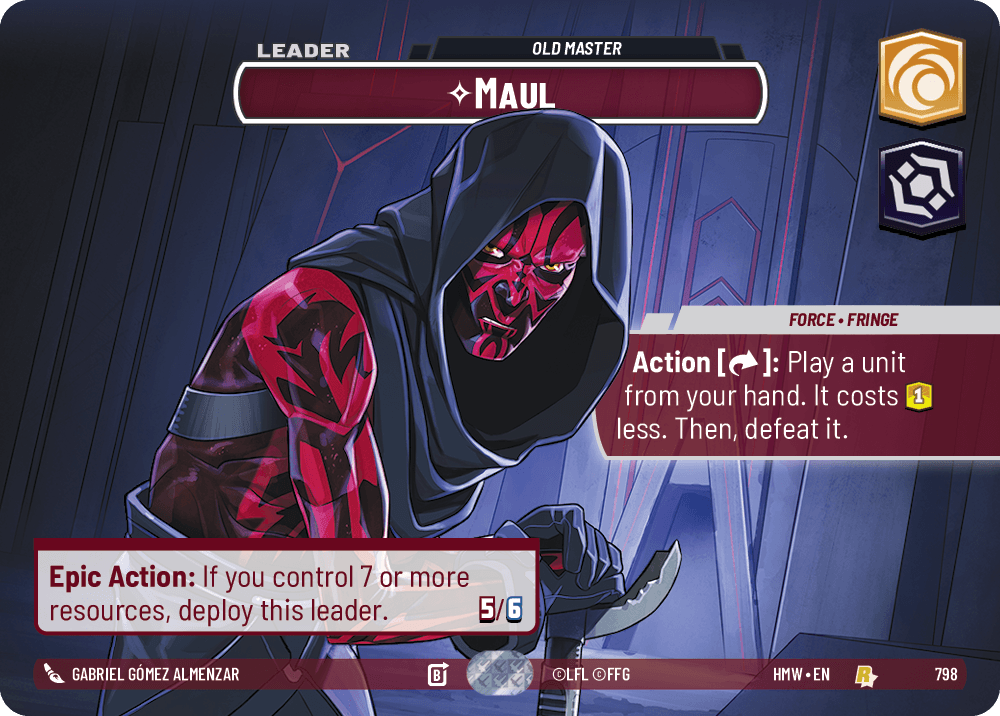
Maul, Old Master
Homeworlds #798
Maul, Old Master, Showcase: $369.93, the top Homeworlds Showcase leader.
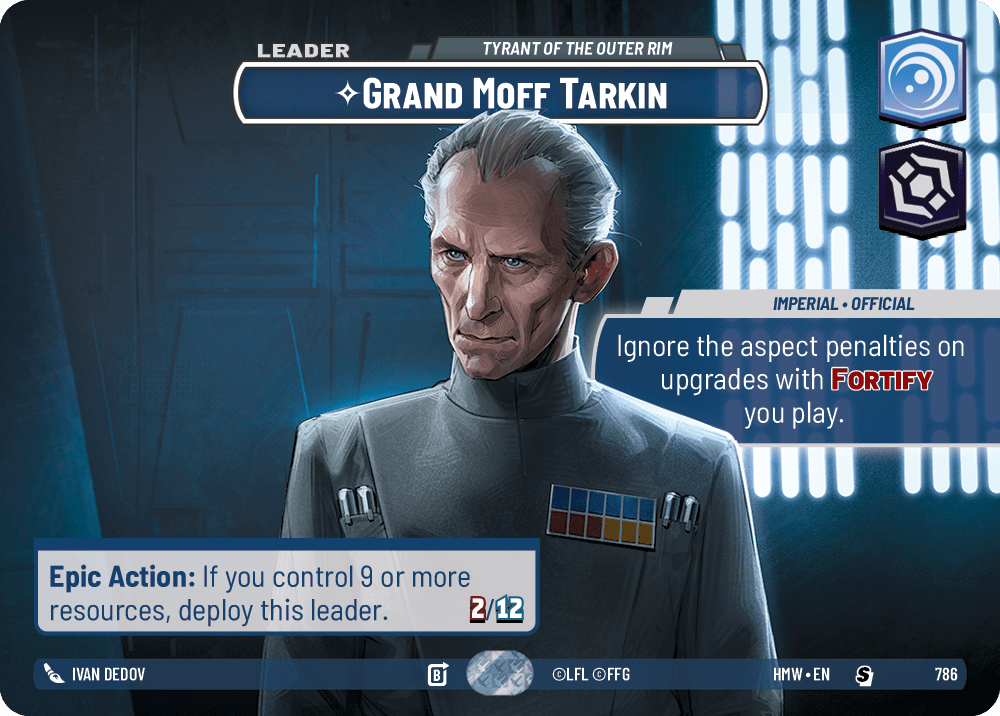
Grand Moff Tarkin // The Death Star, Tyrant of the Outer Rim // Icon of Tyranny
Homeworlds #786
Grand Moff Tarkin, Showcase: $207.60.
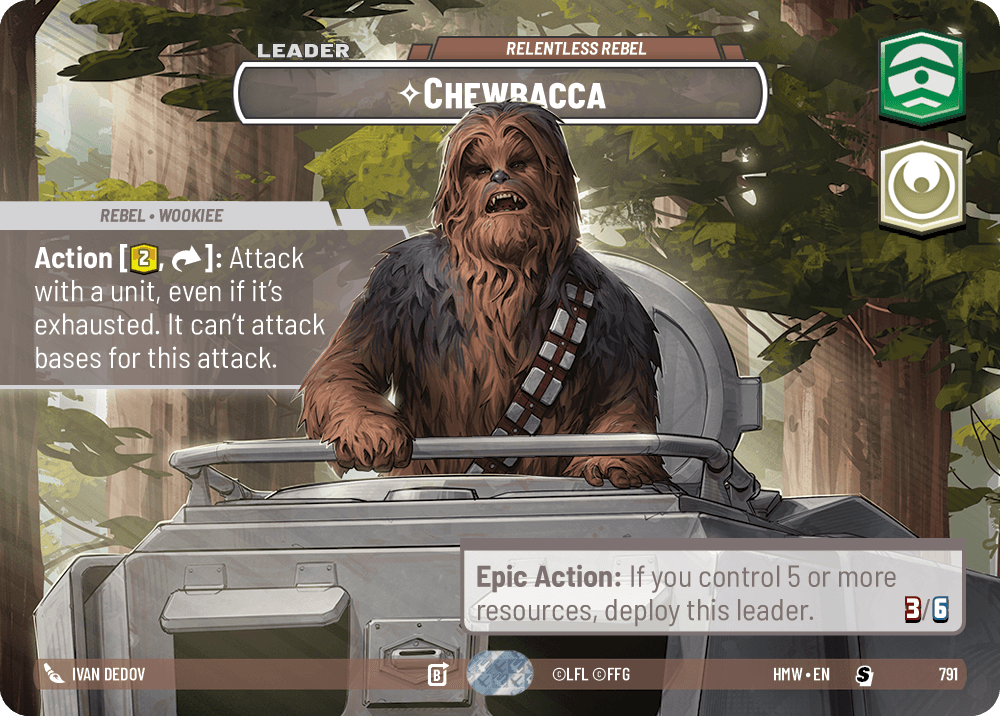
Chewbacca, Relentless Rebel
Homeworlds #791
Chewbacca, Relentless Rebel, Showcase: $190.00.

Han Solo, Hibernation Sick
A Lawless Time #889
Han Solo, Hibernation Sick, serialized Prestige (A Lawless Time): $1,492.49.

Grogu, Yes. Yes. Yes.
Ashes of the Empire #898
Grogu, Yes. Yes. Yes., serialized Prestige (Ashes of the Empire): $699.99.
Luke Skywalker, Dreaming Farmboy
Homeworlds #943
Luke Skywalker, Dreaming Farmboy, serialized Prestige (Homeworlds): $433.36.
A serialized card's price comes from a handful of numbered copies changing hands, so one sale can move it a long way. Read those figures as where the money is, not as a price you can count on. For every Homeworlds leader and card, see the Homeworlds set guide, and the 2026 sets hub lists every release this year.
Singles vs. sealed
Buy singles when you want a particular card, and open packs when opening them is what you enjoy. Most of a booster box's value sits in a few pulls, a Showcase leader or a good Prestige card, and you can't plan on getting one.
Open packs when you enjoy it, when you're building toward a full set, or when you're playing a prerelease or sealed event.
Buy singles as soon as you are chasing one card. The Hyperspace version of your leader is often under a dollar.
Open Carbonite for the variants and the fun of it. It is a premium product, and most packs don't hold a card worth what the pack cost.
Keep product sealed only because you want to own it. Carbonite gets one print run per set, but that doesn't promise its price will rise.
For what decides a single's price (printing, finish, condition, grade and language), see what your cards are worth →
Protecting and organizing
Star Wars: Unlimited cards are standard size, the same as Magic and Pokémon, so any standard sleeve fits. Leaders and bases are the same size too, printed sideways, so they fit a standard binder pocket turned on their side.
Penny sleeves for anything going into a binder, and matte deck sleeves for the cards you play.
A penny sleeve and then a toploader for any card you would be upset to damage, Showcase leaders especially.
One 9-pocket binder per set if you're completing sets, with the Hyperspace and Prestige versions in a second binder or at the back.
Grading only for cards worth far more than the grading fee, which in this game means serialized Prestige cards and the top Showcase leaders.
To keep track of what you own, TurnZero HQ stores each Hyperspace, Showcase and Prestige version as its own printing with its own daily TCGplayer price, and its set completion counts a set from 1 to its printed total with the other versions kept apart as extras. You can sort cards into binders and add them with the card scanner. It tracks single cards, not sealed product.
Mistakes to avoid
Paying well over MSRP for an old starter. Older Two-Player Starters were $34.99 and are out of print; the Icons 2027 Edition Starter Box does the same job at the same price from November 20.
Assuming Hyperspace means valuable. The Hyperspace Grand Moff Tarkin leader was $0.36, less than the normal version's $1.54. Look up the exact version before you celebrate.
Making Carbonite your first purchase. It is built for chasing variants, and a Spotlight Deck will teach you which leaders are worth chasing.
Buying a serialized card from someone you can't check. For a card worth hundreds of dollars, buy from a seller with a record and clear photos of the serial number, or meet in person at your local game store.
Forgetting rotation when you buy to play. The publisher says Icons, A Lawless Time, Ashes of the Empire and Homeworlds stay in Premier until March 2028. Older sets leave first. A collection kept for its art doesn't care, but a deck does.
Frequently Asked Questions
What should I buy first to start collecting Star Wars: Unlimited?
A Spotlight Deck. A Homeworlds Spotlight Deck is a ready-to-play 50-card deck with its leader and base plus one Homeworlds booster pack, at a $24.99 MSRP. Play a few games with it before you open boxes, so you know which leaders you want to chase.
Is a Star Wars: Unlimited booster box worth it?
It is worth it if you want to open packs, build a set or play in sealed events. As a way to get one specific card, it rarely is: most of a box's value sits in a few rare pulls, and buying the single you want usually costs less than opening packs until you pull it.
What is a Carbonite pack in Star Wars: Unlimited?
Carbonite Edition is the publisher's premium booster. Each 16-card pack has a Hyperspace or Showcase leader, a run of foil and Hyperspace cards, and one Prestige card that only Carbonite packs carry. Each set gets one print run of Carbonite packs, which the publisher says will not be reprinted.
What are the most valuable Star Wars: Unlimited cards?
Serialized Prestige cards, which are individually numbered, and Showcase leaders. On October 22, 2026 the serialized Prestige Han Solo, Hibernation Sick from A Lawless Time was $1,492.49 on TCGplayer, and Homeworlds' Showcase Maul, Old Master was $369.93.
Are Hyperspace cards worth more than normal cards?
Not always. Every pack now has at least one Hyperspace card, so most of them sell close to the normal version, and some for less. Check the price of the exact version you hold before you sleeve it.
Track every version you open.
Add your Star Wars: Unlimited cards by set code and number, and TurnZero HQ keeps each Hyperspace, Showcase and Prestige version apart with daily TCGplayer prices and set completion. Free to start.
Create Free AccountStar Wars: Unlimited card names and images are the property of Lucasfilm Ltd. and Fantasy Flight Games. © & ™ Lucasfilm Ltd. TurnZero HQ is not affiliated with, sponsored, or endorsed by Lucasfilm Ltd., Disney, Fantasy Flight Games, or Asmodee. Card data comes from swu-db.com, and prices from TCGplayer.