Pokémon TCG Beginner Series
Pokémon Energy Types
The Pokémon TCG has 11 types, and they do the job colors do in other card games: a Pokémon's type decides which Energy pays for its attacks and which Pokémon it is weak to. This page covers every type, the eight kinds of Basic Energy, and a Weakness chart counted from all 1,781 Pokémon cards legal in Standard on October 15, 2026.
What are the Pokémon TCG types?
There are 11 types: Grass, Fire, Water, Lightning, Psychic, Fighting, Darkness, Metal, Fairy, Dragon and Colorless. Each Pokémon card shows its type as a symbol at top right, and every attack shows its cost as the same symbols. Fairy is the exception today. It was dropped when the Sword & Shield series began in 2020, and Fairy Pokémon from the video games, such as Sylveon, are now printed as Psychic.

Mega Venusaur ex
Mega Evolution #3
Grass

Mega Charizard X ex
Phantasmal Flames #13
Fire

Greninja ex
30th Celebration #21
Water

Pikachu ex
30th Celebration #53
Lightning

Mega Gardevoir ex
Mega Evolution #60
Psychic

Mega Lucario ex
Mega Evolution #77
Fighting

Mega Absol ex
Mega Evolution #86
Darkness
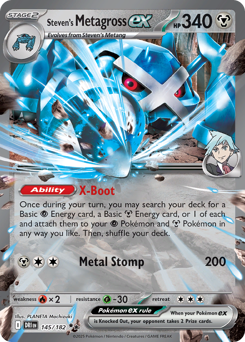
Steven's Metagross ex
Destined Rivals #145
Metal
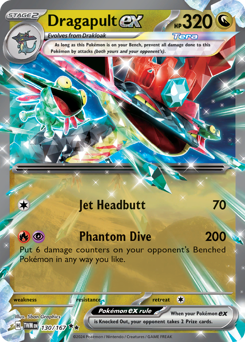
Dragapult ex
Twilight Masquerade #130
Dragon
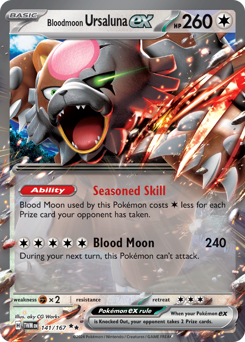
Bloodmoon Ursaluna ex
Twilight Masquerade #141
Colorless
The card game uses fewer types than the video games' 18, so several video game types share one card type. A Fire-type Pokémon is Fire in both, but a Ghost type is usually Psychic (Gengar and its line are Darkness), a Rock or Ground type is usually Fighting, a Normal or Flying type is usually Colorless, and an Ice type is usually Water. That folding is why the Weakness chart below is not a copy of the video games' type chart.
Basic Energy and Special Energy
Basic Energy cards exist for eight types: Grass, Fire, Water, Lightning, Psychic, Fighting, Darkness and Metal. Each provides one Energy of its type, and a deck can hold any number of them, which is the one exception to the four-copy rule. Basic Fairy Energy was printed while Fairy-type cards were, and is not used by any card legal in Standard.
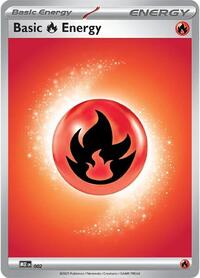
Basic Fire Energy
Mega Evolution Energies #2
Basic: no copy limit.
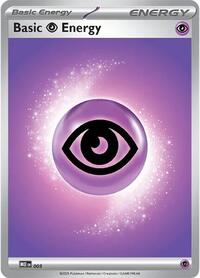
Basic Psychic Energy
Mega Evolution Energies #5
Basic: no copy limit.
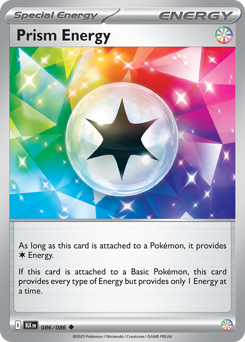
Prism Energy
Black Bolt #86
Special: every type, but only on a Basic Pokémon.
Special Energy cards say "Special Energy" at the top and have an effect of their own. Prism Energy provides Colorless Energy on most Pokémon and every type on a Basic Pokémon, one Energy at a time. A deck can run up to four of each Special Energy by name, and a few are ACE SPEC cards, limited to one per deck.
How Colorless and Dragon Energy work
Colorless and Dragon are types with no Basic Energy card. A Colorless symbol in a cost can be paid with Energy of any type, which is why it is the most common symbol on attacks: 51% of the Energy symbols in attack costs on Standard Pokémon are Colorless. A Colorless-type Pokémon such as Bloodmoon Ursaluna ex usually costs only Colorless Energy, so it fits in a deck of any type.
Dragon Pokémon pay with other types instead. Dragapult ex's Phantom Dive costs one Fire and one Psychic Energy, and Raging Bolt ex's Bellowing Thunder costs one Lightning and one Fighting, so a Dragon deck usually runs two kinds of Basic Energy. In exchange, no Dragon Pokémon in Standard has a Weakness.

Pokémon TCG Weakness and Resistance chart
Weakness doubles the damage an attack does when the attacker's type matches the Weakness printed on the Defending Pokémon. Resistance takes damage off, almost always 30. In the card game these are printed on each card rather than fixed by a chart, so the table below counts what is actually printed: every Pokémon legal in Standard on October 15, 2026, each card counted once however many times it was reprinted.

The main pairs are steady. 233 of 235 Grass Pokémon are weak to Fire, and 167 of 171 Fire Pokémon are weak to Water. Every Weakness in Standard is ×2, and Weakness and Resistance only apply to the Active Pokémon. A Benched Pokémon hit by an attack takes the printed damage with neither one applied. How damage is worked out, step by step →
Why some types have two Weaknesses
Where a type splits, the split follows the video game type the Pokémon came from. That makes a Weakness easy to guess once you know the Pokémon.
Flying is the one pattern that crosses card types. A Flying Pokémon of almost any card type is weak to Lightning and resists Fighting. That explains the Lightning Weakness on the Grass, Fire, Lightning, Darkness, Metal and Colorless rows above, and most of the Fighting Resistance outside the Psychic row.
Choosing types for your first deck
Start with one type, or one type plus Colorless Pokémon. A deck's attacks can only be paid for with the Energy in it, and you attach just one Energy a turn, so every extra type makes it more likely you draw the wrong one. Two types work when the deck needs both, as Dragon decks do, or when a card such as Prism Energy pays for either.
Weakness matters when you pick a deck, but it rarely decides a game on its own. Doubling damage can turn a two-hit Knock Out into one hit: Mega Lucario ex's 130-damage Aura Jab becomes 260 against Pikachu ex, which has 190 HP. Your deck still has to play every other matchup, which is why a deck built around one attacker often carries a second attacker of another type. How to build a Pokémon deck →
Frequently Asked Questions
How many types are there in the Pokémon TCG?
Eleven: Grass, Fire, Water, Lightning, Psychic, Fighting, Darkness, Metal, Fairy, Dragon and Colorless. Fairy has not been printed since the Sword & Shield series began in 2020, so ten types appear on cards legal in Standard today.
Are Pokémon TCG types the same as the video game types?
No. The card game folds the video games' 18 types into fewer. Fire-type Pokémon are Fire in both, but a Flying or Normal type is usually Colorless in the card game, a Ghost or Fairy type is usually Psychic, a Rock or Ground type is usually Fighting, a Poison type is often Darkness, and an Ice type is usually Water.
What is Colorless Energy?
There is no Basic Colorless Energy card. A Colorless symbol in an attack cost means any type of Energy can pay for it, and Colorless-type Pokémon are mostly paid for entirely with Colorless costs, so they fit in a deck of any type.
What is Dragon type weak to in the Pokémon TCG?
Nothing in Standard. All 52 Dragon-type Pokémon legal in Standard as of October 15, 2026 have no Weakness and no Resistance. There is also no Basic Dragon Energy: Dragon attacks usually cost two different types, such as Fire and Psychic for Dragapult ex.
How much extra damage does Weakness do?
On every Pokémon legal in Standard, Weakness is ×2: the attack's damage is doubled. It only applies to the Active Pokémon, and only to damage from an attack, not to damage counters placed by an effect.
Build a Pokémon deck around your favorite type.
Build from the cards you own, check the list against Standard or Expanded, and keep every card's price in one place. Free on iPhone, Android and the web.
Create Free AccountPokémon and Pokémon character names are trademarks of Nintendo. ©Pokémon. ©Nintendo/Creatures Inc./GAME FREAK inc. TurnZero HQ is not affiliated with, sponsored, or endorsed by Nintendo, The Pokémon Company, Creatures Inc., or GAME FREAK inc. Card data comes from the open PokemonTCG dataset, and prices from TCGplayer.