Pokémon TCG
Japanese Pokémon Cards
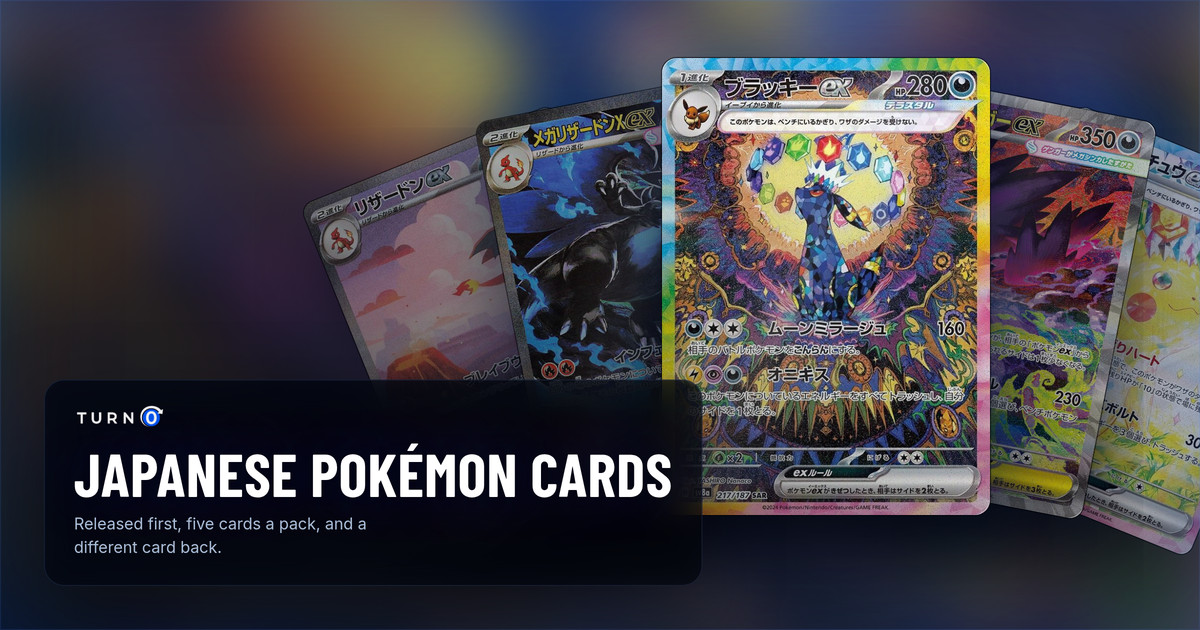
Japanese Pokémon cards are the same game, released months earlier, in smaller packs, with different set lists, rarity codes and card backs. Many collectors buy them for the art and the print quality. Here is how they differ from English cards, what they cost, and where they can be played.
The short answer
Released first, and grouped differently
The Pokémon TCG is made in Japan, and English sets are built from Japanese ones. An English set often combines two Japanese sets, or adds cards from Japanese decks and promos, so the set lists, card numbers and totals don't match. The same Umbreon ex Special Illustration Rare is 161/131 in English Prismatic Evolutions and 217/187 in Japanese Terastal Fest ex.
Mega Evolution, the English set of September 26, 2025, combined two Japanese sets, Mega Brave and Mega Symphonia, released August 1. That early look is why English players often know a set's chase cards and strongest decks before the set arrives. Every English set of 2026 →
Packs and boxes
A Japanese booster pack from a main set has 5 cards, against 10 in an English pack, and a Japanese booster box has 30 packs instead of 36. Japanese High Class packs and other special sets use bigger packs, commonly 10 cards, in smaller boxes. What's in an English pack →
Collectors often say Japanese cards are better centered and printed on smoother, thinner stock, with deeper texture on the top rarities. That is a common view rather than a published standard, and individual cards vary, so judge a card you're buying for grading on its own centering and surface.
Rarity codes
Japanese cards print the rarity as a letter code beside the collector number instead of the English star symbols. The codes map onto the English rarities:
Note the trap in the names: a Japanese "Ultra Rare" (UR) is the gold card, while an English Ultra Rare is a full art one step lower. The English rarities →
Japanese vs. English prices
Neither language is reliably cheaper. These are the same five Special Illustration Rares (Special Art Rares in Japanese) in each language, at TCGplayer market prices on October 2, 2026, ungraded:
The gap follows demand in each market rather than a fixed rule. On that date Charizard ex and Mega Charizard X ex cost a little more in Japanese, while Umbreon ex and Mega Gengar ex cost more than twice as much in English. Check both before you buy or sell, and remember that a market price is what a card sells for, not what a store will pay. How market prices work →
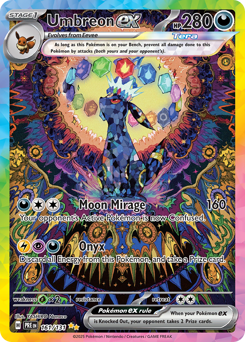
Umbreon ex
Prismatic Evolutions #161
The English printing, Prismatic Evolutions.
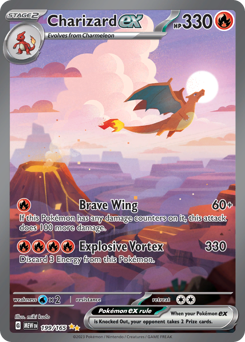
Charizard ex
151 #199
The English printing, 151.

Mega Charizard X ex
Phantasmal Flames #125
The English printing, Phantasmal Flames.
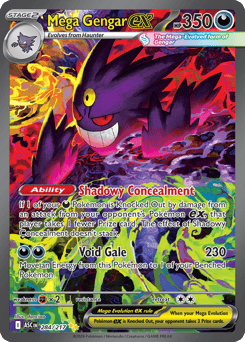
Mega Gengar ex
Ascended Heroes #284
The English printing, Ascended Heroes.
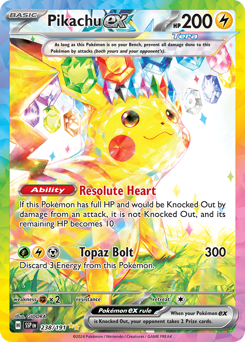
Pikachu ex
Surging Sparks #238
The English printing, Surging Sparks.
Tournament play
Japanese cards are not legal at Play! Pokémon events outside Japan. The Play! Pokémon TCG Tournament Handbook treats them as marked cards, because their backs differ from every other Pokémon card's, and a deck of mixed languages is only allowed when the backs match. In the US and Canada the legal language is English, with French also allowed in Canada. League sessions and casual events can set their own rules, so ask the organizer before you bring a Japanese deck. Building a tournament-legal deck →
Collecting Japanese cards
Japanese cards are sold in the US through importers, marketplaces and some local game stores; TCGplayer lists them as a separate Pokemon Japan product line. Buy from sellers with a good record, since a different language makes a fake harder to spot. Where to buy Pokémon cards →
TurnZero HQ's Pokémon catalog and its daily prices are the English TCG. You can record a Japanese copy as its English counterpart with the language set to Japanese, and since the English market price would not fit it, give that copy a value of your own. How the collection tracker works →
Frequently Asked Questions
Are Japanese Pokémon cards worth more than English ones?
It depends on the card. Of five popular Special Illustration Rares compared on this page, the English printing cost more in the US for three and the Japanese printing for two, and the gaps ranged from a few percent to more than double. Compare the two printings' prices before you buy or sell.
Can I use Japanese Pokémon cards in tournaments?
Not at Play! Pokémon events outside Japan. The tournament handbook treats Japanese cards as marked, because their card backs differ from every other Pokémon card, and in the US and Canada the legal card language is English (and French in Canada). They are fine for casual games if everyone agrees.
Why do Japanese Pokémon sets come out first?
The Pokémon TCG is developed in Japan, and each English set is built from one or more Japanese sets released weeks or months earlier. That is why English collectors often know a set's chase cards well before it arrives.
How many cards are in a Japanese Pokémon pack?
5 cards in a pack from a main Japanese set, with 30 packs in a box. Japanese High Class packs and special sets use larger packs, commonly 10 cards, in smaller boxes.
Can I track Japanese cards in TurnZero HQ?
Partly. TurnZero HQ's Pokémon catalog and its prices are the English TCG, so a Japanese card is recorded as a copy of its English counterpart with the language set to Japanese. Since the English market price would not fit it, give that copy a value of your own.
Track your cards in any language.
Record each Pokémon card's language, condition and grade in TurnZero HQ, with your own value where the market price doesn't fit. Free to start.
Create Free AccountPokémon and Pokémon character names are trademarks of Nintendo. ©Pokémon. ©Nintendo/Creatures Inc./GAME FREAK inc. TurnZero HQ is not affiliated with, sponsored, or endorsed by Nintendo, The Pokémon Company, Creatures Inc., or GAME FREAK inc. Card data comes from the open PokemonTCG dataset, and prices from TCGplayer.