One Piece Card Game · Beginner Series
How to Win the One Piece TCG
You win the One Piece Card Game by taking all of your opponent's Life cards and then landing one more hit on their Leader, or by your opponent running out of deck. Life works differently from a life total in most card games: every hit you take hands you a card, which makes the race closer than the numbers suggest.
What are the ways to win?
The Comprehensive Rules (version 1.2.1, last updated August 28, 2026) list exactly two defeat conditions, and the player who doesn't meet one wins:
Both are checked by rule processing, which happens immediately whenever the condition comes true, even in the middle of another action (rule 9-1-2). A player can also concede at any time, and a few cards have effects that win or lose the game directly (rules 1-2-3 and 1-2-5).
How do Life cards work?
Life cards are your life total. At setup you take cards from the top of your deck equal to your Leader's Life value and place them face down in your Life area without looking at them. The card that was on top of your deck ends up at the bottom of the Life stack (rule 5-2-1-7). Neither player can look at face-down Life cards, but either player can count them at any time.
Those counts cover the 134 released Leaders whose Life value is in our catalog; five OP10 Leaders are missing the field there and are left out rather than guessed.
Each point of damage moves your top Life card into your hand (rule 4-6-2). That is the part beginners miss: taking damage gives you a card. A Leader with 4 Life usually has a stronger effect or more colors to make up for the lower count; One Piece Leader cards covers how to read and choose one.
A few effects change the Life area outside of battle. Some add the top card of your deck to your Life (15% of Yellow cards say "to the top of your Life cards"), some move a Life card to your hand as a cost, and some trash an opponent's Life card. Those count the same as any other Life card for both defeat conditions.
What is a Trigger?
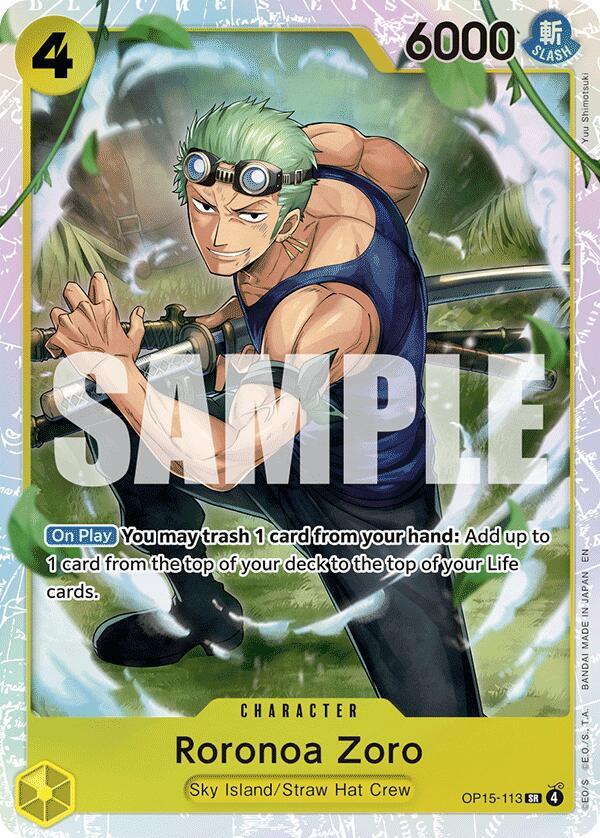
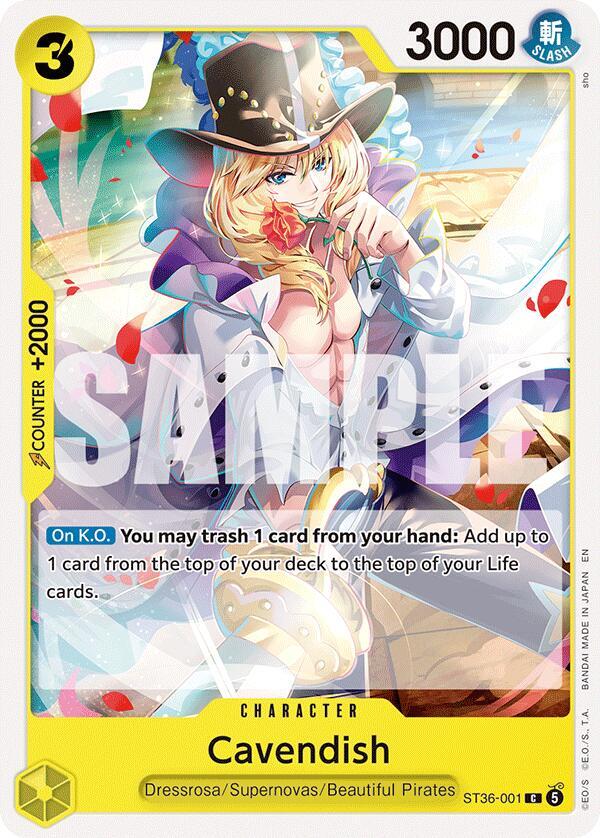
A [Trigger] is an effect on a card that you can use when it comes off your Life area from damage. Instead of adding the card to your hand, you may reveal it and resolve the Trigger, after which the card goes to the trash unless the effect says otherwise (rule 10-1-5). If you'd rather keep the card, you can decline and add it to your hand without showing it.
Triggers are what make a hit risky for the attacker. A Life card might play a Character, draw cards or K.O. an attacker. About 1 in 5 non-Leader cards has one (19% of 2,557), and the share is much higher in Yellow, where half of all cards do (49.8%), compared with about 13% in each other color. How Yellow is built around Life is covered in the colors lesson.
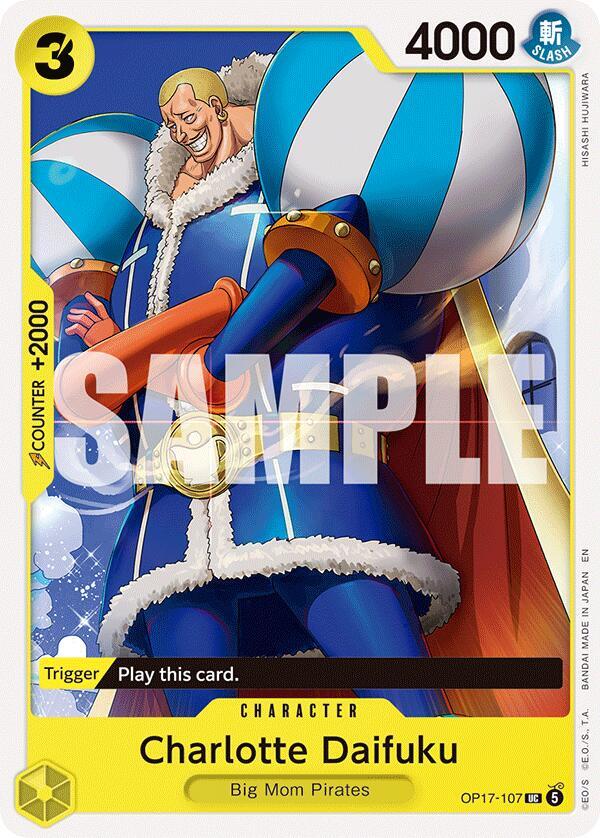
Charlotte Daifuku
OP17-107
[Trigger] Play this card: a free Character off a Life card

Howling Gab
OP17-024
[Banish] trashes the Life card and stops its Trigger
[Banish] is the answer to Triggers. When an attacker with [Banish] deals damage, the Life card is trashed instead of going to hand, and its Trigger can't be used (rule 10-1-3).
Is 0 Life a loss?
No. A player with 0 Life cards is still playing. They lose when their Leader takes damage again while their Life area is empty, so the game is won by the hit after the last Life card, not by the hit that takes it.
Comprehensive Rules · 7-1-4-1-1-1
If the opponent has 0 Life at the point when it is determined that damage will be dealt, the attacking player wins the game.
This makes the endgame a test of defense. At 0 Life, every attack that connects with the Leader ends the game, so the defending player has to block or counter each one. That is why a player at 0 Life often holds their whole hand for Counter cards rather than playing Characters.
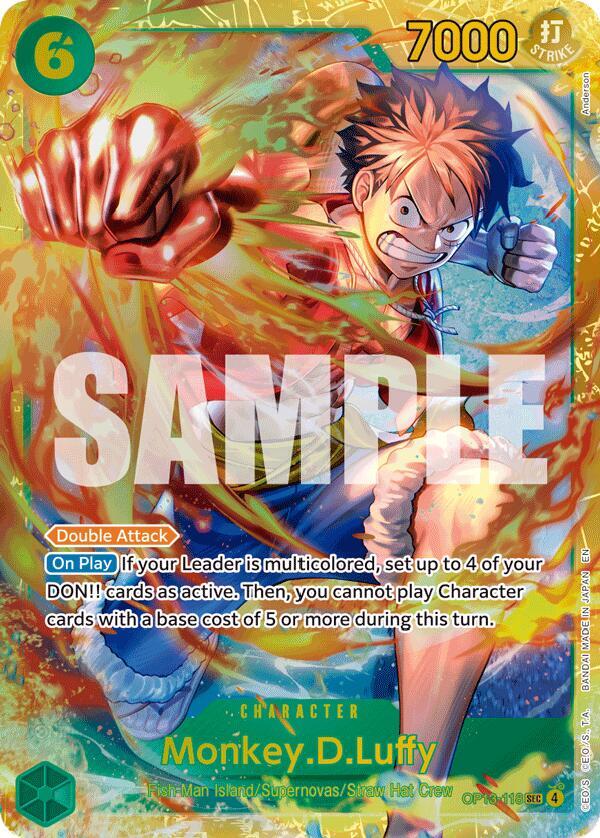
[Double Attack] does not skip that step. It deals 2 damage, but Bandai's official rules Q&A says it can't win the game against an opponent with 1 Life card: the first damage takes the last card and leaves them at 0, still in the game. Against an opponent with 2 or more Life, it removes two cards in one hit, and if the first card's Trigger resolves, the second damage is still dealt.
Can you lose by running out of cards?
Yes. If your deck reaches 0 cards, you lose at once. Bandai's rule checks the deck itself, not your next draw, so drawing your last card ends the game right then (rules 1-2-2-2 and 9-2-1-2).
It rarely comes up by drawing alone. A 50-card deck starts at 40 or 41 cards after a 5-card hand and 4 or 5 Life cards, and you draw 1 card a turn. Deck-outs happen when effects draw extra cards, trash cards from the top of the deck or set up Life repeatedly. If your deck does a lot of that, count your deck before a big turn.
Conceding, card effects and draws
Either player may concede at any point, and the game ends at once; no card can force or prevent a concession (rules 1-2-3 and 1-2-4). Some cards say a player wins or loses, and that happens while the effect resolves (rule 1-2-5). The only draw in the Comprehensive Rules is an infinite loop that neither player can stop (rule 11-1-1-1). One Leader, Nami (OP03-040), turned deck-out into a win for its player and is now banned; Leaders that change the rules covers it. What happens when time runs out in a tournament round is in Bandai's tournament rules, which your store's event will follow.
Life as a resource: when to take a hit
Since every Life card you lose becomes a card in your hand, not every attack is worth stopping. Early in the game, many players let a small attack on their Leader through, take the card, and save their Counter cards for later. The cost is that each hit brings you closer to 0, where every attack has to be answered.
How much Life you can afford to give up depends on your deck and your opponent's. A deck with strong Triggers or effects that add Life can take more hits; a deck facing [Double Attack] or [Banish] attackers can't count on getting a card back. The math for deciding how many Counter cards an attack needs is in how battles work.
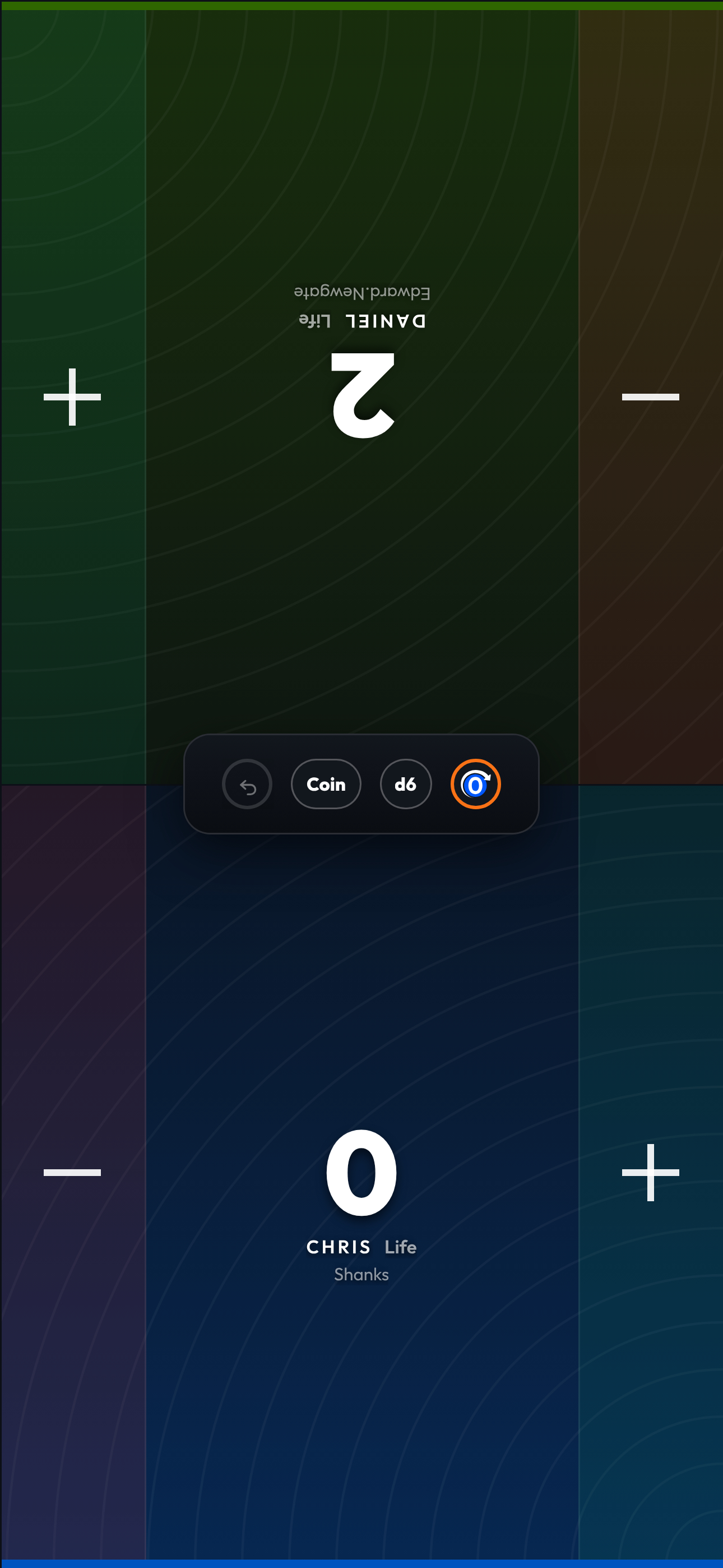
If you play at a real table and want to keep the score, TurnZero HQ's game tracker, shown above, keeps a Life number for each player and records who won and how. The One Piece life tracker page shows the steps.
Frequently Asked Questions
How do you win the One Piece Card Game?
Deal damage to your opponent's Leader while they have 0 Life cards, or have their deck reach 0 cards. Either one ends the game at once. You also win if your opponent concedes or a card effect says you win.
Do you lose when you reach 0 Life in the One Piece TCG?
No. Reaching 0 Life cards is not a loss on its own. You lose when your Leader takes damage while you already have 0 Life cards, so a player at 0 is still in the game until one more attack gets through.
How many Life cards do you start with?
As many as your Leader's printed Life value. Most Leaders have 5 or 4 (128 of the 134 released Leaders whose Life our catalog lists), and a few have 3, 6 or 2. The Life cards come from the top of your deck, face down.
Can Double Attack win the game when my opponent has 1 Life?
No. Bandai's official rules Q&A says a [Double Attack] can't win the game against an opponent with 1 Life card. The first point of damage takes their last Life card, and they are left at 0 Life, still in the game.
What happens when you run out of cards in the One Piece TCG?
You lose as soon as your deck reaches 0 cards. You don't wait until you try to draw from an empty deck: drawing or trashing your last card ends the game at the next rule check.
What does a Trigger do when you take damage?
When a Life card with [Trigger] is moved by damage, you may reveal it and use its Trigger effect instead of adding it to your hand. The card goes to the trash afterward unless the effect says otherwise. You can also decline and keep the card in hand.
Can a One Piece TCG game end in a draw?
Only in rare cases. The Comprehensive Rules call a game a draw when an infinite loop starts that neither player can stop. Tournament time limits have their own procedure, which is in Bandai's tournament rules rather than the game rules.
Keep score at the table.
Track each player's Life and record who won, build and check a One Piece deck, and keep your collection in one place. Free on iPhone, Android and the web.
Create Free AccountONE PIECE CARD GAME card names and images are the property of Bandai and their respective owners. ©Eiichiro Oda/Shueisha, Toei Animation. TurnZero HQ is not affiliated with, sponsored, or endorsed by Bandai, Shueisha, or Toei Animation. Card data and prices come from TCGplayer.