One Piece Card Game · Beginner Series
One Piece TCG Colors: What Each of the Six Does
The One Piece Card Game has six colors, and your Leader decides which ones your deck can use. Each color has a clear specialty you can count on the cards: Purple is the only color that adds DON!!, Blue is the only one that bounces Characters, and half of all Yellow cards have a Trigger. This lesson covers what each color does, how to tell, and where to start.
How do colors work in the One Piece TCG?
Every card has one or more of six colors: red, green, blue, purple, black and yellow (Comprehensive Rules 2-3-3, version 1.2.1). The color is shown on the hexagon in the card's lower left corner, with each color in a fixed position: red upper right, green right, blue lower right, purple lower left, black left and yellow upper left. A card with two colors counts as both.
Colors matter for one rule above all: every card in your deck must share a color with your Leader (rule 5-1-2-2). Unlike some card games, colors cost nothing extra to play. Every card is paid for with DON!!, so a color is a choice of which cards and effects you get, not a separate resource. How to build around a Leader is in how to build a One Piece deck.
You don't have to check the color rule by hand. TurnZero HQ's One Piece Deck Lab names any card that doesn't share a color with your Leader under Worth fixing, beside the other deck-construction problems, and its Colors view counts the deck's cards by color and how many are off the Leader's colors.
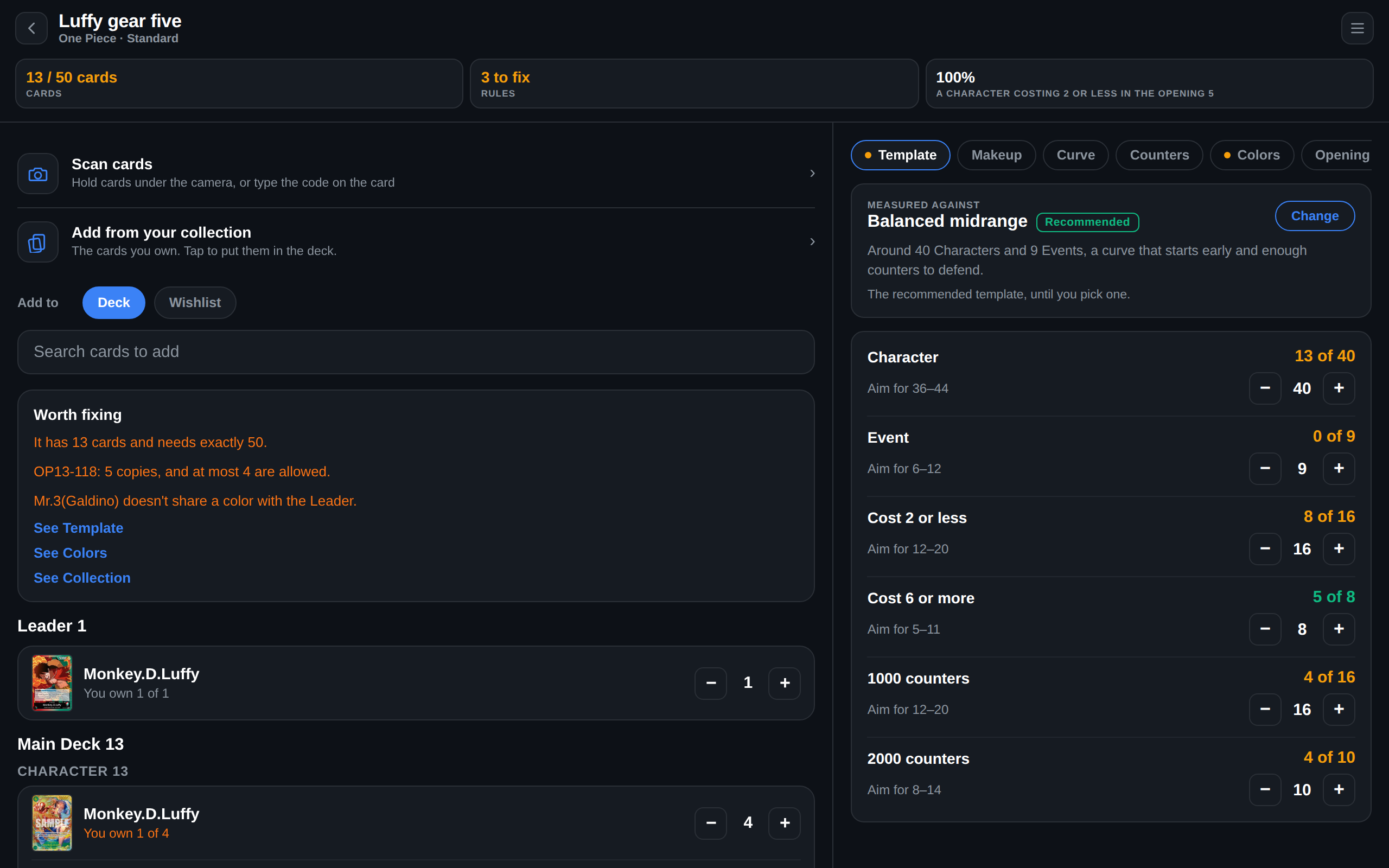
The six colors at a glance
We counted the effect text of every single-color Character, Event and Stage released through October 15, 2026 (2,554 cards, about 420 per color) to see what each color actually does. The figure is the share of that color's cards with the effect.
Red: power and pressure
Red is the attacking color. It has the highest share of cards that add power (24.0%) and the most [Rush] (8.2% of cards mention it, against 3.7% or less in every other color). Its removal works on power: 19.2% of Red cards lower an opponent's power, and 13.3% K.O. a Character with power at or below a number, which no other color does more than 2% of the time. Red also has the most [When Attacking] effects (13.5%).
What Red rarely does: rest your opponent's cards or send them back to hand (0% each). Red decks win by attacking every turn with enough power that the defender runs out of Counter cards.
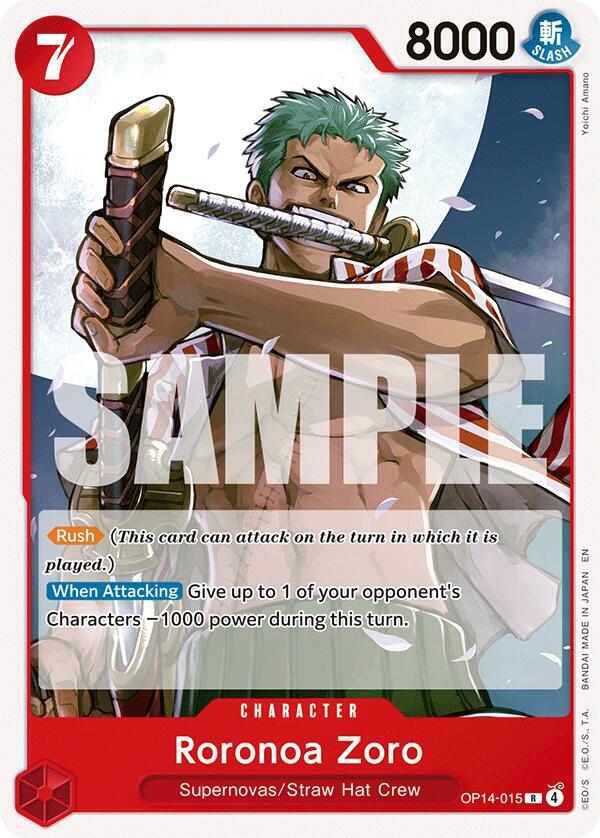
Roronoa Zoro
OP14-015
[Rush] and a power cut when attacking
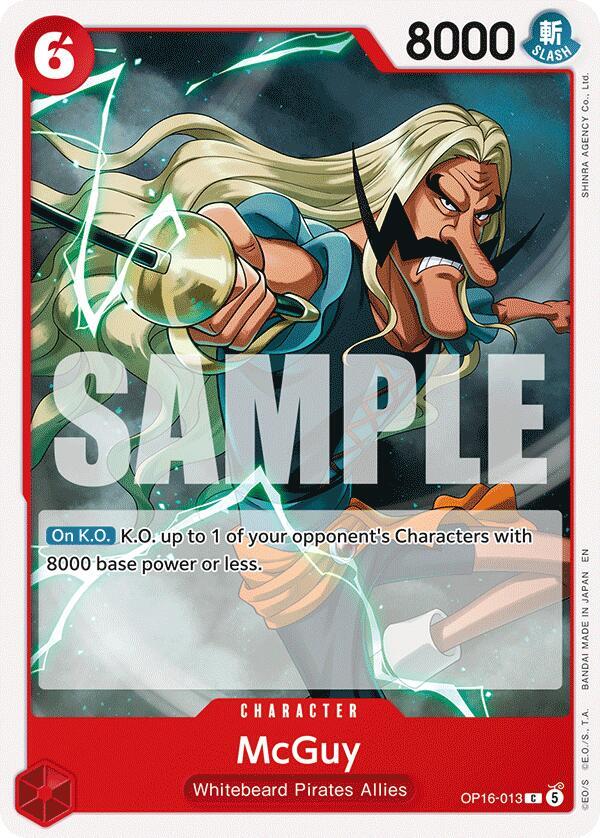
McGuy
OP16-013
[On K.O.] K.O.s a Character by power
Standard-legal starter decks with Red: ST-21 GEAR5, ST-23 RED Shanks, ST-31 RED Monkey.D.Luffy, ST-30 Luffy & Ace, ST-35 RED/BLACK Sabo, ST-13 The Three Brothers.
Green: resting and tempo
Green controls who can act. 24.1% of Green cards rest an opponent's card, and 18.7% set your own cards active again, both far more than any other color. Resting matters twice: a rested Character can't attack or block, and it can be attacked. Green's removal follows from that. Of the Green cards that K.O., most (41 of 49) target rested Characters with a cost at or below a number.
Green also has most of the game's [End of Your Turn] effects (7.0% of its cards, against 1.1% or less elsewhere), usually setting DON!! or Characters active so they are ready on your opponent's turn.

Shanks
OP17-022
[Rush], and rests all of your opponent's Characters
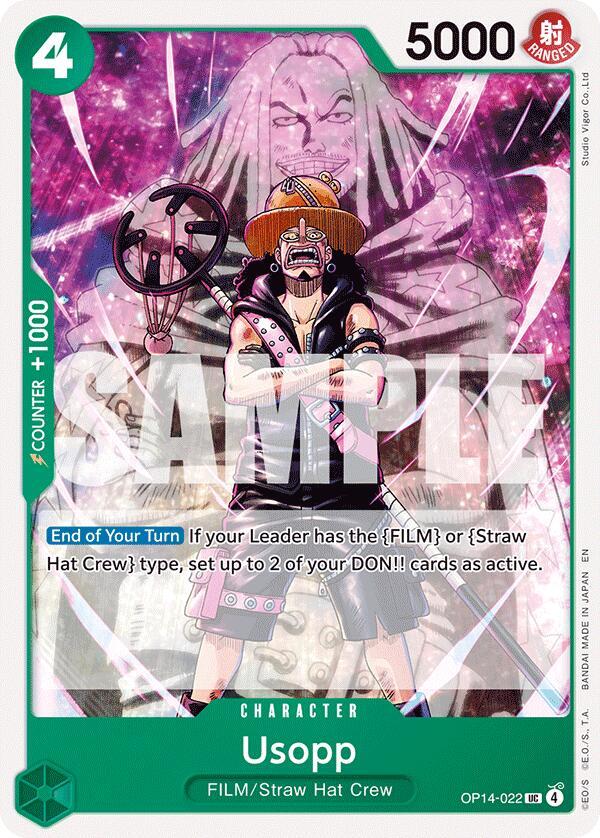
Usopp
OP14-022
[End of Your Turn] sets 2 DON!! active
Standard-legal starter decks with Green: ST-24 GREEN Jewelry Bonney, ST-32 GREEN Roronoa Zoro, ST-12 Zoro and Sanji, ST-28 GREEN/YELLOW Yamato, ST-30 Luffy & Ace.
Blue: cards and bounce
Blue is the card-advantage color: 27.0% of Blue cards draw, the most of any color, and 12.1% look at the top of your deck. Its removal is unique. 13.9% of Blue cards return a Character to its owner's hand and 8.0% place one at the bottom of its owner's deck, while no Blue card has an effect that K.O.s an opponent's Character.
Blue pays for that with your hand. 17.5% of Blue cards ask you to trash cards from your hand, the highest share of any color, so a Blue deck often draws two and gives one back.
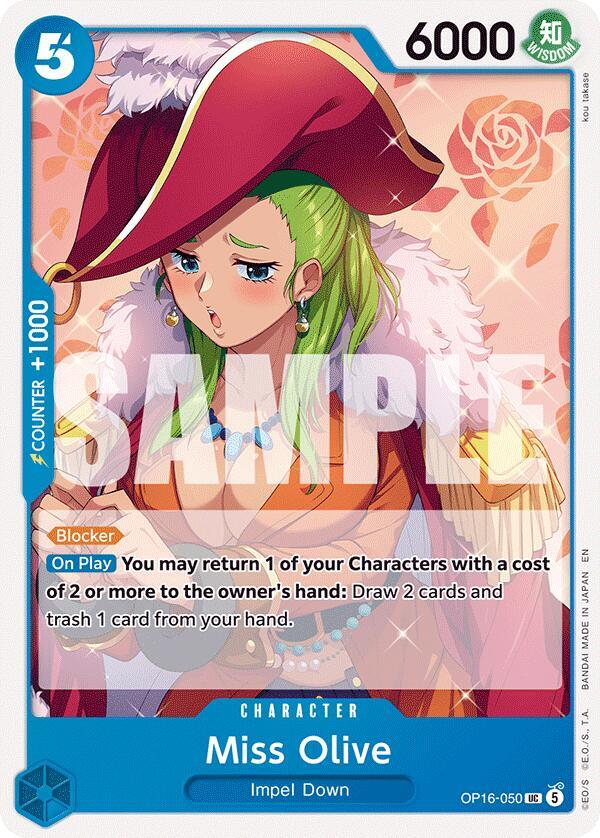
Miss Olive
OP16-050
[Blocker]; return one of yours to draw 2 and trash 1
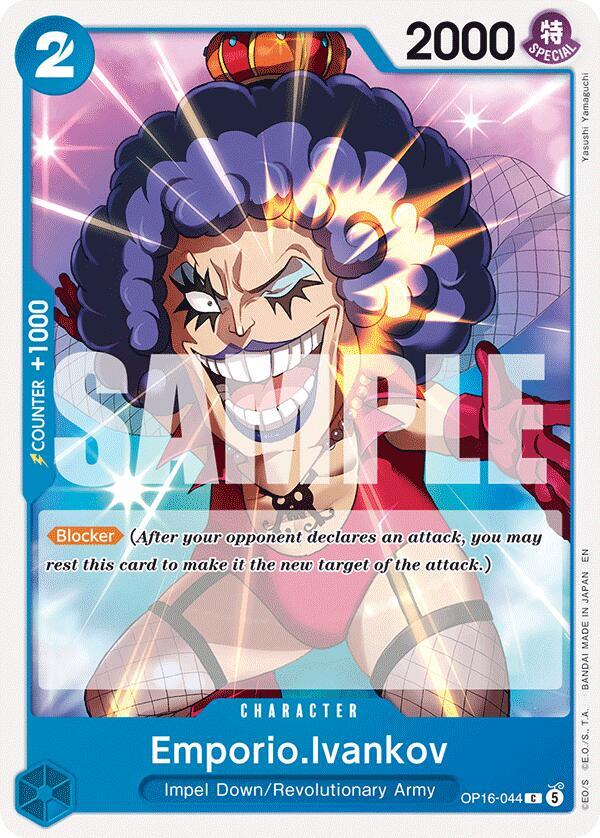
Emporio.Ivankov
OP16-044
A 2-cost [Blocker]
Standard-legal starter decks with Blue: ST-22 Ace & Newgate, ST-25 BLUE Buggy, ST-33 BLUE Kuzan, ST-12 Zoro and Sanji, ST-13 The Three Brothers.
Purple: DON!! ramp and DON!! minus
Purple is the DON!! color, and the numbers are absolute. 27.5% of Purple cards add DON!! from your DON!! deck to the field, and 22.0% have a DON!! −X cost, which returns DON!! to the DON!! deck. No single-color card in any other color, among Characters, Events and Stages, does either. A Purple deck reaches big plays a turn or two early, then spends DON!! −X effects that would cost another color nothing.
That makes Purple the color where DON!! management decides games. How DON!! −X works is in the keywords lesson, and the DON!! deck itself in One Piece DON!! cards.
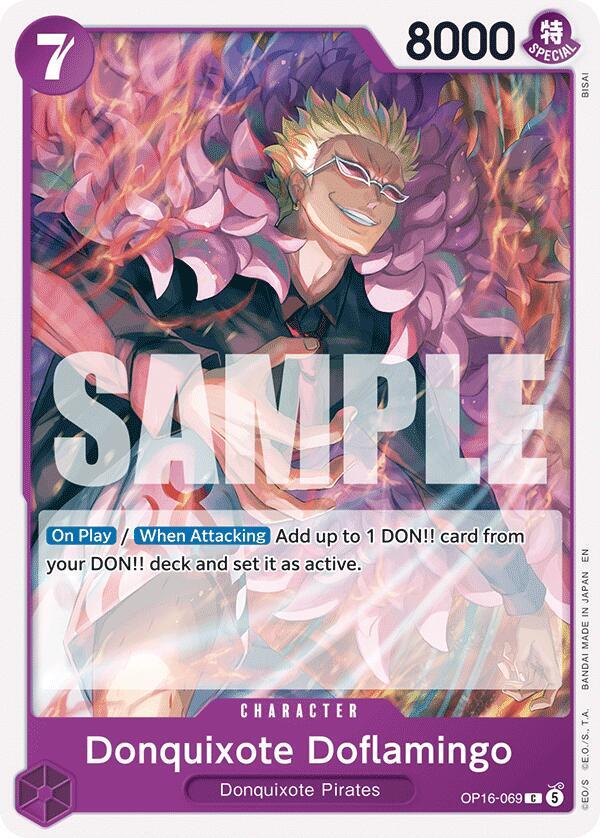
Donquixote Doflamingo
OP16-069
[On Play]/[When Attacking] adds an active DON!!

Queen
OP17-065
[Banish], with a DON!! −1 [On Play]
Standard-legal starter decks with Purple: ST-18 Purple Monkey.D.Luffy, ST-34 PURPLE Charlotte Katakuri, ST-26 PURPLE/BLACK Monkey.D.Luffy.
Black: cost removal and the trash
Black is the removal color. It has the highest share of cards that K.O. an opponent's Character (16.2%), and where Red measures power, Black measures cost: 11.9% of Black cards lower an opponent's cost and 12.4% K.O. a Character at or below a cost, so the two work together. Lowering a Character's cost to 0 brings it into range of almost any K.O. effect.
Black also uses the trash. 18.6% of its cards do something "from your trash", and 7.1% play a card from it, both the most of any color. A Black deck can lose Characters in battle and get them back.
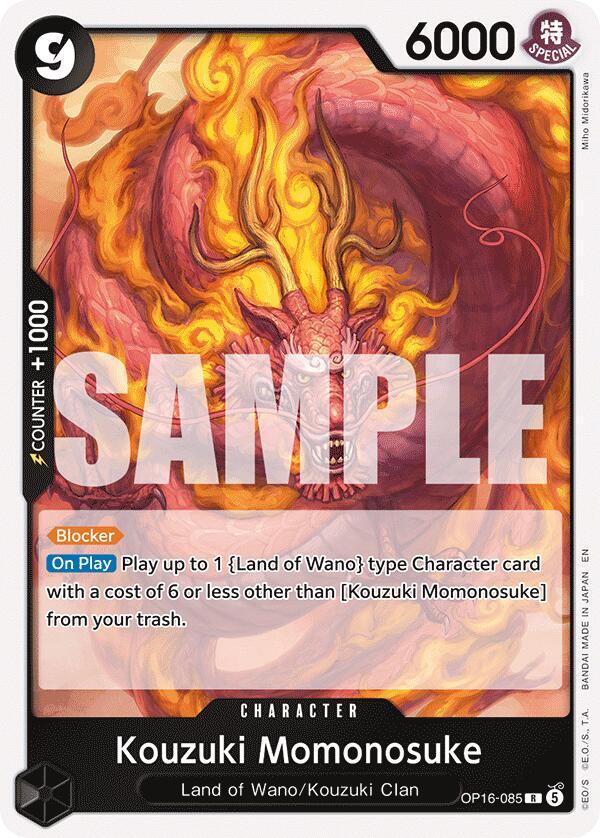
Kouzuki Momonosuke
OP16-085
[Blocker]; plays a Character from your trash
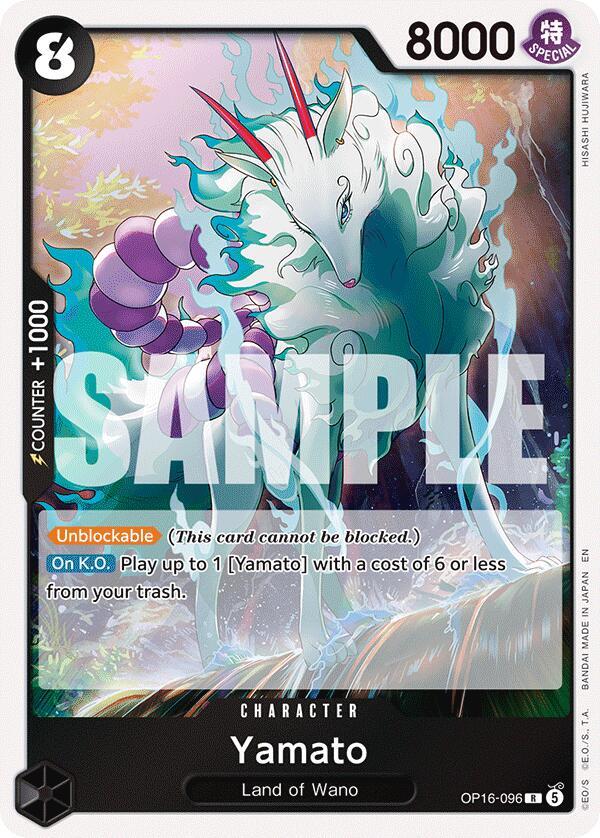
Yamato
OP16-096
[Unblockable]; replays a Yamato from the trash on K.O.
Standard-legal starter decks with Black: ST-14 3D2Y, ST-27 BLACK Marshall.D.Teach, ST-26 PURPLE/BLACK Monkey.D.Luffy, ST-35 RED/BLACK Sabo, ST-13 The Three Brothers.
Yellow: Life and Triggers
Yellow is built around Life cards. 57.6% of Yellow cards mention Life, against 4.1% or less in every other color, and 15.1% add a card to the top of your Life. Half of all Yellow cards have a [Trigger] (49.8%, against about 13% elsewhere), so every hit on a Yellow Leader risks giving the defender a free effect.
Many Yellow effects get stronger as your Life gets lower ("if you have 2 or less Life cards"), so a Yellow deck can let early attacks through on purpose. How Life cards and Triggers work is in how you win the One Piece TCG.
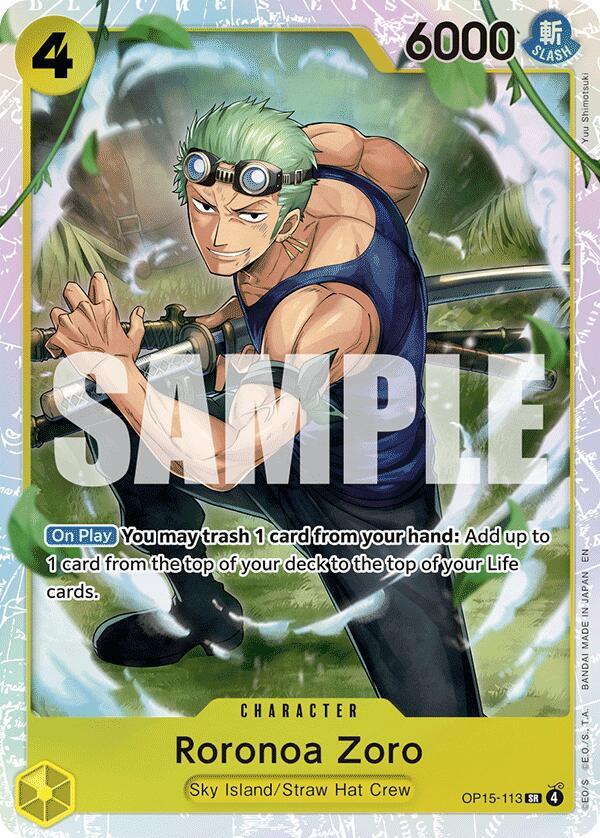
Roronoa Zoro
OP15-113
[On Play] adds a card to your Life
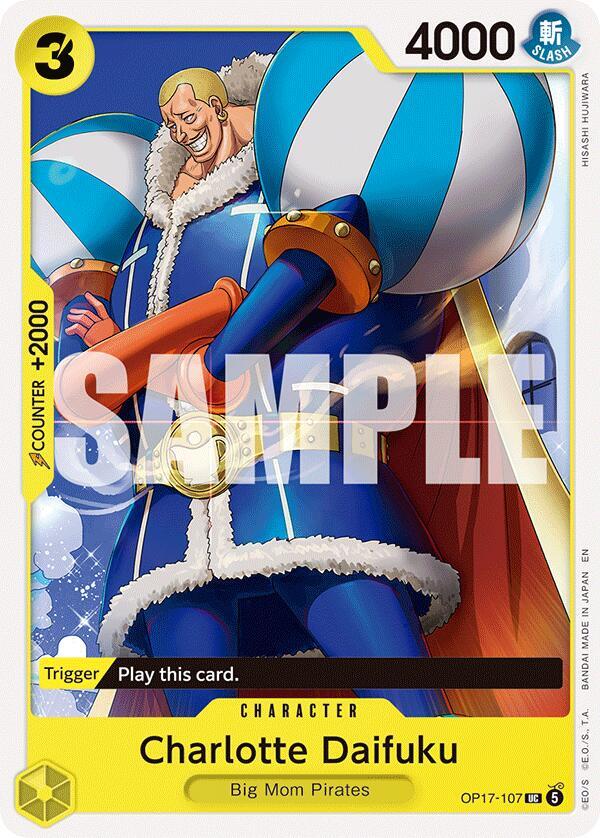
Charlotte Daifuku
OP17-107
[Trigger] Play this card
Standard-legal starter decks with Yellow: ST-29 Egghead, ST-36 YELLOW Eustass"Captain"Kid, ST-28 GREEN/YELLOW Yamato, ST-13 The Three Brothers.
Two-color Leaders
A two-color Leader lets your deck use both colors. Nearly half of the Leaders released so far are two colors (66 of 139), and they usually pair specialties: a Red/Green Leader can rest a Blocker with Green and attack with Red's power. A single-color Leader gives up that flexibility, and many make up for it with a stronger effect that rewards staying in one color.
Some card effects check whether your Leader is multicolored, so a two-color Leader can matter beyond the cards it allows. Other Leaders change deckbuilding in different ways, such as capping costs; Leaders that change the rules lists them.
Which color should a beginner pick?
Red is the easiest color to learn. Its plan is to attack with more power than your opponent can counter, and the decisions are mostly about how much DON!! to give each attacker. In our starter deck ratings, all three Standard-legal single-color Red starter decks (ST-21, ST-23 and ST-31) are rated 2 out of 5 for difficulty; Red is the only color where every one is. Purple asks the most of a new player, because DON!! −X timing takes practice, and its two single-color starter decks are rated 3 and 4.
Easy is not the same as best. Every color has strong Leaders, and the right first color is often the one whose characters you want to play. Pick a Leader you like, check its colors, then use the starter deck guide to find a box in those colors.
Frequently Asked Questions
What are the colors in the One Piece TCG?
There are six: Red, Green, Blue, Purple, Black and Yellow. A card's colors are shown on the hexagon in its lower left corner, and a card with two colors counts as both.
What does each One Piece TCG color do?
Red raises its own power and lowers its opponent's, and has the most [Rush]. Green rests opposing Characters and sets its own cards active again. Blue draws cards and returns opposing Characters to hand or deck. Purple adds DON!! from the DON!! deck and spends it with DON!! −X costs. Black lowers costs, K.O.s by cost and plays cards from the trash. Yellow manages Life cards and has the most Triggers.
What is the best One Piece TCG color for beginners?
Red is the easiest to learn. Its plan is to attack with high power, and all three Standard-legal single-color Red starter decks are rated 2 out of 5 for difficulty in our starter deck guide; no other color has every deck that low. Pick the color whose Leader and characters you like, though: every color has playable decks.
Can you play two colors in the One Piece TCG?
Only if your Leader has two colors. Every card in your deck must share a color with your Leader, so a Red/Green Leader lets you play Red cards and Green cards. 66 of the 139 Leaders released so far have two colors.
Which One Piece TCG color has the most removal?
Black has the highest share of K.O. effects (16.2% of its cards), usually against Characters below a cost. Red removes by lowering power and K.O.ing low-power Characters, Green K.O.s rested Characters, and Blue never K.O.s: it returns Characters to their owner's hand or deck instead.
Build your first One Piece deck.
Pick a Leader, build a deck in its colors and check it against the rules, then keep score at the table. Free on iPhone, Android and the web.
Create Free AccountONE PIECE CARD GAME card names and images are the property of Bandai and their respective owners. ©Eiichiro Oda/Shueisha, Toei Animation. TurnZero HQ is not affiliated with, sponsored, or endorsed by Bandai, Shueisha, or Toei Animation. Card data and prices come from TCGplayer.