Riftbound · Domains
Fury (Red) in Riftbound
Fury is Riftbound's red domain and its most aggressive one. It attacks from the first turns with units that enter ready and get Assault, clears the way with damage spells, and rewards you for conquering battlefields. It pays for that speed with little card draw.
Fury is red, one of Riftbound's six domains. Attacks early. Units that enter ready and hit harder as attackers, damage spells to clear blockers, and rewards for conquering.
Riot's theme for it: "aggression, passion, and the thrill of conquering." As of November 2026, 19 of the game's 58 Legends have Fury, and any of them can lead a deck that plays its cards.
How Fury Plays
Fury wants to attack every turn. Most of the cards in the game that print or grant Assault are Fury, so its units are at their biggest when they are the ones attacking, and Accelerate lets a unit enter ready and attack the turn it is played. Legion rewards you for playing two cards in a turn, which pushes Fury toward cheap units and spells played together.
Its removal deals damage. Fury has more cards that deal damage than any other domain, from Hextech Ray (deal 3 to a unit at a battlefield) to Falling Star (deal 3, twice), and it uses them to remove the blockers between its units and a battlefield. Damage handles small and mid-sized units well and struggles against a unit with high Might.
The cost is staying power. Fury has little card draw, and several of its best attackers ask you to discard as they come in, so a Fury deck that has not scored most of its points by the middle of the game can run out of cards. That is why it so often pairs with Mind for card draw or Body for bigger units.
How domains and domain identity work →What It Does Well, and What It Doesn't
Strengths
- Pressure from the first turns: Assault, Accelerate and Legion are all most common in Fury.
- The most cards that deal damage, to clear blockers and win showdowns.
- Rewards for conquering, which keep a winning attack rolling.
Weaknesses
- Little card draw, and several attackers that make you discard.
- Few ways to kill a unit outright; damage struggles against high Might.
- Trouble reaching units that stay home in their base.
These start from what Riot's Deckbuilding Primer says Fury is good and bad at. The other domain in your pair, and your Legend, can cover a weakness: a Legend that draws cards helps a domain that doesn't.
Fury by the Numbers
Counted from the 953 main-set cards from Proving Grounds and Origins through Radiance as of November 2026, without Legends, battlefields, runes and tokens, one per name. A card with two domains counts for both.
The regions and types that show up most on Fury cards: Noxus above all, then Ionia, Shurima, Dragons, the Trifarian Legion and Mechs. Of its 165 cards, 146 have only Fury and fit any deck whose Legend has it; the other 19 are two-domain cards, which need a Legend with both, and 19 of those are Signature cards tied to one champion.
Cards That Show What Fury Does
Each has only Fury, so it fits any Fury deck. They show the domain's style, not a ranking of its best cards.
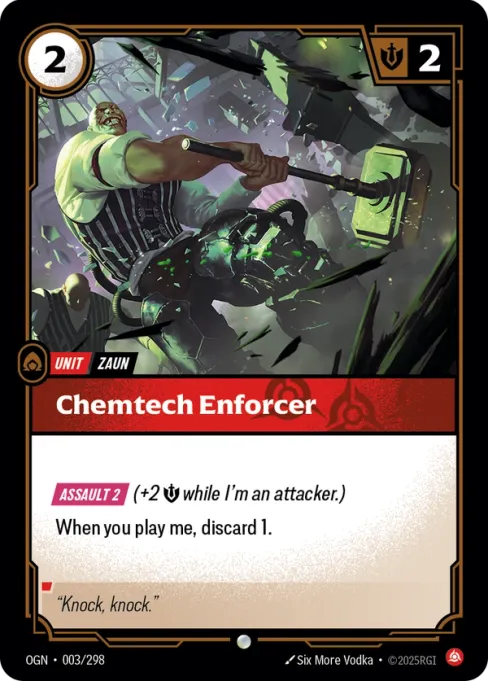
Chemtech Enforcer
OGN-003/298
Chemtech Enforcer: a 2 that attacks as a 4
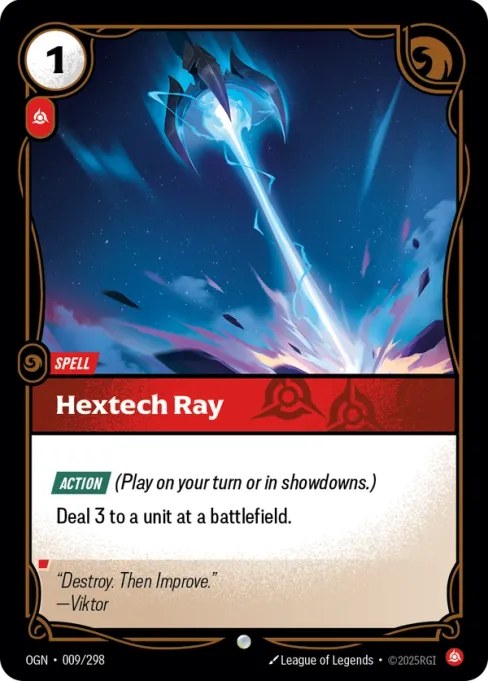
Hextech Ray
OGN-009/298
Hextech Ray: deal 3, playable in showdowns
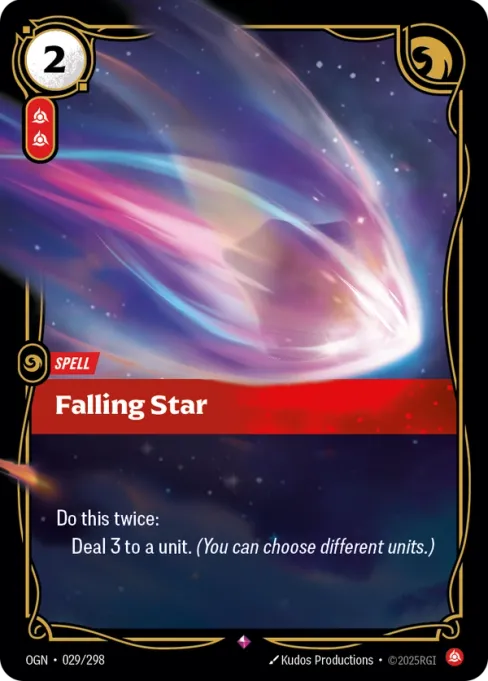
Falling Star
OGN-029/298
Falling Star: deal 3, twice
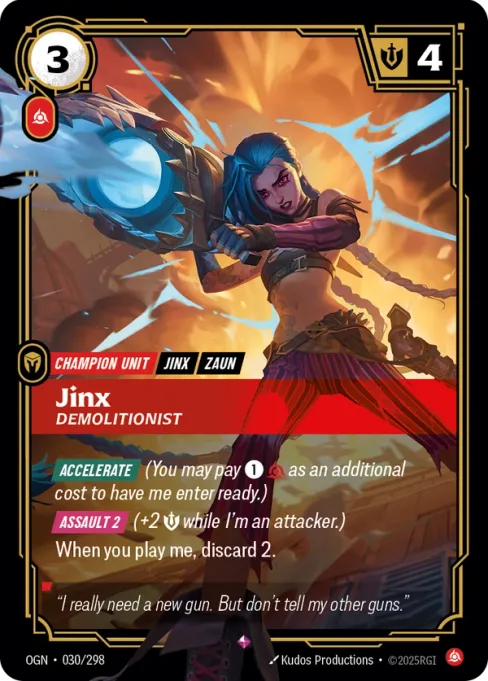
Jinx, Demolitionist
OGN-030/298
Jinx, Demolitionist: Accelerate and Assault 2
- Chemtech Enforcer: A 2-cost unit with Assault 2, so it fights like a 4 Might unit when it attacks. It asks you to discard 1, the price Fury often pays for speed.
- Hextech Ray: Deals 3 to a unit at a battlefield for 1 Energy, and as an Action it can be played in the middle of a showdown.
- Falling Star: Deals 3 to a unit, then 3 to a unit, so it can remove two units or one with 6 Might.
- Jinx, Demolitionist: A champion unit that can enter ready and attack as a 6 Might unit the turn it is played, at the cost of discarding 2.
Fury Legends
Your Champion Legend sets your deck's two domains, so a Fury deck starts with one of these 19. Below is the first Legend printed in each Fury pair, not a ranking; the table lists all of them.
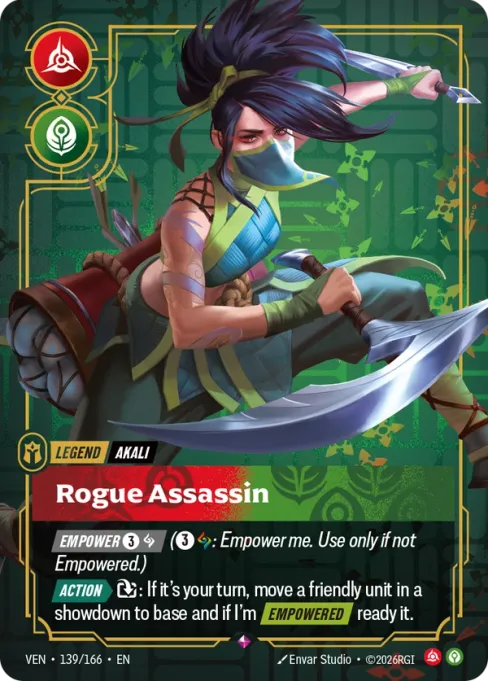
Akali, Rogue Assassin
VEN-139/166
Fury and Calm
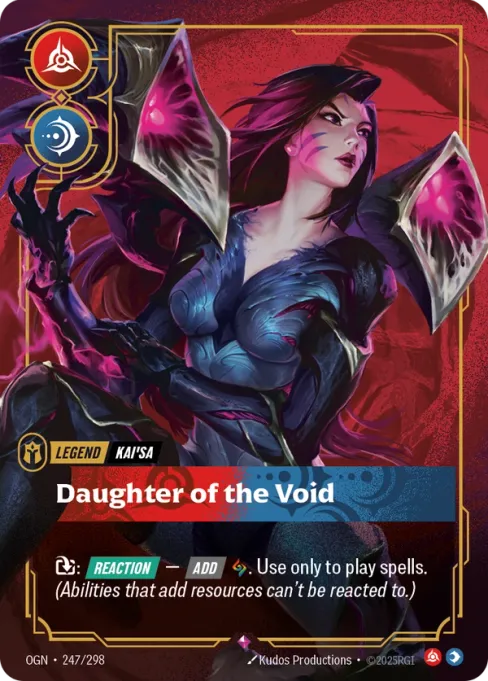
Kai'Sa, Daughter of the Void
OGN-247/298
Fury and Mind
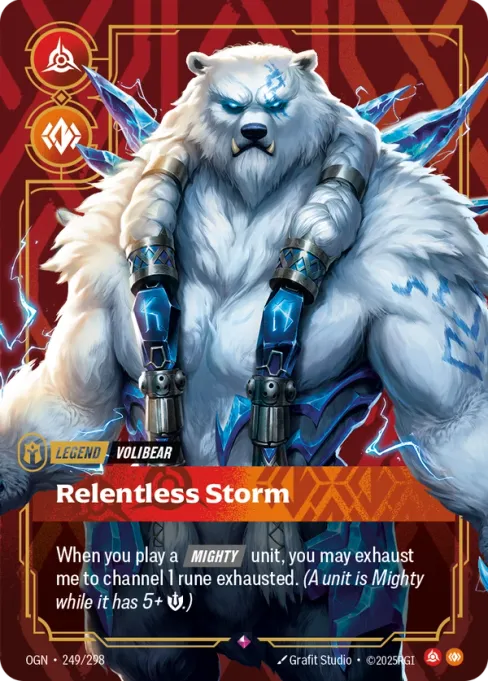
Volibear, Relentless Storm
OGN-249/298
Fury and Body
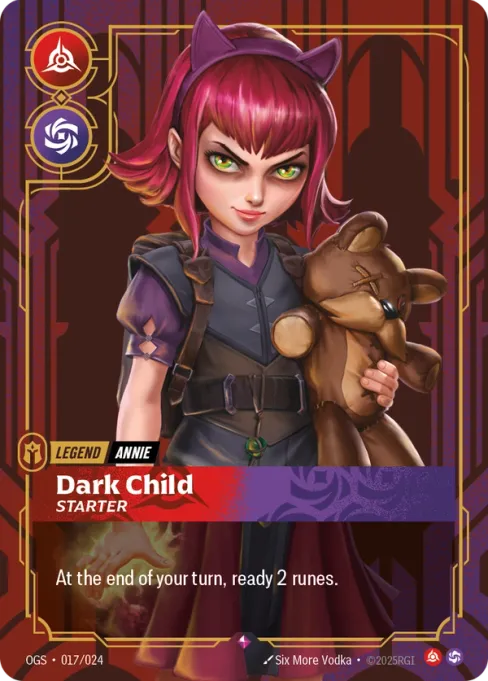
Annie, Dark Child
OGS-017/024
Fury and Chaos
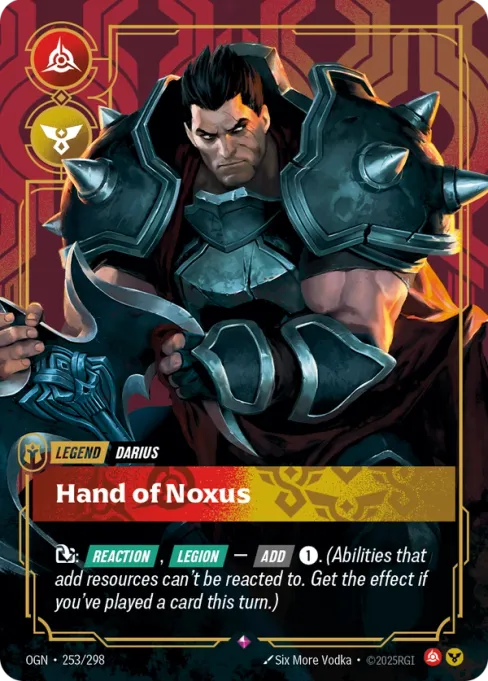
Darius, Hand of Noxus
OGN-253/298
Fury and Order
Every Riftbound Legend lists all of them with each one's ability and price.
Fury Domain Pairs
Fury always shares a deck with one other domain. These are the five pairs with Fury, each with its Legends, Signature cards and how it plays.
Fury Compared to Magic's Colors
For Magic: The Gathering players, the nearest color is red. Fury is the closest match between the two games: attackers, haste-like Accelerate and damage-based removal. Mono-Red in Magic →
The Other Domains
Frequently Asked Questions
What color is Fury in Riftbound?
Fury is red. Riot's Core Rules give each of the six domains a color, a symbol and a one-letter shorthand, and Riot's Deckbuilding Primer describes Fury as "aggression, passion, and the thrill of conquering."
What is Fury good at in Riftbound?
Pressure from the first turns: Assault, Accelerate and Legion are all most common in Fury. The most cards that deal damage, to clear blockers and win showdowns. Rewards for conquering, which keep a winning attack rolling. What it struggles with: Little card draw, and several attackers that make you discard. Few ways to kill a unit outright; damage struggles against high Might. Trouble reaching units that stay home in their base.
Which Riftbound Legends are Fury?
As of November 2026, 19 Legends have Fury, each with one other domain: Fury and Calm (Akali, Rogue Assassin); Fury and Mind (Kai'Sa, Daughter of the Void, Rumble, Mechanized Menace, Jhin, Virtuoso, Ekko, Boy Who Shattered Time); Fury and Body (Volibear, Relentless Storm, Lucian, Purifier, Rengar, Pridestalker, Renekton, Butcher of the Sands); Fury and Chaos (Annie, Dark Child, Jinx, Loose Cannon, Draven, Glorious Executioner, Pyke, Bloodharbor Ripper, Zed, Master of Shadows, Ziggs, Hexplosives Expert); Fury and Order (Darius, Hand of Noxus, Rek'Sai, Void Burrower, Vi, Piltover Enforcer, Mordekaiser, Iron Revenant).
What does Fury pair with in Riftbound?
Every Legend has two domains, so Fury always comes with one of the other five: Fury and Calm, Fury and Mind, Fury and Body, Fury and Chaos, Fury and Order. Every one of those pairs has at least one Legend as of November 2026.
Is Fury good for beginners in Riftbound?
Yes, for players who like to attack. The plan is simple (play units, attack battlefields, use damage spells on blockers), and Annie's Fury and Chaos Legend, Dark Child, is one of the four in Proving Grounds, Riot's starter box.
Build a Fury deck
TurnZero HQ's Riftbound deck builder marks each deck Legal or Not legal for its format as you build, and shows your rune odds. Free to start.
Create Free AccountTurnZero was created under Riot Games' "Legal Jibber Jabber" policy using assets owned by Riot Games. Riot Games does not endorse or sponsor this project. Card data comes from Riot Games' official Riftbound card gallery, and prices from TCGplayer via TCGCSV.