For Game Stores
Running a Commander Night at Your Store
Open play, four to a table, nobody eliminated from anything. The whole job is pods people enjoy and a room that keeps moving, and this is what that looks like week to week.
What a Commander night is, and is not
A Commander night is open play. Four people sit down, a game takes an hour, the pod breaks up and three of them end up at different tables. There are no rounds, nobody is eliminated from anything, and the evening ends when people go home rather than when a bracket resolves.
That is worth stating because most software for game stores is tournament software, and running an open-play night on tournament software means faking rounds nobody plays. TurnZero HQ treats the night as what it is: a room, some tables, and games that start and finish independently of each other. Setting it up is a one-time job, and each week's night is a button.
If you also run a draft night, that one genuinely is a tournament and is handled separately, with pairings, rounds and standings. Do not reach for those on a Commander night; the format is not asking for them.
Building pods people enjoy
This is the whole job, and it is the one thing a store can do that a group of strangers cannot do for themselves. Four random people at a table is a coin flip. Four people whose decks are in the same neighbourhood is a good hour.
Every player's deck carries its bracket, so the room is legible before anybody sits down. A pod of four Bracket 3 decks is a good pod. A Bracket 2 precon and a Bracket 5 cEDH deck in the same four is a game one of them stops enjoying on turn five, and it is far easier to say something at the counter than to fix it at the table.
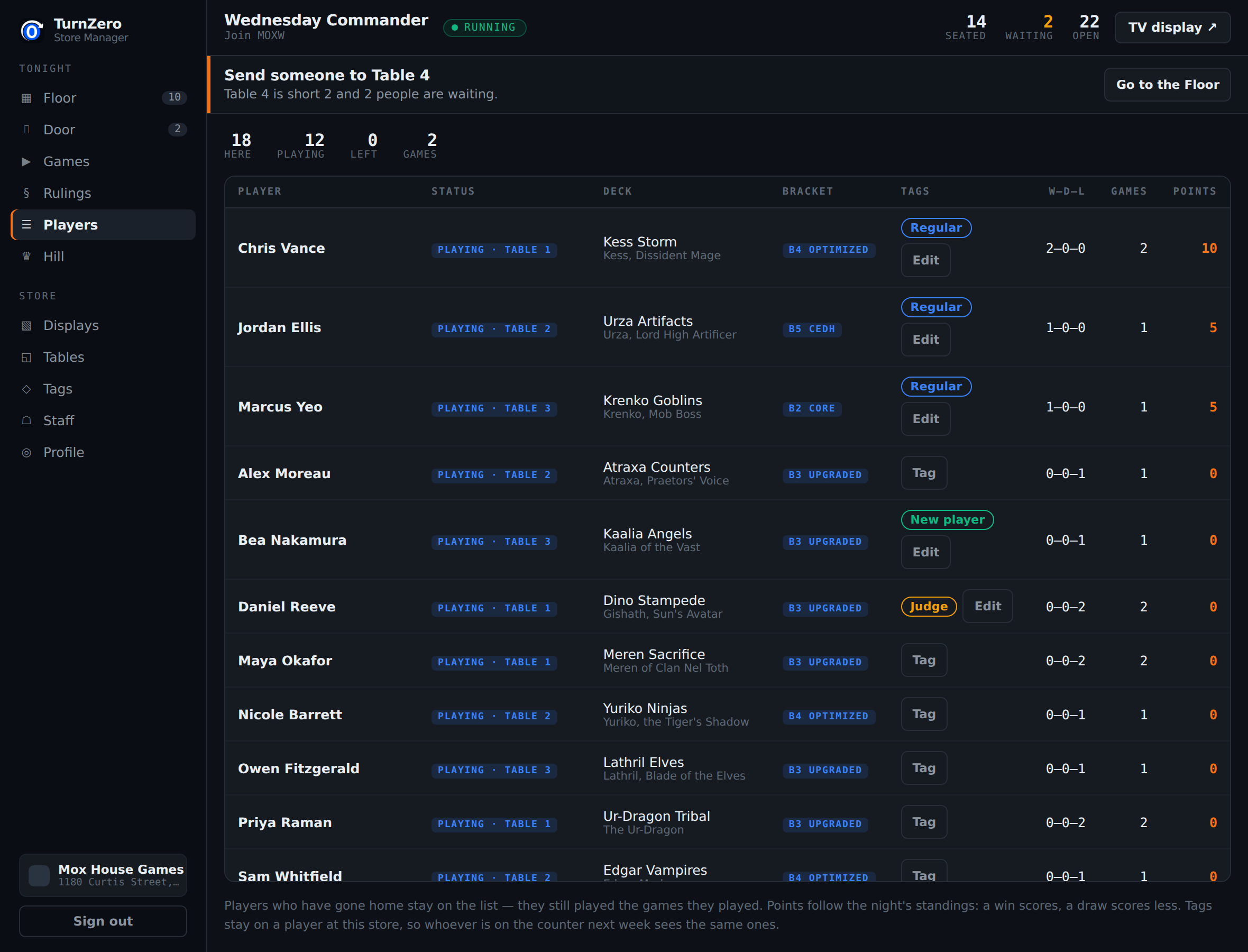
Three habits worth having, none of which need anything typed:
Tag your new players. A "New player" chip is a note to whoever is on the counter next Wednesday, not to you tonight. It is the single most useful tag a shop keeps, because it is the one that stops somebody's second visit being their last.
Seat a group together rather than one at a time. Four people who arrived together are already a pod; pick them and drop them at a table in one move. The console shows the bracket spread of whoever you have selected, which is the moment to notice that one of them brought something much stronger than the rest.
Let the second game reshuffle. The whole point of open play is that the second pod is not the first pod. When a table finishes, its players come back to the waiting list and can be seated anywhere, which is how a regular ends up playing four different people in one evening.
At the table
Once a pod is seated, whatever happens next is the players'. They can track the game on their own phones or ignore the app entirely and use dice; the evening only needs a reported result either way.
For the tables that do use it, the board is built for four people around one table: each seat faces its own player, so the two people across from you are drawn the other way up. Life, commander damage, poison, energy, the monarch and anything else a table invented are all on it, and the pass button in the middle is what moves the turn round.
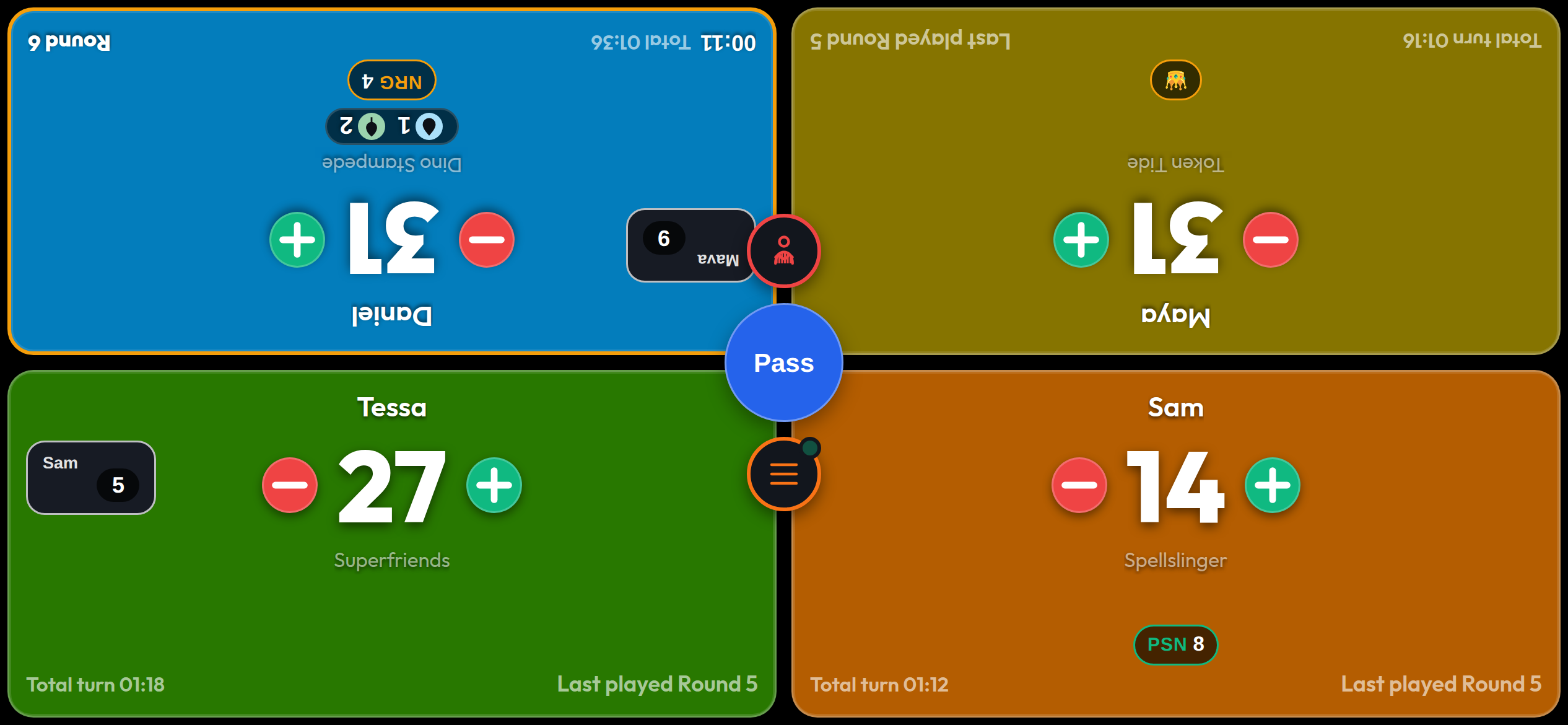
The part a store notices is what happens when the game ends: somebody reports who won and how, and that is the entire interaction with the counter. No slip, no walking a result over, no whiteboard to update.
The wall display
A screen on the wall does two jobs at once. It carries the join code for anybody who walks in, and it cycles through the tables that are playing — who is at each one, what they brought, and where the life totals are.
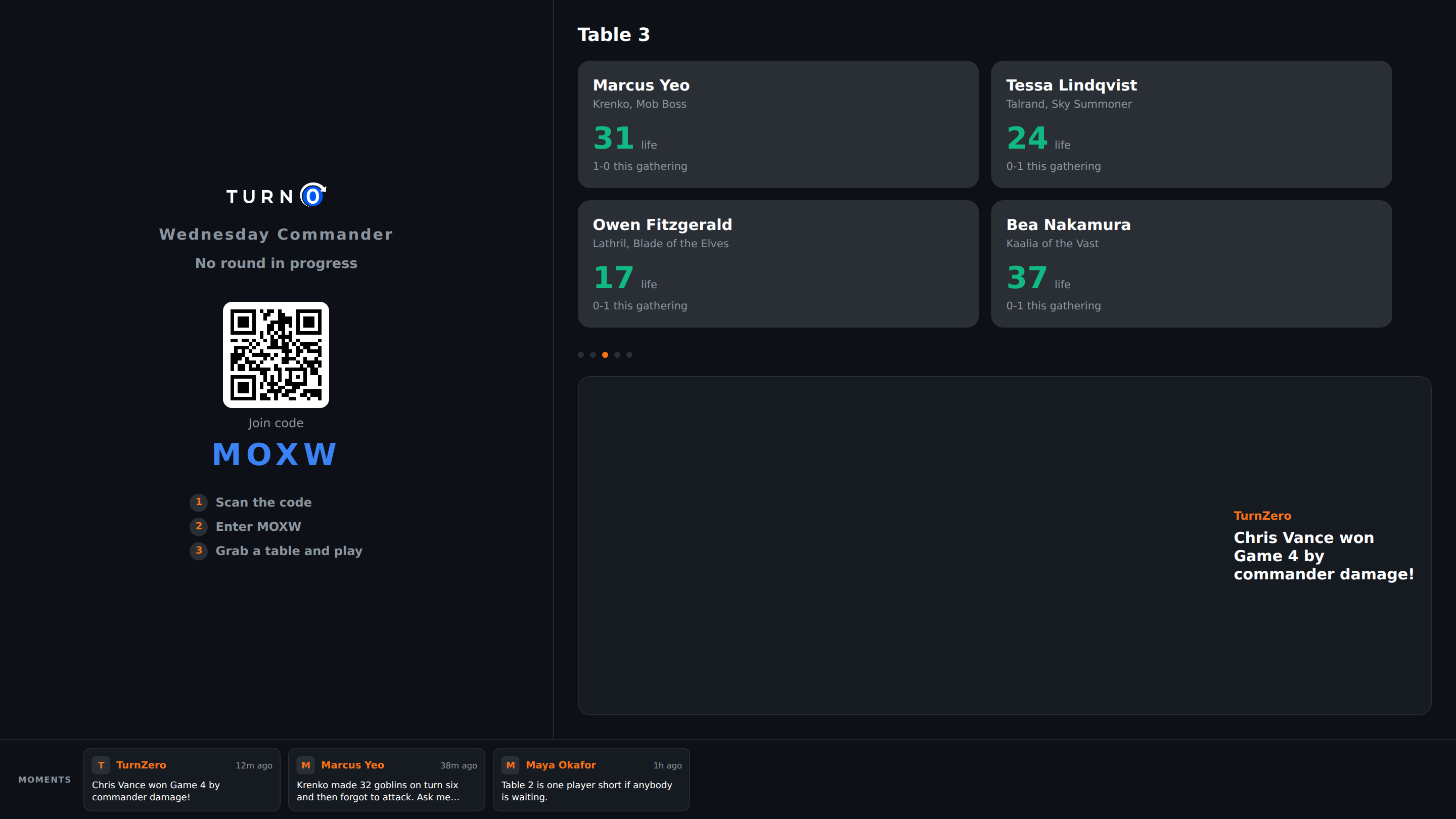
It is the thing that makes a Commander night look like an event from the doorway rather than like eight people sitting quietly. It signs nobody in, so any browser on the TV will do — open the URL once and leave the tab there.
Rules questions, without the summoning bell
Players ask from their own phones and the question lands on the Rulings screen behind the counter: the question, the cards it is about, and the answer. You see the thread rather than a raised hand, which means you walk over already knowing what the argument is about.
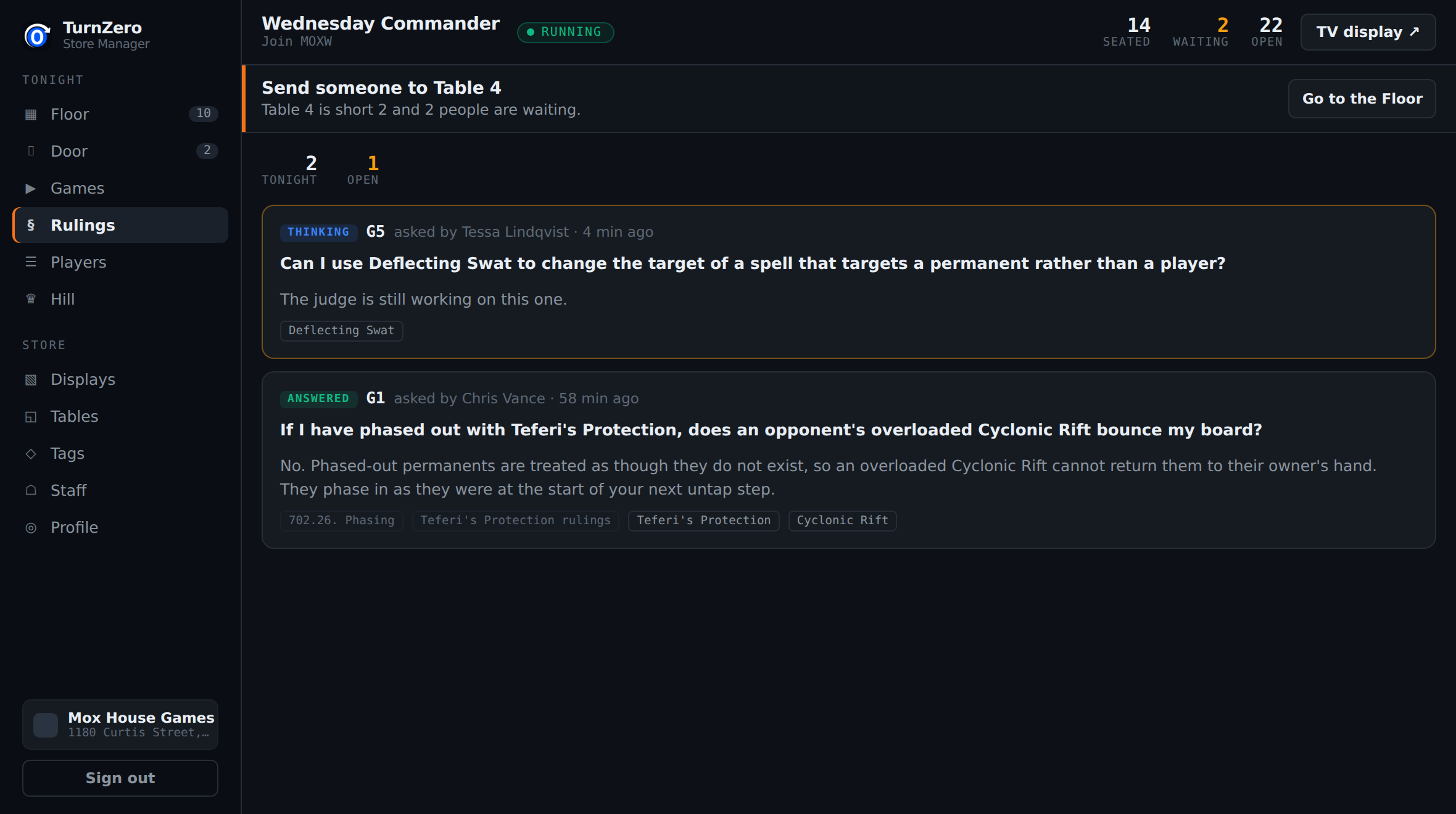
A question that keeps coming back is worth noticing. The screen flags one asked more than once in an evening, and a rules question your room asks every week is usually a policy gap rather than a rules problem — the sort of thing a house rule on a sign fixes permanently.
The leaderboards
Three readings, and they deliberately answer different questions. Hot right now is who is on a run tonight, which is the one the room cares about while it is playing. All-time here is who has won the most at your shop across every night you have run. Deck to fear is the deck rated highest here rather than anywhere else.
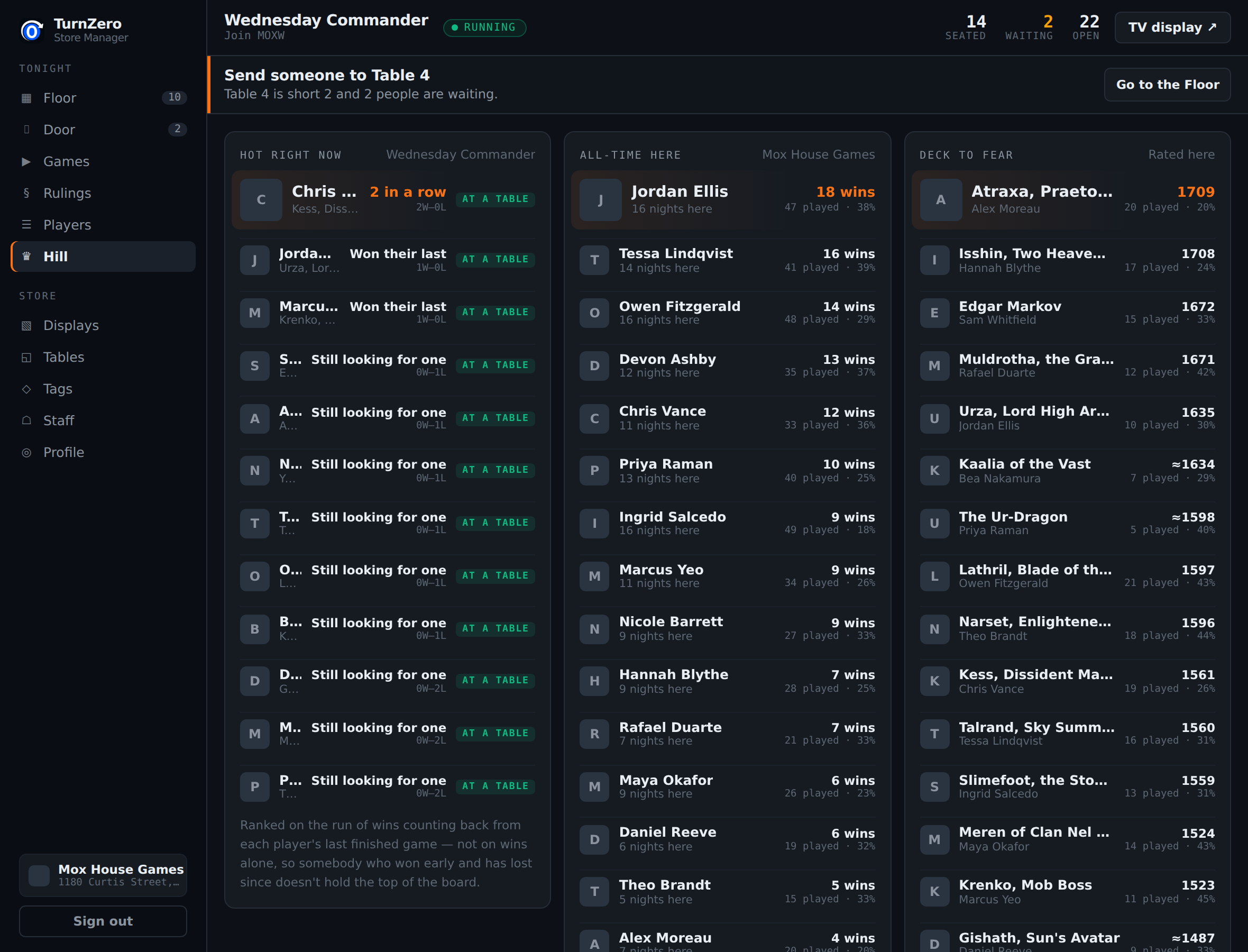
The same three appear on the wall display, so the room reads exactly what the counter reads. That matters more than it sounds: a leaderboard nobody can see is a leaderboard nobody plays for.
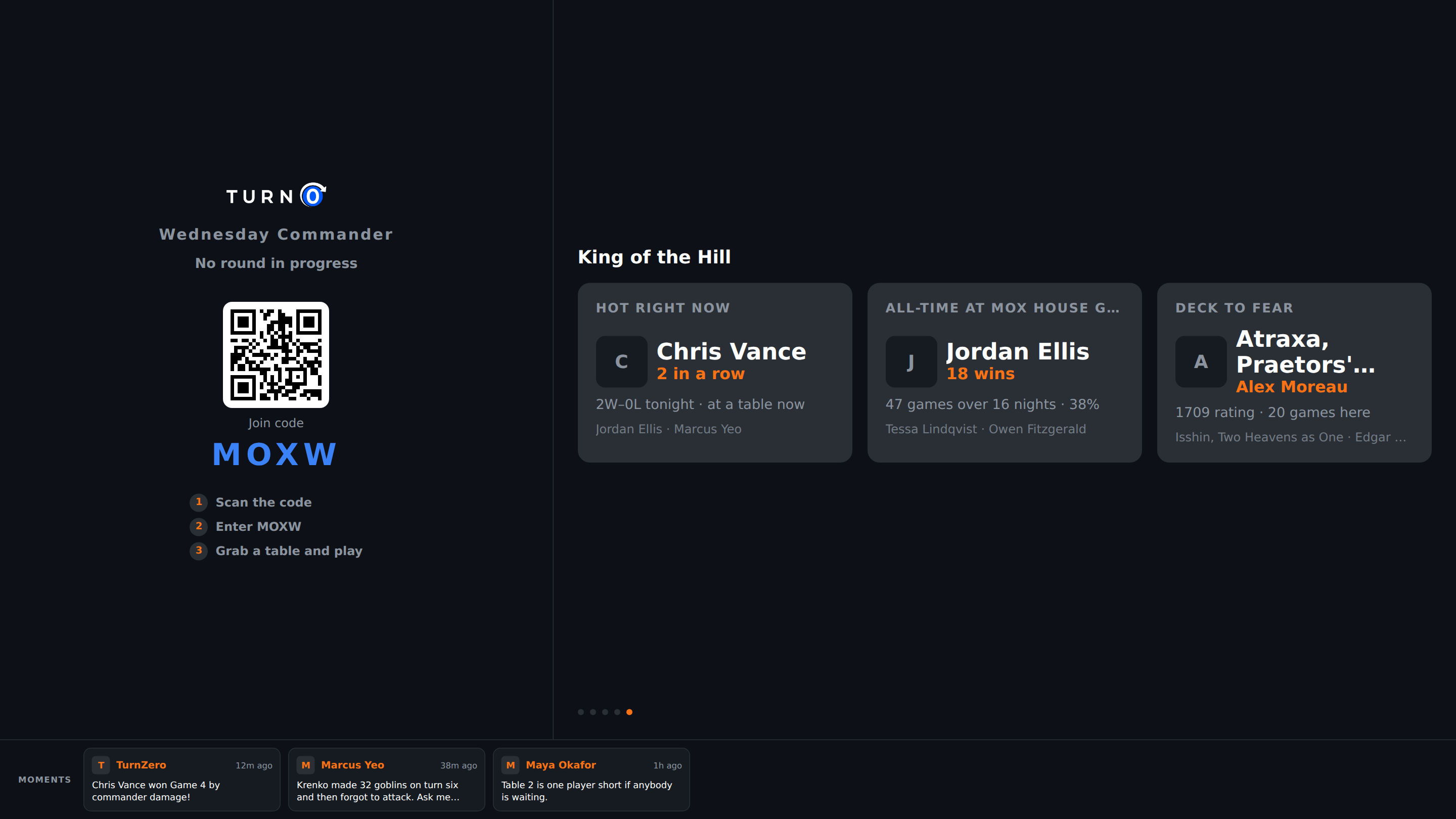
None of this is maintained by anybody. It is counted from the games your players reported, so it is right in the sense that a whiteboard never quite is, and it survives whoever happens to be on the counter.
What the evening leaves behind
When the last table finishes, end the night. What you are left with is a record of what happened: the games, who won each one and how, how long they ran, and how many people were in the shop.
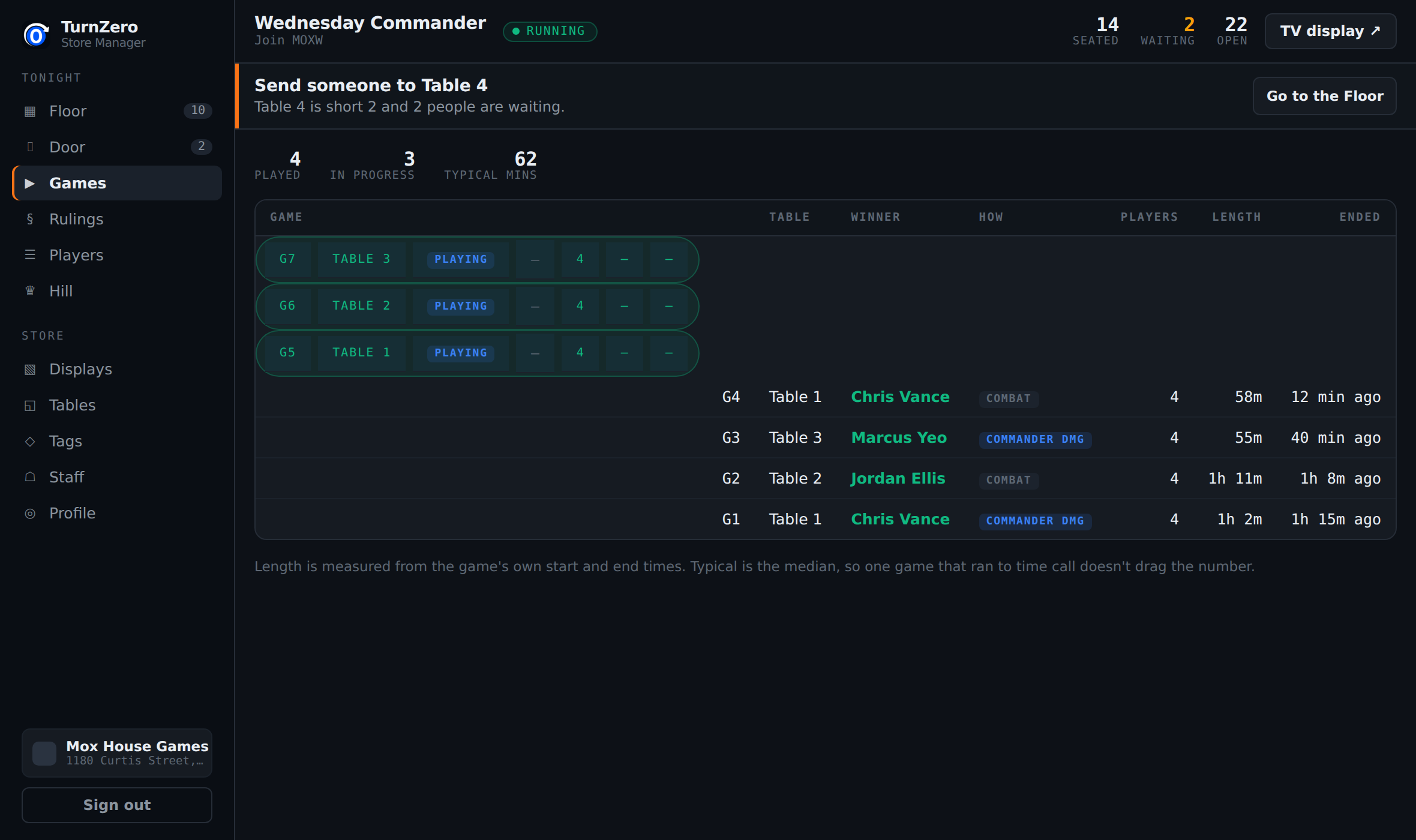
The typical game length is the most practically useful number here. A shop that knows its Commander games run about an hour knows how many rounds an evening holds, which is the difference between closing at nine and having three tables mid-game at nine.
Players get their own half of it: their record, their decks, their games and the people they played against, in the app, for free. That is the reason they keep the app rather than uninstalling it on the way home, and it is what makes next week's night easier to fill.
Is a Commander night a tournament?
Almost never, and TurnZero HQ does not make you pretend it is. A Commander night is open play: pods form, a game finishes, the pod breaks up and reforms. There are no rounds, no pairings and no clock unless you deliberately want them.
How do I stop one player crushing the room every week?
Look at the bracket chips before you seat, and use the shop's own history. The all-time board tells you who wins most here, which is the honest input for a quiet word about pod choice. It also usually solves itself once the room can see it: a Bracket 5 deck stops finding a pod when the pod can read the chip.
Do players need to track life in the app?
No. A table that wants to use dice and report the winner at the end works fine, and plenty do. The app's board is better for the pod that wants it — commander damage, poison, the monarch, and every seat facing its own player — but the only thing the evening needs is a reported result.
What does the store get out of it that a whiteboard does not?
Three things: a leaderboard that carries between weeks without anybody maintaining it, a wall display that makes the room look like something is happening, and a record of who comes and how often. The whiteboard is a fine way to run one evening and a bad way to know your regulars.
Can a table ask for a ruling without stopping the whole room?
The players ask from their own phones and the question, its cards and its answer land on the Rulings screen behind the counter. You see the thread rather than a summoning bell, so you can walk over already knowing what the argument is about.
Do I need a TV?
It is the single best fifty dollars a shop can spend on this, and it is not required. The wall display shows the join code, the games in progress and the leaderboards, and it is what makes a Commander night look busy from the doorway. Any browser-capable screen works and it needs no sign-in.
Run your Commander night on TurnZero HQ.
Pods by bracket, a leaderboard that keeps itself, and a wall display that makes the room look busy. Free for your players.
Open the Store Console