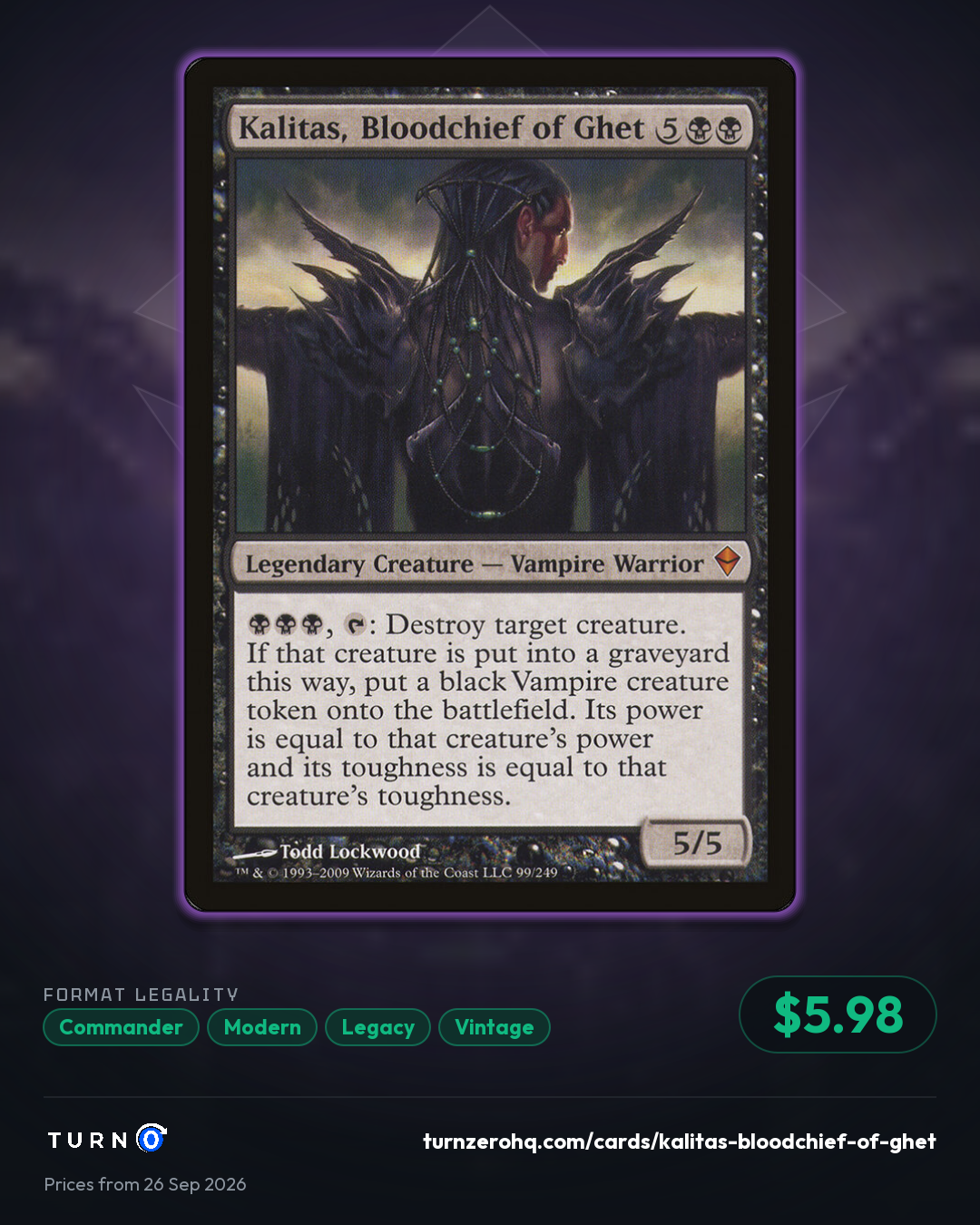
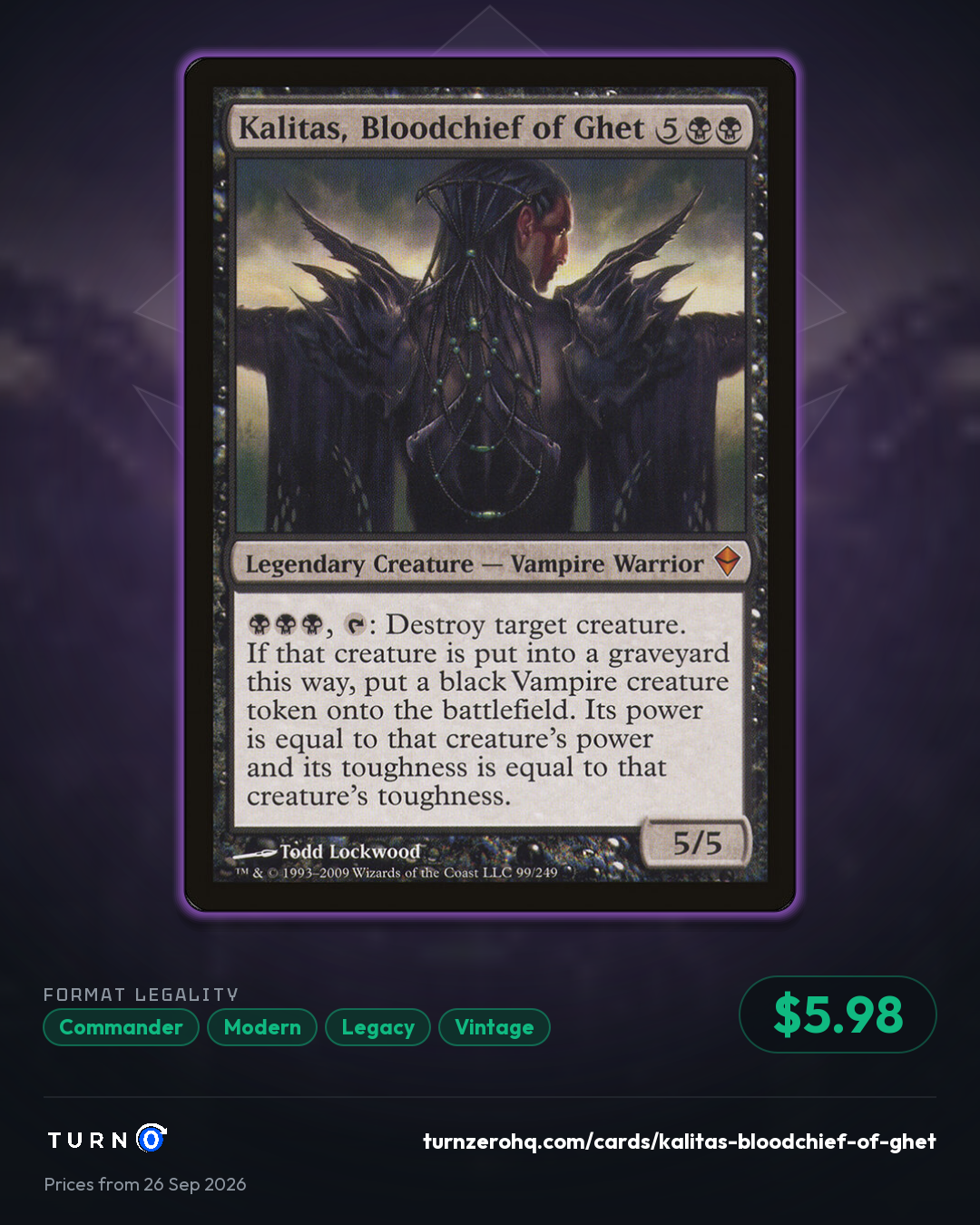
Kalitas, Bloodchief of Ghet
Tracked across real Commander games played through TurnZero HQ.
Jump to section ▾
What it does
, T: Destroy target creature. If that creature dies this way, create a black Vampire creature token. Its power is equal to that creature's power and its toughness is equal to that creature's toughness.
Rulings
3 official rulings, in the order Wizards published them.
- 2009-10-01
You get the token, not the player who controlled the creature.
- 2009-10-01
The power and toughness of the token are based on the destroyed creature’s last existence on the battlefield. The token doesn’t have any of the destroyed creature’s other characteristics.
- 2013-07-01
If the targeted creature has indestructible or regenerates, you won’t get a Vampire token. Similarly, if the targeted creature is destroyed but a replacement effect moves it to a different zone instead of its owner’s graveyard, you won’t get a Vampire token.
Rulings are Wizards of the Coast's own, mirrored from Scryfall and refreshed nightly.
In the 99
Every deck whose current list includes Kalitas, Bloodchief of Ghet, whatever its commander.
Most played under
| Commander | Decks | Games | Win rate |
|---|---|---|---|
| Edgar Markov | 1 | 0 | — |
Colors it shows up in
- Mardu 1 deck
Every version of Kalitas, Bloodchief of Ghet
1 printing, newest first. Prices are the market figures Scryfall publishes, refreshed nightly. A printing with no figure shows a dash rather than a zero, because Scryfall publishes none for some of them.
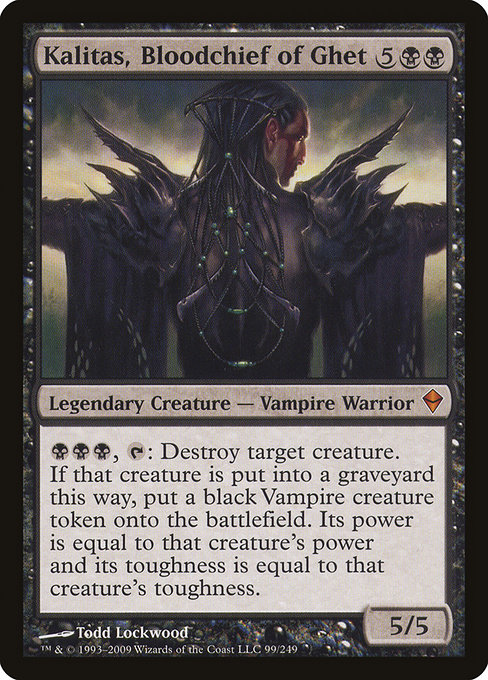
Zendikar
- Normal
- $5.98
- Foil
- $20.00
Prices from Scryfall, which tracks the TCGplayer and Cardmarket markets. They move daily and are a guide rather than a quote. Search TCGplayer for Kalitas, Bloodchief of Ghet. It runs a name search across every version, which covers the printings TCGplayer publishes no direct link to.
Aggregated from Commander games tracked in TurnZero HQ. Every figure counts decks and games only. No individual deck list, player or playgroup is identified. Win rates are withheld below 5 completed games, where the sample is too small to mean anything.